Ask ten people what is vegan and you will get ten slightly different answers. Some will tell you it means no meat. Others will say no dairy or eggs. A few will mention leather shoes and shampoo that involves animal testing. They are all partly right, and that is exactly why the word causes so much confusion. Being vegan is both a way of eating and a way of living, and the line between the two is where most of the misunderstanding starts.
This guide settles it. You will learn the actual definition, where it came from, what vegans eat and avoid, how it differs from plant-based and vegetarian, and the handful of nutrients worth paying attention to so the switch is healthy rather than guesswork. No judgment, no preaching, just a clear answer you can use whether you are vegan, vegan-curious, or cooking for someone who is.
The Short Answer
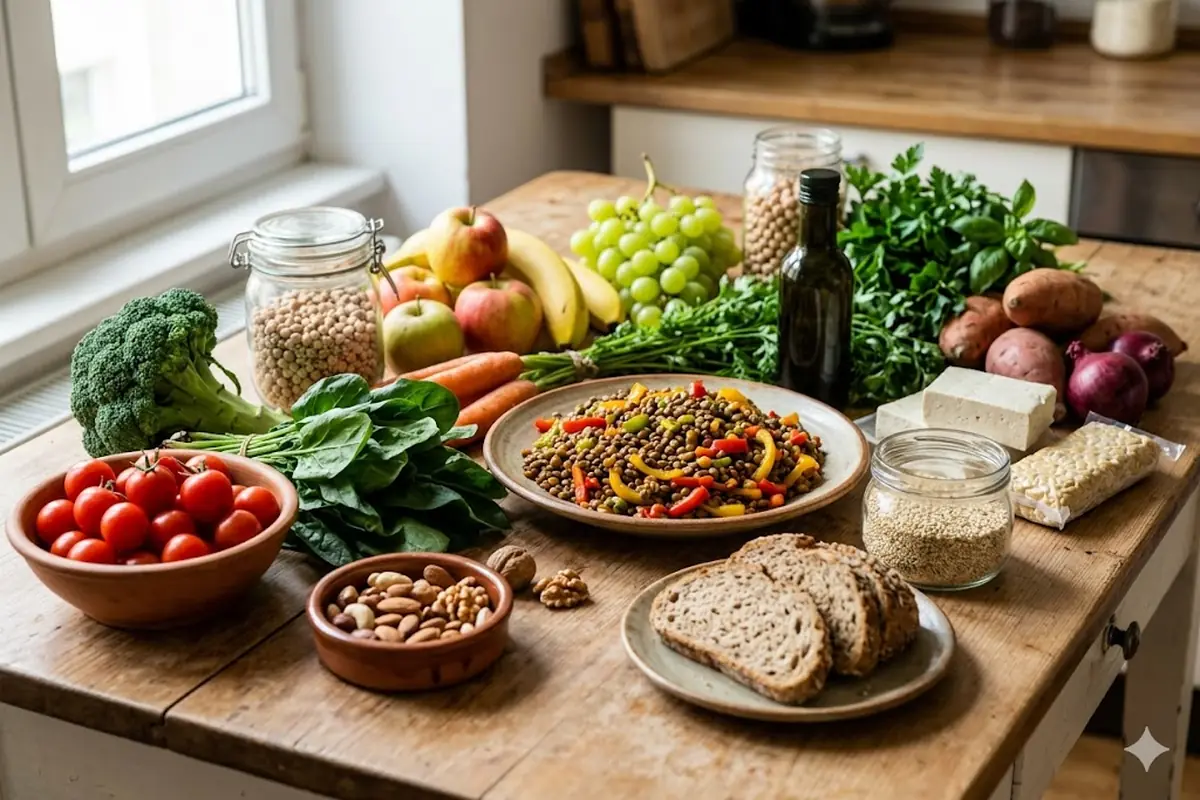
Vegan means excluding animal products as far as is practical. On the plate, that rules out meat, poultry, fish, shellfish, dairy, eggs, and honey. Beyond the plate, committed vegans also avoid animal-derived materials such as leather, wool, silk, and down, along with cosmetics and household products that involve animal testing. The diet is the part most people see; the broader philosophy is what separates veganism from simply eating a lot of vegetables.
The most widely cited definition comes from The Vegan Society, which describes veganism as a way of living that seeks to exclude, as far as is possible and practicable, all forms of exploitation of and cruelty to animals for food, clothing, or any other purpose. The phrase “as far as is possible and practicable” matters. It acknowledges that animal traces hide in places no one can fully police, from the glue in some book bindings to micro-ingredients in processed foods. Veganism asks for a reasonable, consistent effort, not impossible perfection.
Where the Word Came From
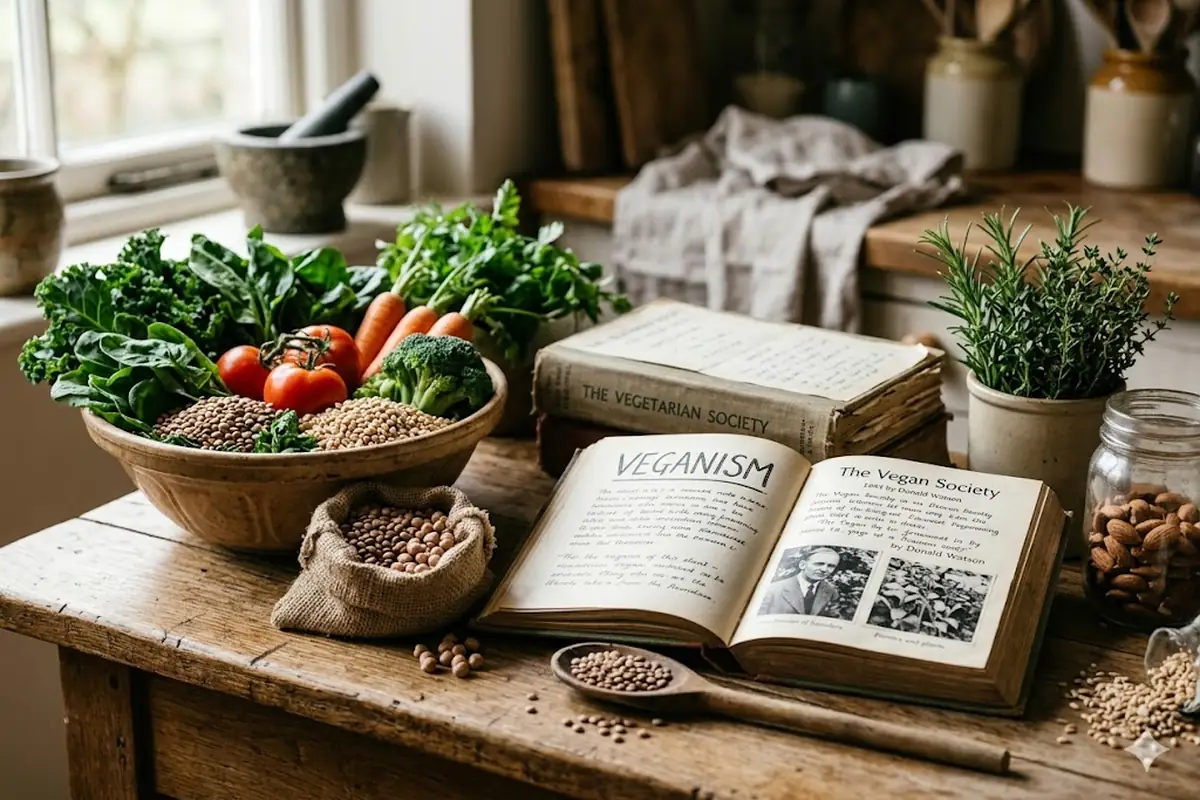
The term is younger than most people assume. In 1944, Donald Watson and a small group in England coined “vegan” by taking the first three and last two letters of “vegetarian,” signaling that veganism is where vegetarianism begins and ends. They wanted a single word for vegetarians who also rejected dairy and eggs, since “vegetarian” had drifted to include both. That founding moment is why the modern definition still leans on ethics rather than nutrition alone. The diet grew out of a moral position, and the health and environmental arguments came later as supporting reasons rather than the original spark.
What Vegans Actually Eat
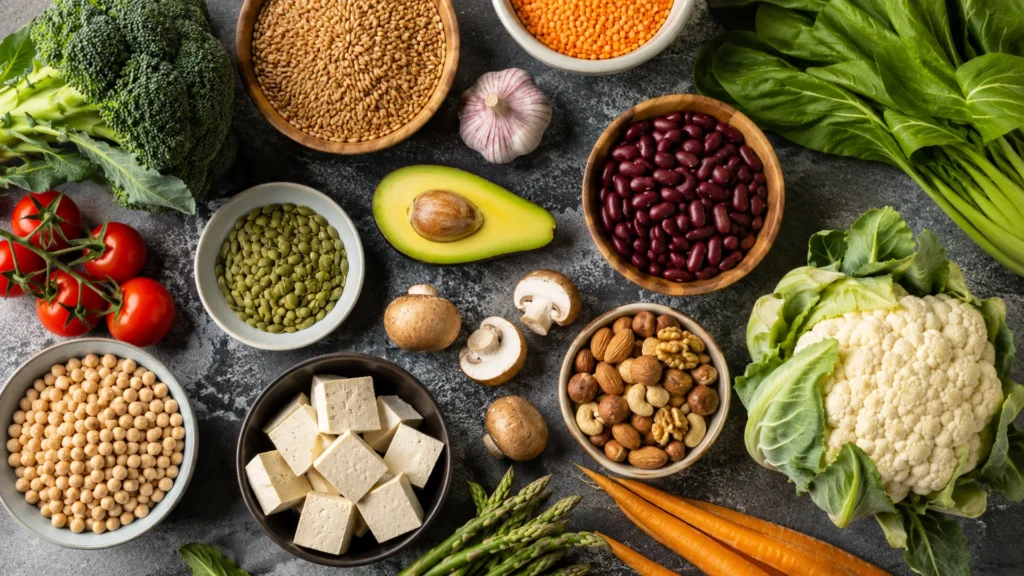
The misconception that veganism is a diet of restriction fades the moment you look at a real grocery list. The foundation is built from whole plant foods, and the variety is enormous once you stop measuring it against a meat-and-dairy template.
- Vegetables and fruit form the bulk of most meals, fresh, frozen, roasted, or raw.
- Legumes such as lentils, chickpeas, black beans, and soybeans carry much of the protein load.
- Whole grains like oats, brown rice, quinoa, and whole wheat provide energy and fiber.
- Nuts and seeds add fat, protein, and minerals, and double as the base for many dairy swaps.
- Soy foods including tofu, tempeh, edamame, and soy milk are protein anchors.
- Plant milks and dairy alternatives cover oat, almond, soy, and coconut versions of milk, yogurt, cheese, and butter.
- Fortified foods such as nutritional yeast and fortified plant milks fill specific nutrient gaps.
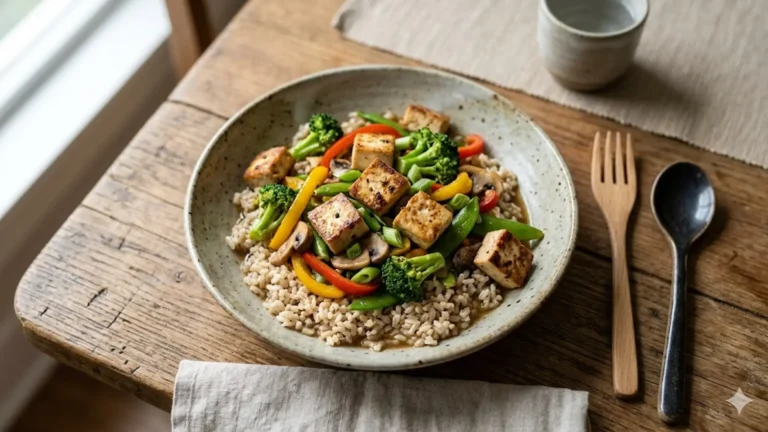
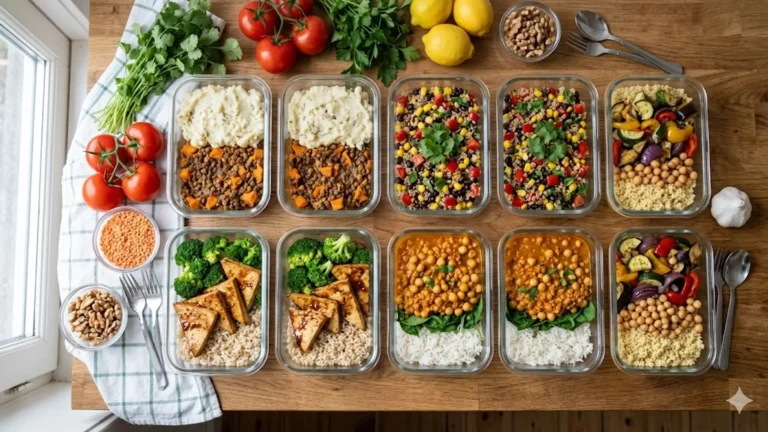
If you are starting from scratch, learning a few reliable cooking methods turns these staples into real meals fast. Knowing how to cook tofu so it crisps instead of crumbles, and how to cook lentils without turning them to mush, removes most of the early frustration. From there, planning ahead with vegan meal prep ideas keeps the fridge stocked so the default choice is always an easy one. The same plant staples also fold neatly into healthy pasta dinners and hearty bean soups on busier nights.
What Vegans Avoid
The avoid list is shorter than the eat list but worth knowing precisely, because the tricky items are the ones that hide.
- All meat, poultry, and seafood, including broths, stocks, and gelatin made from animal bones and skin.
- Dairy in every form: milk, cheese, butter, cream, yogurt, and whey, which sneaks into many packaged snacks.
- Eggs and ingredients derived from them, such as albumin and some mayonnaise.
- Honey and other bee products like royal jelly and bee pollen, since they come from animals.
- Hidden additives such as carmine (a red dye from insects), isinglass (from fish, used to clarify some beers and wines), and certain vitamin D3 sourced from lanolin.
This is where label reading becomes a quiet skill. Many products that seem obviously plant-based, from some breads to certain wines, carry an animal-derived processing aid that never appears on the front of the package.
Vegan vs Plant-Based vs Vegetarian
These three terms get swapped around constantly, but they are not interchangeable. The cleanest way to see the difference is to line them up by what each one allows.
| Term | Meat & Fish | Dairy & Eggs | Honey | Non-Food Animal Products | Core Motivation |
|---|---|---|---|---|---|
| Vegan | No | No | No | Avoided (leather, wool, etc.) | Ethics, often plus health or environment |
| Plant-Based | Usually no | Usually no | Sometimes | Not considered | Health and diet focused |
| Vegetarian | No | Yes | Yes | Not considered | Varies |
The key distinction: “plant-based” describes a way of eating, while “vegan” describes a way of living. A plant-based eater chooses plants mainly for health and may still wear leather or eat honey. A vegan extends the principle to clothing, cosmetics, and daily purchases. And a vegetarian still eats dairy and eggs, which is the single biggest line between vegetarian and vegan. If you want the full breakdown, our deep dive on vegan vs vegetarian walks through every overlap and exception.
Why People Go Vegan
People rarely arrive at veganism for one reason alone, but three motivations come up again and again.
Animal Welfare
This is the founding reason and still the most common. The aim is to avoid contributing to the use and slaughter of animals for food and materials. For people who go vegan for ethics, the lifestyle side, avoiding leather and products that involve animal testing, follows naturally from the same principle.
Health
Well-planned vegan diets are typically high in fiber, vitamins, and antioxidants and low in saturated fat. Major dietetic bodies have stated that appropriately planned vegan diets are healthful and adequate for all stages of life, a position echoed in plain-language overviews like this medically reviewed guide. The word “planned” is doing real work in that sentence, which is why the nutrient section below matters.
Environment
Animal agriculture is a significant source of greenhouse gas emissions, land use, and water consumption. For environmentally motivated eaters, cutting animal products is one of the larger individual changes available. This reason has driven much of the recent growth among people who would not describe themselves as ethically vegan but want a lower-impact plate.
Nutrients Worth Watching
A vegan diet can be excellent or careless, exactly like any other diet. The difference is attention to a few nutrients that are harder to get from plants alone. None of these require obsession, just awareness.
| Nutrient | Why It Matters | Vegan Sources or Fix |
|---|---|---|
| Vitamin B12 | Nerve and blood health; not reliably found in plants | Fortified foods or a supplement (the one nearly every vegan should take) |
| Vitamin D | Bone health and immunity | Sun exposure, fortified plant milks, vegan D2 or lichen-based D3 |
| Iron | Oxygen transport in blood | Lentils, tofu, spinach; pair with vitamin C to boost absorption |
| Omega-3 (DHA/EPA) | Brain and heart health | Ground flax, chia, walnuts, or an algae-based supplement |
| Calcium | Bones and teeth | Fortified plant milks, tofu set with calcium, leafy greens |
| Zinc and iodine | Immunity and thyroid function | Whole grains, legumes, seeds; iodized salt or seaweed for iodine |
The single most important takeaway is B12. Because it is not reliably present in plant foods, a fortified source or supplement is non-negotiable for long-term vegans. Everything else can usually be covered by eating a genuine variety of foods rather than living on the same three meals.
Protein, the Question Everyone Asks
No conversation about what is vegan lasts five minutes without someone asking about protein. The short version: plants supply plenty of it, and getting enough is straightforward once you know where to look. Legumes, soy foods, whole grains, nuts, and seeds all contribute, and eating a range of them across the day covers the full set of amino acids your body needs. Tempeh, lentils, and tofu are among the densest options. If you want the specifics, our guide to vegan protein sources lists grams per serving so you can build meals with confidence.
The Vegan Lifestyle Beyond the Plate
Food is the most visible part of veganism, but for many people it is only the entry point. The same principle that removes animal products from meals extends outward into the rest of daily life, and this is the piece that most diet-focused articles skip entirely. Understanding it explains why two people can both call themselves vegan and shop very differently.
Clothing and Materials
Committed vegans avoid materials that come from animals: leather from cattle, wool from sheep, silk from silkworms, down feathers from ducks and geese, and suede. The market has responded with plenty of alternatives, from cotton and linen to synthetic and plant-derived leathers made from cork, pineapple leaf fiber, or apple waste. None of this is mandatory to eat vegan, which is exactly why “plant-based” and “vegan” diverge here. A plant-based eater is making a food choice; a vegan is applying a value across categories.
Cosmetics and Household Goods
Two separate questions come up with personal care products. The first is whether a product contains animal ingredients such as beeswax, lanolin, carmine, or collagen. The second is whether animal testing was involved. A product can be one without the other, which is why vegans look for both a cruelty-free certification and a vegan-ingredient label rather than assuming one implies the other. The same logic carries into cleaning supplies and candles, where animal-derived fats and dyes still appear.
How to Start Without Overwhelm
The biggest reason people stall is treating veganism as a single overnight switch with no margin for error. A gentler on-ramp tends to stick better, and there is nothing un-vegan about easing in.
- Crowd in before you cut out. Add more plant meals you genuinely enjoy before worrying about removing anything. A fridge full of foods you like makes the rest follow.
- Master five reliable meals. A handful of go-to dinners you can cook on autopilot removes the daily decision fatigue that derails most attempts.
- Learn three dependable swaps. A plant milk you like in coffee, a butter alternative for cooking, and an egg replacer for baking cover most everyday gaps.
- Read labels for a week, then relax. Once you know your usual brands, shopping speeds back up. The label-reading phase is temporary, not forever.
- Plan for eating out. Scan a menu before you go and you will rarely be caught without an option. Most cuisines have naturally vegan dishes once you know where to look.
Batch cooking is the quiet hero of a sustainable transition. A pot of lentils, a tray of roasted vegetables, and a grain cooked in advance assemble into a week of bowls, wraps, and dinners with almost no further effort. The goal is to make the easy choice and the vegan choice the same choice.
Common Myths, Cleared Up
A few stubborn beliefs deserve a direct answer.
- “Vegan food is bland.” Flavor comes from technique and seasoning, not animal products. Roasting, browning, acid, salt, and spice do the work regardless of the ingredient.
- “It is automatically healthy.” Fries, soda, and cookies can all be vegan. Veganism removes animal products; it does not remove sugar or oil.
- “You cannot get enough protein.” Covered above. Plants do the job when you eat a variety.
- “It is all or nothing forever.” Many people transition gradually, and reducing animal products at all is a real change even short of full veganism.
Reading Labels Like a Vegan
Once the obvious animal products are out of the picture, the remaining challenge is the small print. Manufacturers are not required to flag whether an ingredient came from an animal or a plant, and many ingredients can come from either source depending on the supplier. Building a short mental watchlist makes shopping far faster than checking every item from scratch.
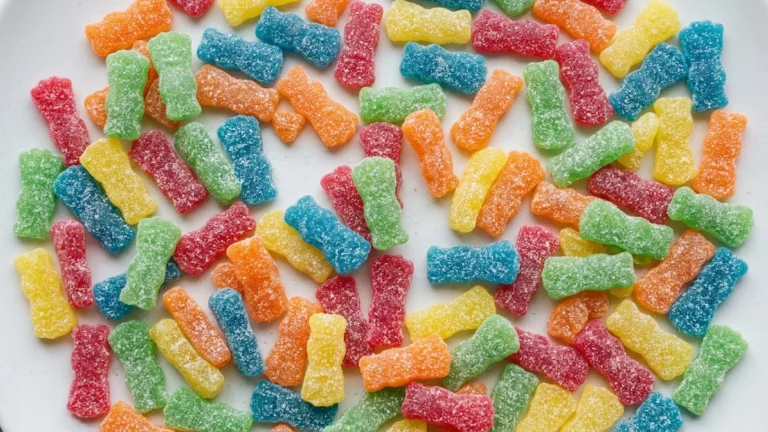
The usual suspects worth memorizing include gelatin (from animal collagen, common in gummy candies and some yogurts), casein and whey (milk proteins that hide in protein bars and processed snacks), carmine or cochineal (a red colorant from insects), shellac and confectioner’s glaze (from the lac insect, used to shine candies), L-cysteine (a dough conditioner sometimes derived from feathers), and certain forms of vitamin D3 sourced from sheep’s wool. None of these are dealbreakers in the sense of being everywhere, but they appear often enough that recognizing them on sight saves real time and prevents accidental purchases.
Certification logos help shortcut the whole process. A registered vegan trademark on the package means a third party has already done the ingredient detective work, which is especially useful for processed and packaged foods where the supply chain is long and opaque. For whole foods like produce, grains, and beans, no label is needed because the food is plant by definition.
Frequently Asked Questions
Is vegan the same as dairy-free?
No. All vegan food is dairy-free, but plenty of dairy-free food is not vegan. A product can skip milk yet still contain eggs, honey, or meat-derived gelatin. Dairy-free is a single exclusion; vegan excludes every animal product at once. Always read the full ingredient list rather than trusting a single front-of-pack claim.
Can you be vegan and still eat honey?
Strictly, no. Honey is produced by bees, which makes it an animal product, so it falls outside the standard definition of veganism. Some people who follow a plant-based diet for health reasons do eat honey, but they would not be considered vegan in the full sense. Common plant swaps include maple syrup, agave, and date syrup.
Do vegans need supplements?
Vitamin B12 is the one nearly every vegan should supplement or get from fortified foods, because it is not reliably available from plants. Vitamin D and algae-based omega-3 are commonly recommended too, especially in winter or low-sun climates. Beyond those, a varied diet usually covers the rest. A blood test is the surest way to know your personal needs.
Is a vegan diet safe for everyone?
Major nutrition bodies state that well-planned vegan diets are appropriate for all life stages, including pregnancy, childhood, and athletic training. The operative word is planned. Anyone with specific medical conditions, or who is pregnant or feeding a young child, should set up the diet with a doctor or registered dietitian rather than improvising.
The Bottom Line
So what is vegan? It is the practice of leaving animal products out of your life as far as you reasonably can, starting with food and often extending to clothing and everyday goods. The diet is generous and varied, the ethics are the historical heart of it, and the health side works well with a little planning, B12 above all. Whether you adopt it fully, lean into it part-time, or simply cook for a vegan friend now and then, understanding the definition takes the mystery out of the word and leaves you with something far more useful: the ability to make an informed choice.