Learning how to cook lentils well comes down to one ratio and one rule: simmer them gently in three parts water to one part lentils, and salt them only after they turn tender. Master that and almost every variety behaves. Lentils are the most forgiving protein in the plant-based kitchen, but they are also the one home cooks most often turn to mush, usually from a hard boil or an early pinch of salt. The rest, which lentil to reach for, how long it actually takes, and how to rescue a pot that has gone too soft, is what separates a sad gray paste from lentils that hold their shape and taste of something.
This guide walks through every common type, the exact water ratio and cook time for each, three cooking methods, the doneness cues to watch for, and how to store the batch so it carries a week of meals. No soaking, no special equipment required, and no guesswork.
Do You Need to Soak or Rinse Lentils?
Unlike dried beans, lentils never need soaking. They are small enough to cook through from dry in twenty to thirty minutes, and soaking only makes them more likely to fall apart. You should, however, always rinse them. Pour the lentils into a fine-mesh strainer, run cold water through them, and pick out any shriveled ones or the occasional small stone or bit of grit that slips through packing. Thirty seconds of rinsing is the whole ritual, and it is worth doing every single time.
The One Ratio That Works: 3 to 1
For lentils you plan to drain, the kind destined for salads, bowls, and tacos, use three cups of water for every cup of dry lentils. The extra liquid gives them room to move and cook evenly, and you tip off whatever they do not absorb at the end. If you are cooking red or yellow lentils for a soup or dal where you want them to break down, you can use the same ratio and simply skip the draining, since the starch they release is exactly what thickens the pot.
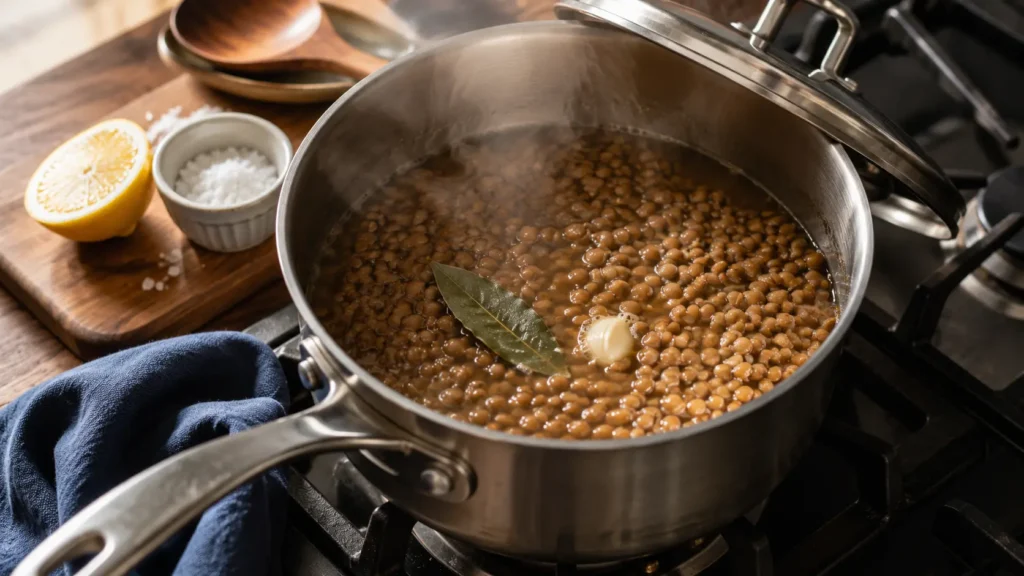
Use plain water or, for more flavor, vegetable broth. A bay leaf, a smashed garlic clove, or half an onion dropped into the pot infuses the lentils as they cook and costs nothing. Pull those aromatics out before serving.
Lentil Types, Ratios, and Cook Times
The biggest mistake is treating all lentils as one ingredient. They are not. Some hold their shape for salads; others dissolve into silk for soups. Match the variety to the dish and half your problems disappear.
| Lentil | Water ratio | Simmer time | Texture & best use |
|---|---|---|---|
| Brown | 3:1 | 20-30 min | All-purpose; soft but intact, good in soups and stews |
| Green | 3:1 | 30-45 min | Robust, peppery, holds shape; salads and sides |
| French / Puy | 3:1 | 25-35 min | Firmest, keeps a distinct bite; best for salads |
| Black (beluga) | 3:1 | 20-25 min | Holds shape, glossy; dresses up bowls and sides |
| Red / yellow (split) | 3:1 | 5-10 min | Breaks down to a puree; dal, soups, thickening |
If you only stock one type, make it brown, it is cheap, widely available, and sits comfortably in the middle, holding together for a bowl while still turning tender enough for soup. Keep a bag of split red lentils alongside it for the nights you want dinner in fifteen minutes.
How to Cook Lentils on the Stovetop
The stovetop is the method I reach for ninety percent of the time because it gives you the most control over the final texture.
Step by step
- Rinse one cup of lentils in a fine-mesh strainer and pick out any debris.
- Combine with three cups of water or broth in a saucepan. Add a bay leaf or garlic clove if you like.
- Bring to a boil, then immediately drop to a gentle simmer with the lid ajar. A hard rolling boil is what bursts the skins and makes lentils mushy, so keep it lazy.
- Start checking for doneness a few minutes before the chart’s lower time. They are ready when tender all the way through but still intact.
- Drain off any excess water, then stir in salt, acid, and oil to taste.
Why you salt at the end
Salting the water before the lentils are tender firms up their skins and can leave them stubbornly hard no matter how long they simmer. The same goes for acidic ingredients like tomatoes, vinegar, and lemon, add them only after the lentils have softened. Wait until the end and you get tender lentils that you then season generously. This is the single most useful habit in this entire guide.
Other Cooking Methods
Instant Pot or pressure cooker
A pressure cooker is excellent for firmer varieties and big batches. Use a 2:1 water ratio since almost no liquid evaporates. Brown and green lentils take about eight to ten minutes at high pressure with a natural release; black and French lentils about the same. Split red lentils cook so fast that the stovetop is usually simpler, but they work at around five minutes if you are already making a pressure-cooker soup.
Slow cooker
For a hands-off pot of soup or dal, the slow cooker is ideal. Combine lentils, liquid, and aromatics and cook on low for six to eight hours or high for three to four. Hold the salt and any tomatoes until the final stretch so the lentils soften properly. This is the method I lean on when I want a make-ahead dinner waiting at the end of the day; a deep bench of bean soups translates beautifully to the slow cooker.
How to Tell When Lentils Are Done
Doneness is about texture, not the clock, because age and storage change how fast a batch cooks, older lentils that have sat in the pantry for a year take noticeably longer. Spoon out two or three and bite them. For salads and bowls, you want them tender with a faint, pleasant resistance and their skins intact. For soups and dal, keep going until they slump and start to break down. If they still have a chalky, hard center, they need more time and possibly more water; if they have collapsed into paste before you wanted them to, you have a soup base whether you planned one or not. One more cue: the lentils on top should look plump and whole rather than split and frayed, and the cooking water will have turned slightly cloudy from released starch when they are ready.
Troubleshooting Common Problems
- Lentils stay hard no matter how long they cook. Usually one of three things: salt or acid added too early, very old lentils, or hard water. Hold the salt, add a splash more water, and give them time.
- They turned to mush. The heat was too high or they cooked too long. Lean into it and blend them into a soup, dal, or the base of a veggie burger.
- Skins are bursting and floating. A rolling boil is breaking them. Drop to a bare simmer next time.
- They taste flat. They were under-seasoned. Lentils are a blank canvas; finish with salt, a squeeze of lemon or splash of vinegar, and a drizzle of good oil.
Seasoning and Serving Cooked Lentils
Plain cooked lentils are a base, not a destination. The moment they are tender, season aggressively: salt, an acid to brighten, and fat to round them out. From there they go almost anywhere. Toss firm green or French lentils with vinaigrette, herbs, and diced vegetables for a salad that holds for days. Fold brown lentils into soups, stews, and pasta sauces for body and protein. Simmer split red lentils with onion, garlic, ginger, and spices into a fast dal. They make a hearty filling for tacos and shepherd’s pie, and a scoop of garlic hummus on top of a warm lentil bowl is one of my favorite five-minute lunches. A side of quick-pickled dilly carrots cuts their earthiness with a welcome bright crunch.
Nutrition: Why Lentils Earn Their Place
Lentils are one of the most nutrient-dense foods you can keep in a pantry. A single cooked cup delivers roughly eighteen grams of protein and around fifteen grams of fiber, along with iron, folate, and potassium, for very few calories and almost no fat. That combination of protein and fiber is part of why legume-forward eating patterns are tied to better long-term health markers, a point made repeatedly by NutritionFacts.org and Forks Over Knives. They are also naturally gluten-free, which makes them a dependable centerpiece for allergy-friendly cooking, they slot neatly into a rotation of gluten-free dinners. For the definitive reference on varieties and handling, the growers’ own resource at Lentils.org is worth a bookmark.
There is one small trick worth knowing if you rely on lentils for iron. The iron in plants is the non-heme type, which the body absorbs more readily in the presence of vitamin C. In practice that means a squeeze of lemon over your lentils, a handful of diced raw pepper in a lentil salad, or a tomato-based sauce does double duty, it brightens the flavor and helps you get more out of the iron at the same time. It costs nothing and turns an already nourishing bowl into a slightly smarter one.
How to Store Cooked Lentils
Lentils are a meal-prep dream because a big batch keeps so well. Let them cool for ten or fifteen minutes before sealing the lid, since trapping steam shortens how long they last, then refrigerate in an airtight container for four to five days. Label the container with the date so you are never guessing on Thursday whether Sunday’s batch is still good. They also freeze beautifully: portion them into one-cup amounts, freeze flat in bags for up to three months, and thaw in the fridge overnight or drop them straight into a simmering soup. Cooking from dry in bulk is also where the savings live, since a bag of dried lentils costs a fraction of canned per serving. Make a double batch on the weekend and you have protein ready for bowls, soups, and tacos all week without lifting a pot again.
Canned vs. Dried Lentils: Which Should You Use?
Both have a place. Dried lentils are dramatically cheaper, let you control the texture exactly, and come in every variety, which is why they are the better choice for salads where shape matters and for batch cooking. Canned lentils are already cooked, so they are the fastest route to dinner on a weeknight, just drain and rinse them for about a minute, which washes off excess sodium and roughly cuts it by two-thirds.
The main thing to know is that canned lentils are soft and a little fragile, since they have been cooked and then sat in liquid. Fold them gently into soups, stews, and sauces at the end of cooking rather than simmering them hard, or they will break down. For anything where you want a firm, distinct lentil, cook dried ones from scratch. A good habit is to keep both on hand: dried for planned cooking, a can or two for the nights you forgot to plan.
Make-Ahead Lentil Ideas for the Week
Because cooked lentils keep so well, a single pot becomes the backbone of several different meals. Once you have a batch in the fridge, the work for the rest of the week is mostly assembly, which is the whole appeal of cooking them ahead.
- Lentil grain bowls. Spoon brown or black lentils over rice or quinoa, add a roasted vegetable and a sauce, and lunch is done in minutes.
- Hearty soups and dal. Simmer red lentils with onion, garlic, ginger, and warm spices for a fast dal, or stir brown lentils into a vegetable soup for body and protein.
- Taco and wrap filling. Season warm lentils with cumin, smoked paprika, and lime for a quick, satisfying taco filling that holds up in a lunchbox.
- Cold lentil salad. Toss firm French or green lentils with vinaigrette, herbs, and diced vegetables; it actually tastes better after a day in the fridge.
- A protein-rich side. Warm lentils with a little oil and salt sit happily next to roasted vegetables, a tray of crispy root vegetable fries turns a bowl of lentils into a full plate.
The trick to keeping a week of lentil meals interesting is the same one that works for any prepped staple: change the seasoning, not the lentil. The same plain pot reads as Indian under cumin and turmeric, Mediterranean under lemon and herbs, and smoky-Mexican under chili and lime. Cook once, season differently, and the repetition never registers.
Frequently Asked Questions
Do you have to soak lentils before cooking?
No. Lentils are small enough to cook through from dry in twenty to thirty minutes, and soaking only makes them more likely to fall apart. Just rinse them in a strainer and pick out any debris before cooking.
What is the water ratio for cooking lentils?
Use three cups of water or broth for every cup of dry lentils when you plan to drain them. In a pressure cooker, drop to about two cups of water per cup of lentils since almost no liquid evaporates.
How long does it take to cook lentils?
It depends on the variety. Split red and yellow lentils are done in five to ten minutes, black and brown lentils in about twenty to thirty, and green or French lentils in thirty to forty-five. Always judge by texture rather than the clock, since older lentils cook more slowly.
Why are my lentils still hard after cooking?
The usual culprits are salt or acidic ingredients added too early, lentils that have been in the pantry too long, or hard water. Hold the salt and any tomatoes or lemon until the lentils are tender, add a little more water, and keep simmering.
Should you salt lentils before or after cooking?
After. Salting the cooking water firms up the skins and can leave lentils stubbornly hard. Simmer them in plain water or broth, then season generously with salt, acid, and oil once they are tender.
Can you freeze cooked lentils?
Yes. Cooked lentils freeze very well for up to three months. Cool them, portion into one-cup amounts, freeze flat in bags, and thaw in the fridge or drop them straight into a simmering soup.
Bottom Line
Cooking lentils well comes down to a handful of rules that never change: rinse but do not soak, simmer gently in three parts water to one part lentils, match the variety to the dish, and salt only after they are tender. Reach for brown lentils as your everyday all-rounder, French or green when you want them to hold their shape, and split red when you want a fast, silky soup. Cook a generous batch, store it in the fridge or freezer, and you have one of the cheapest, most nourishing proteins in the kitchen ready whenever you are.