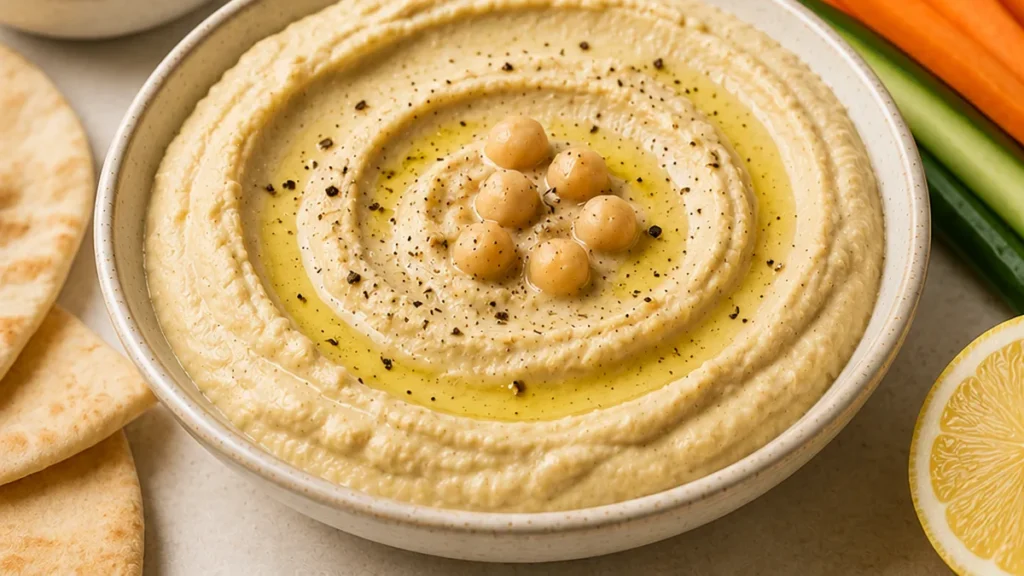
The quest for the perfect homemade garlic hummus ends here! This recipe delivers an incredibly creamy, flavorful dip using just five core ingredients and a food processor. Say goodbye to store-bought versions that lack that fresh, bright taste. this easy garlic hummus is designed for quick preparation and maximum deliciousness. This recipe is perfect for busy weeknights, impromptu gatherings, or simply elevating your everyday snacks. It’s a versatile staple that pairs beautifully with fresh vegetables, warm pita, or as a base for sandwiches and wraps. Get ready to impress yourself and your guests with this simple yet sophisticated garlic hummus.
Key takeaways
- Process garlic and lemon juice first for a smoother, less pungent flavor.
- Emulsify tahini and oil with lemon juice before adding chickpeas for creaminess.
- Add water gradually to achieve the perfect hummus consistency.
- Adjust processing time to ensure a smooth, lump-free texture.
5-Ingredient Garlic Hummus: So Easy, So Creamy!
Ingredients
- 1 can (15.5-ounce) garbanzo beans (chickpeas), drained and rinsed
- 3 garlic cloves
- ½ medium lemon, juice of
- 2 tablespoons tahini
- 2 tablespoons avocado oil or olive oil
- 2 tablespoons water
- ¼ teaspoon fine salt
- Cracked black pepper, to taste
Instructions
- In a food processor or blender, combine the drained garbanzo beans, garlic cloves, lemon juice, tahini, avocado oil, water, and salt.
- Process or blend on high speed until the mixture is completely smooth and creamy. If it’s too thick, add another tablespoon of water and blend again.
- Scrape the hummus into a serving bowl. Drizzle a little extra avocado oil on top and sprinkle with cracked black pepper.
- Serve immediately with your favorite fresh vegetables, pita bread, or use as a spread on sandwiches.
Notes
– Adjust lemon juice and salt to your taste preference after blending.
– For a spicy kick, add a pinch of cayenne pepper or red pepper flakes to the food processor.
– Store leftover hummus in an airtight container in the refrigerator for up to 5 days. Nutrition information is an estimate, calculated automatically. Values vary with brands, substitutions and portion sizes.
The technique that makes it
The key to exceptionally creamy and smooth garlic hummus lies in the processing order and the emulsification of the tahini and oil with the chickpeas. Start by processing the garlic and lemon juice first. This breaks down the garlic into a fine paste, mellowing its raw bite and ensuring it’s evenly distributed. Adding the tahini next and processing until it lightens in color and becomes smooth is crucial. Tahini is an emulsion of sesame seeds and oil; processing it further with the acidic lemon juice helps to stabilize it. Then, add the drained and rinsed garbanzo beans. Process these until they are as smooth as possible. Don’t rush this step. The longer you process, the smoother the hummus will become. The addition of water, a tablespoon at a time, helps to achieve the desired consistency, acting as a final emulsifier to bind everything together. Using a good quality food processor is also beneficial; the sharp blades and powerful motor will break down the chickpea skins and flesh more effectively, contributing to a superior texture.
Troubleshooting
- Hummus is too thick: Add more water, one tablespoon at a time, processing between additions until the desired consistency is reached.
- Hummus is too thin: This can happen if too much liquid is added. To fix it, add a few more drained garbanzo beans or a tablespoon of tahini and process again.
- Hummus is bitter or has a strong raw garlic taste: This usually means the garlic wasn’t processed sufficiently or the hummus wasn’t processed long enough. Try processing for an additional 2-3 minutes, or consider lightly roasting the garlic before adding it.
- Hummus is grainy: Ensure you’ve processed the ingredients long enough. For an ultra-smooth texture, consider removing the chickpea skins before processing, although this is time-consuming.
Substitutions
- Garbanzo beans: Canned cannellini beans or butter beans can be used, though the flavor and texture will be slightly different, resulting in a milder, creamier hummus.
- Tahini: While tahini is essential for authentic hummus flavor, a substitute like sunflower seed butter can be used for a nut-free option, but the flavor profile will change significantly.
- Avocado oil/Olive oil: Any neutral-flavored oil like grapeseed or canola oil will work. Extra virgin olive oil will impart a stronger olive flavor.
- Lemon juice: Lime juice can be used for a tangier, brighter flavor, but it will alter the classic hummus taste.
Pro tips
- For an ultra-smooth hummus, ensure your tahini is well-stirred and your blender is powerful.
- Adjust lemon juice and salt to your taste preference after blending.
- For a spicy kick, add a pinch of cayenne pepper or red pepper flakes to the food processor.
- Store leftover hummus in an airtight container in the refrigerator for up to 5 days.
Enjoy your delicious, homemade garlic hummus – a simple yet satisfying addition to any meal or snack time. Try it today!
More from Vegan Bowls →
Frequently asked questions
What is the best way to get smooth garlic hummus?
For the smoothest garlic hummus, process the garlic and lemon juice into a paste first. Then, emulsify the tahini and oil before adding the chickpeas. Continue processing until the mixture is completely smooth, adding water gradually to reach your desired consistency.
Can I make this garlic hummus without tahini?
While tahini is key to authentic hummus flavor, you can omit it or substitute it with a nut-free butter like sunflower seed butter. Be aware that this will change the traditional taste and texture of the hummus significantly.
How long should I process the hummus?
Process the ingredients until the mixture is completely smooth and creamy, which typically takes 3-5 minutes in a food processor. For an exceptionally smooth texture, you may need to process for longer, scraping down the sides as needed.
My garlic hummus is too thick, what can I do?
If your garlic hummus is too thick, the easiest solution is to add more liquid. Incorporate additional water, one tablespoon at a time, processing between additions until you achieve your preferred creamy consistency.