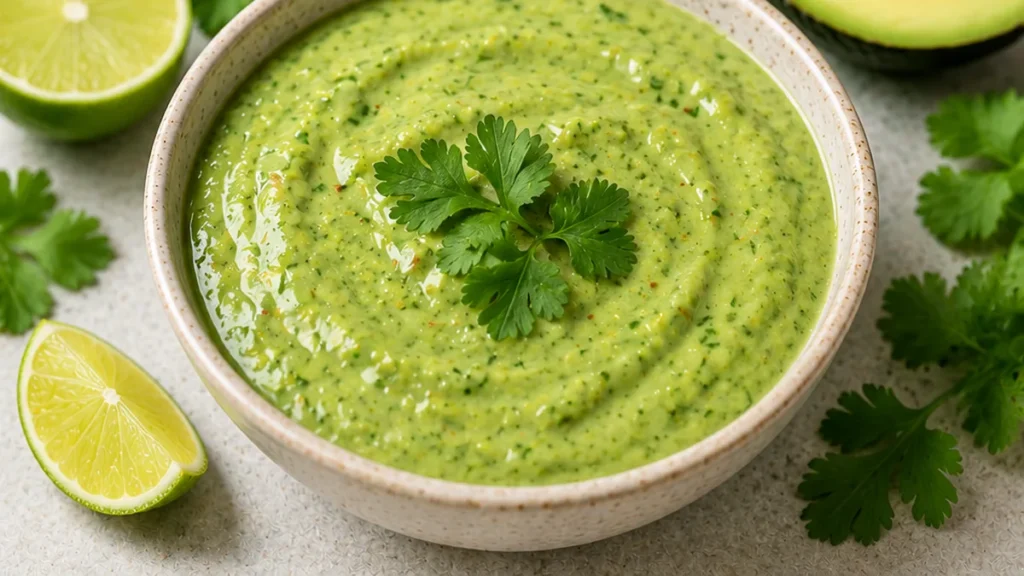
This easy avocado sauce is the perfect flavor enhancer for any meal. It’s incredibly simple to make and adds a burst of freshness and creaminess that improves everything from tacos to grilled vegetables. If you’re looking for a quick, healthy, and delicious sauce, this avocado herb blend is your new go-to. Packed with healthy fats from the avocado and bright, fresh flavor from fresh herbs and lime, this sauce is as good for you as it is tasty. It’s versatile enough for weeknight dinners and impressive enough for entertaining.
Key takeaways
- The creaminess of avocado sauce comes from its natural fats and proper emulsification.
- Blend liquids and avocado thoroughly on high speed for a smooth texture.
- Adjust seasonings and ingredients to fix common issues like bitterness or separation.
- Experiment with substitutions for oil, citrus, herbs, and garlic to customize the flavor.
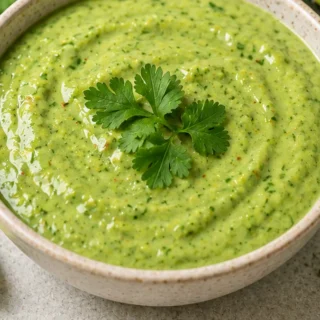
Creamy Avocado Cilantro Sauce Recipe
Ingredients
- 1/4 cup olive oil or avocado oil
- 1/4 cup lime juice
- 1 cup fresh herbs, roughly chopped (mix of parsley and cilantro)
- 1-2 cloves garlic
- 1 medium avocado, peeled pitted and cut in half
- 1/2 tsp sea salt
- 1/4 tsp crushed red pepper flakes
Instructions
- In a small food processor or blender, combine the olive oil, lime juice, fresh herbs, garlic cloves, avocado, sea salt, and crushed red pepper flakes.
- Pulse several times until the desired consistency is achieved, either chunky or completely smooth.
- Taste and adjust seasoning if necessary, adding more salt or red pepper flakes.
- Serve immediately with grilled meats and/or veggies, as a vibrant dressing for a salad, or as a delicious chip dip.
Notes
– To store, press plastic wrap directly onto the surface of the sauce to prevent browning and refrigerate for up to 2 days.
– Add a splash of water if the sauce is too thick for your liking. Nutrition information is an estimate, calculated automatically. Values vary with brands, substitutions and portion sizes.
The technique that makes it
The key to a truly creamy and emulsified avocado sauce lies in the blending process and the order of ingredients. The high fat content of the avocado provides the luxurious texture, but it needs the help of the liquid ingredients and proper blending to achieve a smooth consistency. Starting with the liquids – olive oil (or avocado oil for a neutral flavor) and lime juice – along with the garlic and salt, allows the blender blades to begin breaking down these components. Adding the herbs and then the avocado creates a thick mixture. It’s crucial to blend on a high speed, allowing sufficient time for the ingredients to fully incorporate and for the avocado’s natural fats to meld with the oil and lime juice. This creates a stable emulsion, preventing the sauce from separating and ensuring that characteristic velvety mouthfeel. If the sauce is too thick, a tablespoon of water can be added, but it’s best to add it gradually to avoid diluting the flavor and texture. The lecithin present in avocado also acts as a natural emulsifier, further contributing to the sauce’s stability when blended correctly.
Troubleshooting
- Problem: Sauce is too thin.
Fix: Ensure you used a ripe, firm avocado. If it’s overripe, it can be watery. For a thicker sauce, add a bit more avocado, or let it sit in the refrigerator for 30 minutes to firm up as the fats solidify. You can also try adding a few ice cubes while blending, which will thicken it as they melt slightly and chill the mixture. - Problem: Sauce is bitter or has an off-flavor.
Fix: This can happen if the garlic is too strong or if the herbs are not fresh. Use fresh, bright herbs and consider blanching the garlic briefly in hot water for 30 seconds before adding it to mellow its bite. Alternatively, reduce the amount of garlic in future batches. - Problem: Sauce is separating.
Fix: This indicates a failure to emulsify properly. Try re-blending the sauce, starting with the liquids at the bottom of the blender. If that doesn’t work, add a small amount (1/4 teaspoon) of xanthan gum or a tiny bit more oil and blend again on high speed. - Problem: Sauce is bland.
Fix: The flavor balance might be off. Taste and adjust seasoning with more sea salt, lime juice for brightness, or a pinch more red pepper flakes for heat. Freshness is key; ensure your herbs are bright.
Substitutions
- Oil: While olive oil or avocado oil are recommended for their neutral flavor and healthy fats, you can experiment with other oils. Grapeseed oil or sunflower oil will provide a similar neutral base. Coconut oil, while adding healthy fats, will impart a distinct coconut flavor, which may or may not be desirable depending on the dish.
- Lime Juice: Lemon juice is a direct substitute for lime juice, offering a similar acidic brightness. The flavor profile will be slightly different, but the emulsifying properties remain. Other vinegars like apple cider vinegar or white wine vinegar can be used, but they will alter the taste more significantly and might require adjusting the quantity to achieve the desired tang.
- Herbs: While cilantro and parsley offer a classic fresh flavor, other leafy green herbs can be used. Mint can add a refreshing twist, especially for lighter dishes. Basil provides a sweeter, more aromatic note. A combination of dill and chives can also work for a different savory profile.
- Garlic: For a milder garlic flavor, roasted garlic cloves can be used. A small shallot can also be substituted for garlic, offering a milder, slightly sweeter allium taste. For a completely different flavor profile, consider adding a small piece of fresh ginger.
Pro tips
- For a smoother sauce, blend for an extra 30 seconds.
- To store, press plastic wrap directly onto the surface of the sauce to prevent browning and refrigerate for up to 2 days.
- Add a splash of water if the sauce is too thick for your liking.
Experiment with this versatile avocado sauce and discover your favorite ways to enjoy it!
More from Vegan Bowls →
Frequently asked questions
How do I make avocado sauce less spicy?
To reduce the spice level, simply omit the crushed red pepper flakes entirely. If you’ve already made the sauce and it’s too spicy, you can try diluting the flavor by adding more avocado, a little more oil, or a touch more lime juice. Blending in a small amount of plain yogurt or sour cream can also help mellow the heat.
Can I make avocado sauce ahead of time?
Yes, avocado sauce can be made ahead of time. To prevent browning, press a piece of plastic wrap directly onto the surface of the sauce, ensuring no air is trapped. Store it in an airtight container in the refrigerator for up to 2-3 days. The lime juice also helps to preserve its bright green color.
What is the best way to store leftover avocado sauce?
Store any leftover avocado sauce in an airtight container in the refrigerator. For best results and to minimize oxidation (browning), place a piece of plastic wrap directly on the surface of the sauce before sealing the container. This creates a barrier against air exposure, helping to maintain its fresh green color and flavor for a few days.
Why is my avocado sauce turning brown?
Avocado sauce turns brown due to oxidation, a natural process that occurs when the avocado flesh is exposed to air. The high fat content makes it susceptible. Using fresh ingredients, adequate lime juice, and proper storage techniques like covering the surface directly with plastic wrap can significantly slow down this browning process.