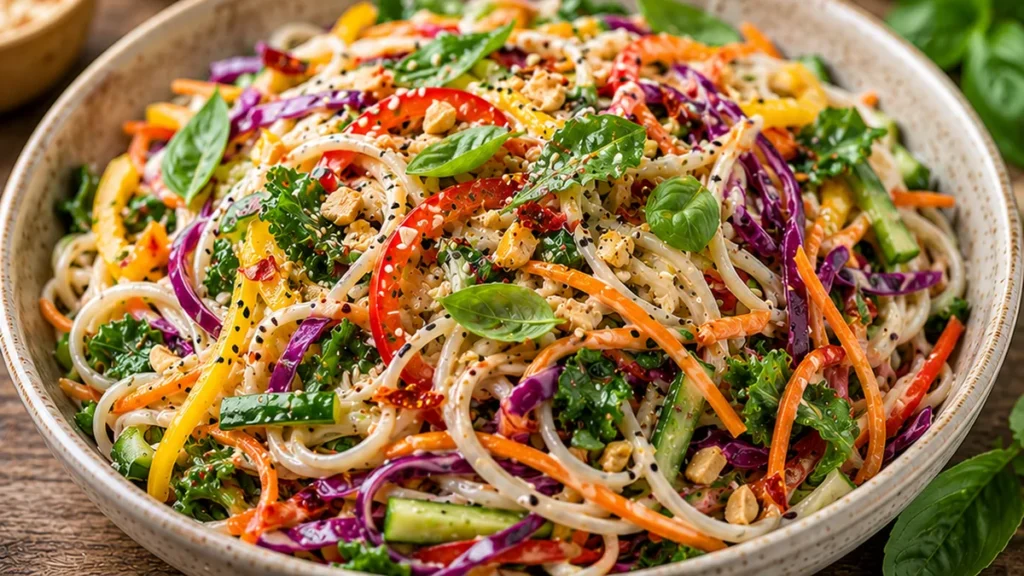
This Thai noodle salad is a celebration of bright colors and fresh flavors, perfect for a light and satisfying meal. The combination of tender rice noodles, crisp vegetables, and a tangy sesame vinaigrette creates a dish that is both visually stunning and incredibly delicious. It’s a quick and easy recipe that brings the taste of Thailand right to your table. Ideal for weeknight dinners or a healthy lunch option, this Thai noodle salad recipe is designed to be customizable. Feel free to add your favorite protein or adjust the spice level to your preference. The star of the show is the beautifully balanced vinaigrette, which coats every strand of noodle and piece of vegetable in pure flavor.
Key takeaways
- Properly cooking and rinsing rice noodles prevents stickiness.
- A well-emulsified dressing is key for even flavor distribution.
- Adjust dressing ingredients to taste for optimal balance.
- Fresh, crisp vegetables enhance the salad's texture.
Rainbow Thai Basil Noodle Salad
Ingredients
- 1/3 cup Simple Truth Tahini (sesame seed paste)
- 2 tablespoons honey
- juice and zest of 1 lime
- 2 tablespoons fish sauce
- 1 clove garlic, minced or grated
- 1 tablespoon fresh ginger, grated
- 1 (8 ounce box) rice noodles
- 4 cups baby kale, finely chopped
- 1 (16 ounce bag) frozen shelled edamame, thawed
- 3 carrots, shredded or chopped
Instructions
- Combine tahini, honey, lime juice, lime zest, fish sauce, minced garlic, and grated ginger in a mason jar for the vinaigrette.
- Seal the jar and shake vigorously until the vinaigrette is well combined.
- Cook rice noodles according to package directions until al dente.
- Drain the cooked noodles and rinse thoroughly under cold running water.
- Transfer the cooled noodles to a large salad bowl.
- Add the finely chopped baby kale, thawed edamame, and shredded carrots to the bowl.
- Drizzle the prepared sesame vinaigrette over the salad ingredients.
- Toss all ingredients gently to combine evenly. Serve immediately or chill.
Notes
The technique that makes it
The key to a successful Rainbow Thai Basil Noodle Salad lies in properly preparing the rice noodles and achieving the right emulsion for the dressing. Rice noodles, when cooked, can easily become sticky and clump together. To prevent this, it’s crucial to cook them just until al dente, following the package instructions precisely. Overcooking will result in mushy noodles. Immediately after draining, rinse the noodles thoroughly under cold running water. This step stops the cooking process and washes away excess starch, which is the primary culprit for stickiness. Tossing the rinsed noodles with a tiny amount of neutral oil, like vegetable or canola, can further prevent them from adhering to each other while you prepare the other components.
The dressing is a bright blend of tahini, honey, lime, fish sauce, garlic, and ginger. For the best flavor and texture, it needs to be properly emulsified. Tahini, being a paste, can sometimes separate. Whisking it vigorously with the lime juice, honey, and other liquid ingredients helps to break down the tahini and create a smooth, cohesive sauce. If the dressing seems too thick, a tablespoon or two of water can be added gradually until the desired consistency is reached. This emulsion ensures that every strand of noodle and every piece of vegetable is coated evenly with the flavorful dressing, integrating all the components into a harmonious dish.
Troubleshooting
- Problem: Noodles are sticky and clumped.
Fix: Ensure noodles were cooked al dente, rinsed thoroughly under cold water immediately after draining, and tossed with a small amount of neutral oil. Re-rinsing and tossing with oil can help salvage slightly clumpy noodles. - Problem: Dressing is too thick or separated.
Fix: Gradually whisk in water, one tablespoon at a time, until a smooth, pourable consistency is achieved. If separated, vigorous whisking should re-emulsify it. Ensure tahini is well-stirred before measuring. - Problem: Salad lacks flavor or is too bland.
Fix: Taste the dressing before tossing. Adjust seasoning by adding more fish sauce for saltiness and umami, lime juice for brightness, or honey for sweetness. A pinch of salt can also enhance overall flavor. - Problem: Vegetables are not crisp.
Fix: Ensure vegetables are fresh and properly prepped. If using pre-shredded carrots, they might be less crisp. For maximum crunch, shred carrots just before assembling and ensure edamame is fully thawed and not waterlogged.
Substitutions
- Tahini: If tahini is unavailable, smooth peanut butter or almond butter can be used, though it will alter the flavor profile significantly, leaning more towards a peanut sauce. The texture might also be slightly different.
- Fish Sauce: For a vegetarian or vegan option, soy sauce or tamari can be substituted. Use a slightly smaller amount initially, as soy sauce can be saltier. Coconut aminos offer a milder, sweeter alternative.
- Honey: Maple syrup or agave nectar are excellent vegan substitutes for honey, providing similar sweetness without altering the flavor profile drastically. Ensure the liquid sweetener is fully incorporated into the dressing.
- Rice Noodles: Any thin pasta, such as spaghetti or linguine, can be used in a pinch, though they will not provide the traditional gluten-free aspect or the same texture. Cook according to package directions and rinse well.
Pro tips
- For extra crunch, add chopped peanuts or cashews.
- Add grilled chicken, shrimp, or tofu for a complete protein meal.
- Adjust the lime juice and fish sauce to achieve your preferred tangy-salty balance.
- If you don’t have tahini, peanut butter can be substituted, though the flavor will differ.
Enjoy this refreshing and flavorful Thai noodle salad. It’s a versatile dish that’s sure to become a favorite.
More from Vegan Bowls →
Frequently asked questions
How to make rainbow Thai basil noodle salad ahead of time?
To make this salad ahead, prepare the noodles and chop all the vegetables, storing them separately in airtight containers in the refrigerator. Keep the dressing separate as well. Combine everything just before serving to prevent the noodles from becoming soggy and to maintain the freshness of the ingredients. Add the Thai basil last for optimal flavor.
What can I substitute for Thai basil in this noodle salad?
If you can’t find Thai basil, regular basil is a good substitute, though it will offer a different flavor profile. Mint can also be used for a refreshing twist. For a hint of anise flavor similar to Thai basil, try a combination of basil and a small amount of fresh tarragon or fennel fronds.
How long does rainbow Thai basil noodle salad last in the fridge?
This salad is best enjoyed fresh, but leftovers can be stored in an airtight container in the refrigerator for up to 2 days. It’s recommended to store the dressing separately to maintain the texture of the noodles and vegetables. The flavors may meld over time, so give it a good stir before eating.
What noodles are best for Thai basil noodle salad?
Rice noodles, such as vermicelli or pad thai noodles, are ideal for this salad as they absorb the dressing well and have a pleasant chewy texture. Ensure they are cooked al dente according to package directions to prevent them from becoming mushy. Rinse them under cold water after draining to stop the cooking process.