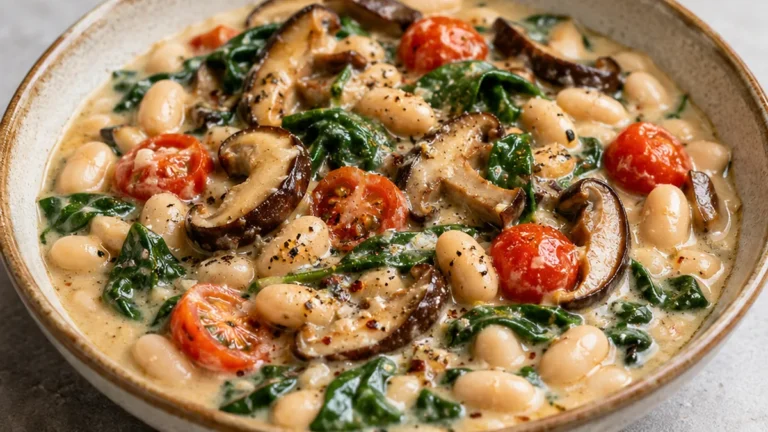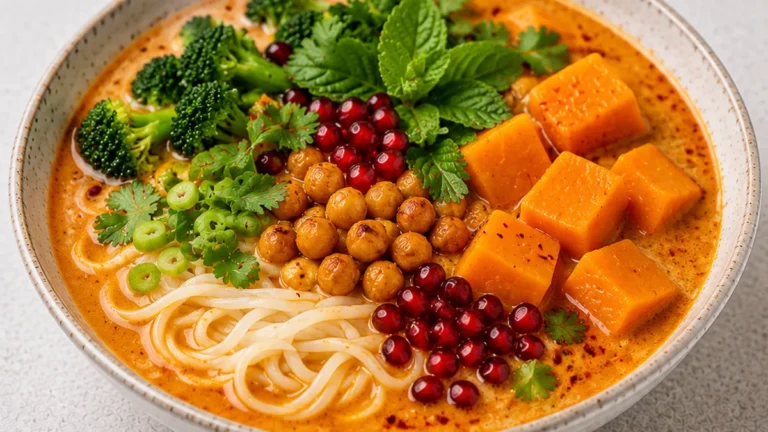
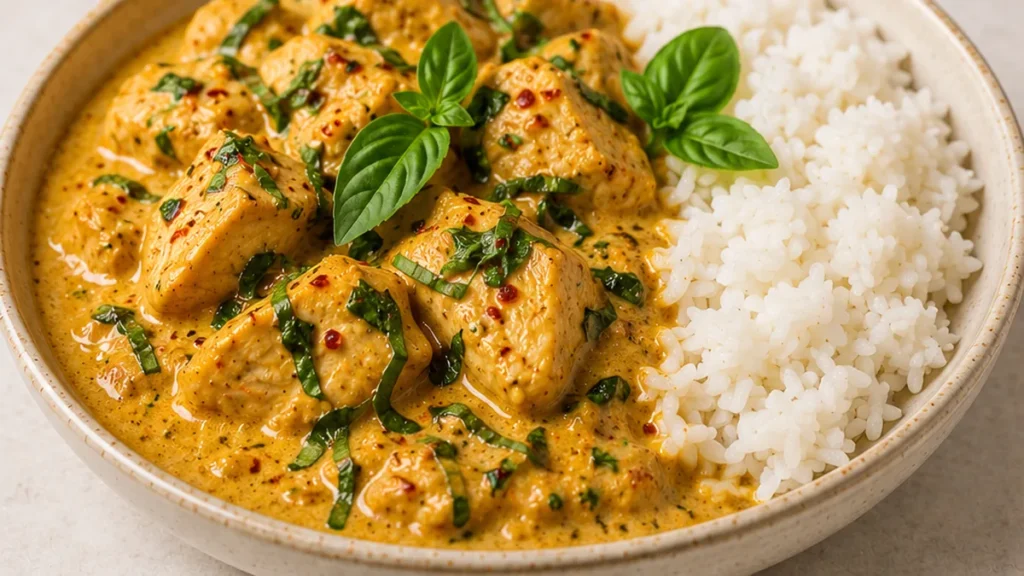
This Almond Chicken Curry is the ultimate weeknight comfort food, offering a delightful balance of creamy, savory, and slightly spicy flavors. It’s remarkably easy to prepare, making it perfect for busy evenings when you crave something delicious without the fuss. Featuring tender pieces of chicken, hearty chickpeas, soft eggplant, earthy mushrooms, and burst cherry tomatoes, all enveloped in a luscious almond-coconut sauce, this dish is a true crowd-pleaser. The subtle nuttiness from the almond milk and almond butter adds a unique depth that rounds out it beyond a typical curry.
Key takeaways
- Achieve a flavorful almond chicken curry by properly searing the chicken and gently simmering the sauce.
- Avoid boiling almond milk to prevent separation and ensure a smooth texture.
- Adjust simmering time to reach your desired sauce consistency.
- Substitutions like cashew milk or chicken thighs can alter richness and flavor profiles.
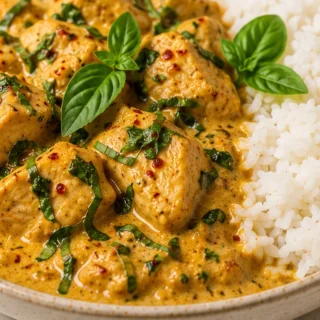
Almond Chicken Curry: Creamy & Easy Recipe
Ingredients
- 2 cups unsweetened almond milk
- 1 cup jasmine rice
- 1 tablespoon fresh ginger, grated
- 2 tablespoons fresh basil, chopped
- 2 tablespoons olive oil
- 1 pound boneless skinless chicken breast, cut into bite-size pieces
- 1/4 cup coconut oil
- 1 large eggplant, cut into cubes
- 8 ounces button mushrooms, sliced
- 1 cup cherry tomatoes
Instructions
- Cook the rice: Combine rice, 1 cup almond milk, salt, grated ginger, and 1 tbsp coconut oil (optional) in a pot. Bring to a low boil, then reduce heat to lowest setting, cover, and cook for 10 minutes. Turn off heat and let sit, covered, for 20 minutes. Fluff with a fork.
- Brown the chicken: Heat 1 tbsp olive oil in a large skillet over medium-high heat. Add chicken pieces and sauté until browned and cooked through, about 5-10 minutes. Remove chicken and set aside.
- Sauté vegetables: Add 2 tbsp coconut oil to the same skillet. Add cubed eggplant and sauté for 3-4 minutes. Toss in sliced mushrooms, cherry tomatoes, more ginger, and garlic (if using). Sauté for another 5 minutes until vegetables begin to soften and tomatoes burst.
- Add spices and chicken: Return the browned chicken to the skillet. Stir in curry powder, curry paste, and chile de arbol or fresno pepper. Cook for 1 minute.
- Create the sauce: Pour in the remaining 1 cup almond milk and almond butter. Stir to combine, bring to a boil, and cook for 5 minutes, or until the sauce thickens slightly.
- Finish and serve: Remove from heat. Stir in the chickpeas, chopped basil, and cilantro. Serve the creamy curry over the fluffy cooked rice.
Notes
The technique that makes it
The success of this Almond Chicken Curry hinges on two key techniques: proper browning of the chicken and the gradual development of flavor in the aromatics and vegetables. First, when searing the chicken pieces, ensure the pan is sufficiently hot and avoid overcrowding. Overcrowding will steam the chicken rather than brown it, leading to a less flavorful and potentially tougher texture. Achieving a good sear creates the Maillard reaction, which is responsible for browning and developing complex savory notes. Let the chicken cook undisturbed for a few minutes on each side until golden brown. Remove the chicken and set aside to prevent overcooking.
Next, the foundation of the curry’s flavor comes from sautéing the ginger and then the vegetables. Start with the coconut oil, which has a higher smoke point and adds a subtle tropical note. Add the grated ginger and cook until fragrant, being careful not to burn it. Follow with the eggplant and mushrooms. Cook these until they begin to soften and release their moisture. This process concentrates their flavor and improves their texture. Finally, adding the cherry tomatoes towards the end allows them to burst and create a light, fresh sauce component that complements the richness of the almond milk and coconut oil.
The almond milk serves as the creamy base. It’s important to add it after the initial sautéing and allow it to simmer gently, rather than boil vigorously. High heat can cause almond milk to separate or curdle, resulting in an undesirable texture. Simmering allows the flavors to meld and the sauce to thicken slightly. Stirring in the fresh basil at the very end preserves its bright, herbaceous aroma and flavor.
Troubleshooting
- Problem: Curry is too thin. Fix: Simmer the curry uncovered for an additional 5-10 minutes to allow excess liquid to evaporate and the sauce to thicken. You can also create a slurry of 1 tablespoon cornstarch mixed with 2 tablespoons cold water, then stir it into the simmering curry until thickened.
- Problem: Chicken is tough. Fix: This usually happens from overcooking or searing at too low a temperature. Ensure chicken is cut into uniform, bite-size pieces and seared quickly over medium-high heat until just cooked through. Avoid boiling the chicken in the sauce for extended periods.
- Problem: Sauce is separating or curdling. Fix: This is often due to aggressive boiling of the almond milk. Ensure the curry is kept at a gentle simmer, not a rolling boil, especially after adding the almond milk. Stirring frequently can also help maintain emulsion.
- Problem: Lack of flavor. Fix: Ensure you’ve properly browned the chicken and sautéed the ginger and vegetables until softened and slightly caramelized. Taste and adjust seasoning with salt, pepper, or a pinch of curry powder if needed before serving.
Substitutions
- Almond Milk: Unsweetened cashew milk or full-fat canned coconut milk can be used for a creamier, richer sauce. Oat milk is another option, but it may result in a thinner consistency.
- Chicken Breast: Boneless, skinless chicken thighs offer more flavor and moisture, though they may require slightly longer cooking time. Firm tofu or chickpeas can be used for a vegetarian/vegan option.
- Eggplant: Zucchini or sweet potatoes are good substitutes. Zucchini will cook faster, while sweet potatoes will add a touch of sweetness and require longer simmering to become tender.
- Jasmine Rice: Basmati rice, brown rice, or quinoa are suitable alternatives. Adjust cooking times according to package directions.
Pro tips
- For a vegan version, omit the chicken and use extra chickpeas or tofu.
- Adjust spice level by modifying the amount of chili pepper.
- Ensure the almond milk is unsweetened for the best flavor balance.
- Add other vegetables like spinach or bell peppers for extra nutrition.
Enjoy this simple yet incredibly satisfying Almond Chicken Curry. It’s a flavorful dish that’s sure to become a family favorite.
More from blog →
Frequently asked questions
Can I make almond chicken curry ahead of time?
Yes, this almond chicken curry can be made a day or two in advance. The flavors meld beautifully overnight. Reheat gently on the stovetop or in the microwave. You may need to add a splash of water or vegetable broth if it becomes too thick.
What can I serve with almond chicken curry?
This curry pairs wonderfully with steamed basmati rice or fluffy quinoa. For a more complete meal, consider serving it with naan bread for dipping, a side of cucumber raita, or a simple green salad with a light vinaigrette.
How do I store leftover almond chicken curry?
Allow the curry to cool completely before transferring it to an airtight container. Store it in the refrigerator for up to 3-4 days. Ensure it is properly sealed to maintain freshness and prevent contamination.
Can I substitute the chicken in this curry?
Absolutely. For a vegetarian or vegan version, substitute firm tofu, tempeh, or chickpeas for the chicken. Ensure tofu is pressed to remove excess water. Adjust cooking time as needed for these alternatives to heat through properly.