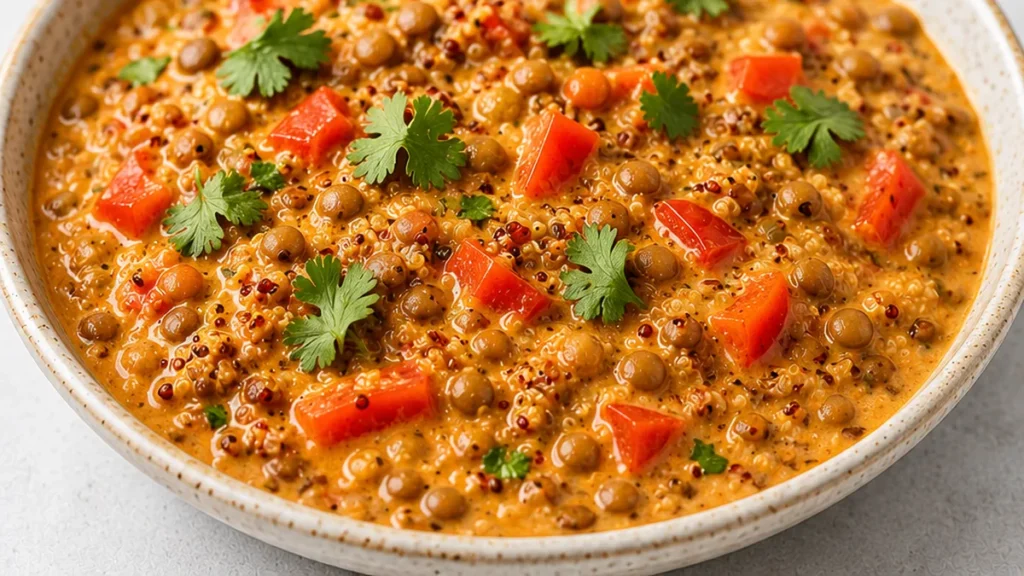
This simple coconut quinoa and lentil curry with lime mango is the perfect weeknight meal for anyone seeking a healthy, flavorful, and bright dish. It combines the creamy richness of coconut milk with hearty lentils and fluffy quinoa, brightened by tropical mango and zesty lime. Ideal for both beginners and experienced cooks, this lentil curry recipe offers a delightful balance of sweet, savory, and spicy notes. It’s a satisfying plant-based option that proves healthy eating can be incredibly delicious and visually appealing.
Key takeaways
- Toast spices before adding liquid to deepen flavor.
- Simmer uncovered to thicken, or add a slurry.
- Add more liquid to thin a thick curry.
- Adjust seasonings at the end for optimal taste.
Creamy Coconut Lentil & Quinoa Curry
Ingredients
- 2 tablespoons coconut oil
- 2 red bell peppers (chopped)
- 2-3 carrots (chopped)
- 2 cloves garlic (minced or grated)
- 1 tablespoon fresh ginger (grated)
- 2-3 tablespoons thai red curry paste
- 1 tablespoon curry powder
- 1 (14 ounce) can full fat coconut milk
- 4 cups coconut water OR vegetable broth OR water
- 1 tablespoon fish sauce or soy sauce if vegan
Instructions
- Heat the coconut oil in a large pot over medium heat. Add red bell peppers and carrots, cook for 2-3 minutes until lightly charred. Add garlic and ginger, cook for 30 seconds until fragrant.
- Stir in the Thai red curry paste and curry powder, cooking for another minute until aromatic.
- Slowly pour in the coconut milk, coconut water (or broth/water), and fish sauce (or soy sauce). Stir to combine and bring to a boil.
- Stir in the lentils and quinoa. Reduce heat to a simmer, cover, and cook for 20-25 minutes until lentils are tender and quinoa is soft.
- Stir in kale and cook uncovered for another 5 minutes. Remove from heat and stir in lemon juice & zest, cilantro, and basil.
- Ladle curry into bowls. Top with fresh mango, a drizzle of lime juice, and optional garnishes like Greek yogurt, chilies, and almonds. Serve with naan. Enjoy!
Notes
The technique that makes it
The trick to this creamy coconut lentil and quinoa curry lies in the careful layering of flavors and textures. The foundation is built by sautéing the aromatics – garlic and ginger – in coconut oil until fragrant. This process, known as blooming, releases their volatile oils and intensifies their flavor. Following this, the red bell peppers and carrots are added. Cooking them until they begin to soften allows their natural sweetness to develop and integrate into the base. The crucial step is then toasting the curry pastes and powders. Gently cooking these spices for a minute or two before adding liquid toasts them, deepening their flavor profile and removing any raw taste. This is key to a well-rounded curry. The full-fat coconut milk provides richness and a creamy base, while the coconut water (or broth/water) controls the consistency. Lentils and quinoa are then simmered until tender, absorbing the complex flavors of the broth. The final addition of fish sauce or soy sauce provides a crucial umami depth that balances the sweetness of the coconut and vegetables.
Troubleshooting
- Failure: Curry is too thin. Fix: Simmer uncovered for an additional 10-15 minutes to allow excess liquid to evaporate. Alternatively, you can create a slurry with 1 tablespoon of cornstarch or arrowroot powder mixed with 2 tablespoons of cold water, then stir it into the simmering curry until thickened.
- Failure: Curry is too thick. Fix: Gradually stir in more coconut water, vegetable broth, or water, a quarter cup at a time, until the desired consistency is reached.
- Failure: Lentils are still hard. Fix: Ensure the lentils are fully submerged in liquid and continue simmering. If the liquid has evaporated, add more and cover the pot. Different types of lentils have varying cooking times; red lentils cook fastest.
- Failure: Curry lacks depth of flavor. Fix: Taste and adjust seasonings. You may need more curry paste, curry powder, salt, or a splash of lime juice for brightness. Ensure the fish sauce or soy sauce was added for umami.
Substitutions
- Coconut Oil: Olive oil or any neutral cooking oil can be used, though coconut oil adds a subtle tropical note that complements the other ingredients. The result will be similar in texture but may have a slightly different flavor profile.
- Red Bell Peppers: Yellow or orange bell peppers can be substituted. The color will change, but the sweetness and texture will be comparable.
- Coconut Water: Vegetable broth or water are excellent substitutes. Vegetable broth will add more savory depth, while water will result in a lighter flavor. The creaminess from the coconut milk will still be prominent.
- Fish Sauce/Soy Sauce: Tamari or a pinch of salt can be used if avoiding fish sauce or soy sauce. Tamari offers a similar umami boost. A pinch of salt will enhance overall flavor but won’t provide the same specific umami complexity.
Pro tips
- Use full-fat coconut milk for the creamiest texture.
- Adjust the amount of curry paste to your spice preference.
- For a vegan version, ensure you use soy sauce instead of fish sauce.
This bright lentil curry is a versatile dish; feel free to add other vegetables or spices to make it your own. Enjoy this taste of tropical paradise!
More from Vegan Bowls →
Frequently asked questions
Can I use brown rice instead of quinoa in lentil curry?
Yes, you can substitute brown rice for quinoa. Adjust the cooking liquid and time accordingly, as brown rice typically requires more liquid and a longer simmer. Ensure the rice is fully cooked and tender before serving with the lentil curry. The texture will be different but still delicious.
How to make coconut lentil curry ahead of time?
This curry can be made up to 3 days in advance. Store it in an airtight container in the refrigerator. The flavors meld and deepen overnight, making it even tastier. Reheat gently on the stovetop or in the microwave, adding a splash of water or broth if it has thickened too much.
What to serve with lentil quinoa curry?
Serve this creamy curry with steamed basmati rice, naan bread, or roti for scooping. A side of fresh cilantro, a dollop of vegan yogurt, or a squeeze of lime juice adds a bright contrast. For a more substantial meal, consider serving it alongside roasted vegetables or a simple green salad.
How long does lentil quinoa curry last in the fridge?
Leftover lentil quinoa curry will keep well in an airtight container in the refrigerator for up to 4 days. Ensure it has cooled completely before storing. When reheating, do so gently over low heat, stirring occasionally, or use the microwave. It tastes even better the next day.