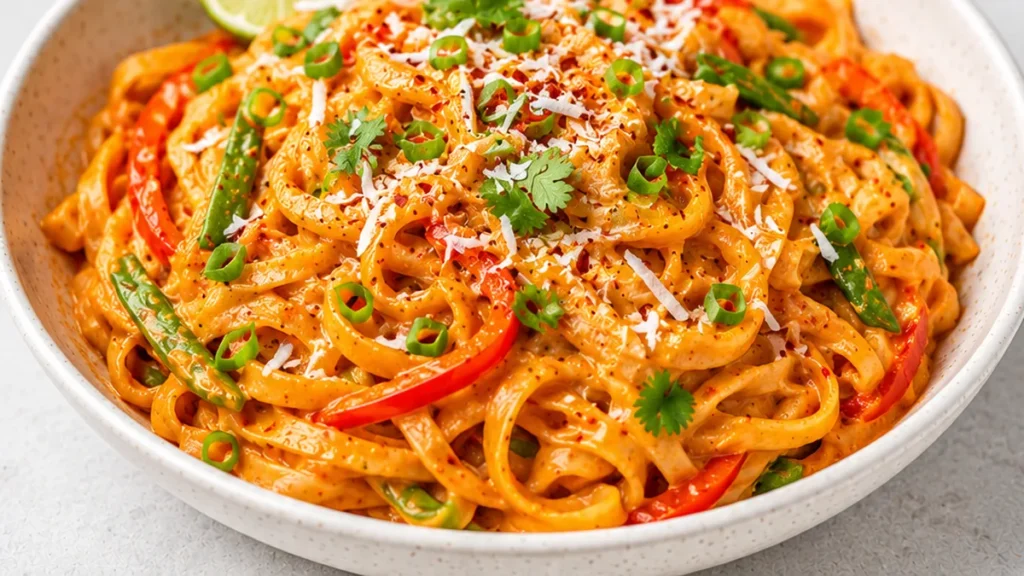
The quest for a fast, flavourful weeknight meal often leads to delicious discoveries, and this Red Curry Noodles recipe is a prime example. In just 20 minutes, you can create a dish that’s both comforting and exciting, featuring the bold tastes of Thai red curry balanced by creamy coconut milk. This recipe is perfect for busy evenings when you crave something special without the time commitment. We’ve optimized this Red Curry Noodles recipe for speed and ease, ensuring that even novice cooks can achieve restaurant-quality results. The key is the quick infusion of flavors and the delightful contrast between tender noodles and crispy toppings.
Key takeaways
- Blooming the red curry paste in hot oil is essential for unlocking its full flavor.
- Full-fat coconut milk creates a richer, creamier sauce.
- Properly cooking and rinsing rice noodles prevents them from becoming gummy.
- Adjusting lime, soy sauce, and salt at the end balances the final dish.
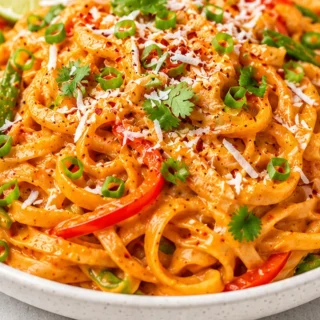
20 Min Red Curry Noodles
Ingredients
- 8 ounces rice noodles
- 4 tablespoons sesame oil
- 6-8 cloves garlic, finely chopped
- 3 tablespoons finely shredded coconut
- 1 teaspoon flaky salt
- 2 zucchini or summer squash diced
- 1 tablespoon fresh grated ginger
- 2-3 tablespoons Thai red curry paste
- 1 (14 ounce) can full fat coconut milk
- 1 tablespoon low sodium soy sauce or tamari
- 1 tablespoon lime juice
- 1/4 cup fresh basil leaves, chopped
- 1/2 cup thinly sliced red bell pepper
Instructions
- Cook rice noodles according to packaged directions.
- Heat the sesame oil in a large skillet over medium heat. Add the garlic and cook until golden, about 3 minutes. Stir in the coconut and cook until the garlic is crisp and the coconut is toasted, about 2 minutes. Spoon the mix out of the skillet and drain onto a paper towel, season with salt.
- Return the skillet to medium heat. Add the zucchini and red bell pepper and cook 2-3 minutes until softened. Stir in the curry paste and ginger and cook until fragrant, about 1 minute.
- Pour in the coconut milk, 1/3 cup water, soy sauce, and honey. Stir to combine, bring the mixture to a boil, cook 5 minutes or until the sauce thickens slightly. If the sauce thickens too much, add additional water to thin.
- Remove from the heat and stir in the lime juice and basil.
- To serve, divide the noodles and sauce between bowls. Top with the fried garlic and coconut mixture.
Notes
The technique that makes it
The key to a fresh and well-emulsified red curry noodle dish lies in how you build the sauce and cook the noodles. For the noodles, it’s crucial to follow package directions precisely. Overcooked rice noodles become gummy and unpleasant, while undercooked ones remain hard. Typically, this involves boiling water, adding the noodles, and cooking for a short period, then draining immediately. Rinsing with cold water after draining can prevent them from sticking together and overcooking from residual heat. For the sauce, the technique involves blooming the red curry paste in hot sesame oil. This process, known as ‘blooming,’ awakens the spices and aromatics in the paste, releasing their full flavor and fragrance. Sautéing the garlic and ginger briefly in the same oil before adding the curry paste further enhances their taste. Once the paste is fragrant, adding the shredded coconut and toasting it lightly adds a subtle nutty depth. Then, incorporating the full-fat coconut milk and simmering gently allows the flavors to meld. The full-fat variety is essential for a rich, creamy sauce that holds its texture. Adding the soy sauce (or tamari) and lime juice at the end preserves their distinct flavors and brightness, preventing them from cooking off. Finally, tossing the drained noodles directly into the simmering sauce ensures they are evenly coated and absorb the delicious flavors.
Troubleshooting
- Failure: Sauce is too thin. Fix: Simmer the sauce uncovered for a few extra minutes to allow some of the liquid to evaporate, concentrating the flavors and thickening the consistency. You can also whisk in a teaspoon of cornstarch mixed with a tablespoon of water (a slurry) and simmer for another minute.
- Failure: Curry paste is too spicy. Fix: If the dish is too hot, you can temper the spice by adding a bit more coconut milk to dilute it. A touch of sweetener, like a teaspoon of sugar or honey, can also help balance the heat.
- Failure: Noodles are clumpy. Fix: Ensure you rinse the rice noodles thoroughly with cold water immediately after draining. Toss them with a small amount of sesame oil before adding them to the sauce to prevent sticking.
- Failure: Flavors are flat. Fix: Re-evaluate the seasoning. Add more lime juice for brightness, soy sauce/tamari for umami, or a pinch more salt. Ensure the curry paste was bloomed properly in the oil to release its full aromatic potential.
Substitutions
- Rice noodles: Udon noodles or even spaghetti can be used. Udon will provide a chewier texture, while spaghetti will offer a more standard pasta experience. Adjust cooking times accordingly.
- Sesame oil: A neutral oil like canola or vegetable oil can be used for sautéing, but it will lack the distinct nutty flavor of sesame oil. For a richer flavor, a blend of vegetable oil and a smaller amount of toasted sesame oil can be used.
- Thai red curry paste: If unavailable, a good quality green or yellow curry paste can be substituted. The flavor profile will change significantly, with green curry being more herbaceous and yellow curry often having turmeric notes. Adjust spice levels as needed.
- Full-fat coconut milk: Light coconut milk can be used, but the sauce will be thinner and less rich. For a dairy-free creamy alternative, cashew cream or a thick, unsweetened oat milk can be explored, though these will alter the flavor.
Pro tips
- Use full-fat coconut milk for the creamiest sauce.
- Adjust the amount of red curry paste to your spice preference.
- For extra protein, add cooked chicken, shrimp, or tofu.
- Don’t skip the crispy fried coconut garlic topping; it adds amazing texture!
Enjoy this fresh and speedy Red Curry Noodles recipe that proves delicious meals don’t need hours to prepare. It’s a perfect dish to spice up any weeknight.
More from Vegan Bowls →
Frequently asked questions
Can I make red curry noodles ahead of time?
Yes, you can prepare the curry sauce and cook the noodles separately ahead of time. Store them in airtight containers in the refrigerator for up to 3 days. When ready to serve, reheat the sauce and cook the noodles just before combining to maintain the best texture and flavor.
What vegetables can I add to red curry noodles?
This recipe is versatile! Great additions include broccoli florets, snap peas, bell peppers (any color), sliced carrots, baby corn, or spinach. Add heartier vegetables like broccoli and carrots earlier in the cooking process, and leafy greens like spinach towards the end.
How to make red curry noodles spicier?
To increase the heat, add more red curry paste, a pinch of cayenne pepper, or a few sliced fresh chilies (like Thai bird’s eye chilies) to the sauce. You can also add a dash of your favorite hot sauce just before serving. Adjust gradually to your preferred spice level.
What to serve with 20 min red curry noodles?
These noodles are a complete meal on their own. For extra protein, consider adding baked tofu, pan-fried tempeh, or edamame. A sprinkle of chopped cilantro, fresh mint, or toasted sesame seeds adds freshness and texture. A lime wedge on the side is also a nice touch.