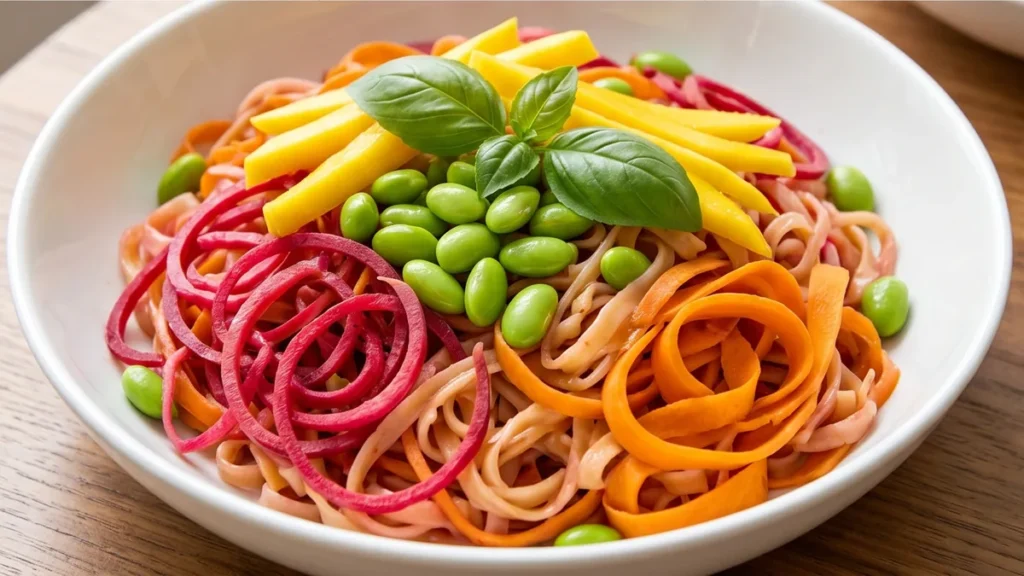
This Rainbow Veggie Pad Thai recipe is a visual and dish, perfect for anyone seeking a quick, healthy, and incredibly flavorful meal. It transforms the classic Thai dish into a bright canvas of fresh vegetables, sweet mango, and satisfying noodles. Forget bland weeknight dinners; this pad thai is bursting with color and texture, making it an exciting option for both solo meals and entertaining. It’s a fantastic way to incorporate a variety of nutritious ingredients into your diet without compromising on taste.
Key takeaways
- The key to perfect Pad Thai noodles is precise soaking to achieve a chewy, tender texture without mushiness.
- A balanced sauce is crucial, typically made with tamarind, fish sauce, and palm sugar.
- High-heat, rapid cooking is essential for noodles to absorb sauce and develop flavor.
- Vegetables and mango should be added at the end to maintain freshness and crunch.
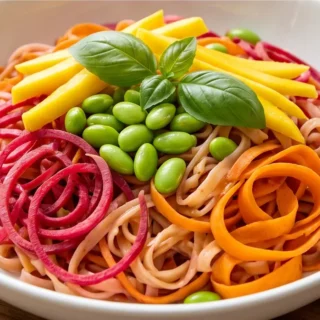
Craveable Rainbow Pad Thai Noodles!
Ingredients
- 1 ounce box pad thai noodles
- 1 medium beet (red and/or yellow, peeled)
- 1 sweet potato (peeled)
- 1 cup frozen edamame (thawed)
- 1 red or orange bell pepper (sliced thin)
- 2 carrots (cut into ribbons or matchsticks)
- 2 radishes (sliced thin)
- 1 mango (cut into matchsticks)
- 2 cups fresh basil leaves (roughly chopped)
- 1/2 cup roasted peanuts
Instructions
- Cook the pad thai noodles according to package directions until al dente. Drain and rinse with cold water to prevent sticking.
- Prepare the veggie noodles: spiralize the beet and sweet potato into thin strands. If no spiralizer, thinly slice bell peppers and cut sweet potatoes into thin matchsticks.
- Assemble the bowl: In a large serving bowl, combine the cooked pad thai noodles, beet noodles, sweet potato noodles, edamame, sliced bell pepper, carrot ribbons, sliced radishes, mango matchsticks, fresh basil, and roasted peanuts.
- Make the dressing: In a small bowl, whisk together the sauce ingredients (tamarind paste, soy sauce, lime juice, honey/maple syrup, garlic, ginger, chili flakes, peanut butter, and water) until smooth and well combined.
- Dress the salad: Pour the prepared dressing over the ingredients in the large bowl. Toss gently but thoroughly to ensure everything is evenly coated.
- Finish and serve: Just before serving, add fresh spinach or watercress and toss once more. Serve immediately and enjoy the vibrant flavors!
Notes
The technique that makes it
The key to achieving truly craveable Pad Thai lies in the careful preparation and cooking of the noodles and the sauce. Pad Thai noodles, typically made from rice flour and water, require precise rehydration to achieve the perfect chewy-tender texture. Over-soaking will result in mushy noodles that break apart easily, while under-soaking will leave them tough and unpleasantly firm. The traditional method involves briefly soaking the dried noodles in warm (not boiling) water until they are pliable but still have a slight bite, often referred to as ‘al dente’. They should be flexible enough to stir-fry without snapping. The sauce, a balance of sweet, sour, and savory, is crucial. A well-balanced Pad Thai sauce typically incorporates tamarind paste for its signature sourness, fish sauce for umami depth, and palm sugar for sweetness. The magic happens when this sauce is introduced to the hot wok with the partially cooked noodles. The high heat and rapid stirring allow the noodles to absorb the sauce quickly, coating them evenly and developing a slight caramelization without becoming sticky or clumping. This rapid cooking process, often called ‘wok hei’ in Chinese cuisine, imparts a subtle smoky flavor and ensures the noodles remain distinct yet thoroughly infused with the sauce’s complex profile. The bright vegetables and other additions are then tossed in at the last moment to retain their freshness and textural contrast.
Troubleshooting
- Noodles are mushy and breaking: This usually means they were soaked for too long or in water that was too hot. To fix this, try using cooler water and soaking for a shorter duration, checking for pliability frequently. If already mushy, gently separate them and incorporate them into the dish quickly to minimize further breakage.
- Noodles are tough and not absorbing sauce: They were likely under-soaked or the soaking water was too cool. Try returning them to warm water for a few more minutes, or if already in the pan, add a splash more water or sauce and stir gently over low heat to encourage softening.
- Sauce is too thick or too thin: If too thick, thin it with a tablespoon of water or broth at a time until desired consistency is reached. If too thin, simmer it gently in a separate pan for a few minutes to reduce and thicken, or thicken with a slurry of cornstarch and water (though this is less traditional).
- Dish is too salty/sweet/sour: Adjust the seasoning by adding a little more of the opposing flavor. For too salty, add a touch more sugar and lime juice. For too sweet, add more fish sauce or a squeeze of lime. For too sour, add more sugar.
Substitutions
- Pad Thai Noodles: For a gluten-free option, use brown rice noodles or even zucchini noodles (spiralized) for a lower-carb alternative. The texture will differ, with zucchini noodles being softer.
- Tamarind Paste: If tamarind paste is unavailable, a mix of lime juice and a touch of brown sugar can provide a similar sour-sweet balance, though the depth of flavor will be less complex.
- Fish Sauce: For a vegetarian or vegan version, use a good quality soy sauce or tamari, and consider adding a pinch of MSG or a dash of vegan Worcestershire sauce for added umami.
- Peanuts: Cashews or almonds, roughly chopped, can be used instead of peanuts for a similar crunchy texture, offering a slightly different nutty flavor profile.
Pro tips
- For extra crunch, toast your peanuts lightly before adding.
- Adjust chili flakes to your preferred spice level.
- If you don’t have a spiralizer, julienned or thinly sliced vegetables work beautifully.
- Use fresh lime juice for the best tangy flavor in the dressing.
Experience the joy of healthy eating with this stunning Rainbow Veggie Pad Thai. It’s a versatile dish that’s as fun to make as it is to eat!
More from Vegan Bowls →
Frequently asked questions
Can I make rainbow pad thai noodles ahead of time?
Yes, you can prepare most components of the rainbow pad thai noodles ahead. Cook the noodles and chop the vegetables separately. Store them in airtight containers in the refrigerator for up to 2 days. Toss everything together with the sauce just before serving to prevent sogginess. The sauce can also be made a day in advance.
What can I substitute for rice noodles in pad thai?
If you can’t find rice noodles, whole wheat spaghetti or linguine make a decent substitute. For a gluten-free option other than rice noodles, consider zucchini noodles or spaghetti squash. Adjust the cooking time accordingly to ensure they are al dente and not mushy when mixed with the sauce and other ingredients.
How do I store leftover rainbow pad thai noodles?
Store any leftover rainbow pad thai noodles in an airtight container in the refrigerator for up to 3 days. To reheat, gently warm them in a skillet over medium heat, adding a splash of water or vegetable broth if they seem dry. Avoid microwaving, as it can make the noodles gummy.
How do I know when pad thai noodles are done cooking?
Pad thai noodles are done when they are tender but still have a slight chew, or ‘al dente.’ They should not be mushy or hard. Typically, this takes about 5-8 minutes of boiling or stir-frying, depending on the thickness of the noodles. Taste a strand to check for the perfect texture.