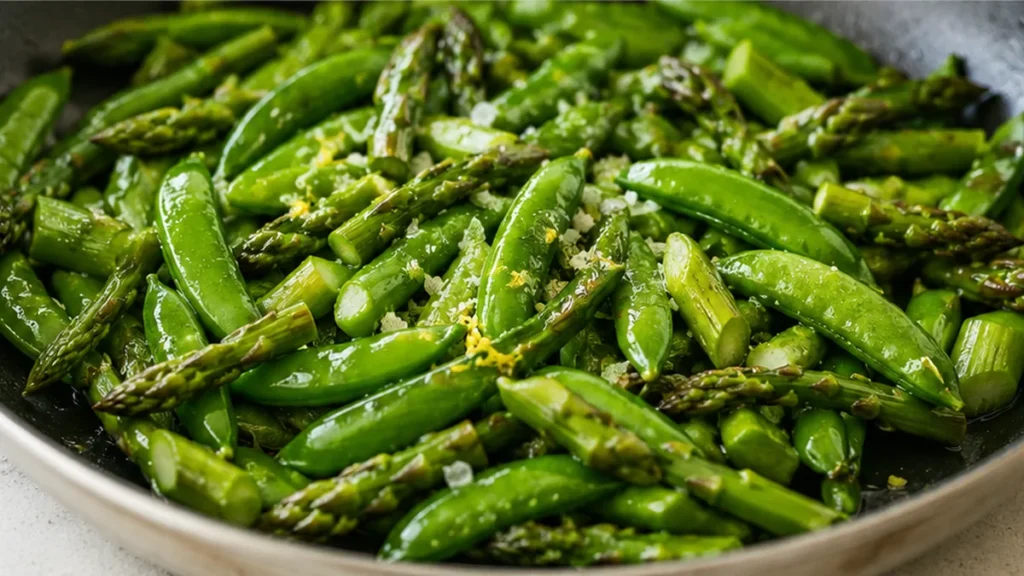
This asparagus sauté recipe is a testament to how simple ingredients can create extraordinary flavors. It’s a vibrant, tender-crisp side dish that perfectly complements almost any meal, making it an essential addition to your weeknight rotation. What truly makes this asparagus sauté special is its incredible speed and the bright, zesty finish from fresh lemon. Even on a busy weeknight with just a few minutes, high heat and a quick stir-fry keep the asparagus sauté perfectly tender-crisp, not soggy. This recipe is designed to bring that same effortless elegance to your table.
Key takeaways
- High heat is crucial for searing, not steaming.
- Cook quickly to maintain a crisp-tender texture.
- Add lemon zest and juice at the very end for maximum brightness.
- Avoid overcrowding the pan to ensure proper searing.
Quick & Crispy Asparagus Sauté
Ingredients
- 1 tablespoon olive oil
- 2 cups sugar snap peas
- 1 bunch asparagus, chopped
- 1/2 teaspoon kosher salt
- zest from 1 small lemon
- juice from 1 small lemon
Instructions
- Heat 1 tablespoon of olive oil in a skillet over medium-high heat until shimmering.
- Add the 2 cups of sugar snap peas and 1 bunch of chopped asparagus to the skillet.
- Sauté the vegetables, stirring occasionally, until they are tender-crisp, about 3-5 minutes.
- Remove from heat, sprinkle with the lemon zest and juice, toss to coat evenly, and serve immediately.
Notes
The Technique: High Heat Searing for Crisp-Tender Perfection
The key to a truly excellent asparagus sauté lies in achieving a balance between tender-crisp vegetables and a vibrant, fresh flavor. This recipe relies on high heat and quick cooking. When the olive oil is shimmering hot (but not smoking), it allows the asparagus and sugar snap peas to sear rapidly. This searing process, a form of the Maillard reaction, creates desirable browning on the cut surfaces of the asparagus and the peas, adding a layer of complex, slightly sweet flavor. Crucially, this high-heat, short-duration cooking method prevents the vegetables from becoming waterlogged and mushy. The cell walls of the vegetables are rapidly heated, causing them to soften slightly while retaining their structure and a satisfying bite. Overcrowding the pan will lower the temperature, leading to steaming rather than searing, resulting in limp, unappealing vegetables. Therefore, ensuring the pan is sufficiently hot and not overcrowding it are paramount to achieving the desired crisp-tender texture and flavor development.
Troubleshooting
- Asparagus is limp and watery: Your pan was likely not hot enough, or you overcrowded it. This caused the vegetables to steam instead of sear. To fix, ensure your pan is very hot before adding vegetables, and cook in batches if necessary.
- Asparagus is tough and stringy: The asparagus spears might have been too thick, or they were cooked for too short a time at insufficient heat. Try to select medium-thickness spears and ensure the heat is high enough to achieve a quick sear.
- The dish lacks brightness or tastes bland: This can happen if the lemon zest and juice are added too early and cooked off, or if not enough was used. Add the lemon zest and juice at the very end of cooking, just before serving, to preserve their fresh, vibrant flavor.
- Sugar snap peas are mushy: Sugar snap peas cook very quickly. If added too early or cooked for too long, they will lose their crispness. Add them in the last minute or two of cooking, or alongside the asparagus if they are very small.
Substitutions
- Broccoli florets: Use bite-sized broccoli florets instead of asparagus. They will require a slightly longer cooking time to become tender-crisp, so add them a minute or two before the sugar snap peas. The flavor will be earthier.
- Green beans: Trimmed whole green beans can be used. They will also need a slightly longer cooking time than asparagus to reach tenderness. The texture will be similar, with a slightly different, grassy flavor profile.
- Snow peas: If sugar snap peas are unavailable, snow peas are a good substitute. They have a more delicate texture and flavor and cook even faster, so add them in the final 30 seconds of cooking.
- Lime zest and juice: For a different citrus note, substitute lime zest and juice for lemon. The flavor will be tangier and more tropical.
Pro tips
- For the crispiest veggies, ensure your skillet is adequately hot before adding the sugar snap peas and asparagus. Overcrowding the pan can steam the vegetables instead of sautéing them, leading to a softer texture.
- Add the lemon zest and juice right at the end to preserve their fresh, bright flavors. Cooking them for too long can diminish their vibrancy.
- To store leftovers, refrigerate the sauté in an airtight container for up to 3 days. Reheat gently in a skillet over medium heat to maintain some crispness, or microwave briefly.
This quick and easy Sugar Snap Pea and Asparagus Sauté is a testament to fresh, simple flavors. Give it a try tonight and brighten up your meal with minimal effort!
Frequently asked questions
Why is my asparagus sauté soggy?
Sogginess usually results from insufficient pan heat or overcrowding. The vegetables steam instead of sear, releasing excess moisture. Ensure your pan is very hot before adding ingredients and cook in batches if needed to allow for proper searing and evaporation.
How do I prevent the asparagus from becoming tough?
Select medium-thickness asparagus spears and ensure your pan is hot enough for a quick sear. Overcooking or using very thick spears can lead to toughness. Aim for a cooking time that allows the asparagus to become tender-crisp, not mushy or hard.
When should I add the lemon?
Add the lemon zest and juice right at the end of the cooking process, just before serving. This preserves their fresh, bright flavor and aroma. Cooking them for too long will diminish their vibrant taste.
Can I use thicker asparagus spears?
Yes, but they will require a slightly longer cooking time. If using very thick spears, you might need to add them to the pan a minute or two earlier than thinner ones to ensure they cook through to a tender-crisp texture.
More from Vegan Bowls →