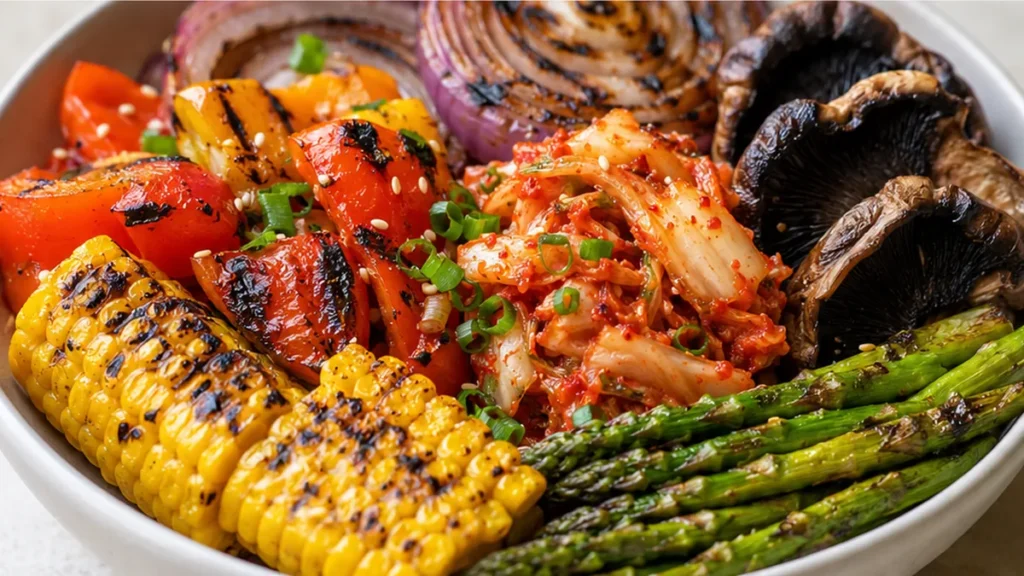
The secret to an exceptional grilled vegetable kimchi salad lies in mastering the char on your produce. This method enhances natural flavors and adds a smoky depth that simply can’t be achieved otherwise. This straightforward recipe delivers a flavorful and satisfying dish perfect for a light lunch or a bright side. The Maillard reaction, the browning process from high heat, develops hundreds of new flavor compounds in grilled vegetable, creating a savory depth that improves the entire dish. This particular grilled vegetable recipe focuses on achieving that perfect balance of smoke, tang, and spice.
Key takeaways
- Achieve a deep char on produce through high heat grilling.
- Do not overcrowd the grill to ensure proper searing.
- Cook produce in batches if necessary for even results.
- Season simply with salt and pepper to let the grilled flavors shine.
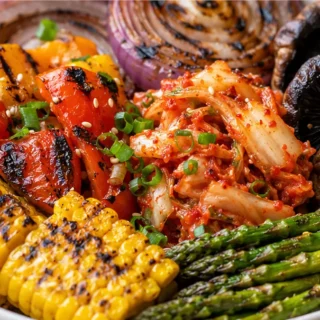
Grilled Veggie Kimchi Salad: Your Taste Buds Will Explode!
Ingredients
- 3 tablespoons olive oil (plus extra for drizzling)
- 1 large red onion, sliced into 3-4 rounds
- 3 bell peppers, seeded and each cut in 3-4 large pieces (preferably in different colors)
- 4 squash or zucchini, cut in half lengthwise (or a combination of both)
- 1 pound asparagus, fibrous part of stem removed
- 4 ears corn on the cob, shucked
- 2 large portobello mushrooms
- salt and pepper to taste
- 1 clove garlic, minced
- 1 cup kimchi (drained of excess liquid)
Instructions
- Preheat your grill to medium/high heat.
- Place the vegetables on a baking sheet, liberally drizzle with olive oil, sprinkle with salt and pepper and toss with your hands to coat.
- When your grill is hot place the vegetables directly on the grill and cook, turning occasionally to create grill marks on each side. Asparagus will take a total of 3-4 minutes, onions, bell peppers, mushrooms and squash 4-5 minutes and corn 5-6 minutes or until fork tender and lightly charred.
- Remove the vegetables to the sheet pan and cool for several minutes or until cool enough to chop.
- While the vegetables are cooling, place 3 tablespoons olive oil, minced garlic, and a splash of champagne vinegar (if using) in a large serving bowl and whisk to combine.
- Chop the vegetables into 1-inch bite-size pieces, place in the bowl with the kimchi and using your hands, toss the vegetables to coat evenly. Season with more salt and pepper as needed.
Notes
– For extra flavor, marinate the vegetables in olive oil and a dash of soy sauce or sesame oil for 15-20 minutes before grilling.
– Internal temperature for grilled bell peppers, squash, and onions should be fork-tender, around 180°F (82°C), for optimal texture without being mushy. Nutrition information is an estimate, calculated automatically. Values vary with brands, substitutions and portion sizes.
The Technique That Makes It: Mastering the Grill for Optimal Flavor
The success of this grilled vegetable kimchi salad hinges on achieving the perfect char on your ingredients. This is primarily due to the Maillard reaction and caramelization, processes that occur when exposed to high heat. The Maillard reaction, a complex browning process, develops hundreds of new flavor compounds, lending a savory, roasted depth that raw or boiled versions simply cannot achieve. Caramelization, the browning of natural sugars in the produce, adds a subtle sweetness and further enhances complexity. Achieving this requires a few key principles:
High Heat is Crucial
Preheat your grill to medium-high heat (around 400-450°F or 200-230°C). This intense heat is necessary to quickly sear the items, creating those desirable grill marks and charred edges without overcooking the interior. A rapid sear, about 4 minutes per side for thicker items like bell peppers, makes all the difference.
Don’t Overcrowd the Grill
Grilling too many at once lowers the grill’s temperature, leading to steaming rather than searing. Cook in batches if necessary to ensure each piece gets direct contact with the heat source. Unlike most recipes that suggest filling the grill, this one leaves about 25% of the grate empty to maintain consistent heat.
Proper Oiling
Lightly coat the produce with olive oil. This helps prevent sticking, promotes even browning, and facilitates heat transfer for a better sear. Make sure each piece is glistening but not dripping.
Strategic Placement
Place them directly over the hottest part of the grill for searing. Thicker items like corn and portobellos can handle longer cooking times, while thinner ones like asparagus (which only needs 3-4 minutes total) and peppers cook faster.
Troubleshooting
- Items Sticking to the Grill: Ensure your grill grates are clean and well-oiled before placing them. Also, resist the urge to move the items too soon; let them develop a sear before attempting to flip. Rushing it can tear the delicate asparagus.
- Uneven Cooking/Burning: This often results from uneven grill heat or overcrowding. Ensure your grill is preheated evenly and cook in manageable batches. Rotate them halfway through cooking for consistent results.
- Mushy Produce: Overcooking is the culprit. Stick to the recommended cooking times (e.g., 4-5 minutes for squash) and check for tenderness with a fork. They should be tender-crisp, not soft.
- Lack of Char: If you’re not getting enough char, your grill might not be hot enough, or you may be moving the items too frequently. Increase the heat slightly and allow them to sit undisturbed for a few minutes per side. What most guides miss is that patience is key here.
Substitutions
- Bell Peppers: Substitute with poblano peppers for a mild heat and smoky flavor, or Anaheim peppers for a slightly spicier kick. The result will be a similar texture but with a different pepper profile, adding a subtle warmth.
- Squash/Zucchini: Eggplant (cut into thick rounds or planks) can be used. It will absorb more of the oil and develop a creamier texture when grilled, offering a richer mouthfeel, though it can become slightly softer.
- Asparagus: Green beans or broccolini can be substituted. They will offer a similar crisp-tender texture, though the flavor profile will be slightly different, with broccolini adding a slightly bitter note.
- Portobello Mushrooms: King oyster mushrooms, sliced lengthwise, can be used. They provide a chewier texture and a distinct earthy flavor that stands up well to grilling. Slice them about 1/2 inch thick.
Pro tips
- Don’t overcrowd the grill: cook these items in batches if necessary to ensure even charring and proper cooking, preventing steaming.
- For extra flavor, marinate the produce in olive oil and a dash of soy sauce or sesame oil for 15-20 minutes before grilling.
- Store leftover salad in an airtight container in the refrigerator for up to 3 days. The flavors will meld beautifully overnight, enhancing the kimchi’s tang.
- For optimal texture, aim for fork-tender bell peppers, squash, and onions, which is typically around 180°F (82°C) internal temperature, ensuring they aren’t mushy.
This grilled vegetable kimchi salad is a testament to how simple ingredients can create complex flavors. Experiment with different seasonal produce to make it your own. Enjoy this bright, smoky, and spicy dish!
Frequently asked questions
Can I make this grilled vegetable salad ahead of time?
Yes, you can grill the produce a day in advance and store it in an airtight container in the refrigerator. Chop and toss with kimchi and dressing just before serving to maintain freshness and texture. The flavors meld beautifully overnight.
What if I don’t have a grill?
You can achieve a similar charred effect using a cast-iron grill pan on your stovetop or roasting the produce in a very hot oven (425°F or 220°C) until tender and slightly browned. Ensure good ventilation for stovetop grilling.
Can I add protein to this salad?
Absolutely! Grilled chicken, shrimp, or firm tofu would be excellent additions. Add them to the grill alongside the produce, ensuring they are cooked through to an internal temperature of 165°F (74°C) for poultry and shrimp.
What kind of kimchi works best?
Napa cabbage kimchi is the most common and works wonderfully here. Look for one with a good balance of spicy, sour, and umami flavors. Ensure it’s well-drained of excess liquid to prevent the salad from becoming watery.