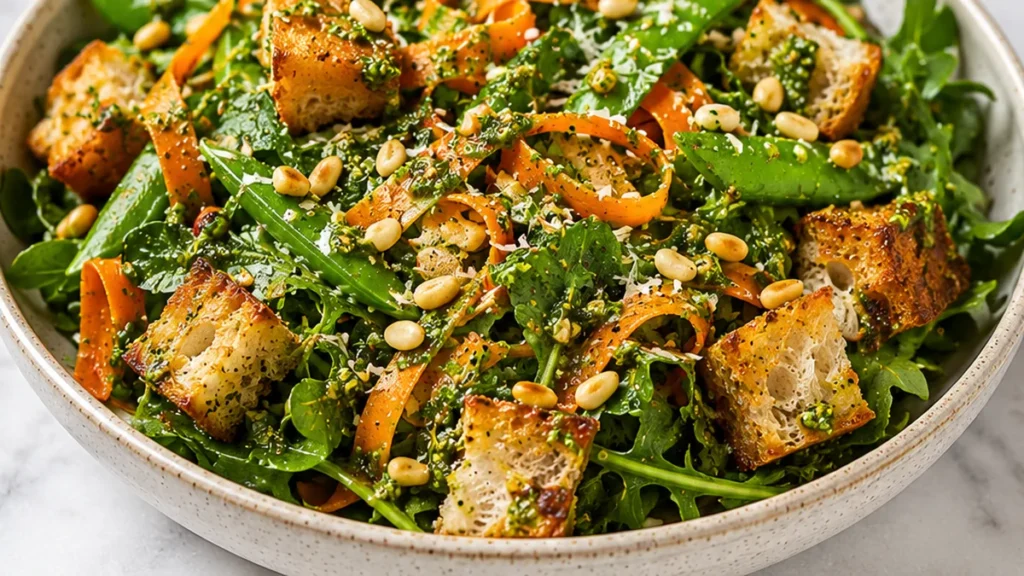
This Spring Pea and Carrot Salad with Carrot Top Pesto is a delightful way to celebrate fresh seasonal produce. It transforms humble carrot tops into a flavorful pesto, reducing food waste and adding a unique zest to your meal. This bright salad is perfect for a light lunch or a stunning side dish. The combination of crisp, tender vegetables, crunchy homemade croutons, and the bright, herbaceous carrot top pesto makes this spring salad a true winner. It’s an easy recipe that feels gourmet, proving that deliciousness can be found in unexpected places.
Key takeaways
- The bright, fresh flavor of this spring salad comes from a zesty carrot top pesto, enhanced by toasted nuts and fresh basil.
- Properly toasting nuts and emulsifying the pesto are key techniques for success.
- Troubleshoot bitterness with lemon or more basil, and sogginess with proper roasting.
- Substitutions like arugula for carrot tops or walnuts for pine nuts offer flexibility without sacrificing flavor.
Vibrant Spring Salad with Zesty Carrot Top Pesto
Ingredients
- 2 cups carrot top greens (can sub 2 cups fresh arugula or baby kale)
- 1/2 cup fresh basil
- 1/4 cup toasted pine nuts
- 1/2 cup olive oil
- 1/3 cup grated parmesan
- pinch crushed red pepper flakes
- salt (to taste)
- 1 loaf ciabatta or sourdough french bread (torn into bite size)
- 2 tablespoons olive oil
- 1 clove garlic
Instructions
- Make the Carrot Top Pesto: In a food processor, combine carrot top greens, fresh basil, and toasted pine nuts. Pulse until finely chopped.
- With the machine running, slowly drizzle in the olive oil until the pesto is smooth. Add grated parmesan, red pepper flakes, and salt to taste.
- Prepare the Croutons: Preheat oven to 350°F (175°C).
- On a baking sheet, toss torn ciabatta or sourdough bread with 2 tablespoons of olive oil, minced garlic, salt, and pepper until evenly coated.
- Bake for 10-15 minutes, tossing halfway, until the bread is golden brown and toasted.
- Assemble the Salad: In a large bowl, toss together thinly sliced carrots, snap peas, watercress (or spinach/arugula), and fresh herbs for 1 minute.
- Add a few tablespoons of the prepared carrot top pesto to the salad and toss to coat the vegetables. Stir in the toasted bread croutons.
- Serve immediately with the remaining carrot top pesto on the side for an extra flavor boost.
Notes
The technique that makes it
The star of this bright spring salad is the zesty carrot top pesto. The key to a successful pesto lies in balancing the intense flavor of the carrot greens with the richness of olive oil and the salty bite of Parmesan. Properly toasting the pine nuts is crucial; it unlocks their aromatic oils, adding a depth of flavor that raw nuts cannot provide. Toast them gently in a dry pan over medium-low heat, stirring frequently until they are fragrant and lightly golden. Over-toasting will result in a bitter pesto. When blending the pesto, start with the solid ingredients (carrot tops, basil, pine nuts, Parmesan, red pepper flakes) and gradually stream in the olive oil. This emulsification process creates a smooth, cohesive sauce rather than an oily separation. Aim for a consistency that is spreadable but not watery. The garlic should be finely minced or even grated into a paste before adding to the pesto to ensure it distributes evenly and doesn’t leave harsh, raw chunks. Seasoning with salt is best done at the end, after tasting, as the Parmesan cheese already contributes significant saltiness.
For the croutons, the technique involves creating a flavorful base and achieving the right texture. Tearing the ciabatta or sourdough bread into bite-sized pieces rather than slicing creates nooks and crannies that will crisp up beautifully and hold onto the pesto. Tossing these torn pieces with olive oil infused with garlic is essential. Rubbing a cut clove of garlic over the bread pieces or mincing it very finely and tossing with the oil ensures a subtle garlic aroma permeates the bread. Spreading the bread in a single layer on a baking sheet allows for even toasting and prevents steaming, which would lead to soft croutons. Roasting at a moderate temperature (around 375°F or 190°C) until golden brown and crisp ensures a satisfying crunch that contrasts with the tender greens and creamy pesto.
Troubleshooting
- Pesto is too bitter: If the carrot tops were older or tougher, they can impart bitterness. To fix this, add a little more basil or a small squeeze of lemon juice to brighten the flavor. A touch more Parmesan can also help balance bitterness.
- Pesto is too oily/watery: This usually happens if the oil was added too quickly or too much was used. To thicken, add a few more toasted pine nuts or a bit more grated Parmesan and blend again. You can also add a small handful of the greens if you have extra.
- Croutons are soggy: This means they didn’t roast long enough or were overcrowded on the baking sheet. Return them to the oven in a single layer, ensuring good air circulation, and bake at a slightly higher temperature if necessary until crisp.
- Pesto lacks flavor: Ensure your greens are fresh and bright. Properly toasting the pine nuts is key. Taste and adjust seasoning with salt, more Parmesan, or a pinch more red pepper flakes if needed.
Substitutions
- Carrot Tops: If you don’t have carrot tops or prefer not to use them, 2 cups of fresh arugula will provide a peppery bite, while 2 cups of baby kale will offer a slightly more robust green flavor. The resulting pesto will have a different, but still delicious, flavor profile.
- Pine Nuts: Toasted walnuts or almonds can be substituted for pine nuts. They will impart a different nuttiness to the pesto; walnuts will be earthier, while almonds will be sweeter. Ensure they are toasted for optimal flavor.
- Parmesan Cheese: Pecorino Romano can be used as a substitute for Parmesan, offering a sharper, saltier flavor. For a dairy-free option, nutritional yeast can be used, though it won’t provide the same salty, umami depth.
- Ciabatta/Sourdough: Any crusty artisan bread can be used for the croutons. A baguette or even sturdy whole wheat bread will work, though the texture and flavor will vary slightly.
Pro tips
- Use young, tender carrot tops for the best pesto flavor.
- Toast your bread until golden and crisp for the best crouton texture.
- Adjust the amount of pesto to your liking; start with a little and add more.
Enjoy this fresh and flavorful spring salad, a creative way to use every part of your ingredients. Experiment with different greens or nuts to make it your own!
More from blog →
Frequently asked questions
Can I make the carrot top pesto ahead of time?
Yes, the zesty carrot top pesto can be made up to 3 days in advance. Store it in an airtight container in the refrigerator. A thin layer of olive oil on top can help prevent browning. It’s perfect for meal prepping components of the salad.
What can I substitute for the walnuts in the pesto?
If you have a walnut allergy or simply don’t have them, pumpkin seeds or sunflower seeds make excellent substitutes. Pine nuts are also a classic pesto ingredient. Toasting the seeds lightly before blending will enhance their flavor in the pesto.
How should I store leftover Bright Spring Salad?
For best results, store the salad components separately. Keep the greens and vegetables in an airtight container in the fridge. Store the pesto in a separate container. Combine just before serving to prevent the greens from wilting.
What other vegetables can I add to this spring salad?
Feel free to add other spring vegetables like radishes, snap peas, or asparagus. Blanched or lightly steamed asparagus would be a great addition. Thinly sliced radishes add a nice peppery crunch. Ensure all additions are fresh and in season.