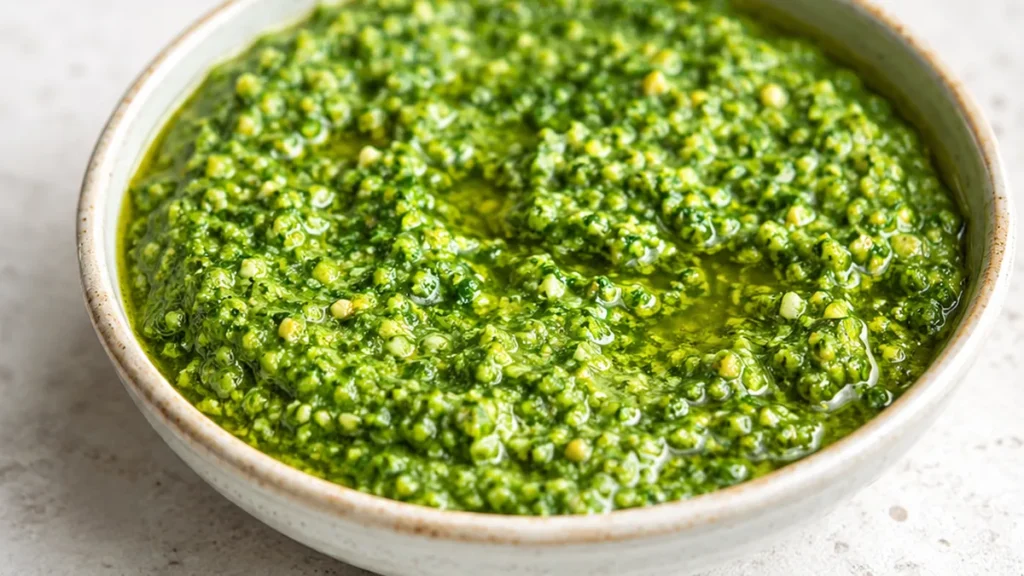
Cilantro pesto offers a refreshing alternative to traditional basil pesto, bringing a bright, herbaceous, and slightly zesty flavor profile to countless dishes. This quick and easy cilantro pesto recipe is designed to elevate your everyday meals with minimal effort, making it an indispensable condiment in your kitchen. Cilantro pesto is a great way to use up an abundance of cilantro in the fridge. The blend of fresh herbs with the citrusy kick of lime creates an unforgettable flavor that instantly brightens everything from roasted vegetables to scrambled eggs. This cilantro pesto truly transforms simple ingredients into something extraordinary.
Key takeaways
- Slowly drizzle oil while processing to create a stable emulsion.
- Balance the bright, zesty lime with the nutty pistachios and cilantro.
- Adjust salt and lime to taste for optimal flavor.
- Use mostly cilantro leaves for a less bitter, more vibrant pesto.
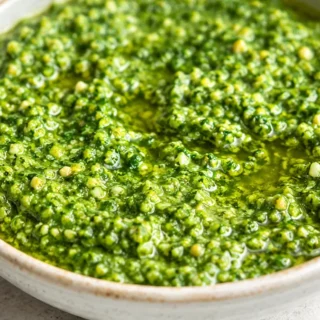
Zesty Cilantro Pesto: Fresh, Flavorful, Fast!
Ingredients
- 1 bunch cilantro (1.5 “, 2 cups)
- 1/2 jalape o, ribs and seeds removed
- 1 clove garlic
- juice and zest of 1 lime
- 1/4 cup olive oil or avocado oil
- 1/2 cup roasted salted pistachios
- salt to taste
Instructions
- Combine cilantro, jalape
- Pulse the ingredients for 30-60 seconds, scraping down the sides as needed, until a desired textured consistency is achieved.
- Season the pesto with salt to taste, starting with 1/4 teaspoon and adjusting as needed.
- Transfer the pesto to an airtight container and refrigerate for up to 3-4 days. Serve with bowls, soups, pizza, eggs, sandwiches, or wraps.
Notes
The Technique: Emulsification for a Silky Pesto
The key to a vibrant and cohesive cilantro pesto lies in the emulsification process. As the olive oil is slowly drizzled into the food processor while it’s running, it gradually incorporates into the other ingredients. This creates a stable emulsion, where tiny droplets of oil are suspended evenly throughout the pesto. This process prevents the pesto from becoming oily or separated. The high-speed blades of the food processor not only chop the ingredients but also help to break down the cell walls of the cilantro and garlic, releasing their flavorful oils and contributing to the smooth texture. The lime juice also plays a crucial role; its acidity helps to stabilize the emulsion and brightens the overall flavor profile, preventing the pesto from tasting flat or greasy.
Troubleshooting
- Problem: Pesto is too oily or separated.
Fix: Ensure you are drizzling the olive oil in a very slow, steady stream while the food processor is running. If it’s already separated, try transferring the pesto to a bowl and whisking in a teaspoon of lime juice or water to help re-emulsify.
- Problem: Pesto is too bitter or grassy.
Fix: This can happen if too much of the cilantro stems are included. For future batches, use primarily the leaves and tender upper stems. You can also try adding a pinch more salt or a tiny bit more lime juice to balance the bitterness.
- Problem: Pesto is bland.
Fix: Taste and adjust seasoning. Add more salt, lime juice, or even a pinch of red pepper flakes if you desire more heat. Ensure your pistachios are freshly roasted and salted for maximum flavor impact.
- Problem: Pesto is too thick.
Fix: Gradually add more olive oil, a tablespoon at a time, while the food processor is running, until you reach your desired consistency. You can also thin it with a little water or more lime juice.
Substitutions
- Nuts: Walnuts or almonds can be used instead of pistachios. The flavor will be nuttier and less sweet, with a slightly different texture.
- Herbs: For a milder flavor, substitute half of the cilantro with fresh parsley. This will reduce the intensity of the cilantro flavor and add a fresh, green note.
- Acidity: Lemon juice can replace lime juice. The flavor will be less tropical and more classic, but still provide the necessary brightness and help with emulsification.
- Spice: Omit the jalapeño for a mild pesto. For more heat, leave some seeds and ribs in the jalapeño or add a pinch of red pepper flakes.
Pro tips
- To achieve a perfectly textured cilantro pesto, pulse the ingredients rather than continuously blending. This prevents over-processing and maintains some chunky bits for better mouthfeel.
- For maximum freshness, ensure your cilantro is thoroughly dried after washing to prevent a watery pesto. Spin it in a salad spinner or pat dry with paper towels.
- When storing, press a layer of plastic wrap directly onto the surface of the cilantro pesto to prevent oxidation and keep its vibrant green color for up to 4 days in the refrigerator.
This cilantro pesto is a game-changer for anyone looking to add quick, fresh flavor to their cooking. Experiment with it on your favorite dishes and share your creative uses!
Frequently asked questions
How do I prevent my cilantro pesto from turning brown?
To keep your cilantro pesto vibrant green, ensure you’re using fresh cilantro and incorporate the lime juice effectively. The acidity from the lime juice helps to preserve the color. Store the pesto in an airtight container with a thin layer of olive oil on top to minimize air exposure, which can cause oxidation and browning.
Can I make this pesto ahead of time?
Yes, this cilantro pesto can be made ahead of time. It’s best stored in an airtight container in the refrigerator for up to 5 days. For optimal freshness and color, press a layer of plastic wrap directly onto the surface of the pesto before sealing the container.
What is the best way to store leftover cilantro pesto?
Store leftover cilantro pesto in an airtight container in the refrigerator. To prevent oxidation and maintain its fresh flavor and color, add a thin layer of olive oil on top of the pesto before sealing the container. This acts as a barrier against air.
How can I make this pesto less spicy?
To reduce the spiciness, simply omit the jalapeño entirely. If you still want a hint of heat but less intensity, carefully remove all seeds and ribs from the jalapeño before processing. You can also add a pinch of sugar to counteract some of the heat.
More from Vegan Bowls →