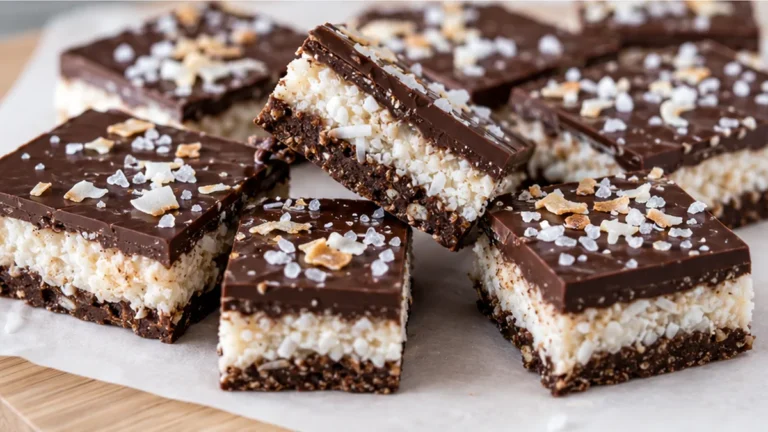
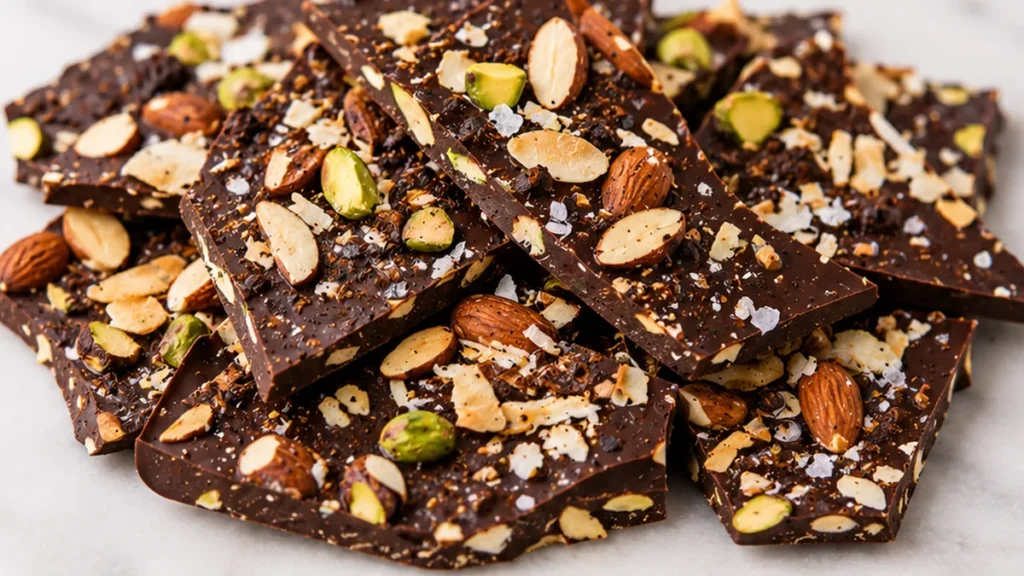
This coffee roasted almond and toasted coconut dark chocolate bark is a true showstopper. It combines the deep richness of dark chocolate with the satisfying crunch of roasted nuts and a unique hint of coffee. Perfect for gifting or indulging, this bark is surprisingly simple to make, offering a gourmet flavor experience that will impress anyone. Each bite is a complex symphony of textures and tastes.
Key takeaways
- The key to great chocolate bark is proper chocolate handling and balanced flavor additions.
- Coarsely ground coffee beans and toasted coconut provide texture and aroma.
- Sea salt enhances all the flavors.
- Ensure toppings are pressed into the chocolate for good adhesion.
Coffee Almond Chocolate Bark Recipe
Ingredients
- 1 1/2 cups whole raw almonds
- 1 cup pistachios
- 1/2 cup fresh ground coffee beans
- 1 tablespoon unsweetened cocoa powder
- 2 tablespoons coconut oil (melted)
- 1 teaspoon vanilla extract
- 1/2 teaspoon sea salt
- 16 ounces dark chocolate (chopped, divided)
- 1 1/2 cups unsweetened flaked coconut (toasted)
- flaked sea salt (for topping)
Instructions
- Preheat oven to 375°F (190°C). Line a baking sheet with parchment paper.
- Spread raw almonds on the baking sheet and roast for 10-12 minutes until fragrant, watching carefully to prevent burning.
- While nuts roast, mix coffee grounds, cocoa powder, and 1/2 tsp sea salt in a bowl. In a separate small bowl, combine melted coconut oil and vanilla extract.
- Add pistachios to the baking sheet with the almonds. Toss nuts with the oil/vanilla mixture, then toss thoroughly with the coffee ground mixture. Roast for another 10 minutes until coffee is fragrant and nuts are crisping.
- Let the nuts cool. Line a new baking sheet with parchment or wax paper.
- Melt 3/4 of the dark chocolate (reserve the rest for drizzling) over a double boiler or in a heatproof bowl over simmering water. Stir until smooth.
- Pour the melted chocolate onto the prepared sheet and spread into a rectangle (not too thin). Immediately sprinkle with half of the toasted coconut, then add the roasted nuts (tapping off excess coffee grounds first).
- Sprinkle on remaining toasted coconut and drizzle the reserved melted chocolate over the bark. Finish with a sprinkle of flaked sea salt.
- Refrigerate for 30-60 minutes until firm, then break into pieces.
Notes
The technique that makes it
The success of this coffee almond chocolate bark hinges on two key techniques: proper chocolate tempering and the careful combination of flavors and textures. Dark chocolate, when melted and cooled correctly, achieves a glossy finish, a satisfying snap, and resists blooming (the white, chalky streaks that indicate fat or sugar crystallization). While full tempering requires precise temperature control (heating to around 115°F, cooling to 82°F, then rewarming to 90°F), a simpler method for home cooks involves melting the chocolate gently over a double boiler or in the microwave in short intervals, stirring frequently to avoid scorching. Adding a small amount of coconut oil helps to thin the chocolate, making it easier to spread thinly and achieve a good snap. The coffee beans, ground coarsely, provide an intense coffee flavor and a slight crunch, while the cocoa powder deepens the chocolate notes. Toasting the flaked coconut enhances its nutty aroma and flavor, creating a delightful contrast with the bitter chocolate and the crunch of the almonds and pistachios. The sea salt sprinkled on top is crucial for balancing the sweetness and enhancing all the other flavors.
Troubleshooting
- Failure: Chocolate bloomed or looks streaky.
Fix: This indicates improper cooling or fat separation. Gently re-melt the chocolate over low heat, stirring constantly, and add a tiny bit more melted coconut oil (1/2 teaspoon at a time) to help re-emulsify. Spread thinly and cool quickly. For future batches, ensure consistent, gentle heating and cooling, and avoid overheating the chocolate. - Failure: Bark is too thick and brittle, or too soft and chewy.
Fix: Thickness is controlled by how thinly you spread the chocolate. For a snappier bark, spread it thinly (about 1/4 inch). For a softer, chewier texture, spread it slightly thicker. Too soft can also be due to insufficient cooling time or ambient humidity. Ensure it’s fully set in a cool environment. - Failure: Flavors are muddled or not distinct.
Fix: Ensure your coffee beans are ground coarsely enough to provide texture and distinct flavor without becoming bitter. Toasting the coconut is essential for its aroma. Make sure the sea salt is applied as a finishing touch, not mixed into the melted chocolate, to provide pops of saltiness. - Failure: Nuts and coconut are unevenly distributed.
Fix: While spreading the melted chocolate, gently press the toppings into the chocolate to ensure they adhere. For a more even distribution, you can also sprinkle some toppings before the chocolate is fully set but after it’s spread.
Substitutions
- Nuts: Walnuts, pecans, or hazelnuts can be substituted for almonds and pistachios. They will offer a different flavor profile but still provide a satisfying crunch. Ensure they are roasted for best flavor.
- Chocolate: While dark chocolate is recommended for its robust flavor that complements coffee and nuts, semi-sweet chocolate can be used for a sweeter result. White chocolate is not recommended as its sweetness will likely overpower the other ingredients.
- Coconut: If you dislike coconut, omit it entirely or substitute with toasted slivered almonds or chopped pecans for added crunch and nutty flavor.
- Coffee: For a less intense coffee flavor, use finely ground espresso powder instead of whole beans, or reduce the amount. Decaffeinated coffee beans can also be used if preferred.
Pro tips
- Use high-quality dark chocolate (60-70% cacao) for the best flavor.
- Ensure nuts are fully cooled before adding to the chocolate to prevent melting.
- Toast the coconut flakes lightly; burnt coconut will turn bitter.
- Customize with other nuts like pecans or walnuts if desired.
Enjoy this unique and incredibly delicious chocolate bark. It’s a perfect homemade gift or a special treat for yourself.
More from Vegan Bowls →
Read also on TastyBend: Cake Pop Nutrition Facts: Complete Expert Guide to Smart Dessert Choices 2026.
Frequently asked questions
Can I make coffee almond chocolate bark ahead of time?
Yes, this bark is perfect for making ahead. Store it in an airtight container at room temperature for up to two weeks. For longer storage, you can keep it in the refrigerator, but allow it to come to room temperature for a few minutes before serving to ensure the best texture.
What’s the best way to store homemade chocolate bark?
Store your coffee almond chocolate bark in a single layer in an airtight container to prevent sticking. Keep it in a cool, dry place away from direct sunlight and heat. If your kitchen is particularly warm, refrigeration is a good option, but remember to let it soften slightly before enjoying.
Can I substitute the almonds in chocolate bark?
Absolutely! Feel free to swap the almonds for other nuts like walnuts, pecans, or hazelnuts. For a nut-free version, consider using toasted pumpkin seeds (pepitas) or sunflower seeds. Ensure any substitutions are roughly the same size for even distribution in the bark.
How do I know when the chocolate bark is set?
The chocolate bark is set when it is completely firm to the touch and no longer sticky. You should be able to break it cleanly. This usually takes about 1-2 hours in the refrigerator or several hours at cool room temperature. Avoid touching it excessively while it sets.