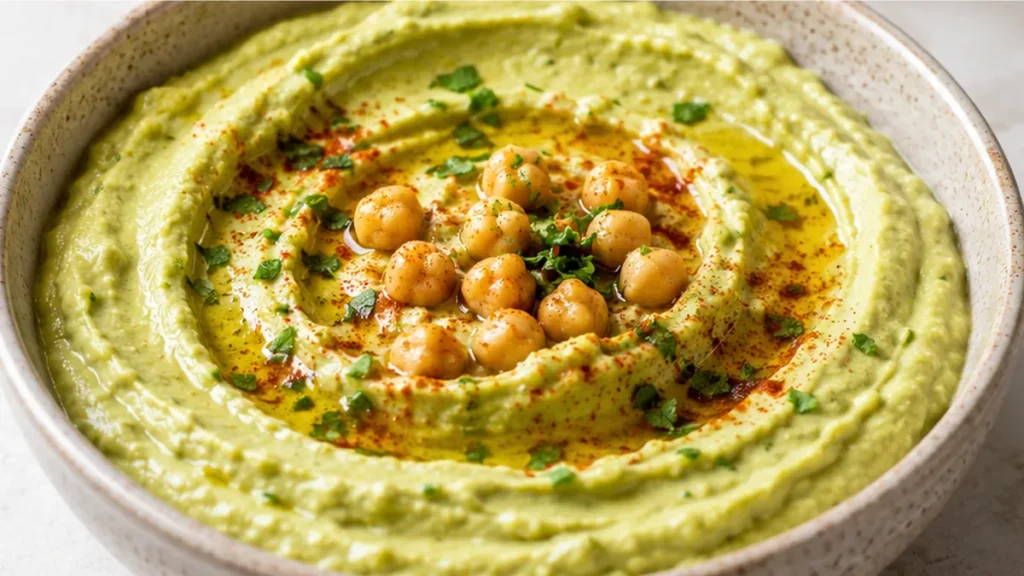
Avocado hummus combines creamy avocado with classic hummus ingredients, creating a dip that’s both familiar and exciting. This avocado hummus recipe adds a refreshing twist with lime and cilantro, transforming a simple snack into a bright appetizer. The key to its irresistible texture lies in creating a stable emulsion, where the fats from the avocado and tahini bind seamlessly with the water-based elements. This recipe is designed for ease and speed, taking only 10 minutes to prepare from start to finish. It’s an ideal choice for a quick, healthy snack, a light lunch accompaniment, or a show-stopping appetizer that always receives compliments. Mastering this creamy avocado hummus means understanding how to balance flavor and texture with minimal effort.
Key takeaways
- The key to creamy avocado hummus is creating a stable emulsion using tahini and avocado as emulsifiers.
- Process ingredients until smooth, gradually adding liquids to achieve the right consistency. Blend for about 2-3 minutes.
- Troubleshoot thickness by adjusting liquid (1-2 tablespoons) or chilling; address off-flavors by checking ingredient freshness.
- Press plastic wrap directly onto the surface when storing to prevent browning for up to 3 days.
Creamy Avocado Hummus: Your New Obsession!
Ingredients
- 1 15 ounces can chick peas or garbanzo beans, drained & rinsed
- 1 medium avocado, pitted
- 1 garlic clove
- 2 tablespoons lemon juice
- 1/2 teaspoon kosher salt
- 1/4 cup olive oil
- 1 tablespoon tahini
Instructions
- Drain and rinse the can of chickpeas thoroughly.
- Pit and scoop out the flesh of the medium avocado.
- Combine the drained chickpeas, avocado flesh, garlic clove, lemon juice, kosher salt, olive oil, and tahini in a food processor.
- Puree until smooth and creamy, scraping down the sides as needed. Serve immediately or chill before serving with desired accompaniments.
Notes
– If you prefer a thinner consistency, add a tablespoon of water or more lemon juice until desired texture is reached.
– Store leftover avocado hummus in an airtight container in the refrigerator for up to 3 days. Press a piece of plastic wrap directly onto the surface to prevent browning. Nutrition information is an estimate, calculated automatically. Values vary with brands, substitutions and portion sizes.
The Technique: Achieving Creamy Emulsion
The magic behind this avocado hummus lies in creating a stable emulsion. An emulsion is formed when two liquids that normally don’t mix, like oil and water-based ingredients (from the chickpeas and avocado), are combined with the help of an emulsifier. In this recipe, both the tahini and the lecithin naturally present in the avocado act as emulsifiers. Tahini, made from ground sesame seeds, is rich in lecithin, which helps bind the fat from the olive oil and avocado with the water content of the chickpeas and lemon juice. The key is to process these ingredients until they are thoroughly combined and the mixture becomes smooth and creamy, usually within 2-3 minutes. What most guides miss is that starting the blending process with the drier ingredients (chickpeas, garlic, salt) and gradually adding the liquids (lemon juice, olive oil) and the avocado helps the blender blades effectively break down the solids and incorporate the fats, leading to a cohesive and velvety texture. Over-processing can sometimes lead to a gummy texture, so blending until just smooth is ideal. Stop the food processor once or twice to scrape down the sides, ensuring an even consistency.
Troubleshooting
- Problem: Hummus is too thick. Fix: Gradually add a tablespoon of water or more lemon juice while blending until the desired consistency is reached. Usually 1-2 tablespoons is enough.
- Problem: Hummus is too thin or watery. Fix: Chill the hummus in the refrigerator for at least 30 minutes; it will thicken as it cools. If still too thin, you can try blending in a tablespoon of additional tahini or a few more chickpeas.
- Problem: Hummus has a bitter or off-flavor. Fix: Ensure your avocado is ripe and not overripe, as this can impart bitterness. Also, check that your chickpeas are fresh and not expired. Tahini that has been open too long can also turn a batch bitter.
- Problem: Hummus is not smooth enough. Fix: Ensure all ingredients are well-processed. If using a food processor, scrape down the sides of the bowl frequently, every 30 seconds or so.
Substitutions
- Tahini: If you don’t have tahini, you can substitute it with an equal amount of unsalted, smooth peanut butter or almond butter. The flavor profile will change, becoming nuttier, but it will still provide emulsification and a creamy texture.
- Lemon Juice: Fresh lime juice can be used instead of lemon juice. It will lend a slightly different, brighter citrus note to the hummus, which suits an even zestier dip.
- Olive Oil: While olive oil contributes significantly to the flavor and texture, you could use a neutral oil like avocado oil or grapeseed oil. The hummus might be slightly less rich in flavor, so extra virgin olive oil is the better choice if possible.
- Avocado: For a similar creamy texture without avocado, you could try using 1/4 cup of plain Greek yogurt or silken tofu. The color will be different, and the flavor will be altered, losing that signature avocado richness.
Pro tips
- For an extra smooth avocado hummus, process for an additional minute, scraping down the sides as needed to ensure all ingredients are fully incorporated.
- If the hummus is too thick, gradually add a tablespoon of water or more lemon juice while blending until the desired texture is reached.
- To prevent browning during storage, press a piece of plastic wrap directly onto the surface of the hummus before refrigerating for up to 3 days. This simple step truly helps maintain its fresh green color.
This avocado hummus is a simple yet spectacular recipe that will quickly become a favorite. Enjoy its creamy texture and fresh flavors with your favorite dippers, from fresh vegetables to pita bread. Share your creations and enjoy!
Frequently asked questions
How do I get the smoothest avocado hummus?
For the smoothest texture, ensure your avocado is perfectly ripe and blend all ingredients thoroughly. Scrape down the sides of your food processor or blender multiple times. For an ultra-smooth finish, consider passing the blended hummus through a fine-mesh sieve, though this is rarely necessary with a good processor.
Can I make this avocado hummus ahead of time?
Yes, avocado hummus can be made ahead. Store it in an airtight container in the refrigerator for up to 2-3 days. The avocado may cause some browning on the surface; stir it in before serving or press plastic wrap directly onto the surface to minimize oxidation, a simple trick to keep it fresh looking.
What if my avocado hummus tastes bitter?
A bitter taste often comes from an underripe or overripe avocado. Ensure you are using a perfectly ripe avocado. Also, check the freshness of your chickpeas and tahini, as old ingredients can sometimes impart off-flavors. If unsure of its ripeness, taste the avocado first.
How can I make avocado hummus without tahini?
If you don’t have tahini, you can substitute it with an equal amount of unsalted, smooth peanut butter or almond butter. The flavor profile will become nuttier, but it will still provide the necessary emulsification for a creamy texture, although tahini gives the most authentic hummus flavor.