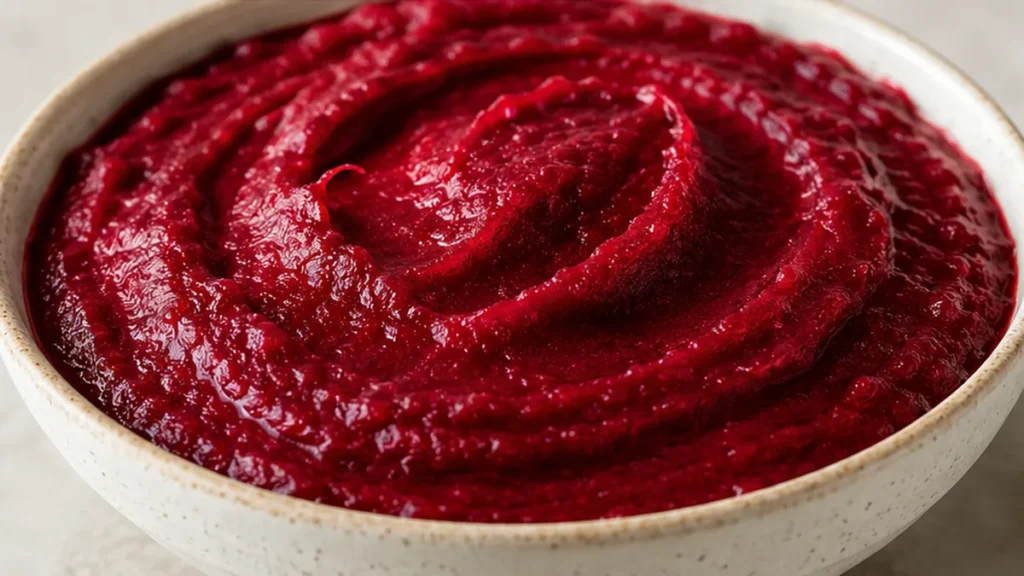
The secret to a truly bright beet puree lies in the roasting process, which concentrates their natural sugars and intensifies their color. This beet puree recipe offers a simple yet incredibly effective way to enjoy the natural sweetness and earthy depth of beets, transforming them into a versatile dish. Whether you need a wholesome side dish, a colorful dip, or a nutritious base for baby food, this beet puree is a fantastic option. Start with fresh, firm beets for the best results, as their sweetness will shine through.
Key takeaways
- Roasting beets at 375°F for 45 minutes concentrates sweetness and color
- Wrap beets tightly in foil to steam them perfectly tender
- Add liquid gradually to the food processor for desired consistency
- Pass through a fine-mesh sieve for an ultra-smooth texture
- A splash of orange juice can subtly brighten the flavor profile
Vibrant Beet Puree: Healthy & Easy!
Ingredients
- 2 beets (any color), washed with stems and leaves removed
- Aluminum foil or parchment paper
- Water (if needed to thin puree)
- Ziplock bag or gloves
- Food processor
- 1/2 teaspoon salt, or to taste
Instructions
- Preheat the oven to 375°F.
- Place beets on one side of a piece of aluminum foil or parchment paper and fold in half over the beets like a book. Pinch the edges to fully seal the package to steam them.
- Bake for 45 minutes until fork tender.
- Open the foil, and let roasted beets cool for 10-15 minutes until you’re able to touch them.
- Use a ziplock bag or gloves to cover your hands and peel the beets. The skin should slide right off easily.
- Cut and puree beets in a food processor until smooth. Add water little by little if you need to thin out the puree to your desired consistency.
- Serve immediately as a side or make a baby food combination with another puree for a balanced meal.
Notes
– Roasting brings out the natural sweetness of the beets. If you prefer a bolder, more earthy flavor, you can boil or steam them instead.
– A tiny splash of orange juice instead of water gives a subtle citrusy brightness that complements the beets beautifully. Experiment with small amounts to find your preferred balance.
– Store leftover beet puree in an airtight container in the refrigerator for up to 3-4 days, or freeze in small portions for up to 3 months. Nutrition information is an estimate, calculated automatically. Values vary with brands, substitutions and portion sizes.
The science of roasting beets for bright beet puree
Roasting is the key technique for developing the deep, sweet flavor and bright color of this beet puree. Unlike boiling, which can leach flavor and color into the water, roasting concentrates the natural sugars in the beets through caramelization and the Maillard reaction. The dry heat of the oven at 375°F (190°C) causes the sugars within the beet cells to break down and reform, creating complex, sweet, and slightly earthy notes. Wrapping the beets tightly in aluminum foil or parchment paper traps steam released from the beet’s own moisture. This steam helps to tenderize the beets, ensuring they become fork-tender after about 45 minutes and are easy to puree, while also preventing them from drying out. The high heat also helps to set the bright pigments (betalains) within the beet, preserving their intense color in the final puree. This method ensures a concentrated flavor and a smooth, rich texture that boiling alone cannot achieve. What most guides miss is how crucial that tight seal is for effective steaming within the foil – it’s not just about covering them.
Troubleshooting
- Problem: Puree is too thick and pasty. Fix: Add water, one tablespoon at a time, while processing until the desired consistency is reached. Start with just a teaspoon of liquid and increase gradually to avoid over-thinning.
- Problem: Beet color is dull or muted. Fix: Ensure beets are fresh and not overcooked, as overcooking can sometimes dull the color. Roasting, rather than boiling, consistently helps retain pigment. A tiny splash of lemon juice or a 1/2 teaspoon of apple cider vinegar can sometimes brighten the color, but use sparingly to avoid altering the flavor.
- Problem: Puree has a raw or bitter taste. Fix: Ensure beets are fully roasted until fork-tender. Undercooked beets will retain a raw flavor. Roasting longer at the same temperature or slightly increasing the temperature to 400°F (200°C) for the last 10-15 minutes can help achieve full tenderness.
- Problem: Puree is grainy or not smooth. Fix: Ensure the food processor is powerful enough and process for an adequate amount of time, typically 2-3 minutes. For an ultra-smooth texture, pass the puree through a fine-mesh sieve after processing. Avoid moving the food processor too much during blending; let it do the work.
Substitutions
- Beet type: While red beets are standard, golden beets can be used. The resulting puree will have a milder, sweeter flavor and a beautiful yellow-orange hue instead of bright red, offering a different visual appeal.
- Roasting method: If short on time, you can boil the beets until tender, but be aware this may result in a less intense flavor and color. Drain them very well before pureeing to prevent a watery consistency.
- Sweetener: A teaspoon of honey or maple syrup can be added if a sweeter puree is desired, especially if using less sweet beet varieties or if serving as a dessert component.
- Acidity: A squeeze of lemon juice (about 1 teaspoon per beet) or a teaspoon of apple cider vinegar can be added to balance the earthiness and brighten the flavor profile, enhancing the overall taste without making it sour.
Pro tips
- For an extra smooth beet puree, pass it through a fine-mesh sieve after blending, especially when serving it to picky eaters.
- Roasting brings out the natural sweetness of the beets. However, if you prefer a bolder, more earthy flavor, boiling or steaming them works too, though the color might not be as intense.
- Adding a tiny splash of orange juice (about 1 tablespoon per 2 beets) instead of water can improve the flavor profile, giving it a subtle citrusy brightness that complements the beets beautifully. Experiment with small amounts to find your preferred balance.
- Store leftover beet puree in an airtight container in the refrigerator for up to 3-4 days. For longer storage, freeze in small portions for up to 3 months, which is perfect for meal prep.
This simple beet puree is a versatile and healthy addition to your culinary repertoire. Enjoy its natural sweetness and bright color, and feel free to experiment with seasonings like a hint of orange zest or a pinch of cumin. Bon appétit!
Frequently asked questions
Why should I roast the beets instead of boiling them?
Roasting concentrates the natural sugars in beets through caramelization, leading to a sweeter, richer flavor. It also helps to preserve their bright color, which can be lost or diluted when boiling, resulting in a more visually appealing and intensely flavored puree. Roasting at 375°F for 45 minutes yields the best balance of tenderness and flavor concentration.
My beet puree is too thick. What can I do?
If your puree is too thick, gradually add water, one tablespoon at a time, while the food processor is running until the desired consistency is reached. Start with minimal liquid to avoid over-thinning. You can also use a splash of orange juice or vegetable broth for added flavor.
Can I make this beet puree ahead of time?
Yes, beet puree is excellent for making ahead. Prepare it as directed, let it cool completely, then transfer to an airtight container. It will keep in the refrigerator for up to 3-4 days. For longer storage, freeze it in ice cube trays or small freezer-safe containers for up to 3 months.
How can I make the beet puree even smoother?
Beyond using a powerful food processor, the best way to achieve an ultra-smooth beet puree is to pass it through a fine-mesh sieve or a chinois after blending. This removes any remaining fibrous bits, resulting in a silken texture ideal for dips or baby food. Ensure your beets are fork-tender after roasting.