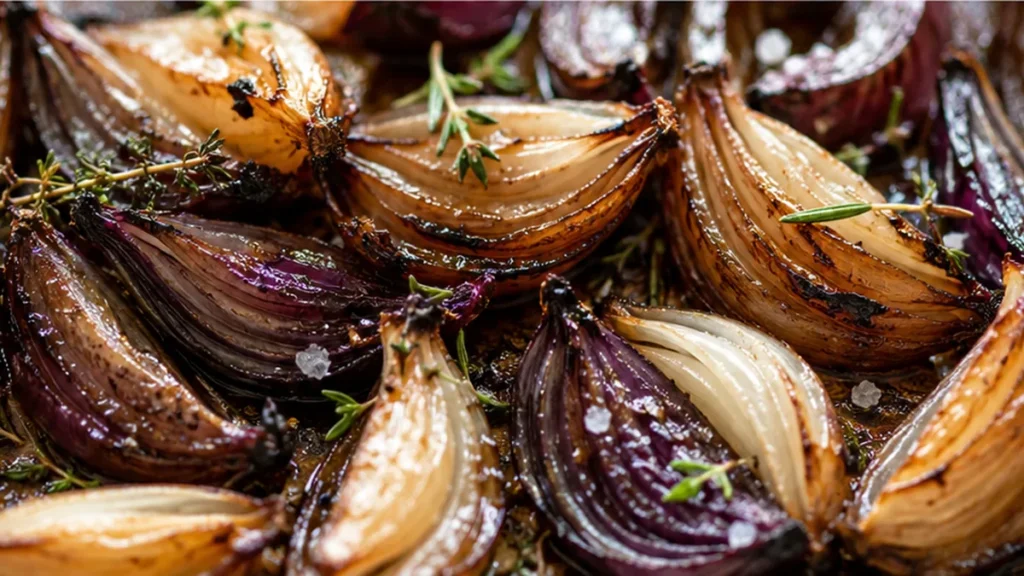
The secret to truly flavorful balsamic roasted onions lies in embracing the Maillard reaction and proper caramelization. This process transforms humble onions into a sweet, tangy, and deeply savory side dish with minimal effort. Prepare these balsamic roasted onions in about an hour, turning simple ingredients into a gourmet experience. This recipe focuses on maximizing the natural sugars within the onions, enhanced by the acidic notes of balsamic vinegar and aromatic fresh herbs. It’s a versatile addition to almost any dinner table, offering both elegance and ease, making it perfect for both weeknights and special occasions.
Key takeaways
- Caramelization and the Maillard reaction are key to developing deep flavor.
- Ensure proper oven temperature and avoid overcrowding for even browning.
- Balsamic vinegar adds tang and helps create a flavorful glaze.
- Uniformly cut onions ensure even cooking.
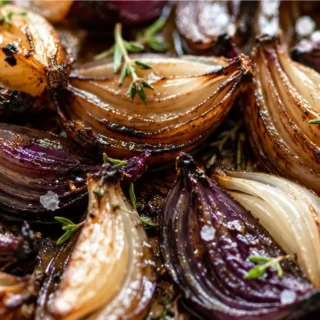
Sweet & Tangy Balsamic Roasted Onions
Ingredients
- 3 onions, any color, peeled and quartered
- 3 tablespoons olive oil
- 3 tablespoons balsamic vinegar
- 1 tablespoon minced fresh thyme
- 1 teaspoon minced fresh rosemary
- 1/2 teaspoon kosher salt
Instructions
- Preheat oven to 400F (200C).
- In a large 7 x 11 inch baking dish, combine the balsamic vinegar, oil, thyme, rosemary, salt, and onion wedges and toss to coat evenly.
- Bake for 50-60 minutes, until the onions are caramelized and fork tender, stirring once halfway through the cooking time.
- Remove from the oven and drizzle with any remaining dressing from the bottom of the dish.
Notes
– Don’t skip stirring halfway through; this ensures even cooking and browning on all sides of the roasted onions. Nutrition information is an estimate, calculated automatically. Values vary with brands, substitutions and portion sizes.
The technique that makes it
The magic behind these deeply flavorful balsamic roasted onions lies in a combination of controlled caramelization and the Maillard reaction, enhanced by the acidity of balsamic vinegar. Onions are primarily composed of water and sugars (sucrose, fructose, and glucose). When exposed to dry heat, the water begins to evaporate. As the temperature rises above 212°F (100°C), the sugars concentrate and begin to caramelize, turning golden brown and developing sweet, complex flavors. Simultaneously, amino acids present in the onion react with these sugars through the Maillard reaction, creating hundreds of new flavor compounds responsible for savory, roasted notes. The olive oil acts as a heat conductor, ensuring even cooking and promoting browning. The balsamic vinegar, added towards the end, contributes acidity that balances the sweetness and intensifies the flavors through a process similar to deglazing, lifting browned bits from the pan and integrating them into the sauce. Thyme and rosemary add aromatic compounds that complement the onion’s sweetness and add herbaceous depth.
Troubleshooting
- Problem: Onions are mushy and lack browning.
Fix: Ensure the oven temperature is correct (400°F/200°C) and the onions are not overcrowded on the baking sheet. Overcrowding steams the onions rather than roasting them, inhibiting browning. Use a single layer, even if it means using two baking dishes.
- Problem: Onions are burnt on the edges and raw in the center.
Fix: Reduce the oven temperature slightly to 375°F (190°C) and ensure the onions are cut into relatively uniform quarter pieces. Uneven cuts cook at different rates. Toss them halfway through cooking to ensure even exposure to heat.
- Problem: The balsamic glaze is too thin or too thick.
Fix: For a thinner glaze, add a tablespoon of water or more olive oil to the roasting pan after cooking. For a thicker glaze, return the onions to the oven for an additional 5-10 minutes without any foil, or simmer the drained liquid from the dish on the stovetop briefly to reduce it.
- Problem: Onions lack sweetness and flavor.
Fix: Ensure the onions are properly caramelized. This requires sufficient time at the right temperature (50-60 minutes at 400°F/200°C). Don’t rush the process; the browning is where the flavor develops. Adding the balsamic vinegar towards the end helps concentrate the existing flavors.
Substitutions
- Onions: While yellow or red onions offer the best balance of sweetness and structure, sweet onions like Vidalia or Walla Walla can be used for an even sweeter result, though they may soften faster. Shallots can also be roasted, but will cook faster and have a milder flavor, requiring a shorter roasting time.
- Olive Oil: Avocado oil or another high-heat neutral oil can be substituted for olive oil, maintaining the cooking function. The flavor profile will be slightly different, as olive oil contributes a distinct note that other oils lack.
- Balsamic Vinegar: Red wine vinegar or apple cider vinegar can be used, but they will impart a tangier, less sweet flavor profile. A touch of honey or maple syrup (1-2 teaspoons) may be needed to compensate for the lost sweetness and achieve a balanced tang.
- Herbs: Dried thyme and rosemary can be used in place of fresh. Use about 1/3 the amount of dried herbs compared to fresh (e.g., 1 teaspoon dried thyme, 1/3 teaspoon dried rosemary). Sage is another complementary herb that works well with roasted onions, offering an earthy counterpoint.
Pro tips
- For the best caramelization, ensure your onions are in a single layer in the baking dish. Overcrowding will cause them to steam instead of roast, leading to a mushy texture without the desired browning.
- Don’t skip stirring halfway through the baking time; this ensures all sides of the onion wedges get even exposure to the heat, promoting uniform caramelization and tenderness.
- Leftovers can be stored in an airtight container in the refrigerator for up to 3-4 days. Reheat gently in the oven at 300°F (150°C) until warmed through to maintain texture.
These balsamic roasted onions are a testament to how simple ingredients can yield extraordinary flavor with the right technique. Enjoy this versatile side dish that complements everything from grilled proteins to hearty salads. Make them your go-to for an effortlessly elegant addition to any meal.
Frequently asked questions
What kind of onions work best for roasting?
Yellow or red onions are excellent choices due to their balanced flavor and structure when roasted. Sweet onions like Vidalia will yield an even sweeter result, while red onions add a beautiful color and slightly sharper initial bite that mellows significantly during cooking.
Can I roast the onions without olive oil?
While possible, omitting olive oil will result in less even browning and a drier texture. Olive oil helps conduct heat, promoting caramelization and preventing the onions from sticking to the baking dish, ensuring a more consistent and flavorful roast.
How do I prevent my roasted onions from becoming mushy?
To prevent mushy onions, ensure your oven is preheated to the correct temperature and avoid overcrowding the baking dish. Onions need space to release moisture and caramelize. Also, stir them halfway through cooking to promote even browning and prevent steaming.
Can I prepare the onions ahead of time?
You can peel and quarter the onions a day in advance and store them in an airtight container in the refrigerator. However, for best results, toss them with the oil, balsamic, and herbs just before roasting to ensure the freshest flavors and best caramelization.