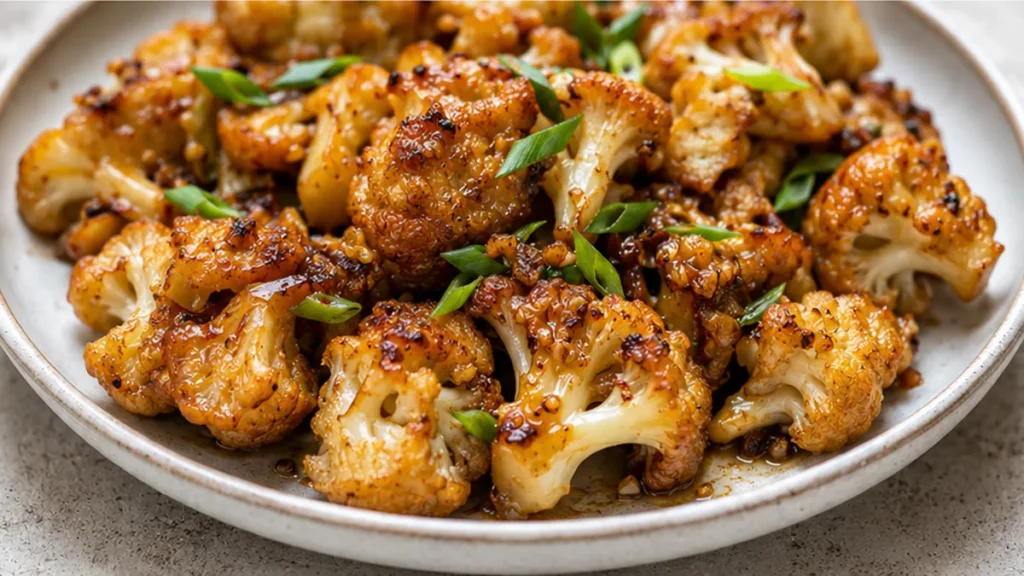
This coconut cauliflower adobo is a flavor sensation that redefines weeknight dinners. It transforms simple cauliflower into a dish bursting with savory, tangy, and slightly sweet notes, all brought together by a luscious, creamy sauce. Perfect for those seeking a quick, vegetarian meal without compromising on taste. The trick to adobo, infused with rich coconut milk and tender charred cauliflower, creates an incredibly satisfying and comforting dish. It’s surprisingly simple to make, proving that complex flavors can come from accessible ingredients and straightforward steps.
Key takeaways
- Roasting cauliflower is key to developing deep flavor and texture.
- The adobo sauce benefits from the richness of coconut milk and sweetness of honey.
- Ensure proper simmering time for the sauce to thicken and meld flavors.
- Uniform florets and adequate space during roasting prevent mushiness.

Coconut Cauliflower Adobo: Mind-Blowing Flavor!
Ingredients
- 1 large head cauliflower, cut into florets
- black pepper
- 2 tablespoons extra virgin olive oil
- 3/4 cup low sodium soy sauce
- 1/3 cup white vinegar
- 1/2 cup canned full fat coconut milk
- 1/4 cup honey
- 2 small shallots, halved or quarter
- 6 cloves garlic, minced or grated
- 4 dried bay leaves
Instructions
- Preheat the broiler to high. On a large baking sheet, toss the cauliflower florets with 2 tablespoons olive oil and a pinch of black pepper. Spread in an even layer.
- Transfer the baking sheet to the oven and broil for 3-4 minutes, until the cauliflower is just beginning to char.
- Meanwhile, in a large glass measuring cup, combine the soy sauce, white vinegar, coconut milk, honey, and 1/4 cup of water.
- In a large skillet with sides, heat the remaining 1 tablespoon olive oil over medium-high heat. Add the shallots and garlic, cook until fragrant, about 1-2 minutes.
- Reduce the heat to low and pour in the soy sauce mixture from step 3. Stir in the charred cauliflower and add the bay leaves. Bring the sauce to a boil, then reduce heat to medium.
- Simmer, uncovered, for 15 minutes, until the sauce is thickening slightly. If it thickens too fast, add ¼ cup of additional water. If not thickening enough, simmer for an additional 10 minutes. Remove and discard the bay leaves.
- Serve the coconut cauliflower adobo hot, ideally over rice, and garnish with green onions and a squeeze of lime juice if desired.
Notes
The technique that makes it
What makes this Coconut Cauliflower Adobo work is a few key techniques that transform humble cauliflower into a flavor powerhouse. First, the roasting of the cauliflower is crucial. Roasting at a relatively high temperature (around 400°F or 200°C) caramelizes the natural sugars in the cauliflower, developing a nutty depth of flavor and a slightly tender-crisp texture. This step is non-negotiable for achieving that ‘mind-blowing’ taste, as simply simmering or steaming the cauliflower won’t impart the same complexity. The Maillard reaction, responsible for browning and flavor development, is maximized during roasting.
Second, the adobo sauce itself is built upon layers of flavor. The combination of soy sauce (umami), vinegar (acidity), garlic, shallots, and bay leaves creates a classic adobo base. However, the addition of full-fat coconut milk and honey rounds out it. The coconut milk adds a creamy richness that balances the saltiness of the soy sauce and the tang of the vinegar, while also providing a subtle sweetness and tropical note. The honey further enhances this sweetness and contributes to a glossy finish on the cauliflower as it reduces. Simmering the sauce allows these flavors to meld and concentrate, and when the roasted cauliflower is tossed in, it absorbs this rich sauce, infusing every bite.
Troubleshooting
- Failure: Cauliflower is mushy. Fix: Ensure the cauliflower is cut into uniform florets for even cooking. Do not overcrowd the baking sheet when roasting; allow space for air circulation to promote browning rather than steaming. Roasting at the correct temperature (around 400°F/200°C) is key to achieving a tender-crisp texture.
- Failure: Sauce is too thin. Fix: Simmer the sauce uncovered for a longer period after adding the coconut milk and honey. This allows excess liquid to evaporate, concentrating the flavors and thickening the sauce to a syrupy consistency that coats the cauliflower well.
- Failure: Adobo flavor is too sharp or one-dimensional. Fix: Ensure adequate simmering time for the sauce to allow flavors to meld. Taste and adjust seasoning if necessary; a pinch more honey can round out sharpness, or a splash more soy sauce can deepen the umami. Ensure the bay leaves have infused sufficiently.
- Failure: Cauliflower is bland. Fix: Make sure the cauliflower is well-seasoned with black pepper before roasting. Don’t skimp on the garlic and shallots in the sauce, and ensure the soy sauce is a good quality, flavorful variety.
Substitutions
- Soy Sauce: Tamari can be used for a gluten-free option. The flavor profile is similar, though tamari may be slightly less salty, so adjust accordingly.
- Honey: Maple syrup or agave nectar can be used as vegan or alternative sweeteners. The flavor will be slightly different but will provide the necessary sweetness and gloss.
- Coconut Milk: A lighter coconut milk can be used, but the sauce may be thinner and less rich. For a dairy-based option, heavy cream could be used, though it will alter the flavor profile significantly, losing the tropical note.
- Shallots: Red onion or yellow onion, finely minced, can be substituted for shallots. The flavor will be slightly more pungent and less delicate.
Pro tips
- For extra char, don’t overcrowd the baking sheet when broiling the cauliflower.
- Adjust the soy sauce and vinegar to your personal preference for saltiness and tang.
- If you prefer a thicker sauce, simmer uncovered for a few extra minutes, but watch carefully to prevent burning.
Enjoy this unique take on adobo! Experiment with serving it over different grains or with a side of fresh vegetables. Bon appétit!
More from Vegan Bowls →
Read also on TastyBend: Sweetgreen Nutrition Facts: Complete Expert Guide to Healthy Fast-Casual Dining.
Frequently asked questions
Can I use regular cauliflower instead of frozen for this adobo?
Yes, you can use fresh cauliflower. Cut it into bite-sized florets and roast them until tender and slightly browned before adding them to the sauce. This will ensure a similar texture and flavor profile to using frozen cauliflower.
How long does Coconut Cauliflower Adobo last in the fridge?
This adobo can be stored in an airtight container in the refrigerator for up to 3-4 days. The flavors often meld and deepen overnight, making leftovers quite delicious. Reheat gently on the stovetop or in the microwave.
What can I serve with Coconut Cauliflower Adobo?
This adobo pairs wonderfully with steamed jasmine rice or brown rice. For added freshness, serve it with a side of pickled red onions or a simple cucumber salad. A sprinkle of fresh cilantro also enhances the flavors.
Can I make this adobo ahead of time?
Absolutely! The sauce can be made a day in advance and stored in the refrigerator. Roast the cauliflower just before serving or up to a day ahead and reheat gently with the sauce. This makes weeknight meal prep much easier.