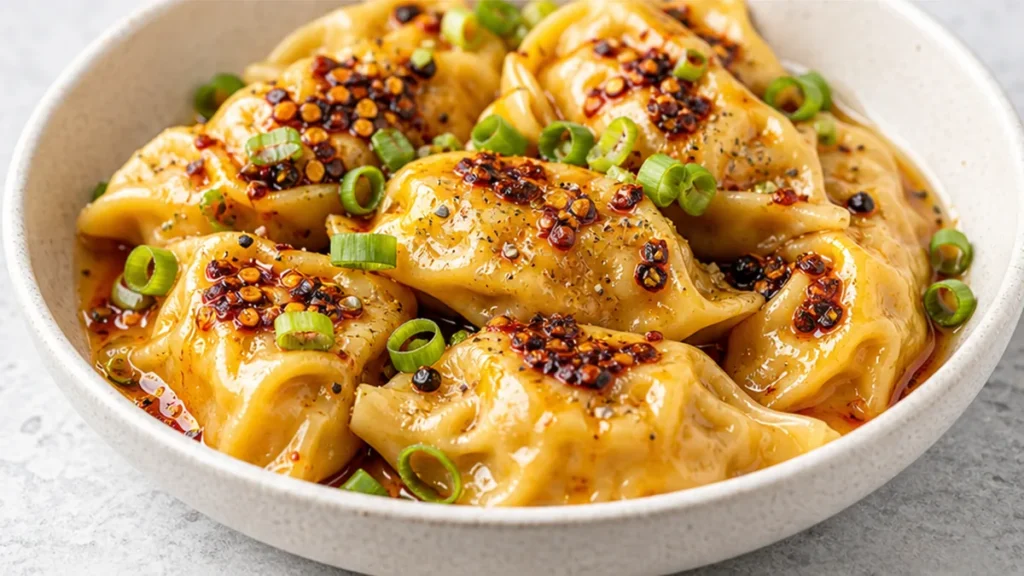
These chili crisp butternut squash dumplings are a dish, offering a unique fusion of sweet, spicy, and savory flavors. Perfect for an adventurous palate, they combine the comforting sweetness of roasted squash with the exciting kick of chili crisp, all wrapped in delicate dumplings and served in an aromatic ginger-soy broth. This recipe is designed to impress, bringing together bold tastes and satisfying textures for an unforgettable meal. The star of this dish is undoubtedly the butternut squash filling, enhanced with warming curry powder and a touch of honey for balanced sweetness. The crispy-bottomed dumplings paired with the fragrant broth create a multi-layered sensory experience that is both comforting and exhilarating. They are ideal for dinner parties or a special weeknight treat.
Key takeaways
- Roast or steam butternut squash until very tender for a smooth, flavorful filling.
- Ensure the filling is thick and not watery to prevent wrappers from tearing.
- Seal dumplings firmly by moistening edges and pressing firmly to prevent bursting during cooking.
- Pan-fry or steam until golden brown and cooked through.
Butternut Squash Dumplings with Chili Crisp
Ingredients
- 4 cups cubed butternut squash
- 2 tablespoons extra virgin olive oil
- 1 tablespoon spicy curry powder
- 2 teaspoons honey
- 2 green onions, chopped
- Freshly ground black pepper
- 24-26 round dumpling wrappers
- 1/4 cup sesame seeds
- 2 tablespoons salted butter
- 3-4 medium shallots, sliced
Instructions
- Preheat oven to 425°F (220°C). Toss cubed butternut squash with olive oil and curry powder on a baking sheet.
- Bake for 25-30 minutes, or until tender.
- In a bowl, mash the roasted squash with green onions, honey, and a pinch of black pepper until combined.
- Spoon about 1 tablespoon of the squash filling onto the center of each dumpling wrapper. Brush water around the edges. Fold the wrapper up and around the filling, pinching in the center to seal.
- Place sesame seeds in a shallow bowl. Brush the bottoms of the dumplings lightly with water, then dredge them in the sesame seeds.
- For the broth: Melt butter in a large skillet over medium-high heat. Add sliced shallots and cook until softened, about 5 minutes. Add ginger and garlic, cook for 1 minute. Stir in broth, soy sauce, and cinnamon. Simmer over low heat for 10 minutes.
- Heat a few tablespoons of oil in a large skillet over medium heat. Add the dumplings, bottoms down, and cook until golden brown, 2-3 minutes. Carefully pour 1/4 cup of water into the skillet, cover immediately, reduce heat to medium-low, and steam for 4-5 minutes.
- Arrange the steamed dumplings in shallow bowls. Ladle the hot ginger-soy broth over them. Top generously with chili crisp sauce and extra green onions. Enjoy!
Notes
The technique that makes it
The success of these butternut squash dumplings hinges on two key techniques: achieving the right filling consistency and proper sealing. First, ensure the butternut squash is cooked until very tender. Roasting or steaming are ideal methods. Roasting caramelizes the natural sugars in the squash, adding depth of flavor and a slightly drier texture, which is crucial for the filling. Overcooked, watery squash will result in a mushy filling that can make the wrappers tear during cooking. Once cooked, mash the squash thoroughly. A food processor can be used for a smoother texture, but avoid over-processing, which can create a gummy consistency. The goal is a thick, spreadable paste, not a liquid. Incorporating the curry powder, honey, and olive oil at this stage helps bind the flavors and adds moisture without making the mixture too wet. Season generously with black pepper. The second critical technique is the sealing of the dumplings. Ensure the edges of the dumpling wrappers are kept moist. A small bowl of water is sufficient. Place a spoonful of the squash filling in the center of a wrapper, moisten half the edge with water, and then fold the wrapper over. Press firmly to seal, ensuring no air pockets remain. You can create decorative pleats for a more professional finish, but a simple, firm seal is paramount to prevent the dumplings from opening during pan-frying or steaming. The combination of a firm, flavorful filling and a secure seal guarantees that the delicious butternut squash mixture stays contained and cooks evenly.
Troubleshooting
- Problem: Dumpling wrappers tearing during sealing.
Fix: Ensure the filling is not too wet or chunky. Mash the squash very smoothly and allow any excess moisture to evaporate. Also, avoid overfilling the wrappers; use just enough filling to cover the center without reaching the edges. - Problem: Dumplings opening during cooking.
Fix: This usually indicates a poor seal. Moisten the wrapper edges thoroughly with water before folding. Press the edges together firmly, ensuring a complete seal without any gaps. Pleating can help reinforce the seal. - Problem: Filling is too dry and crumbly.
Fix: Add a touch more olive oil or a teaspoon of water to the mashed squash mixture to improve consistency and spreadability. Ensure the squash was cooked until very tender before mashing. - Problem: Dumplings sticking to the pan.
Fix: Ensure there is enough oil and butter in the pan when pan-frying. Do not overcrowd the pan, as this can lower the temperature and lead to sticking. Cook in batches if necessary.
Substitutions
- Butternut Squash: Roasted sweet potato or pumpkin can be used as a substitute for butternut squash, offering a similar sweetness and texture. The flavor profile will be slightly different but still delicious.
- Spicy Curry Powder: A blend of cumin, coriander, turmeric, and a pinch of cayenne pepper can be used if spicy curry powder is unavailable. Adjust the cayenne to control the heat level.
- Honey: Maple syrup or agave nectar can be substituted for honey. These sweeteners will impart a slightly different flavor but will work effectively to balance the savory notes.
- Round Dumpling Wrappers: Wonton wrappers can be used, though they are typically smaller and thinner, requiring a slightly different folding technique and potentially a shorter cooking time.
Pro tips
- For extra flavor, roast the butternut squash with a pinch of smoked paprika.
- Ensure the dumpling wrappers are sealed tightly to prevent filling leakage during steaming.
- Adjust the amount of chili crisp to your personal spice preference.
- Use homemade ginger-soy broth for a richer, more authentic taste.
Experience the delightful fusion of sweet squash and spicy chili crisp in these unique dumplings. A truly memorable dish!
More from Vegan Bowls →
Read also on TastyBend: Sweetgreen Nutrition Facts: Complete Expert Guide to Healthy Fast-Casual Dining.
Frequently asked questions
Can I make butternut squash dumplings ahead of time?
Yes, you can prepare the dumpling filling and wrappers separately up to two days in advance. Store the filling in an airtight container in the refrigerator. Keep the wrappers separated with parchment paper and store them in a sealed bag. Assemble just before cooking to prevent the wrappers from drying out or becoming soggy.
What can I substitute for chili crisp in this recipe?
If you don’t have chili crisp, you can create a similar flavor profile by sautéing minced garlic and ginger in oil, then adding red pepper flakes, a pinch of sugar, and a splash of soy sauce. Alternatively, a good quality chili oil with some added crispy fried shallots or garlic can work as a substitute.
How do I know when the butternut squash dumplings are cooked?
The dumplings are cooked when they float to the surface of the boiling water and the wrappers appear translucent. If pan-frying, they should be golden brown and crispy on the bottom, and the filling should be heated through. A gentle poke should reveal a tender wrapper.
How should I store leftover butternut squash dumplings?
Allow any cooked dumplings to cool completely. Store them in a single layer on a baking sheet lined with parchment paper, then transfer to an airtight container. Refrigerate for up to 3 days. Reheat by pan-frying or gently steaming to restore their texture.