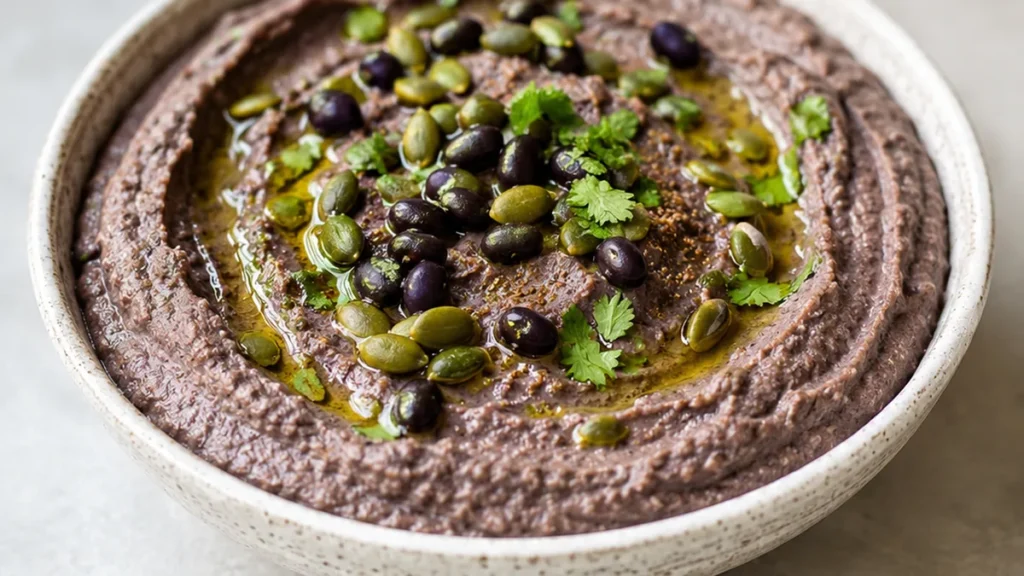
The secret to an exceptionally creamy black bean hummus lies in the slow emulsification of olive oil and thorough processing. This recipe, featuring avocado as a natural enhancer, transforms simple ingredients into a rich, satisfying dip. This black bean hummus offers a delicious and healthy alternative to traditional chickpea versions, making it ideal for those seeking new flavors or a versatile appetizer. Its quick preparation makes it perfect for last-minute gatherings or meal prep.
Key takeaways
- The slow addition of olive oil while processing creates a stable emulsion for creaminess
- Rinsing and draining canned black beans removes excess liquid and sodium for better flavor
- Processing time is key to achieving a smooth, non-gritty texture
- Cilantro stems add significant flavor and blend seamlessly into the dip
Creamy Black Bean Hummus: Your New Favorite Dip
Ingredients
- 1/3 cup Pepitas (pumpkin seeds)
- 1 small garlic clove
- 1 15 ounce can black beans, rinsed and drained
- 3 tablespoon olive oil
- 2 tablespoon water
- Juice of 1/2 a Lemon
- 1/2 tsp cumin
- 1/4 tsp kosher salt
- 1/4 cup Cilantro, chopped (you can use the stems u2014 they have tons of flavor)
Instructions
- Place the pepitas in a dry saut
- Place the pepitas and garlic clove in a food processor and pulse for 1 minute.
- Add the rinsed and drained black beans, olive oil, water, lemon juice, cumin, and kosher salt to the food processor and puree until smooth.
- Stir in the chopped cilantro.
- Serve immediately, perhaps with toasted corn tortillas.
Notes
– To store, transfer the black bean hummus to an airtight container and refrigerate for up to 5 days. You can also freeze it for up to 1 month; thaw overnight in the fridge before serving. If it thickens too much after refrigeration, stir in a teaspoon of water or lemon juice to restore consistency.
– When toasting pepitas, listen for a subtle popping sound and a fragrant aroma, which signals they are perfectly done. Over-toasting can make them bitter, so keep a close eye on them. Nutrition information is an estimate, calculated automatically. Values vary with brands, substitutions and portion sizes.
The Science of Smooth Black Bean Hummus
Achieving a velvety smooth black bean hummus hinges on two critical processes: proper bean preparation and emulsion formation. Rinsing canned black beans thoroughly removes excess sodium and the starchy canning liquid, which can introduce off-flavors and impede the smooth blending of the dip. The key to its creamy texture, similar to traditional hummus, is the slow, steady drizzle of olive oil while the food processor is running. This creates a stable emulsion, where the oil molecules encapsulate the water-soluble components, resulting in a cohesive and luxurious texture. The fat content from the pepitas also contributes to this richness, creating a more satisfying mouthfeel.
Troubleshooting Common Issues
- Hummus is too thick: Gradually add more water, one teaspoon at a time, while the food processor is running until the desired consistency is reached. Avoid adding too much at once, as it can quickly become too thin.
- Hummus is gritty or not smooth: Ensure you have processed the ingredients for a sufficient duration. Scrape down the sides of the food processor bowl periodically. If it remains gritty, continue processing for an additional 1-2 minutes. Older or less hydrated beans can sometimes be tougher to break down.
- Hummus lacks flavor: Taste and adjust seasonings. Often, a bit more kosher salt, an extra squeeze of lemon juice for brightness, or another pinch of cumin can significantly enhance the flavor. Using fresh, bright cilantro is also crucial.
- Hummus is watery: This issue typically arises from adding too much liquid too quickly. While difficult to fully reverse, you can try incorporating a few more pepitas or a tablespoon of tahini (if available) to help thicken it, though the texture may still be slightly compromised.
Substitutions and Variations
- Pepitas: Sunflower seeds or a tablespoon of tahini can be substituted. Sunflower seeds will offer a similar nutty depth, while tahini provides a more classic hummus flavor and contributes to creaminess. Be aware of any nut allergies when substituting.
- Cilantro: Fresh parsley can be used for a milder, more universally appealing herbaceous note. The flavor will be less distinct than cilantro but still offers a fresh, green taste.
- Black Beans: While this recipe is tailored for black beans, other canned beans like cannellini or pinto beans can be used for a different flavor profile. Cannellini beans, for instance, tend to yield an exceptionally creamy result due to their softer texture.
- Lemon Juice: Lime juice makes an excellent alternative, providing a tangier and brighter flavor. Use the same quantity as specified for lemon juice.
Pro tips
- For the silkiest texture, process the hummus for an additional minute or two beyond smooth, ensuring you scrape down the sides of the food processor bowl several times.
- Toasting pepitas until fragrant but not burnt enhances their nutty flavor without bitterness; listen for a subtle popping sound.
- If storing, this black bean hummus can be refrigerated for up to 5 days or frozen for up to 1 month. Thaw overnight and stir in a splash of water if needed to regain consistency.
This black bean hummus is a fantastic way to enjoy a healthy, flavorful, and easy-to-make dip. Experiment with a pinch of smoked paprika for an extra layer of flavor. Enjoy!
Frequently asked questions
Can I make this black bean hummus ahead of time?
Yes, you can prepare this hummus up to 5 days in advance and store it in an airtight container in the refrigerator. For longer storage, freeze it for up to 1 month and thaw overnight in the fridge before serving. Stir in a bit of water or lemon juice to refresh the consistency if needed.
What can I substitute for pepitas?
Sunflower seeds are an excellent substitute for pepitas, offering a similar nutty flavor and contributing to the creamy texture. Alternatively, a tablespoon of tahini can be used for a more traditional hummus profile, though it will alter the flavor slightly. Avoid nuts if there are allergy concerns.
How do I fix gritty black bean hummus?
Gritty hummus typically means it hasn’t been processed long enough. Continue pureeing the mixture in the food processor for an additional 1-2 minutes, frequently scraping down the sides. Ensure your black beans are well-rinsed and drained, as residual canning liquid can sometimes affect texture.
Can I use lime juice instead of lemon juice?
Yes, lime juice can be used as a direct 1:1 substitute for lemon juice in this recipe. It will impart a tangier and brighter flavor profile, which can be a delightful variation. Taste and adjust the amount to your preference.