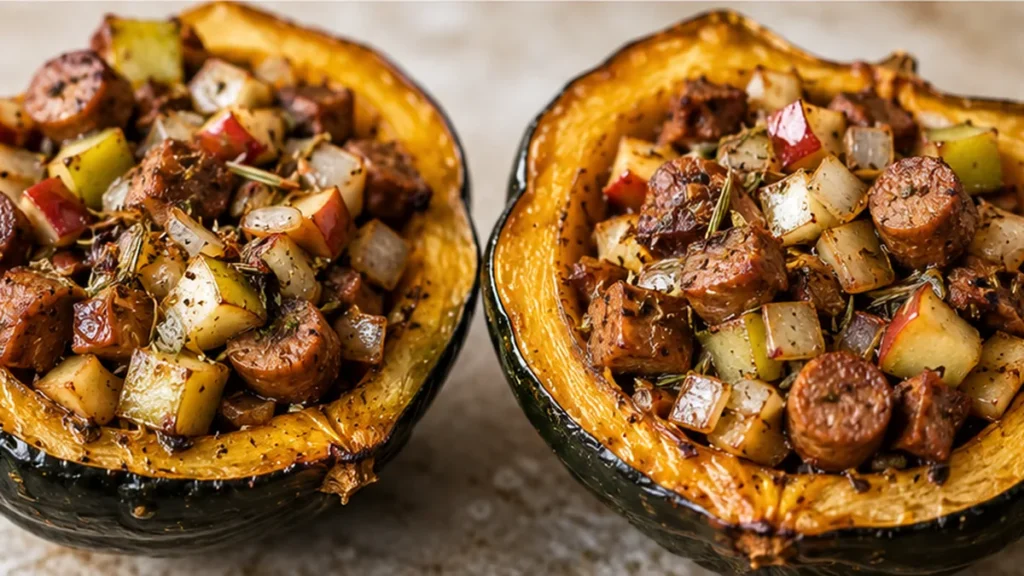
The key to a truly delicious stuffed acorn squash lies in perfectly roasted, tender squash that cradles a flavorful, well-balanced filling. This vegan stuffed acorn squash recipe combines the earthy sweetness of roasted squash with a savory, herbaceous plant-based sausage and apple mixture, creating a satisfying dish that appeals to everyone. This recipe is designed to be both comforting and wholesome, making it an excellent choice for a weeknight dinner or a special holiday side. The blend of textures and tastes in this stuffed acorn squash ensures a memorable dining experience, highlighting the best of autumn produce.
Key takeaways
- Select firm, heavy acorn squash for the best flavor.
- Roast the squash at 400°F for 25-30 minutes for optimal tenderness.
- Balance the stuffing with moisture from apples and herbs for depth of flavor.
- Ensure even cooking by using squash of similar size and rotating the baking sheet.
Cozy Vegan Stuffed Acorn Squash: Fall’s Best Meal!
Ingredients
- 2 medium acorn squash (about 1 lb 5 oz–1 lb 11 oz each)
- 5 teaspoons avocado oil (divided, plus more for oiling squash)
- 4 vegan sausages (chopped (about 12.95 oz total; I use Field Roast Smoked Apple & Sage))
- 2 cups chopped onion
- Salt (to taste)
- 4 garlic cloves (minced)
- 4 small apples (chopped (about 2 cups))
- 1/2 teaspoon rubbed sage
- 1 teaspoon dried rosemary
- 1 teaspoon dried thyme
Instructions
- Preheat oven to 400 degrees F.
- Cut acorn squash in half length-wise, avoiding the stem directly. Slice next to it or cut mostly down and pull apart, letting the stem stay on one side.
- Scoop out the seeds from the squash halves using a spoon. Discard or roast them separately.
- Drizzle avocado oil on the cut side of the squash halves and place them cut side down onto a baking sheet. (Line with parchment for easier cleanup).
- Roast the squash for 30 minutes, or until the flesh is easily pierced with a fork.
- While squash roasts, prepare the stuffing. Heat a large skillet to medium and add a tablespoon of avocado oil. Add chopped vegan sausage and brown, flipping occasionally. Transfer browned sausage to a plate.
- If the skillet is dry, add 2 teaspoons more avocado oil. Add chopped onion and a pinch of salt. Sauté until softened and fragrant, about 5 minutes. Add minced garlic and sauté for about 30 seconds more.
- Stir in chopped apple and sauté a few minutes. Add rubbed sage, dried rosemary, dried thyme, and a few twists of pepper. Combine with a spatula and cook for about a minute. Return the reserved browned sausage to the skillet and mix well.
Notes
Choosing the Right Acorn Squash for Stuffing
When selecting acorn squash, look for specimens that are firm, heavy for their size, and have a rich, dark green color. The ideal weight for each squash is between 1 lb 5 oz and 1 lb 11 oz. This ensures they are mature and will hold up well during cooking while providing a sweet flavor to complement the stuffing.
Mastering the Cooking Time for Perfectly Tender Squash
To achieve tender acorn squash, preheat your oven to 400°F (204°C). Cut the squash in half, remove seeds, and rub the insides with avocado oil. Roast cut-side down for 25-30 minutes. This method allows for even cooking and caramelization, enhancing the natural sweetness of the squash.
Balancing Flavors in the Stuffing Mixture
The stuffing for acorn squash is crucial for flavor depth. Start by sautéing chopped onions in 2 teaspoons of avocado oil until translucent, about 5-7 minutes. Add minced garlic and cook for an additional minute. Incorporate chopped vegan sausages, apples, and herbs (sage, rosemary, thyme) to create a harmonious blend. The apples add sweetness, while the herbs provide aromatic complexity.
Common Stuffing Mistakes and How to Avoid Them
- Too Dry Stuffing: If your stuffing turns out dry, it may be due to insufficient moisture from the apples or an overcooked mixture. Add a splash of vegetable broth to moisten it.
- Overly Salty Flavor: Using too much salt can overpower the dish. Start with a small amount and adjust gradually to taste.
- Uneven Cooking: If the squash is unevenly cooked, ensure that all halves are of similar size and thickness before roasting. Rotate the baking sheet halfway through cooking for even heat distribution.
Unique Characteristics of Stuffed Acorn Squash
This dish stands out due to its combination of sweet and savory elements, with the acorn squash providing a natural vessel for the stuffing. Unlike other stuffed vegetables, acorn squash has a unique texture that becomes tender yet retains a slight firmness, allowing it to hold its shape and flavors beautifully during baking.
How to Prepare Stuffed Acorn Squash in Advance
Preparing stuffed acorn squash ahead of time can save you valuable cooking time on busy days. To make this dish in advance, you can prepare the stuffing mixture up to 24 hours ahead. Store it in an airtight container in the refrigerator. When ready to cook, cut and prepare the acorn squash, drizzle with avocado oil, and roast for about 30 to 40 minutes at 400°F (204°C) until tender. Fill the squash with the pre-prepared stuffing and return it to the oven for an additional 15 to 20 minutes to heat through. This method ensures that the flavors meld beautifully while allowing for a convenient meal option.
Adjusting Serving Sizes for Gatherings
Scaling the recipe for stuffed acorn squash is straightforward. Each medium acorn squash serves about two people, depending on the appetite and accompanying dishes. To serve a larger group, simply multiply the ingredients accordingly. For example, if you plan to serve eight people, use four acorn squashes and double the stuffing ingredients. Keep in mind that cooking times may vary slightly based on the number of squashes in the oven; ensure they are all evenly spaced for proper heat circulation. If you have leftovers, they can be stored for later enjoyment.
Choosing the Right Equipment for Even Cooking
The equipment you use can significantly impact the cooking results of stuffed acorn squash. A baking sheet lined with parchment paper helps prevent sticking and promotes even roasting. If available, use a convection oven, which circulates air for more consistent cooking. When stuffing the squash, a spoon or small scoop can help ensure even distribution of the filling. If you prefer a crispy topping, consider using a broiler for the last few minutes of cooking, keeping a close eye to prevent burning.
How Seasonal Ingredients Affect Flavor and Texture
Using seasonal ingredients can enhance the flavor profile of your stuffed acorn squash. In fall, apples are at their peak sweetness, which complements the savory vegan sausage beautifully. If you use out-of-season apples, they may lack the desired sweetness and juiciness, leading to a less flavorful dish. Similarly, fresh herbs like rosemary and thyme provide a fragrant note that can diminish when using dried versions. Always aim for the freshest ingredients available to achieve the best balance of flavors and textures in this dish.
How to Store Leftover Stuffed Acorn Squash
Proper storage of leftover stuffed acorn squash is crucial for maintaining its flavor and texture. Allow the stuffed squash to cool to room temperature before transferring it to an airtight container. It can be stored in the refrigerator for up to 4 days. For longer storage, consider freezing the stuffed squash. Wrap each half tightly in plastic wrap and then place it in a freezer-safe container. It can last up to 3 months in the freezer. When you’re ready to enjoy it again, thaw it overnight in the refrigerator and reheat in the oven at 350°F (175°C) for about 20-25 minutes, or until heated through.
Scaling the Recipe for Larger Gatherings
Scaling the recipe for a larger gathering is straightforward with stuffed acorn squash. Each squash serves about two people, so for a gathering of eight, you would need four medium acorn squashes. When increasing the quantity, maintain the same ratios for the stuffing ingredients. For instance, if using 8 sausages instead of 4, ensure you also double the onions, apples, and herbs accordingly. However, keep in mind that cooking time may vary slightly; larger batches may require a few extra minutes in the oven. Monitor the squash for tenderness to ensure even cooking.
Choosing the Right Equipment for Even Baking
Using the right equipment can significantly affect the outcome of your stuffed acorn squash. A baking dish with high sides is ideal as it can catch any juices that may escape during cooking. Additionally, using a rimmed baking sheet can help prevent spills and allow for even heat distribution. If you have a convection oven, consider using it to promote even cooking and browning. The fan in a convection oven circulates hot air, which can help the squash cook more evenly and achieve a desirable caramelization on the stuffing.
How to Prepare Stuffed Acorn Squash in Advance
Preparing stuffed acorn squash in advance can save time and enhance flavors. To do this, you can prepare the stuffing a day ahead. Cook the vegan sausage, onions, garlic, and apples, allowing the mixture to cool before refrigerating. When ready to serve, simply hollow out the acorn squash, fill it with the prepped stuffing, and bake. This method not only reduces the active cooking time but also allows the spices and ingredients to meld together for a more robust flavor profile. If you choose to assemble the squash and stuffing the night before, cover them tightly with plastic wrap and refrigerate. Bake them straight from the fridge, adding a few extra minutes to the cooking time to ensure they heat through completely.
Understanding the Impact of Ingredient Quality on Flavor
The quality of your ingredients significantly affects the final outcome of your stuffed acorn squash. Fresh, seasonal apples will impart a crisp sweetness that enhances the overall dish, while older apples may lack flavor and texture. Similarly, the choice of vegan sausage is crucial; a high-quality product like Field Roast provides a smoky richness that complements the natural sweetness of the squash and apples. When selecting herbs, fresh herbs can elevate the dish, but dried herbs are convenient and still provide flavor. Remember that the freshness of your spices can also alter the taste; always check for potency before using. Seasonal variations can lead to differences in sweetness and acidity levels in apples, so adjust your seasoning accordingly to maintain balance.
How to Prepare Stuffed Acorn Squash Ahead of Time
Preparing stuffed acorn squash in advance can streamline your cooking process, especially during busy fall gatherings. To make-ahead, follow these steps: Cook the stuffing mixture completely and allow it to cool. Cut and scoop the acorn squash, then brush with avocado oil and season with salt. You can store the squash halves in an airtight container in the refrigerator for up to 2 days. The stuffing can also be refrigerated for the same duration. When ready to bake, fill the squash with the chilled stuffing and bake at 375°F (190°C) for 30-35 minutes or until heated through and the squash is tender. This method maintains the flavors without compromising texture.
Understanding the Impact of Ingredient Quality on Flavor
The quality of ingredients significantly influences the flavor profile of your stuffed acorn squash. Using fresh, organic apples will enhance sweetness and provide a crisp texture, while high-quality vegan sausages contribute to the overall savoriness of the dish. Additionally, fresh herbs like rosemary and thyme can elevate the dish’s aromatic qualities compared to their dried counterparts. When selecting acorn squash, ensure they are firm and free of blemishes; this indicates freshness. The difference in ingredient quality can yield a dish that feels vibrant and wholesome versus one that appears lackluster and bland.
Pro tips
- For extra tenderness, roast the squash cut-side up for the last 10 minutes after flipping.
- Pre-browning the vegan sausage before adding it to the vegetables enhances its texture and deepens the overall flavor of the stuffing.
- Doneness check: The internal temperature of the squash flesh should easily give way to a fork. For a firmer texture, reduce roasting time by 5 minutes.
- Leftovers can be stored in an airtight container in the refrigerator for up to 3 days. Reheat gently in the oven at 300°F (150°C) until warmed through, or microwave in short bursts.
This vegan stuffed acorn squash is a testament to how satisfying and rich plant-based meals can be. Experiment with different plant-based sausages or add a sprinkle of toasted pecans for extra crunch. Enjoy this comforting taste of fall!
Frequently asked questions
Can I use a different type of squash for this recipe?
Yes, while acorn squash is ideal for its shape and flavor, you can substitute butternut or delicata squash. Keep in mind that cooking times may vary slightly due to different densities.
How do I store leftovers of stuffed acorn squash?
Store leftover stuffed acorn squash in an airtight container in the refrigerator for up to 3 days. Reheat in the oven at 350°F (175°C) until warmed through for best results.
What can I add to the stuffing for extra protein?
To increase protein content, consider adding cooked quinoa, lentils, or chickpeas to the stuffing mixture. This will enhance the nutritional profile while maintaining the dish’s flavor.
Is it necessary to peel the apples before adding them to the stuffing?
Peeling the apples is not necessary; the skin adds texture and nutrients. However, if you prefer a smoother stuffing, feel free to peel them before chopping.
More from Vegan Bowls →