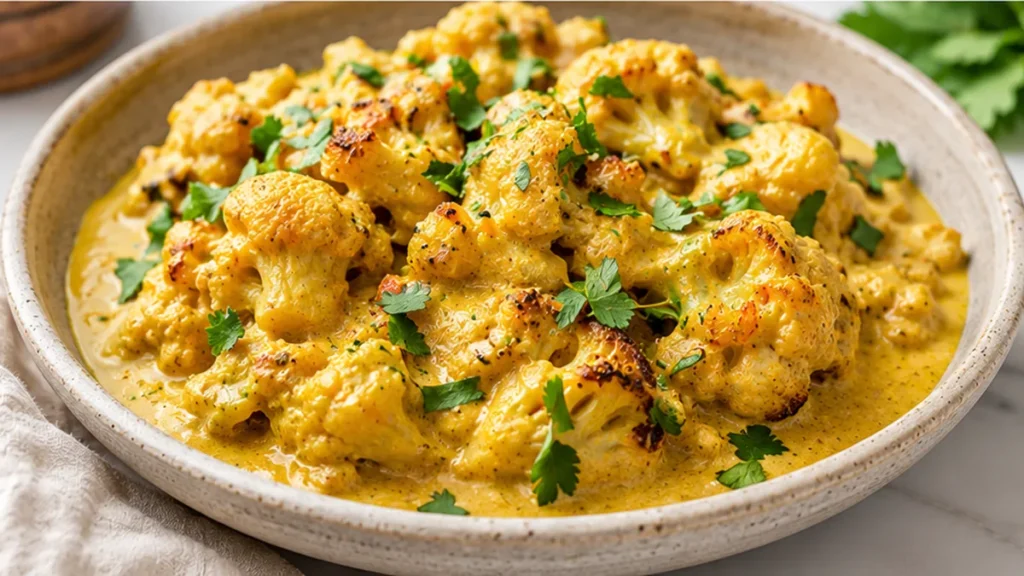
This Indian coconut cauliflower curry is ready in 30 minutes. It uses simple ingredients to create a rich, creamy sauce. This recipe transforms cauliflower into a flavorful main dish.
Key takeaways
- Toast spices with aromatics before adding liquid to deepen flavor.
- Use full-fat coconut milk for a rich, creamy sauce.
- Simmer cauliflower in the sauce until tender-crisp, avoiding overcooking.
- Adjust seasoning and add acid (like lime juice) at the end to enhance taste.
Indian Coconut Butter Cauliflower in 30 Mins
Ingredients
- 1 large head cauliflower, cut into florets
- 2 1/3 cups canned full fat coconut milk
- 4 cloves garlic, minced or grated
- 2 inches fresh ginger, grated
- Kosher salt
- Black pepper
- 2 tablespoons extra virgin olive oil
- 1/2 yellow onion, chopped
- 1 tablespoon garam masala
- 2 teaspoons yellow curry powder
- 1/2 teaspoon turmeric
Instructions
- Preheat the broiler to high. Grease a baking sheet with olive oil.
- In a large bowl, combine the cauliflower, 1/3 cup coconut milk, 2 cloves chopped garlic, 1 tablespoon grated ginger, and a pinch of salt. Let sit 10 minutes to “marinate”. Spread the cauliflower in an even layer on the prepared baking sheet. Transfer to the oven and broil for 3-4 minutes, until the cauliflower is just beginning to char on the edges.
- Meanwhile, heat the olive oil in a large skillet over medium heat. Add the onion and cook 5 minutes or until fragrant. Add the remaining garlic and ginger, cooking another 5 minutes.
- Stir in the garam masala, curry powder, turmeric, and cayenne, and cook until fragrant, about 1 minute.
- Add the tomato paste and remaining 2 cups coconut milk. Stir to combine, bring the sauce to a boil, cook 5 minutes or until the sauce thickens slightly. Stir in coconut oil. If the sauce seems thick, thin with 1/2 to 1/2 additional coconut milk or water.
- Add the cauliflower and any juices on the pan and cook, stirring occasionally, until the sauce thickens slightly, about 5 minutes.
- Serve the cauliflower and sauce over bowls of rice with fresh naan and mango chutney, if desired. Enjoy!
Notes
The technique that makes it
What makes this Indian Coconut Butter Cauliflower work is its ability to transform humble cauliflower into a rich, creamy, and flavorful dish in under 30 minutes. The key technique involves building a robust flavor base before introducing the cauliflower. Starting with sautéing the onion in olive oil until softened and translucent releases its natural sweetness. Then, the minced garlic and grated ginger are added and cooked briefly until fragrant. This step is crucial for mellowing the raw pungency of garlic and ginger and developing their aromatic compounds. Immediately following, the spices – garam masala, curry powder, and turmeric – are toasted in the hot oil with the aromatics. Toasting spices awakens their essential oils, intensifying their flavor and aroma significantly. This brief cooking period prevents them from burning while unlocking their full potential. The full-fat coconut milk is then introduced, providing a creamy, slightly sweet base that emulsifies beautifully with the spices and aromatics. Using full-fat coconut milk is essential for achieving the desired richness and velvety texture; light coconut milk will result in a thinner, less satisfying sauce. The cauliflower florets are then added and simmered directly in this flavorful sauce. This allows the cauliflower to absorb the complex flavors while cooking to a tender-crisp consistency. Overcooking will lead to mushy cauliflower, so vigilance is key to achieving the perfect texture within the 30-minute timeframe.
Troubleshooting
- Failure: Sauce is too thin. Fix: Simmer uncovered for an additional 5-10 minutes to allow excess liquid to evaporate. Alternatively, whisk together 1 tablespoon of cornstarch or arrowroot powder with 2 tablespoons of cold water to create a slurry, then stir it into the simmering sauce until thickened.
- Failure: Cauliflower is mushy. Fix: This indicates overcooking. For future attempts, add the cauliflower florets later in the cooking process, ensuring they are added only after the sauce has reached a simmer and is ready to cook the vegetables. Aim for a simmer, not a rolling boil, to cook the cauliflower gently.
- Failure: Flavor is bland or one-dimensional. Fix: Ensure you are toasting the spices adequately before adding the liquid. Also, don’t skimp on the salt; season generously throughout the cooking process. A final squeeze of fresh lime or lemon juice can brighten the flavors considerably.
- Failure: Garlic and ginger taste raw or sharp. Fix: Cook the garlic and ginger for at least 1 minute after adding them to the pan, stirring constantly, until fragrant before adding the spices and liquids. This allows their pungent notes to mellow and sweeten.
Substitutions
- Cauliflower: Broccoli florets or Brussels sprouts (halved or quartered) can be used. Adjust cooking time as needed; broccoli may cook slightly faster, while Brussels sprouts might require a few extra minutes. The texture and flavor profile will change subtly.
- Full-fat Coconut Milk: Cashew cream (made by blending soaked cashews with water) can provide a similar richness, though it will lack the distinct coconut flavor. Heavy cream could also be used for richness, but it will alter the dish’s flavor significantly and is not dairy-free.
- Yellow Onion: Shallots can be substituted for a milder, slightly sweeter onion flavor. If unavailable, use the white or light green parts of leeks, sautéed until very soft.
- Garam Masala/Curry Powder/Turmeric: If you don’t have specific spice blends, you can approximate by using ground cumin, ground coriander, and a pinch of cayenne pepper for heat, alongside the turmeric. Adjust quantities to taste, as individual spice strengths vary.
Pro tips
- For an extra flavorful char, ensure your broiler is fully preheated.
- Adjust the spice level by adding more or less curry powder and turmeric.
- If the sauce becomes too thick, thin it with a splash of water or extra coconut milk.
- Serve with basmati rice, naan bread, or your favorite grain for a complete meal.
Enjoy this remarkably simple yet deeply flavorful Indian Coconut Butter Cauliflower. It’s a testament to how quickly delicious, exotic meals can be prepared at home.
More from Vegan Bowls →
Frequently asked questions
Can I make Indian Coconut Butter Cauliflower ahead of time?
Yes, this dish can be made a day in advance. Store it in an airtight container in the refrigerator. Reheat gently on the stovetop or in the microwave, adding a splash of water or coconut milk if it seems too thick. The flavors often meld and improve overnight.
What can I serve with Coconut Butter Cauliflower?
This dish pairs wonderfully with steamed basmati rice or quinoa for a complete meal. For added texture and freshness, serve with a side of cucumber raita or a simple green salad. Fresh cilantro is also a great garnish.
How do I know when the cauliflower is cooked?
The cauliflower should be tender-crisp. You can test for doneness by piercing a florets with a fork; it should yield easily but not be mushy. Avoid overcooking, as the cauliflower will continue to soften slightly as it rests in the sauce.
What can I substitute for coconut milk in this recipe?
If you don’t have coconut milk, you can use cashew cream for a similar richness. Alternatively, a full-fat oat milk or even a blend of vegetable broth and a tablespoon of tahini can work, though the flavor profile will be slightly different.