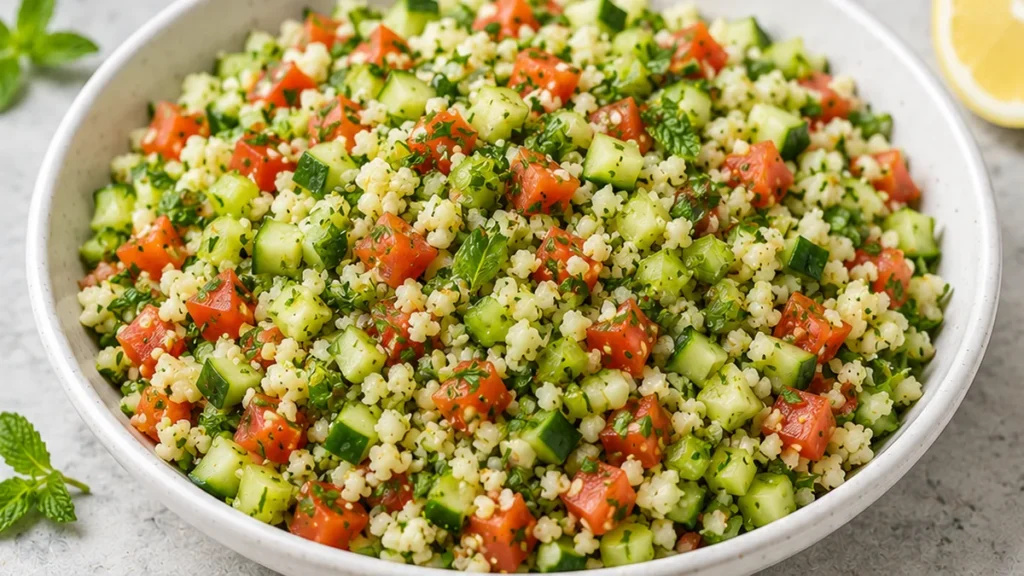
Cauliflower tabbouleh is a brilliant, low-carb twist on the classic Middle Eastern parsley salad. This recipe swaps traditional bulgur wheat for finely riced cauliflower, creating a refreshing and nutrient-dense dish perfect for a light lunch or a bright side. It’s packed with crisp vegetables, an abundance of fresh herbs like mint and parsley, and brought together with a zesty lemon and avocado oil dressing. This cauliflower tabbouleh is an excellent option for those looking to reduce carbs or simply enjoy a lighter, more vegetable-forward meal. The preparation is straightforward, making it accessible even for beginner cooks, and the resulting flavors are bright, clean, and incredibly satisfying.
Key takeaways
- The texture of the riced cauliflower is paramount; aim for tender with a slight bite.
- Lightly steam or sauté the riced cauliflower to tenderize and reduce moisture.
- Fresh herbs are essential for authentic flavor; mince them finely.
- Balance the bright dressing with the vegetables and herbs for a harmonious salad.
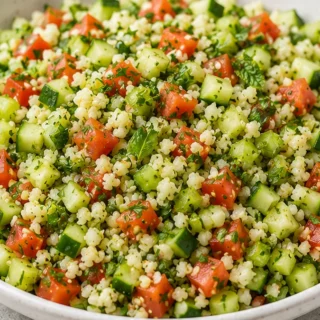
Cauliflower Tabbouleh Salad Recipe
Ingredients
- Riced cauliflower
- Cucumber, diced
- Celery, diced
- Roma tomatoes, seeded and diced
- Green onions, white and green parts thinly sliced
- Mint leaves, minced
- Fresh parsley, minced
- Avocado oil
- Juice of 1 lemon
- Garlic clove, finely minced
Instructions
- Heat 1 tsp avocado oil in a large skillet over medium heat. Add riced cauliflower and stir until crisp-tender and some moisture has evaporated. Spread onto a plate and chill in the freezer for 10 minutes while preparing the dressing and veggies.
- Blend dressing ingredients (avocado oil, lemon juice, garlic) until smooth for 30 seconds, or whisk together in a small bowl if not using a blender.
- In a large bowl, combine the chilled cauliflower rice with diced cucumber, celery, tomatoes, sliced green onions, minced mint, and minced parsley.
- Pour the dressing over the salad and stir well to combine for 1 minute. Taste and adjust seasoning.
- Serve immediately or refrigerate for 30 minutes to let flavors meld. Store any leftovers in a covered container in the fridge for up to 4 days.
Notes
– Chill the cauliflower thoroughly before mixing to ensure a crisp salad.
– This salad can be made ahead and stored in the refrigerator for up to 4 days. The flavors meld beautifully over time. Nutrition information is an estimate, calculated automatically. Values vary with brands, substitutions and portion sizes.
The technique that makes it
The key to an exceptional Cauliflower Tabbouleh lies in the preparation of the riced cauliflower. Unlike traditional tabbouleh which relies on bulgur wheat, this version uses finely riced cauliflower as its base. The goal is to achieve a texture that is tender yet retains a slight bite, mimicking the chewiness of bulgur without becoming mushy or watery. Raw, finely riced cauliflower can be too crunchy and overpower the other ingredients. Conversely, overcooking it will release excess moisture, leading to a soggy salad.
The best method involves either using a food processor to pulse cauliflower florets into fine grains or purchasing pre-riced cauliflower. Once riced, it’s crucial to lightly steam or sauté the cauliflower. Steaming for 2-3 minutes until just tender is ideal. If sautéing, use a dry non-stick pan over medium heat for a similar duration, stirring frequently. This process softens the cauliflower slightly and evaporates some of its natural moisture, preventing a watery salad and enhancing its ability to absorb the dressing.
Another critical element is the dressing. The lemon juice and avocado oil create a bright, emulsified base. Ensure the garlic is finely minced or even grated to distribute its pungent flavor evenly. The fresh herbs – mint and parsley – are the soul of tabbouleh. Mince them finely to release their aromatic oils. The ratio of herbs to cauliflower is important; a generous amount of fresh herbs is what gives tabbouleh its signature bright, fresh flavor and color.
Troubleshooting
- Failure: Salad is watery. Fix: Ensure the riced cauliflower is not overcooked and excess moisture is allowed to drain after steaming or sautéing. Patting it dry with paper towels can also help.
- Failure: Cauliflower is too crunchy. Fix: Extend the steaming or sautéing time slightly, ensuring the cauliflower is tender but not mushy. Alternatively, pulse the cauliflower in the food processor for a finer texture.
- Failure: Dressing is bland. Fix: Add more lemon juice for brightness, a pinch of salt to enhance flavors, or a touch more finely minced garlic for pungency. Ensure herbs are fresh and finely minced.
- Failure: Herbs are overpowering. Fix: Reduce the amount of herbs in future preparations or balance with more cucumber and tomato. Finely mincing them helps distribute their flavor more evenly.
Substitutions
- Riced cauliflower: Finely chopped broccoli florets can be used for a similar texture and color, though the flavor will be slightly different. Quinoa, cooked and cooled, offers a grain-like texture but changes the dish’s carbohydrate profile.
- Cucumber: Zucchini, finely diced, can substitute for cucumber, providing a similar crispness and mild flavor.
- Mint leaves: Basil or dill can be used, but will impart a distinctly different flavor profile. Use sparingly as they can be stronger than mint.
- Lemon juice: Lime juice offers a similar acidity but with a slightly different citrus note. Apple cider vinegar can be used in a pinch, but will result in a less traditional flavor.
Pro tips
- For best texture, don’t overcook the cauliflower rice; aim for ‘al dente’.
- Chill the cauliflower thoroughly before mixing to ensure a crisp salad.
- This salad can be made ahead and stored in the refrigerator for up to 4 days. The flavors meld beautifully over time.
Enjoy this light, flavorful, and healthy Cauliflower Tabbouleh as a refreshing alternative to traditional tabbouleh or as a nutritious side dish.
More from Vegan Bowls →
Frequently asked questions
Can I use raw riced cauliflower?
While you can use raw riced cauliflower, it will result in a much crunchier texture, more akin to a raw vegetable slaw. Lightly cooking it is recommended to achieve a texture closer to traditional tabbouleh’s bulgur wheat base and to mellow its raw flavor.
How do I prevent the salad from becoming watery?
The key is to manage the moisture content of the riced cauliflower. After steaming or sautéing, allow it to cool completely. You can also gently press it between paper towels to absorb any excess liquid before mixing the salad ingredients.
What is the best way to mince the herbs?
For the best flavor release and texture, stack the mint and parsley leaves, roll them tightly like a cigar, and then thinly slice across the roll. This technique, known as chiffonade, ensures fine, even pieces.
Can I make this salad ahead of time?
Yes, you can prepare the components ahead of time. It’s best to store the riced cauliflower, chopped vegetables, and dressing separately and combine them just before serving to maintain optimal texture and freshness.