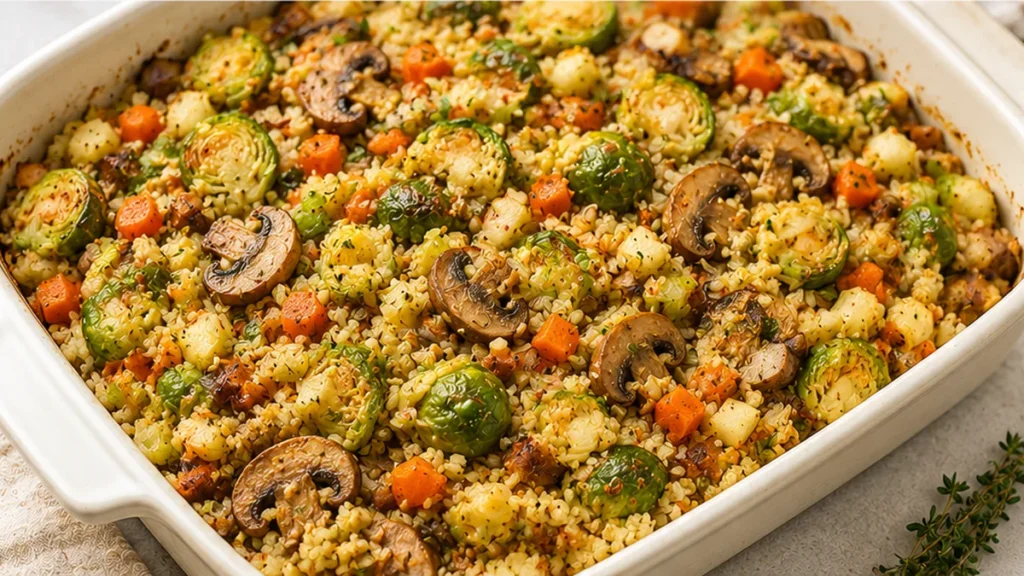
This healthy cauliflower stuffing is a delightful twist on a classic side dish. It’s packed with flavor and nutrients, making it a perfect addition to any meal, especially holidays. Forget the traditional bread-based stuffing; this cauliflower version is lighter, packed with vegetables like Brussels sprouts, carrots, celery, and mushrooms, plus a hint of sweetness from apple. It’s a satisfying and delicious way to enjoy stuffing without the guilt.
Key takeaways
- Manage moisture by sautéing vegetables thoroughly and toasting riced cauliflower.
- Develop flavor by caramelizing vegetables and using fresh herbs.
- Use fresh, not frozen, riced cauliflower for best texture.
- Adjust substitutions carefully to maintain desired flavor and texture.
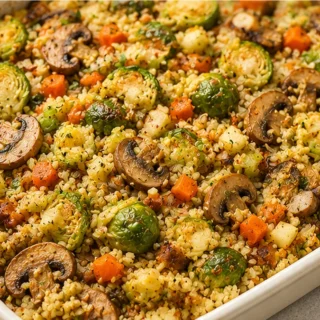
Craveable Cauliflower Stuffing (Healthy Twist!)
Ingredients
- 2 cups Brussels sprouts, quartered (about 8 oz.)
- 16 oz riced cauliflower (fresh, not frozen)
- 2 medium carrots, chopped
- 2 celery ribs, sliced
- 16 oz cremini mushrooms, sliced
- 1 small yellow onion, chopped
- 3 cloves garlic, minced
- 1 medium apple, cored and diced
- 3 tbsp olive or avocado oil
- 1 ½ tsp. fresh thyme (or ½ tsp. dried)
Instructions
- Preheat oven to 375℉.
- Combine Brussels sprouts, riced cauliflower, carrots, celery, mushrooms, yellow onion, garlic, and apple in a greased 9×13-inch baking dish. Drizzle with olive oil and sprinkle with thyme. Toss until everything is mixed well.
- Cover baking dish with foil.
- Bake, covered, for 30 minutes. Remove foil, stir, then bake for an additional 10-15 minutes longer or until vegetables are tender.
- Taste and season with additional salt and pepper as desired.
- Stir in dried fruit and toasted pecans just before serving (optional additions).
Notes
– Ensure cauliflower is fresh, not frozen, for the best texture.
– Taste and adjust seasoning with salt and pepper before serving; a pinch of sage or rosemary can also be added for more herby notes. Nutrition information is an estimate, calculated automatically. Values vary with brands, substitutions and portion sizes.
The technique that makes it
The key to a truly craveable cauliflower stuffing lies in managing moisture and developing flavor. Unlike traditional bread stuffing, which absorbs liquid and softens beautifully, riced cauliflower can become watery and mushy if not handled correctly. The technique here focuses on two main principles: pre-cooking aromatics and vegetables to release their natural sugars and evaporate excess water, and then gently toasting the riced cauliflower. Sautéing the vegetables like Brussels sprouts, carrots, celery, onions, and mushrooms until they begin to caramelize concentrates their flavors and reduces their water content. This step is crucial for building a savory base. The garlic is added later to prevent burning. Introducing the diced apple towards the end of the sauté adds a touch of sweetness and a slight tender bite that complements the savory elements. When it comes to the riced cauliflower, it’s important to use fresh, not frozen, as frozen cauliflower releases significantly more water. Spread the riced cauliflower in a single layer in the pan after the vegetables are mostly cooked and allow it to sauté undisturbed for a few minutes. This toasting process develops a slightly nutty flavor and helps achieve a texture that is tender but not mushy, mimicking the bite of breadcrumbs. Finally, incorporating fresh thyme at the end preserves its bright, herbaceous aroma, which is essential for that classic stuffing flavor profile.
Troubleshooting
- Problem: Stuffing is too watery or mushy.
- Fix: Ensure you are using fresh, not frozen, riced cauliflower. Sauté the vegetables until they have released most of their liquid and are beginning to brown. Allow the riced cauliflower to toast in the pan for several minutes without stirring to evaporate moisture.
- Problem: Stuffing lacks depth of flavor.
- Fix: Don’t rush the sautéing process for the vegetables. Allow them to caramelize slightly to bring out their natural sweetness and savory notes. Ensure you are using fresh herbs if possible, and season generously with salt and pepper throughout the cooking process.
- Problem: Cauliflower stuffing tastes bland.
- Fix: Add a splash of vegetable broth or a squeeze of lemon juice at the end of cooking to brighten the flavors. Consider adding a pinch of nutmeg or sage, which are classic stuffing spices, if desired.
- Problem: Apple pieces are too hard or too soft.
- Fix: Dice the apple into small, uniform pieces (about 1/4 inch). Add the apple during the last 5 minutes of sautéing the vegetables to ensure it becomes tender but not mushy.
Substitutions
- Brussels sprouts: Kale or spinach can be substituted. If using kale, chop it finely and add it earlier in the sautéing process to allow it to soften. Spinach will wilt quickly and should be added at the very end. The flavor profile will be slightly different, with kale offering a more robust flavor and spinach a milder one.
- Apple: Pears or dried cranberries can be used. Pears will offer a similar subtle sweetness and tender texture. Dried cranberries will provide a more concentrated tart-sweet flavor and a chewier texture. Adjust sweetness as needed.
- Thyme: Sage or rosemary can be substituted. Sage offers a more traditional, earthy stuffing flavor. Rosemary provides a more pungent, pine-like aroma. Use sparingly as they are stronger than thyme.
- Olive or avocado oil: Butter or ghee can be used for sautéing. This will add a richer, more decadent flavor profile, closer to traditional stuffing, but will increase the overall fat content.
Pro tips
- For extra flavor, toast pecans and add dried cranberries or cherries along with the pecans before serving.
- Ensure cauliflower is fresh, not frozen, for the best texture.
- Taste and adjust seasoning with salt and pepper before serving; a pinch of sage or rosemary can also be added for more herby notes.
Enjoy this flavorful and healthy cauliflower stuffing as a delicious and guilt-free side dish for your next gathering!
More from Vegan Bowls →
Frequently asked questions
What is the best way to rice cauliflower for stuffing?
For this recipe, using pre-riced cauliflower from the store is recommended for convenience and consistent texture. If ricing your own, ensure the florets are processed until they resemble coarse grains of rice, avoiding over-processing into a paste.
Can I make this cauliflower stuffing ahead of time?
Yes, you can prepare the vegetable mixture and sauté the riced cauliflower separately a day in advance. Store them in airtight containers in the refrigerator. Gently reheat them together on the stovetop or in the oven before serving.
Is this recipe vegan?
This recipe is naturally vegan if you use olive or avocado oil for sautéing. If you opt for butter or ghee as a substitution, it will no longer be vegan.
How do I get a crispy topping on my cauliflower stuffing?
To achieve a crispier texture, spread the prepared stuffing in a single layer in a baking dish. Bake at 375°F (190°C) for 15-20 minutes, or until the top is lightly browned and slightly crispy.