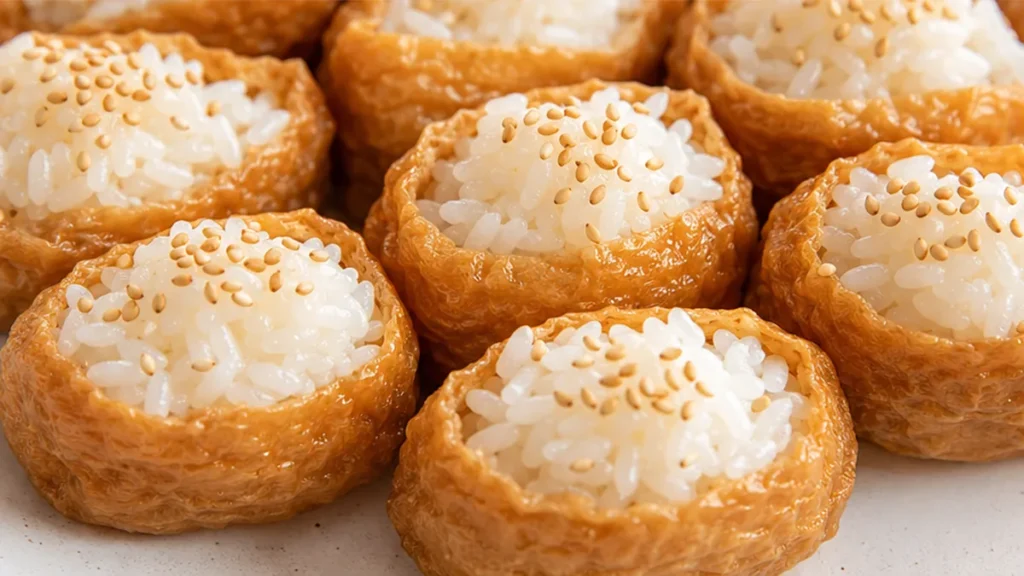
Creating delicious inari sushi at home doesn’t require a culinary degree; the secret lies in a few simple ingredients and careful preparation. This recipe focuses on delivering authentic flavors with minimal fuss, making it accessible even for beginner cooks. Inari sushi, made from sweet fried tofu pouches filled with seasoned rice, is a staple in Japanese cuisine. I find it’s a fantastic option for a quick, satisfying meal or a delightful appetizer when you need something light yet flavorful. The sweetness of the tofu skin perfectly complements the savory rice, creating a balanced bite.
Key takeaways
- Properly rinsing and cooking the rice is essential for the right texture.
- Using reserved liquid from Inari pouches enhances flavor and moisture.
- Season the rice with rice vinegar for a balanced taste.
- Allow rice to cool before stuffing to maintain shape.

Quick Inari Sushi Bites
Ingredients
- 1.5-2 cups Japanese sticky rice, uncooked
- 12 Inari/Aburrage pouches (juices reserved)
- 1 teaspoon toasted sesame seeds
- Reserved liquid from Inari pouches
- Water for cooking rice
- 2 tablespoons rice vinegar
Instructions
- Wash and rinse the Japanese sticky rice thoroughly for 2-3 minutes until the water runs clear. Cook the rice as directed on the package (typically in a rice cooker or pot with a 1:1.25 rice to water ratio).
- Once cooked, fluff the hot rice gently with a rice paddle or fork to release excess steam and make it fluffy, not clumpy. Let it cool slightly for 5-10 minutes.
- Open the package of inari pouches. Carefully drain all the sweet, savory liquid from the bag or can into a separate small bowl or cup. This liquid is essential for seasoning the rice.
- Transfer the slightly cooled, fluffed rice into a large mixing bowl. Sprinkle the reserved inari liquid (from step 3) and the toasted sesame seeds over the rice.
- Using the rice paddle or a spoon, lightly toss the rice together for 1-2 minutes, ensuring the seasoning is evenly distributed. Take care not to mash the rice; you want to keep the individual grains distinct.
- Carefully open each inari pouch in the palm of your hand. They are delicate, so be gentle to avoid tearing. Gently fill each pouch with a spoonful of the seasoned rice, about 2-3 tablespoons per pouch. You can use your spoon or fingers to lightly press the rice into the pouch, shaping it neatly.
- Once filled, place the inari sushi rice-side down on a serving plate to help them hold their shape. Serve immediately as a snack, appetizer, or light meal.
Video
Notes
– When filling the pouches, avoid overpacking them, as this can cause them to tear or become too dense.
– If the pouches are difficult to open, gently squeeze them or run them under warm water for a few seconds to soften. Nutrition information is an estimate, calculated automatically. Values vary with brands, substitutions and portion sizes.
The technique that makes it
Creating perfect Inari sushi relies heavily on the preparation of the sticky rice and the use of the Inari pouches. The key technique is hydration and seasoning of the rice. Japanese sticky rice, when cooked properly, achieves the right texture—sticky enough to hold together but not overly mushy. The reserved liquid from the Inari pouches adds umami flavor and moisture, enhancing the overall taste. The rice should be rinsed thoroughly before cooking to remove excess starch, which can lead to a gummy texture. After cooking, incorporating rice vinegar helps to balance the flavors and gives the rice a slightly tangy taste. Allowing the rice to cool to room temperature is crucial; this helps the rice maintain its shape when stuffed into the Inari pouches.
Troubleshooting
- Problem: Rice is too sticky.
- Fix: Rinse the rice thoroughly before cooking to remove excess starch.
- Problem: Inari pouches are too oily.
- Fix: Pat the pouches with a paper towel to absorb excess oil before filling them with rice.
- Problem: Rice falls apart when stuffed.
- Fix: Ensure the rice is properly cooked and slightly cooled; it should be sticky enough to hold together.
- Problem: Flavor is bland.
- Fix: Ensure to use the reserved liquid from the Inari pouches and adjust rice vinegar to taste.
Substitutions
- Sticky rice: Use sushi rice or short-grain rice for similar texture and flavor.
- Inari pouches: Use tofu skins or homemade tofu pouches for a different but still compatible flavor profile.
- Rice vinegar: Substitute with apple cider vinegar or white wine vinegar for a slightly different tang.
- Toasted sesame seeds: Swap with chopped nuts or seeds for added crunch and flavor.
Pro tips
- For the best texture, use Japanese short-grain sticky rice. Long-grain varieties won’t achieve the desired consistency.
- When filling the pouches, avoid overpacking them, as this can cause them to tear or become too dense.
- If the pouches are difficult to open, gently squeeze them or run them under warm water for a few seconds to soften.
This 3-ingredient inari sushi recipe is a testament to how simple ingredients can create something truly special. Enjoy these sweet and savory treats as a quick snack or a delightful addition to any meal. Feel free to experiment with a sprinkle of furikake for an extra layer of flavor!
Frequently asked questions
What type of rice should I use for Inari sushi?
It’s best to use Japanese sticky rice, also known as sushi rice or short-grain rice, as it provides the right texture and stickiness needed for Inari sushi.
How do I store leftover Inari sushi?
Store leftover Inari sushi in an airtight container in the refrigerator for up to two days. However, the rice may lose its texture over time.
Can I make Inari sushi ahead of time?
Yes, you can prepare the rice and fill the Inari pouches a few hours ahead of serving. Just keep them covered to prevent them from drying out.
What can I serve with Inari sushi?
Inari sushi pairs well with pickled vegetables, miso soup, or a light salad. These sides complement the flavors and textures of the sushi.
More from Vegan Bowls →