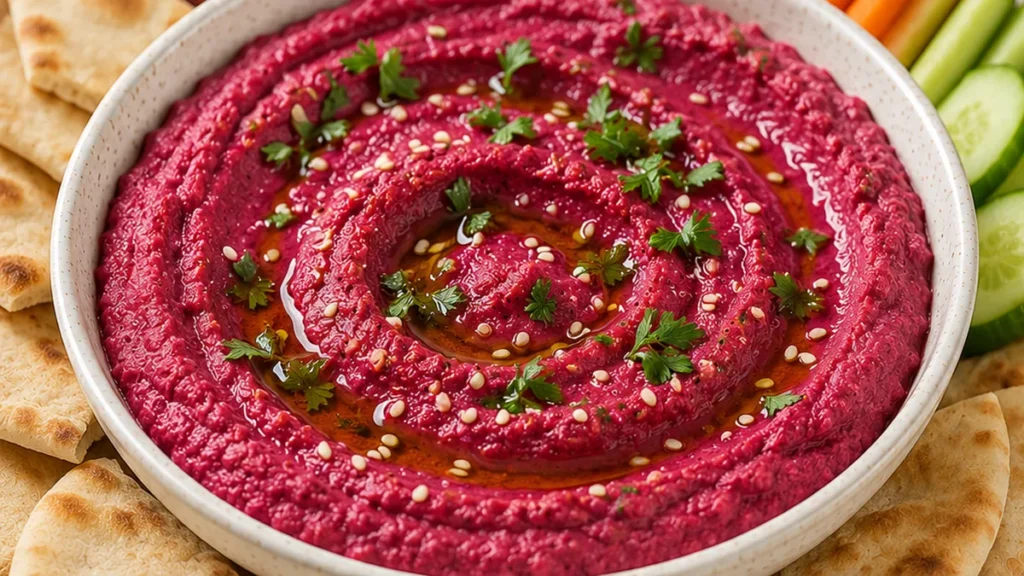
This bright beet hummus is a showstopper, perfect for anyone looking to add a splash of color and flavor to their appetizer spread. Unlike traditional hummus, this recipe incorporates earthy, sweet beets for a unique twist that is both visually striking and incredibly delicious. It’s remarkably simple to prepare, requiring just a few minutes in a food processor, making it an ideal option for busy hosts or anyone seeking a healthy, impressive dip. The combination of earthy beets, creamy chickpeas, and tangy lemon creates a flavor profile that’s both comforting and exciting.
Key takeaways
- Achieve bright color and smooth texture by properly cooking beets and emulsifying tahini.
- Adjust liquid and tahini to correct thickness; add salt and lemon for flavor.
- Substitute beans or tahini for variations, but expect flavor and texture changes.
- Ensure fresh ingredients and proper blending for the best results.
Vibrant Beet Hummus: Delicious Dip!
Ingredients
- 12 ounces beets, cooked and peeled
- 1 (14-ounce) can garbanzo beans, drained but reserve ¼ cup of the liquid
- Juice of ½ lemon
- ¼ cup tahini
- 3 cloves garlic, peeled
- 3 tbsp Thrive Culinary Algae Oil, divided
- ¼ cup reserved liquid from garbanzo beans
- ½-1 tsp salt, to taste
- Optional: Chopped parsley
- Optional: sesame seeds
Instructions
- Place beets, beans, lemon juice, tahini, and garlic cloves in the bowl of a food processor. Add 2 Tbsp. algae oil and begin blending.
- With the food processor running, slowly drizzle the remaining 1 Tbsp. algae oil through the lid chute until the mixture is smooth, scraping down the sides as needed.
- If the hummus is too thick, gradually add the reserved bean liquid, one tablespoon at a time, until the desired consistency is reached.
- Season the hummus with salt, starting with ½ tsp. and adding more to taste.
- Serve the beet hummus, garnished with optional parsley and sesame seeds, and an extra drizzle of oil if desired.
- Store any leftover hummus in an airtight container in the refrigerator for up to 5 days.
Notes
– If you don’t have algae oil, a neutral-flavored oil like avocado or light olive oil works well.
– Store leftover beet hummus in an airtight container in the refrigerator for up to 5 days. Nutrition information is an estimate, calculated automatically. Values vary with brands, substitutions and portion sizes.
The technique that makes it
The bright color and smooth texture of this beet hummus are key to its appeal. The foundation of any great hummus lies in achieving a creamy consistency, and for beet hummus, the cooking method of the beets is paramount. Roasting or steaming the beets until tender, rather than boiling, helps to concentrate their flavor and prevent them from becoming waterlogged. This ensures a richer, earthier beet taste that complements the tahini and garbanzo beans. When blending, the order of ingredients can also impact the final texture. Starting with the tahini and lemon juice allows the tahini to emulsify properly before adding the other ingredients. Gradually adding the reserved garbanzo bean liquid helps to achieve the desired smoothness without making the hummus too thin. The addition of Thrive Culinary Algae Oil contributes a neutral flavor and a silky mouthfeel, enhancing the overall creaminess and richness of the dip. Ensuring the garlic is finely minced or even lightly sautéed beforehand can mellow its raw bite, integrating it more harmoniously into the dip’s flavor profile.
Troubleshooting
- Problem: Hummus is too thick. Fix: Gradually add more reserved garbanzo bean liquid or a little extra lemon juice, one tablespoon at a time, while blending until the desired consistency is reached.
- Problem: Hummus is too thin. Fix: If the hummus is too liquidy, you can try adding a few more cooked garbanzo beans or a tablespoon of tahini to help thicken it. Chilling the hummus in the refrigerator will also help it firm up.
- Problem: Hummus lacks flavor or is bland. Fix: Taste and adjust seasoning. Add more salt, a pinch of cumin (if desired), or a bit more lemon juice to brighten the flavors. Ensure you’ve used enough garlic and tahini.
- Problem: Hummus has a grainy texture. Fix: Blend for a longer period, scraping down the sides of the food processor as needed. Ensure your tahini is well-stirred and fresh, as old or separated tahini can contribute to a less smooth texture.
Substitutions
- Beets: While fresh beets are recommended for the best flavor and color, you can substitute with pre-cooked, vacuum-sealed beets (not pickled). The flavor might be slightly less intense.
- Garbanzo Beans: Canned cannellini beans or butter beans can be used as a substitute for garbanzo beans. This will result in a slightly different, creamier texture and a milder flavor profile.
- Tahini: If tahini is unavailable, a smooth, unsalted sunflower seed butter or a plain cashew butter can be used, though it will alter the classic hummus flavor and may require slight adjustments in seasoning.
- Thrive Culinary Algae Oil: A neutral-flavored oil like avocado oil or a light olive oil can be used. However, algae oil provides a unique, clean flavor and a very smooth texture that might be subtly different with other oils.
Pro tips
- For an extra bright color, ensure your beets are fully cooked and peeled.
- If you don’t have algae oil, a neutral-flavored oil like avocado or light olive oil works well.
- Store leftover beet hummus in an airtight container in the refrigerator for up to 5 days.
Serve this stunning beet hummus with your favorite pita bread, crackers, or fresh vegetables for a delightful and healthy treat.
More from Vegan Bowls →
Frequently asked questions
How do I get the smoothest beet hummus?
For the smoothest beet hummus, ensure your beets are thoroughly cooked until very tender. Use a high-powered blender or food processor and blend for an extended period, scraping down the sides. Gradually adding the reserved liquid and oil helps create a silky emulsion.
Can I use raw beets for this recipe?
No, raw beets are not recommended for this recipe. They are too hard to blend smoothly and have a strong, earthy flavor that is best mellowed through cooking. Roasting or steaming the beets concentrates their sweetness and makes them tender enough for hummus.
How long does beet hummus last in the refrigerator?
Beet hummus can be stored in an airtight container in the refrigerator for up to 4-5 days. Ensure it is properly sealed to maintain freshness and prevent it from absorbing other odors from the refrigerator.
What makes beet hummus different from regular hummus?
The primary difference is the addition of cooked beets, which impart a bright pink or red color and a distinct, slightly sweet, earthy flavor. This contrasts with the more subtle flavor profile of traditional hummus, making beet hummus visually striking and uniquely delicious.