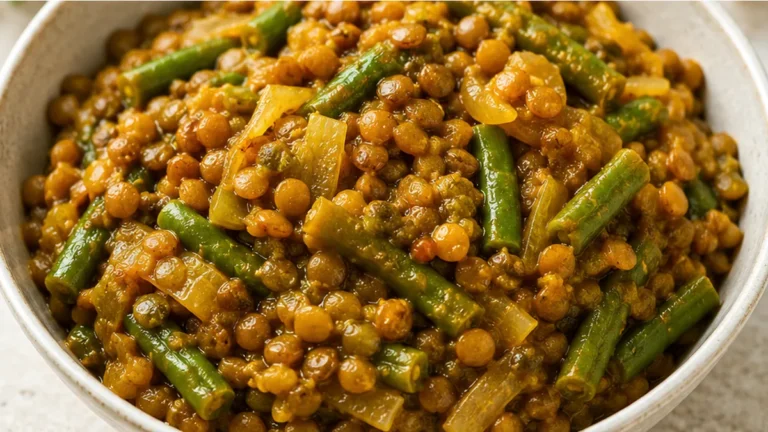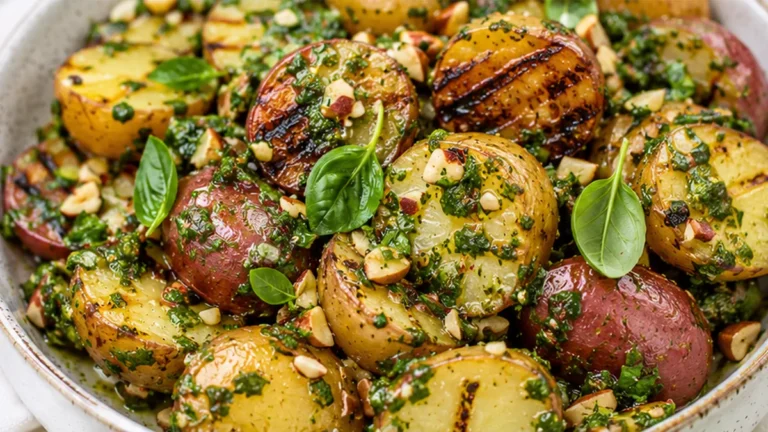
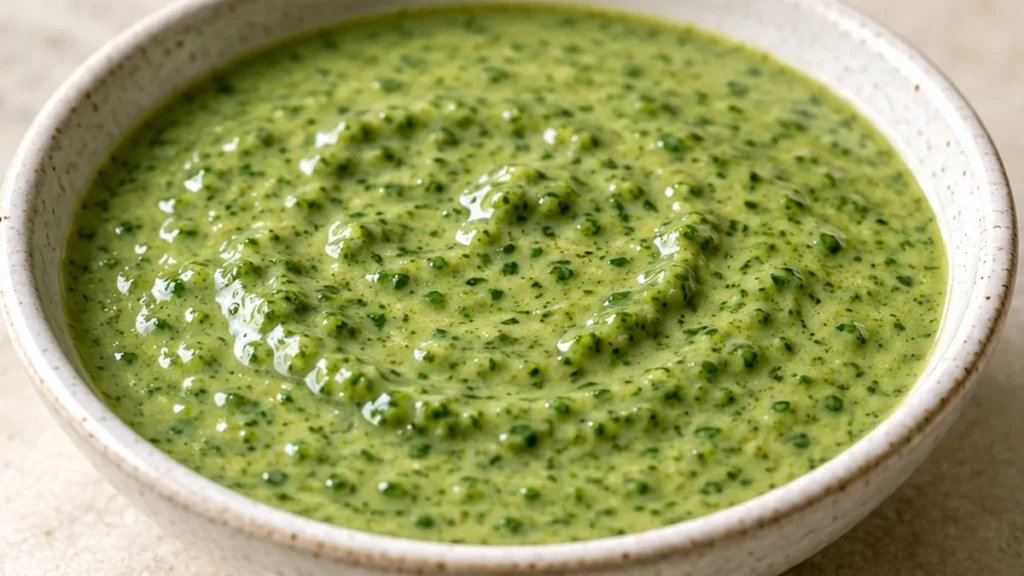
Green tahini is a flavorful and versatile sauce that brings a burst of freshness to any dish. This recipe transforms simple ingredients into a creamy, herbaceous dressing perfect for elevating everyday meals. Green tahini is a simple way to add more zest to roasted vegetables. The combination of fresh herbs, nutty tahini, and bright lemon makes a condiment worth keeping on hand every week. It’s a fantastic way to utilize extra herbs and impress guests with minimal effort.
Key takeaways
- Achieve a stable emulsion by gradually adding liquids, especially the olive oil.
- Use fresh, good-quality tahini for the best flavor and texture.
- Blend herbs at the very end to maintain vibrant color and fresh taste.
- Adjust lemon juice and salt to balance the flavors according to your preference.
Zesty Green Tahini: Your New Obsession!
Ingredients
- 1/2 cup mild tasting olive oil
- 1/2 cup water
- 1/4 cup tahini
- A big bunch of fresh cilantro and parsley
- 1 clove garlic
- Juice of half a lemon (about 2 tablespoons)
- 1/2 teaspoon salt (adjust to taste)
Instructions
- Combine 1/2 cup olive oil, 1/2 cup water, 1/4 cup tahini, the fresh cilantro and parsley, 1 garlic clove, 2 tablespoons lemon juice, and 1/2 teaspoon salt in a food processor or blender.
- Blend until the mixture is completely smooth and creamy, scraping down the sides as needed.
- Taste the tahini sauce and adjust seasoning; add more salt or lemon juice if desired, or a little more tahini if a thicker consistency is preferred.
- Serve immediately over roasted vegetables, beans, grains, or protein to enhance their flavor.
Notes
The Science of a Silky Green Tahini
The magic of this green tahini sauce lies in creating a stable emulsion. An emulsion is a mixture of two liquids that normally don’t mix, like oil and water. In this recipe, the tahini acts as an emulsifier. Tahini is made from ground sesame seeds, which contain proteins and lecithins. These compounds have both water-attracting (hydrophilic) and oil-attracting (hydrophobic) properties. When blended with the water, olive oil, lemon juice, and herbs, the tahini helps to bind these ingredients together, preventing the oil and water from separating. The key to a smooth, stable emulsion is gradual addition of the liquids and consistent blending. Starting with the tahini, garlic, and lemon juice allows these ingredients to form a base. Then, slowly drizzling in the olive oil while the blender is running creates tiny droplets of oil dispersed throughout the water-based mixture, stabilized by the tahini. Adding the water gradually at the end helps to achieve the desired pourable consistency without breaking the emulsion. The fresh herbs and garlic are blended in last to preserve their vibrant color and fresh flavor, as prolonged blending or heat can dull their taste and appearance.
Troubleshooting
- Sauce is too thick: Gradually add more water, one tablespoon at a time, while blending until the desired consistency is reached. Ensure you are blending continuously as you add the water.
- Sauce has separated (oily or watery): This usually happens if the oil was added too quickly or the ingredients weren’t blended long enough. Try re-blending the sauce, slowly drizzling in the separated oil if necessary, or adding a tiny bit more tahini to help re-emulsify.
- Sauce is bitter or bland: Taste and adjust seasoning. Bitterness can sometimes come from the tahini itself; ensure you’re using a good quality, mild tahini. Add more lemon juice for brightness or a pinch more salt to enhance flavors.
- Herbs have turned brown: This indicates the herbs were over-blended or exposed to too much air during blending. For the freshest color, add herbs towards the very end of blending and use a high-speed blender if possible.
Substitutions
- Tahini: If you don’t have tahini, you can substitute with an equal amount of unsalted, unsweetened cashew butter or sunflower seed butter. The flavor profile will change slightly, with cashew butter being milder and sunflower seed butter having a more distinct nutty taste.
- Cilantro and Parsley: You can use a mix of other fresh green herbs like mint, dill, or basil. Using only one type of herb is also acceptable. The flavor will be different but still delicious.
- Lemon Juice: Fresh lime juice can be used as a substitute for lemon juice. The resulting sauce will have a slightly different citrusy tang, but it will still provide the necessary acidity.
- Olive Oil: A neutral-flavored oil like avocado oil or grapeseed oil can be used if you prefer a less pronounced olive oil flavor. The sauce will be lighter in taste.
Pro tips
– For the creamiest texture, ensure your tahini is well-stirred before measuring. If the sauce is too thick, thin it with an extra tablespoon of water until it reaches your desired consistency. – To prevent the herbs from oxidizing and losing their vibrant color, blend the sauce just before serving or store it in an airtight container in the refrigerator for up to 5 days. – A neat trick for a more garlicky kick without raw bite: lightly roast the garlic clove before adding it to the blender. Just a few minutes in a dry skillet until fragrant.
This green tahini recipe is a staple for adding fresh, vibrant flavors to almost anything. Experiment with different herb combinations, such as dill or mint, to truly make it your own. Enjoy this simple yet transformative sauce!
Frequently asked questions
How do I get the smoothest possible green tahini?
For the smoothest texture, ensure your tahini is well-stirred before measuring. Blend all ingredients, starting with the tahini, garlic, and lemon juice, then slowly drizzle in the olive oil while the blender is running. Add water gradually at the end to reach your desired consistency. A high-speed blender will yield the best results.
Can I make this green tahini ahead of time?
Yes, you can make this green tahini sauce ahead of time. Store it in an airtight container in the refrigerator for up to 3-4 days. The sauce may thicken as it chills; simply whisk in a teaspoon or two of water or lemon juice before serving to loosen it up.
What if my green tahini tastes too bitter?
Bitterness in tahini can sometimes be due to the quality of the sesame seeds or the roasting process. If your sauce tastes bitter, try adding a little more lemon juice or a pinch of salt to balance the flavor. Using a mild, high-quality tahini is key to avoiding bitterness.
How can I thin out my green tahini if it’s too thick?
If your green tahini is too thick, the easiest way to thin it is by adding more liquid gradually. Start with a teaspoon of water or lemon juice and whisk or blend it in. Continue adding liquid, a little at a time, until you reach your desired pourable consistency. Avoid adding too much liquid at once.
More from Vegan Bowls →