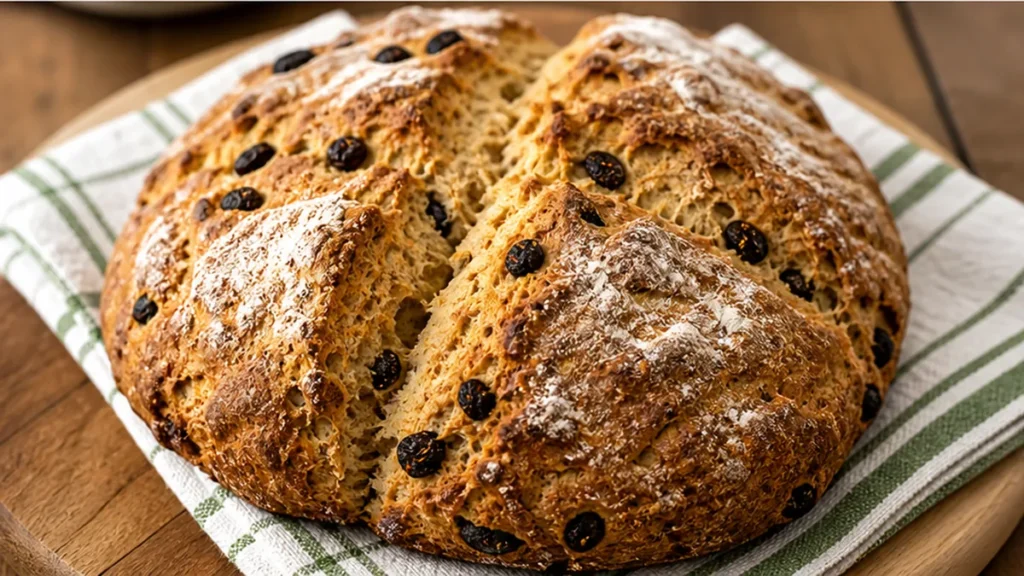
This Beer and Rye Irish Soda Bread is the ultimate comfort food recipe, offering a taste of tradition with incredible ease. It’s perfect for beginners and seasoned bakers alike, providing a hearty, rustic loaf that’s ready in under an hour. Unlike many quick breads, this soda bread uses both rye and whole wheat flour for a complex flavor and satisfying texture. The addition of stout beer lends a subtle malty depth that makes this soda bread truly special and exceptionally delicious.
Key takeaways
- The leavening in soda bread comes from a chemical reaction between baking soda and acidic ingredients like buttermilk and stout beer.
- Mix the dough only until just combined to avoid developing gluten, which leads to a tough texture.
- Fresh baking soda and active acidic liquids are essential for proper rising.
- Adjusting flours or liquids can alter the final flavor and texture of the bread.
Bake This EASY Irish Soda Bread!
Ingredients
- 1 3/4 cups whole wheat flour
- 2 cups rye flour
- 1/4 cup brown sugar
- 2 teaspoons baking soda
- 1 teaspoon salt
- 1 cup buttermilk
- 1 cup stout beer
Instructions
- Preheat your oven to 400°F (200°C).
- In a large mixing bowl, combine the whole wheat flour, rye flour, brown sugar, baking soda, and salt.
- Add the buttermilk and 1 cup of stout beer to the dry ingredients. Stir until the dough just comes together into a slightly sticky ball. If it seems too dry, add a splash more beer.
- Turn the dough out onto a lightly floured surface. Gently shape it into a rough ball or football shape.
- Place the shaped dough onto a prepared baking sheet. Sprinkle the top with a little flour.
- Using a sharp knife, score a deep cross on the top of the dough.
- Bake for 40-50 minutes, or until the loaf sounds hollow when tapped on the bottom.
Notes
The technique that makes it
Irish soda bread relies on a chemical reaction between an acid and a base for leavening, rather than yeast. In this recipe, the acid comes from two sources: the buttermilk and the stout beer. Baking soda (sodium bicarbonate) is the base. When these combine, they produce carbon dioxide gas, which creates the characteristic open, crumbly texture of soda bread. It’s crucial to mix the dry and wet ingredients just until combined. Overmixing develops the gluten in the flour, resulting in a tough, dense loaf. The high baking temperature (425°F or 220°C initially) helps the leavening reaction happen quickly and efficiently, setting the structure before the gas escapes.
Troubleshooting
- Dense, heavy loaf: This is usually due to overmixing the dough, which develops too much gluten. Mix only until the dry ingredients are moistened.
- Bread didn’t rise: Baking soda may have lost its potency, or the acid (buttermilk/beer) was insufficient or old. Ensure your baking soda is fresh and the liquids are not expired.
- Crumbly, falling apart: The dough might have been too dry, or not mixed enough to bind the ingredients. Add a touch more buttermilk or beer if the dough seems excessively dry.
- Tough crust: Baking at too low a temperature for too long can dry out the crust. The initial high heat is important for a good rise and tender crust.
Substitutions
- Buttermilk: You can make a substitute by measuring 1 cup of milk and stirring in 1 tablespoon of lemon juice or white vinegar. Let it sit for 5-10 minutes until it curdles.
- Stout beer: Any dark, malty beer can be used. If you prefer not to use alcohol, you can substitute with an equal amount of strong black tea or an additional cup of buttermilk, though this will alter the flavor profile.
- Whole wheat flour: All-purpose flour can be used, but the bread will have a lighter color and a less nutty flavor. You might need slightly less liquid.
- Rye flour: For a milder flavor, you can substitute with more whole wheat flour or all-purpose flour. This will change the characteristic earthy taste of this soda bread.
Pro tips
- Use a good quality stout like Guinness for the best flavor.
- Don’t overmix the dough; it should be slightly sticky for a tender crumb.
- Scoring the top with a cross is traditional and helps the bread bake evenly.
- Serve warm with plenty of butter for the ultimate experience.
Enjoy this authentic Irish Soda Bread as a side, snack, or breakfast. It’s a simple yet rewarding bake that brings warmth and flavor to any table.
More from Vegan Bowls →
Read also on TastyBend: Saltines Nutritional Value: Expert RD Guide to Cracker Facts 2026.
Frequently asked questions
Can I make vegan Irish soda bread ahead of time?
Yes, you can prepare the dough a few hours in advance and store it, covered, in the refrigerator. For best results, bake the bread closer to serving time. If you need to store baked bread, let it cool completely before wrapping it tightly in plastic wrap or placing it in an airtight container.
What can I substitute for buttermilk in vegan Irish soda bread?
For a vegan substitute, combine 1 cup of unsweetened plant-based milk (like soy or almond) with 1 tablespoon of apple cider vinegar or lemon juice. Let it sit for 5-10 minutes until it thickens slightly. This creates a ‘vegan buttermilk’ that works perfectly in the recipe.
How do I know when my Irish soda bread is done baking?
The bread is done when it’s golden brown on top and sounds hollow when tapped on the bottom. An instant-read thermometer inserted into the center should register around 200-210°F (93-99°C). If the top is browning too quickly, you can loosely tent it with foil.
How should I store leftover Irish soda bread?
Once completely cooled, store leftover Irish soda bread at room temperature in an airtight container or wrapped tightly in plastic wrap for up to 2 days. For longer storage, you can freeze it. Wrap individual slices or the whole loaf securely in plastic wrap and then in foil.