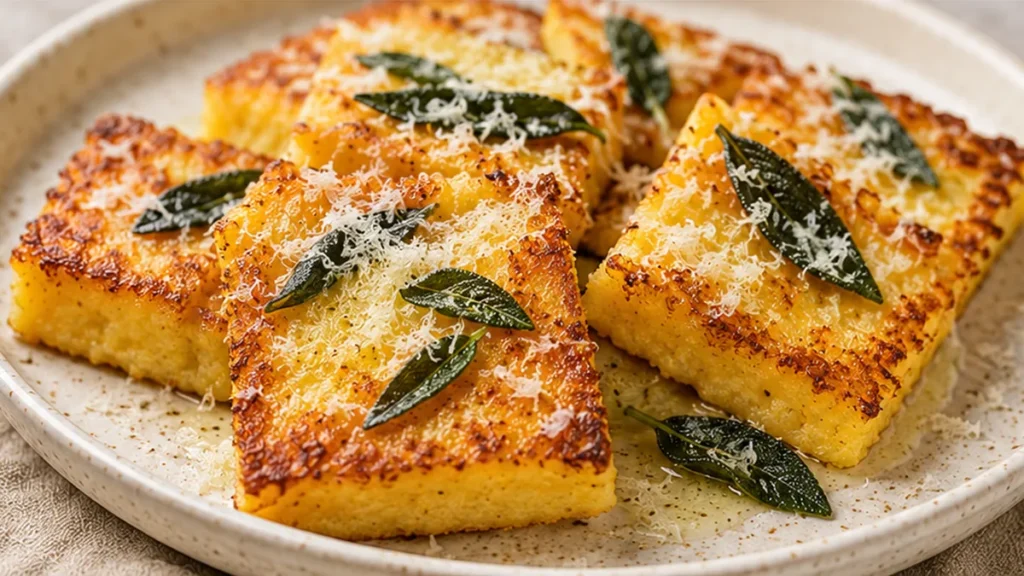
This fried polenta recipe is the ultimate comfort food experience, combining crispy golden polenta squares with rich, melty cheeses and a bright balsamic Brussels sprout topping. Perfect for a special weeknight dinner or an impressive appetizer, this dish offers a delightful contrast of textures and flavors, featuring homemade roasted garlic sage oil for an aromatic finish.
Key takeaways
- Achieve crispy fried polenta by thoroughly chilling the cooked polenta before frying.
- Maintain a consistent oil temperature between 350-375°F (175-190°C) for optimal crispness.
- Properly coating the chilled polenta in flour is essential for a good crust.
- Adjust chilling time and oil temperature to troubleshoot common issues.
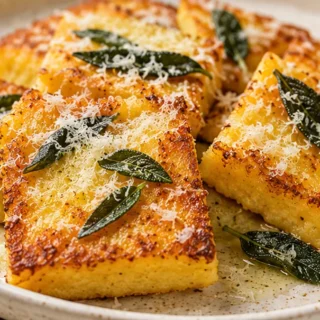
Crispy Cheesy Polenta Dream!
Ingredients
- 5 cups water
- 1 teaspoon salt
- 1 1/4 cups polenta
- 1/2 pound brie
- 4 ounces parmesan cheese
- 1 tablespoon fresh sage
- 2 tablespoons butter
- 2 cups flour
- black pepper
- 2 tablespoons olive oil
Instructions
- To make the polenta: Pour the water into a medium saucepan and bring to a boil. Lower heat to medium and slowly whisk in polenta. Cook, stirring frequently, until soft and thick, about 15-20 minutes. Stir in the brie and parmesan cheese, and butter. Season with salt and pepper. Stir until cheese is melted and polenta is creamy and smooth.
- Grease an 8 or 9-inch square baking dish. Pour hot polenta into the prepared pan and smooth the top. Let cool slightly, then cover and refrigerate until cold and set, at least 1 hour or up to 3 days.
- Meanwhile, preheat oven to 325°F (160°C). To make the oil: Slice the tops off the garlic and place cut-side down in a baking dish. Pour olive oil over the garlic. Add sage. Cover tightly with foil and bake for 45 minutes, or until garlic is caramelized and flavorful. Pour oil through a fine-mesh strainer.
- To make the brussels sprouts: Heat a large skillet over medium heat, add oil. Once hot, add brussels sprouts and cook, stirring occasionally, until golden brown, 8-10 minutes. Season with salt and pepper. Reduce heat and slowly pour in balsamic vinegar and honey. Cook 2-3 minutes until balsamic glazes the sprouts. Remove from heat, keep warm.
- To fry the polenta: Use a sharp knife to cut the chilled polenta into 9 squares. Toss them gently with the flour, ensuring all sides are coated.
- Heat oil in a large pot to 375°F (190°C). Add polenta squares two at a time and fry, turning occasionally, until golden brown, 4-6 minutes. Transfer to paper towels to drain.
- To serve: Divide brussels sprouts among plates. Add a square of fried polenta. Top with sage and drizzle with roasted garlic oil. Eat immediately!
Notes
The technique that makes it
The magic behind achieving perfectly crispy fried polenta lies in a two-step process: proper chilling and the right frying temperature. First, the cooked polenta needs to set completely. This is crucial because it solidifies the cornmeal, allowing it to hold its shape when cut and fried. If the polenta is too warm or soft when you attempt to fry it, it will likely disintegrate in the hot oil, leading to a messy and uneven result. Chilling the polenta in a thin, even layer in a baking dish for at least 2-4 hours, or preferably overnight, ensures it firms up sufficiently. A thin layer promotes faster and more even chilling.
Secondly, the frying temperature is paramount for achieving that desirable golden-brown crust without the interior becoming mushy or the exterior burning. For fried polenta, a medium-high heat is ideal, typically between 350°F and 375°F (175°C to 190°C). If the oil is too cool, the polenta will absorb too much oil, becoming greasy rather than crispy. If the oil is too hot, the exterior will brown too quickly before the inside has a chance to heat through or develop a pleasant texture. Using a thermometer is highly recommended for consistent results. The flour coating also plays a role; it provides a surface for browning and helps create a slight barrier, contributing to the crispness.
Troubleshooting
- Polenta is falling apart when frying: This usually means the polenta wasn’t chilled long enough or thoroughly enough. Ensure it’s completely firm before cutting and frying. You can try chilling it for an additional hour or two.
- Polenta is greasy and not crispy: The frying oil was likely not hot enough. Ensure your oil reaches the target temperature of 350-375°F (175-190°C) before adding the polenta. Don’t overcrowd the pan, as this lowers the oil temperature.
- Polenta is burning on the outside but not heated through: The oil is too hot. Reduce the heat slightly to maintain a temperature within the recommended range. Ensure the polenta pieces are not too thick.
- Polenta is sticking to the pan: Ensure you are using enough oil and that the polenta pieces are properly coated in flour. A well-seasoned cast-iron skillet or a non-stick pan can also help prevent sticking.
Substitutions
- Polenta: Quick-cooking polenta can be used, but it may result in a slightly softer texture. Follow package directions carefully, as cooking times vary. Cornmeal can also be substituted, but ensure it’s medium or coarse grind for best texture.
- Brie: Cream cheese or a milder, soft goat cheese can be used. The flavor profile will change, becoming less rich and earthy, but the creamy texture will still meld well.
- Parmesan cheese: Pecorino Romano offers a sharper, saltier alternative. A good quality Gruyère or even a sharp cheddar could also be incorporated for a different flavor dimension.
- Fresh sage: Dried sage can be used, but use about one-third the amount as dried herbs are more potent. Thyme or rosemary would also complement the richness of the cheese and polenta.
Pro tips
- For extra crispy polenta, ensure the oil is at the correct temperature (375°F/190°C) before frying.
- Don’t overcrowd the pot when frying; cook polenta in batches for even browning.
- The roasted garlic sage oil can be made ahead and stored in the refrigerator for up to a month.
Enjoy this decadent fried polenta as a satisfying main course or a shareable appetizer. Experiment with different cheeses or herbs to make it your own.
More from Vegan Bowls →
Read also on TastyBend: Cheez Its Nutrition Label: Complete Facts & Expert Analysis.
Frequently asked questions
Can I make cheesy polenta ahead of time?
Yes, you can prepare the polenta a day in advance. Once cooked and cooled, store it in an airtight container in the refrigerator. When ready to serve, slice it and pan-fry or bake until crispy. It might require a little extra cooking time when cold.
What cheese is best for crispy polenta?
A good melting cheese like shredded mozzarella, Monterey Jack, or a blend of cheddar and Gruyere works wonderfully. For a sharper flavor, consider Parmesan or Pecorino Romano. Ensure the cheese is finely shredded for even distribution and optimal meltiness throughout the polenta.
How do I get my polenta super crispy?
For maximum crispiness, ensure your polenta is spread evenly and chilled thoroughly before cutting. Pan-frying in a generous amount of hot oil or butter until golden brown on both sides is key. Baking at a high temperature also helps achieve a satisfying crunch.
What can I serve with crispy cheesy polenta?
Crispy cheesy polenta is versatile. Serve it as a side dish with roasted vegetables, a hearty stew, or grilled tofu. It also makes a fantastic base for a vegetarian main, topped with marinara sauce, sautéed mushrooms, or a fresh arugula salad.