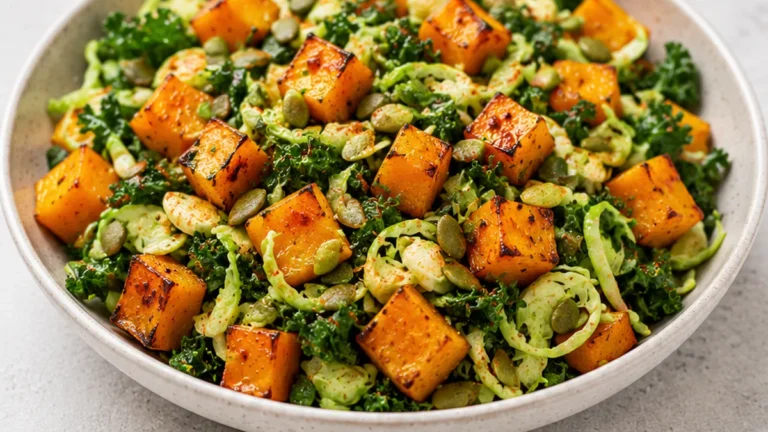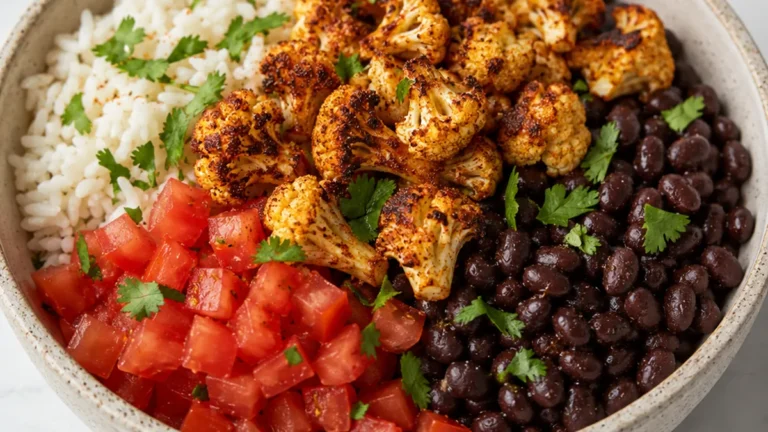
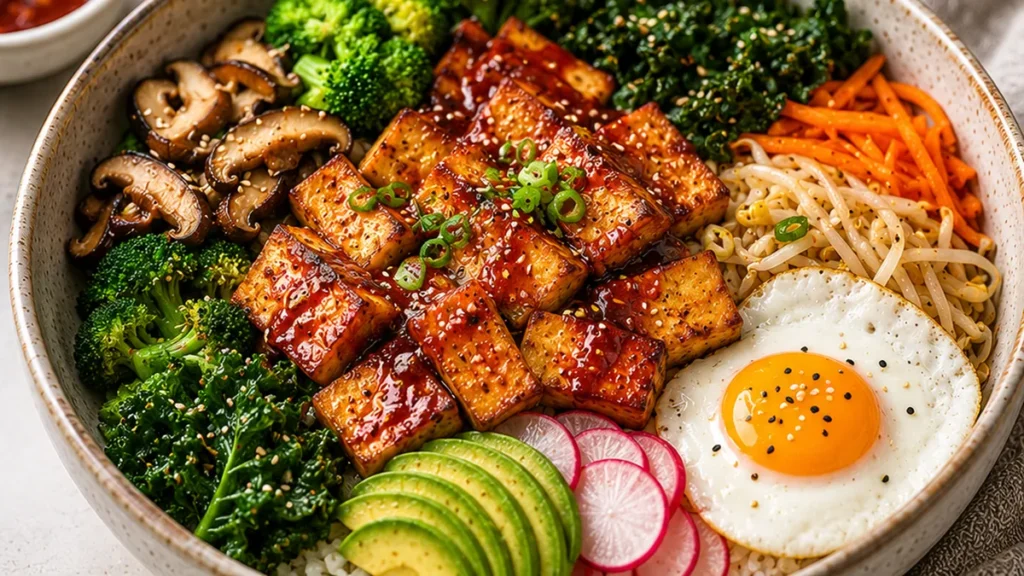
Bibimbap tofu is a delightful twist on the classic Korean dish, offering a satisfying crunch and a burst of fresh flavors. This recipe transforms firm tofu into crispy, golden bites, perfectly complementing the colorful medley of fresh and roasted vegetables. It’s an ideal choice for a wholesome and visually stunning meal that doesn’t compromise on taste. Ideal for a weeknight dinner or a healthy lunch, this bibimbap tofu is designed to be both nourishing and incredibly delicious. The combination of textures and the savory-sweet sauce makes every spoonful an adventure, proving that healthy eating can be exciting and flavorful.
Key takeaways
- Pressing tofu is essential for achieving a crispy texture.
- Marinating tofu infuses it with flavor and aids browning.
- Cook vegetables quickly over high heat to maintain crispness.
- Don't overcrowd the pan when frying tofu for optimal crisping.
Crispy Tofu Bibimbap: Taste the Rainbow!
Ingredients
- 1 block organic extra firm tofu
- 1/2 cup low sodium soy sauce or tamari
- 1-2 tablespoons Gochujang (Korean chili paste)
- 2 tablespoons toasted sesame oil
- 1 inch fresh ginger, grated
- 2 cloves garlic, grated
- 2 tablespoons extra virgin olive oil
- 1 cup broccoli
- 1 cup shiitake mushrooms, sliced or torn
- 1 bunch curly kale, roughly torn
Instructions
- Preheat the oven to 400F (200C). Line a baking sheet with parchment paper.
- Press the tofu to remove excess water. Slice into 1/4 inch thick pieces and place in a ziplock bag.
- In a small bowl, combine soy sauce, Gochujang, sesame oil, grated ginger, and garlic. Add half the sauce to the tofu bag, toss, and let sit 5-10 minutes. Remove tofu from sauce, place in a single layer on the baking sheet. Bake for 10 minutes.
- Flip the tofu and bake for another 10-15 minutes until crisp. Meanwhile, toss broccoli and mushrooms with 1 tbsp olive oil and a pinch of salt. Add to the baking sheet with the tofu for the last 10-15 minutes of cooking.
- In a separate bowl, massage the torn kale with the remaining 1 tbsp olive oil and a pinch of salt until softened.
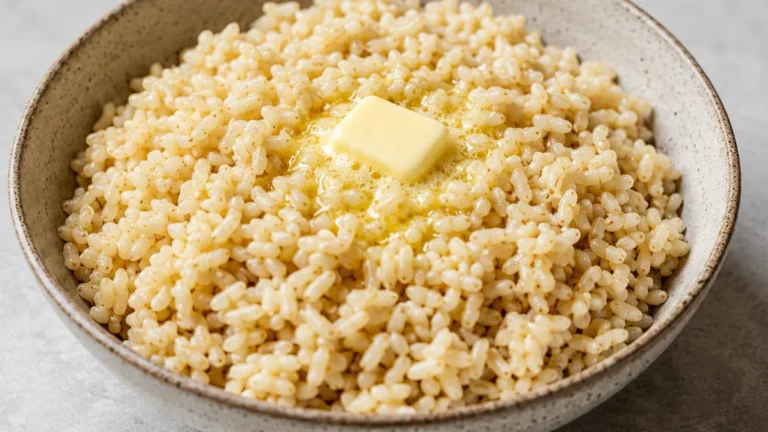
- To serve, divide cooked grains (rice or quinoa) among bowls. Top with crispy tofu, massaged kale, roasted broccoli and mushrooms. Add optional fried egg, avocado, carrots, and radishes. Drizzle with reserved sauce and sprinkle with sesame seeds.
Notes
The technique that makes it
The key to an exceptional crispy tofu bibimbap lies in preparing the tofu correctly. We’re aiming for a firm, chewy interior with a delightfully crisp exterior that can stand up to the other ingredients without becoming soggy. This is achieved through a multi-step process. First, pressing the tofu is crucial to remove excess water. Use a tofu press or a heavy object (like books or cans) with paper towels for at least 30 minutes, ideally longer. This dehydration step allows the tofu to absorb more marinade and achieve a better sear. Next, we’ll marinate the pressed tofu in a flavorful blend of soy sauce (or tamari for gluten-free), gochujang, toasted sesame oil, grated ginger, and garlic. This marinade not only infuses the tofu with Korean flavors but also contributes to browning. The final, critical step is the cooking method. Pan-frying the marinated tofu in extra virgin olive oil over medium-high heat, ensuring not to overcrowd the pan, allows each piece to develop a golden-brown, crispy crust. Rotating the tofu pieces ensures even cooking and crispiness on all sides. This method transforms bland tofu into a textural and flavorful star of the bibimbap.
Troubleshooting
- Failure: Tofu is soggy. Fix: Ensure tofu was pressed thoroughly to remove as much water as possible. Also, make sure the pan is hot enough before adding tofu and avoid overcrowding the pan, which steams rather than fries.
- Failure: Tofu is bland. Fix: Marinate the tofu for at least 15-30 minutes after pressing. Ensure all marinade ingredients are well-mixed and coats the tofu evenly.
- Failure: Vegetables are too soft or mushy. Fix: Cook vegetables in batches or in a separate pan. Stir-fry them quickly over high heat, leaving them slightly crisp-tender (al dente) to maintain their texture and bright colors.
- Failure: Bibimbap lacks cohesive flavor. Fix: Drizzle the finished bowl generously with toasted sesame oil and a bit of the reserved marinade or a simple gochujang sauce before mixing. This ties all the components together.
Substitutions
- Tofu: Tempeh can be used as a substitute for tofu. It offers a firmer texture and nutty flavor, and will also crisp up well when pan-fried.
- Soy Sauce: Coconut aminos can be used for a soy-free and slightly sweeter alternative. The flavor profile will be different but still delicious.
- Broccoli: Green beans or snap peas can replace broccoli. They offer a similar crisp texture when stir-fried quickly.
- Kale: Spinach or bok choy are good substitutes for kale. They wilt down beautifully and absorb flavors well, though kale provides a chewier texture.
Pro tips
- Ensure tofu is well-pressed for maximum crispiness.
- Don’t overcrowd the baking sheet for even roasting.
- Adjust Gochujang to your preferred spice level.
- Add a fried egg for extra richness.
Enjoy this fresh and healthy bibimbap tofu, a perfect balance of crispy, fresh, and savory flavors. Experiment with your favorite vegetables!
More from Vegan Bowls →
Frequently asked questions
How to make tofu crispy for bibimbap?
Press extra-firm tofu for at least 30 minutes to remove excess water. Cut into cubes or triangles, toss with cornstarch, and pan-fry in a bit of oil until golden brown and crispy on all sides. Alternatively, bake at 400°F (200°C) for 25-30 minutes, flipping halfway.
Can I prep bibimbap ingredients ahead of time?
Yes, most components can be prepared a day in advance. Cook the rice, chop vegetables, and prepare the sauces. Store each item separately in airtight containers in the refrigerator. Assemble just before serving to ensure everything is fresh and the tofu remains crispy.
What are good substitutes for vegetables in bibimbap?
Feel free to use any vegetables you have on hand. Excellent options include spinach, carrots, zucchini, mushrooms, bean sprouts, bell peppers, and edamame. For a different flavor, try broccoli florets, kale, or even thinly sliced sweet potato.
How do I store leftover bibimbap?
It’s best to store components separately if possible. Keep cooked rice, prepared vegetables, and tofu in airtight containers in the fridge for up to 2-3 days. The sauce can also be stored separately. Reheat rice and vegetables gently; add fresh toppings if desired.