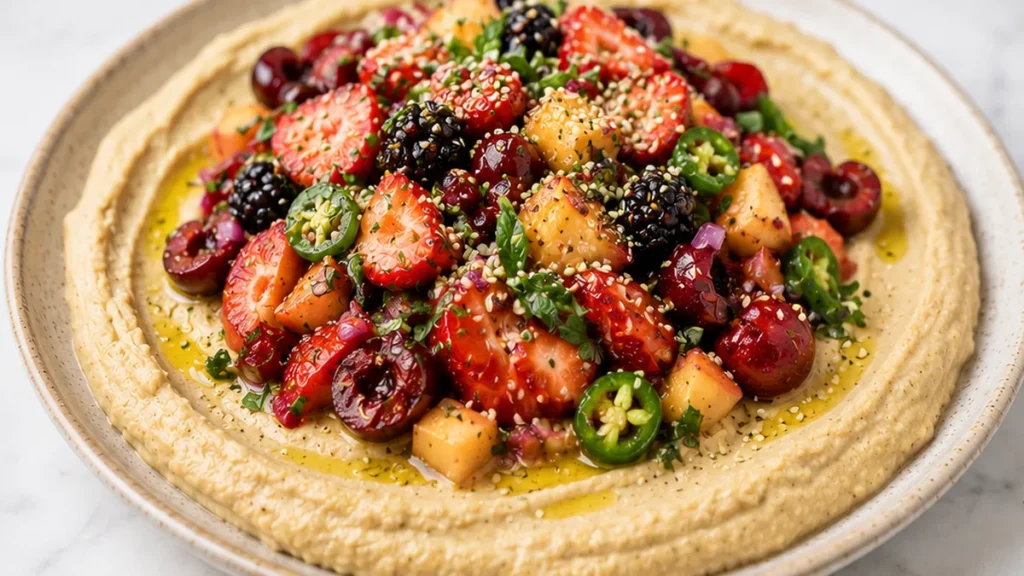
Improve your snack game with this incredible fruit salsa and miso hummus recipe. It’s the perfect combination of sweet, savory, and fresh, making it an ideal appetizer for any gathering. This fruit salsa brings a burst of summer flavors, while the miso hummus offers a creamy, umami-rich base that’s far more exciting than traditional hummus. Together, they create a dish that’s both visually stunning and delicious.
Key takeaways
- The slow addition of olive oil is key for achieving a creamy, emulsified hummus.
- White miso paste and almond butter add depth and umami to the hummus.
- Ensure chickpeas are well-cooked and soft for the smoothest texture.
- Taste and adjust seasoning, lemon, and miso for balanced flavor.
Juicy Fruit Salsa & Creamy Miso Hummus
Ingredients
- 2 cups cooked chickpeas (rinsed + drained if using canned)
- 1/4 cup tahini (sesame seed paste)
- 2 tablespoons creamy almond butter
- 1 tablespoon white miso paste
- pinch crushed red pepper flakes
- juice of 1/2 a lemon
- 1/3 cup olive oil (+ more for drizzling)
- salt and pepper (to taste)
- 1/2 cup basil pesto
- toasted sesame seeds + hemp seeds (for topping)
Instructions
- Add the chickpeas, tahini, almond butter, miso paste, crushed red pepper flakes and lemon juice to the bowl of a food processor. Puree the mixture until smooth, scraping down the sides if necessary.
- With the machine running, stream in 1/3 cup olive oil until smooth and creamy. Let the machine run for about 5 minutes, scraping down the sides, for an extra smooth texture.
- Taste and season with salt and pepper. If the hummus is too thick, thin with water or extra olive oil, adding 1 tablespoon at a time until desired consistency is reached.
- For the salsa: In a bowl, combine cherries, strawberries, blackberries, peaches or nectarines, jalapeño, cilantro, basil, and lemon juice. Combine well.
- To serve, generously top the creamy miso hummus with the fresh fruit salsa. Drizzle with a little extra olive oil.
- Sprinkle with toasted sesame and hemp seeds for a delightful crunch.
Notes
The technique that makes it
The success of this creamy miso hummus hinges on achieving the right emulsion and texture. The key is the gradual addition of olive oil while blending. Start by combining the chickpeas, tahini, almond butter, white miso paste, lemon juice, and red pepper flakes in a food processor. Process until the mixture is relatively smooth, scraping down the sides as needed. Then, with the food processor running, slowly drizzle in the olive oil. This slow incorporation allows the oil to emulsify with the other ingredients, creating a lusciously smooth and creamy consistency rather than a greasy or separated one. The almond butter contributes to this creaminess and adds a subtle nutty depth that complements the miso. The white miso paste itself is crucial for its umami-rich, slightly sweet, and savory notes, which improve the hummus beyond a simple chickpea dip. Ensure your chickpeas are well-cooked and soft; this is vital for a smooth final product. If using canned chickpeas, rinsing them thoroughly removes excess sodium and the brine that can impart an off-flavor. The final consistency should be thick but pourable, coating the back of a spoon.
Troubleshooting
- Hummus is too thick: Add more olive oil, a tablespoon at a time, while processing until the desired consistency is reached. Alternatively, a teaspoon of water can be used to thin it slightly.
- Hummus is too thin: This is usually due to adding too much liquid too quickly. You can try to thicken it by adding a few more cooked chickpeas and processing again, or by chilling it, which will firm it up.
- Hummus is bland: Ensure you’ve seasoned adequately with salt and pepper. The lemon juice and miso paste should also be balanced. Taste and adjust; you might need a touch more lemon or a pinch more salt.
- Hummus is grainy: This often happens if the chickpeas weren’t fully cooked or if the olive oil wasn’t incorporated slowly enough. Process for longer, ensuring the oil is drizzled in gradually.
Substitutions
- Chickpeas: For a different base, cannellini beans or even cooked white lentils can be used. The texture might be slightly different, but the flavor profile will remain largely intact.
- Tahini: Sunflower seed butter or a smooth cashew butter can replace tahini. This will alter the flavor profile, making it nuttier or seedier, but still delicious.
- Almond Butter: Any smooth nut or seed butter, like cashew butter or sunflower seed butter, will work. Ensure it’s unsweetened and unsalted for best results.
- White Miso Paste: If white miso is unavailable, a small amount of light soy sauce or tamari can provide some umami, though the characteristic fermented flavor will be less pronounced.
Pro tips
- Use ripe, in-season fruits for the best flavor.
- Adjust the jalapeño and lemon juice in the salsa to your preference.
- For a smoother hummus, ensure your food processor runs for the full 5 minutes, scraping down sides as needed.
- If you don’t have almond butter, cashew butter or even extra tahini can be used.
This fruit salsa and miso hummus is a delightful and healthy way to enjoy summer produce. Serve it with your favorite chips or crackers!
More from Vegan Bowls →
Frequently asked questions
How to make fruit salsa less watery?
To prevent a watery fruit salsa, drain excess liquid from your fruits before chopping. For softer fruits like berries, consider gently patting them dry with a paper towel. Avoid over-mashing or over-mixing, which releases more juice. Adding a touch of cornstarch or agar-agar can also help thicken the juices if needed.
Can I make fruit salsa ahead of time?
Yes, you can prepare the fruit salsa a few hours in advance. However, it’s best to add delicate fruits like berries and kiwi just before serving to maintain their texture and bright color. Store the firmer fruits and dressing separately and combine them closer to serving time for optimal freshness.
What can I serve with fruit salsa and hummus?
This fruit salsa and creamy miso hummus pairing is versatile. Serve with tortilla chips, pita bread, or vegetable sticks like carrots, celery, and bell peppers for dipping. It also makes a delightful topping for grilled tofu, vegan chicken, or even as a side dish for a light summer meal.
How long does miso hummus last in the fridge?
Properly stored in an airtight container in the refrigerator, creamy miso hummus will typically last for 5 to 7 days. Ensure it’s always scooped with a clean utensil to avoid introducing bacteria. If you notice any off-smells or changes in texture, it’s best to discard it.