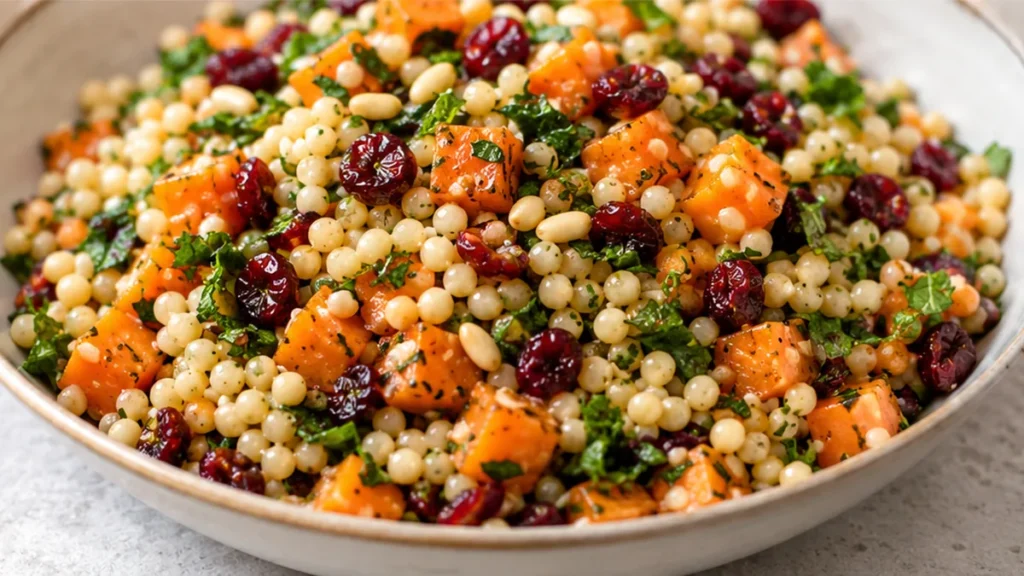
This Israeli couscous salad is a fantastic option for a light lunch, a vibrant side dish, or a fulfilling meal prep component. Its unique texture from the pearled couscous combined with the sweetness of yam and cranberries makes it a standout. Combining savory couscous with sweet elements works remarkably well, which makes this salad an easy staple. This recipe is designed to be straightforward yet impressive, perfect for both beginners and seasoned cooks.
Key takeaways
- Cook Israeli couscous with a precise 1:1.5 liquid ratio and allow it to rest covered after simmering for optimal texture.
- Season the cooking water for the couscous to build a foundation of flavor.
- Roast or boil yam until tender but firm to prevent it from breaking apart in the salad.
- Toast pine nuts to enhance their flavor and add a crucial crunchy element.
Vibrant Israeli Couscous Salad!
Ingredients
- 1 cup Israeli couscous
- 1 1/2 cups water
- 1/2 tsp kosher salt
- 1 small yam, peeled and cubed
- 1/2 cup dried cranberries
- 1 tablespoon fresh mint, chopped
- 1/4 cup pine nuts
- 1 tablespoon lemon juice
- 1 tablespoon olive oil
Instructions
- Bring the water to a boil, add the Israeli couscous and yam, cover and reduce to a simmer.
- Cook for 12 minutes.
- Combine all the ingredients and serve.
Notes
The Technique That Makes It: Hydration and Flavor Infusion
The key to a perfect Israeli couscous salad lies in proper couscous hydration and the subsequent flavor infusion. Israeli couscous, also known as pearl couscous, is larger and chewier than its finer counterparts. It requires cooking in a liquid, typically water or broth, to achieve its signature tender, slightly al dente texture. The ratio of 1 cup of Israeli couscous to 1.5 cups of water is crucial for optimal hydration. Too little water will result in undercooked, hard grains, while too much can lead to a mushy, unappealing consistency. Boiling the water first and then simmering the couscous, covered, for about 10-12 minutes ensures even cooking. It’s important to let the couscous rest, covered, off the heat for at least 5 minutes after cooking. This resting period allows the grains to absorb any remaining moisture and firm up, preventing a gummy texture. The addition of salt to the cooking water seasons the couscous from within, forming the flavor base for the entire salad.
The yam preparation also plays a role. Roasting or boiling the yam cubes until tender but not mushy ensures they integrate well into the salad without disintegrating. The residual heat from the cooked couscous will gently warm the other ingredients, allowing the flavors to meld. The final dressing, a simple emulsion of olive oil and lemon juice, lightly coats the couscous and other components, enhancing their individual flavors without overpowering them. The fresh mint adds a bright, aromatic counterpoint to the sweetness of the cranberries and yam, and the toasted pine nuts provide a welcome textural contrast and nutty depth.
Troubleshooting
- Problem: Couscous is mushy and sticky.
- Fix: You likely used too much water or overcooked it. Ensure you use the 1:1.5 couscous to water ratio and reduce heat to a gentle simmer. Avoid stirring excessively during cooking. Let it rest undisturbed after cooking.
- Problem: Couscous is hard and undercooked.
- Fix: Not enough water or insufficient cooking time. Ensure the water is boiling before adding couscous and maintain a simmer for the full 10-12 minutes. Allow it to rest covered for the full 5 minutes.
- Problem: Salad is bland.
- Fix: Seasoning is key. Ensure salt is added to the couscous cooking water. Taste and adjust the lemon juice and olive oil dressing before serving, adding a pinch more salt if needed. Consider adding a pinch of black pepper.
- Problem: Yam pieces are falling apart.
- Fix: Cook the yam cubes separately until just tender. Overcooking them before adding to the salad will cause them to break down. Aim for fork-tender but still holding their shape.
Substitutions
- Israeli Couscous: Quinoa or orzo pasta can be substituted. Quinoa will offer a nuttier flavor and slightly different texture. Orzo will cook faster and have a softer bite. Adjust cooking liquid and time accordingly.
- Yam: Sweet potato or butternut squash can be used. Both will provide a similar sweetness and soft texture when cooked, though butternut squash may have a slightly more pronounced flavor.
- Dried Cranberries: Dried cherries or raisins can be substituted. Dried cherries offer a similar tartness, while raisins will be sweeter. Ensure they are plumped slightly if very dry.
- Pine Nuts: Toasted slivered almonds, chopped walnuts, or even sunflower seeds can be used. These will provide a crunchy texture and nutty flavor, though the specific taste profile will vary.
Pro tips
- For extra flavor, toast the pine nuts lightly in a dry skillet before adding them. This enhances their nutty aroma.
- Make ahead: This salad tastes even better after an hour or two in the fridge, allowing the flavors to meld. It stores well for up to 3 days.
- If the couscous seems too dry, add an extra tablespoon of olive oil or lemon juice when combining all ingredients.
This Israeli couscous salad is a versatile and delicious dish that’s sure to impress. Enjoy experimenting with different herbs or nuts to make it your own!
Frequently asked questions
How do I prevent Israeli couscous from becoming mushy?
Ensure you use the correct water ratio (1.5 cups water to 1 cup couscous) and simmer gently, covered, for the recommended time. Crucially, allow the couscous to rest, covered and off the heat, for at least 5 minutes after cooking. This allows the grains to absorb excess moisture and firm up.
Can I cook the couscous in broth instead of water?
Yes, substituting vegetable or chicken broth for water will add another layer of savory flavor to your Israeli couscous salad. Use the same 1:1.5 ratio of couscous to liquid and follow the same cooking and resting instructions for best results.
What is the best way to cook the yam for this salad?
Roasting the yam cubes with a little olive oil and salt until fork-tender but still holding their shape is ideal. Alternatively, you can boil or steam them. The key is to cook them until tender but not mushy, so they integrate well without disintegrating.
How long can I store this Israeli couscous salad?
This salad is best enjoyed fresh, but leftovers can be stored in an airtight container in the refrigerator for up to 2-3 days. The textures may soften slightly over time, especially the pine nuts.
More from Vegan Bowls →