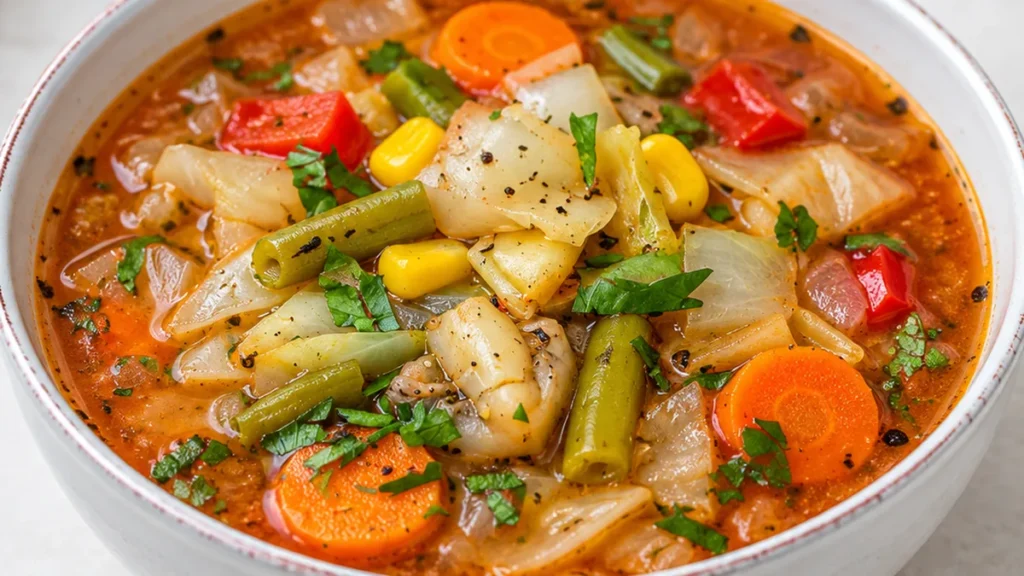
Cabbage soup serves as a foundation for a satisfying vegan detox, packed with hearty vegetables. It’s designed to be light yet incredibly flavorful, making it the perfect meal when you want to feel refreshed and nourished. This recipe focuses on simple, wholesome ingredients that work together to create a delicious and healthy dish.
Key takeaways
- Cabbage is key for detoxification due to its high nutrient content.
- Avoid overcooking cabbage to maintain texture and nutrients.
- Experiment with ingredient swaps to customize flavor profiles.
- This soup is a hearty, fiber-rich meal suitable for any day.
Vegan Detox Cabbage Soup
Ingredients
- 2 tbsp Olive Oil
- 1 Large Onion (diced)
- 2 Carrots (chopped or sliced)
- 2 Stalks Celery (chopped)
- ½ Large Head Cabbage (chopped)
- 1 Large Red Bell Pepper (seeded and chopped)
- 3 Garlic Cloves (pressed)
- 1 tsp Chili Powder (or to taste)
- ⅓ cup Corn (fresh or frozen)
- 1 cup Chopped Green Beans (fresh or frozen)
Instructions
- Heat olive oil in a large stockpot over medium heat.
- Add onion, carrots, celery, cabbage, red bell pepper, garlic, and chili powder. Sauté until veggies soften, about 8-10 minutes.
- Add corn, green beans, vegetable broth, and fire-roasted tomatoes, and bring to a boil.
- Reduce the heat and simmer for about 10 minutes.
- Stir in lemon juice, then season with salt and pepper to taste.
- Garnish with fresh chopped parsley and enjoy!
Video
Notes
Understanding the Role of Cabbage in Detoxification
Cabbage is a powerhouse of nutrients and has been recognized for its detoxifying properties. It is rich in vitamins C and K, as well as fiber, which aids in digestion and promotes a healthy gut. The high water content in cabbage helps to flush out toxins from the body. When making cabbage soup, the way you prepare the cabbage can significantly affect its nutrient retention. For optimal results, aim to chop the cabbage into uniform pieces, as this ensures even cooking and nutrient release. Cooking cabbage at a temperature of around 90°C (194°F) can help maintain its beneficial properties while softening its texture.
Common Mistakes When Preparing Cabbage Soup
One common mistake is overcooking the cabbage, which can lead to a mushy texture and a loss of nutrients. To avoid this, cook the cabbage just until tender, typically around 5-7 minutes after adding it to the soup. Another issue arises from not seasoning adequately. Cabbage has a mild flavor that can be enhanced with the right amount of salt, pepper, and spices like chili powder. Start with a small amount and adjust to taste. Lastly, failing to include a variety of vegetables can result in a less flavorful soup. Incorporating a mix of colorful vegetables not only boosts the flavor but also enhances the nutritional profile of the dish.
Ingredient Adjustments for Enhanced Flavor
When making cabbage soup, consider swapping out some ingredients for others that can elevate the dish. For instance, if you prefer a spicier soup, you could replace the chili powder with cayenne pepper, which will add heat without altering the soup’s base flavor. Alternatively, if you want a sweeter taste, adding diced sweet potatoes can provide natural sweetness and a creamy texture. If you’re looking for a different texture, consider using different types of beans instead of green beans, such as kidney beans or chickpeas, which will also increase the protein content of the soup. Each swap will yield a different flavor profile, so it’s worthwhile to experiment.
Unique Characteristics of Vegan Detox Cabbage Soup
This vegan detox cabbage soup stands out due to its high fiber content, which is essential for digestive health. Unlike many soups that are broth-based, this recipe is loaded with whole vegetables, making it a hearty meal. The combination of cabbage, carrots, and celery creates a depth of flavor that is both satisfying and nutritious. Additionally, the use of olive oil not only enhances the flavor but also provides healthy fats that aid in the absorption of fat-soluble vitamins from the vegetables. This soup is not just a detox meal; it’s a complete dish that can be enjoyed any day of the week.
How to Prepare Cabbage Soup in Advance for Maximum Flavor
Preparing cabbage soup ahead of time can enhance its flavor significantly. When made in advance, the ingredients have more time to meld together, resulting in a richer taste. To make ahead, cook the soup as directed and allow it to cool completely before transferring it to airtight containers. Store in the refrigerator for up to 5 days or freeze for up to 3 months. When reheating, add a little water or vegetable broth to adjust the consistency, as the soup may thicken upon sitting.
Scaling Your Cabbage Soup Recipe for Larger Gatherings
If you’re looking to serve a crowd, scaling your cabbage soup recipe is straightforward. Simply multiply the ingredient quantities by the number of servings you need. Keep in mind that larger batches might require longer cooking times to ensure even heat distribution. Use a large pot or Dutch oven to accommodate the increased volume, and stir occasionally to prevent sticking. Additionally, taste and adjust seasoning, as larger quantities may need more spices to maintain flavor balance.
Choosing the Right Equipment for Cooking Cabbage Soup
The choice of cooking equipment can greatly influence the outcome of your cabbage soup. A heavy-bottomed pot or Dutch oven is ideal for even heat distribution, which helps prevent burning and ensures that vegetables cook uniformly. If using an Instant Pot, adjust the cooking time to about 10 minutes under high pressure, followed by a natural release for best results. Different materials, such as stainless steel versus non-stick, can also affect cooking time and flavor, so consider your equipment carefully.
Seasonal Variations: Adapting Cabbage Soup to Available Ingredients
Seasonality plays a crucial role in the flavor and nutrition of your cabbage soup. In winter, hearty root vegetables like parsnips or turnips can be added for additional sweetness and texture. During the summer, consider incorporating fresh tomatoes or zucchini for a lighter, fresher taste. Using seasonal produce not only enhances the flavor but also ensures that your soup is packed with nutrients. Always adjust cooking times based on the freshness and type of vegetables used to achieve the best results.
Understanding the Impact of Ingredient Freshness on Cabbage Soup
The quality of ingredients significantly affects the flavor and nutritional value of cabbage soup. Fresh vegetables, particularly cabbage, carrots, and celery, contribute to a vibrant taste and texture. Fresh cabbage retains more of its nutrients and has a crispier texture, enhancing the overall experience of the soup. For instance, using fresh cabbage instead of wilted cabbage can make a notable difference in flavor. Fresh greens should be vibrant in color and firm to the touch, while carrots should be bright orange without any blemishes. If using frozen vegetables, ensure they are high quality and not past their expiration date, as this can alter the soup’s flavor profile.
Optimal Storage Techniques for Cabbage Soup
Proper storage of cabbage soup can preserve its flavors and extend its shelf life. After cooking, allow the soup to cool to room temperature before transferring it to an airtight container. Cabbage soup can be refrigerated for up to 5 days, but for longer storage, consider freezing it. When freezing, use freezer-safe containers or bags, leaving some space for expansion. To reheat, thaw the soup overnight in the refrigerator and gently warm it on the stove, adding a splash of water or vegetable broth if necessary to restore its original consistency. Avoid reheating multiple times, as this can degrade the flavor and texture.
Scaling the Recipe for Different Serving Sizes
Scaling your cabbage soup recipe can be straightforward, but it requires some attention to ingredient ratios and cooking times. For larger batches, maintain the proportions of the ingredients to ensure the flavor remains consistent. For instance, if doubling the recipe, use double the amount of each ingredient, including spices. However, be mindful that cooking time may increase slightly, as larger volumes take longer to reach the desired simmering point. Conversely, if making a smaller batch, you can easily halve the recipe, but ensure that you adjust the seasoning carefully, tasting as you go to achieve the right balance. This adaptability makes cabbage soup a versatile option for both small family meals and larger gatherings.
Understanding the Best Practices for Preparing Vegan Detox Cabbage Soup Ahead of Time
Preparing vegan detox cabbage soup ahead of time can enhance its flavors significantly. When you allow the soup to sit, the ingredients have more time to meld together, resulting in a more cohesive taste. To do this effectively, make the soup up to three days in advance. Store it in an airtight container in the refrigerator. When reheating, use a low to medium heat to avoid overcooking the vegetables, which can lead to a mushy texture. Aim for a temperature around 70°C (160°F) when reheating to ensure the soup is hot throughout without compromising the integrity of the ingredients.
Additionally, consider batch cooking to save time during the week. This method allows you to have healthy meals ready to go. If you plan to freeze the soup, it’s best to leave out the corn and green beans until you reheat it, as these ingredients can become overly soft when frozen and thawed. Freezing the soup in portions can also help manage serving sizes effectively.
Pairing and Serving Suggestions for Cabbage Soup
Cabbage soup is versatile and can be paired with various side dishes to create a complete meal. For a balanced diet, consider serving the soup with a slice of whole-grain bread or a side salad. Whole grains provide additional fiber and nutrients, complementing the soup’s detoxifying properties. If you’re looking for a protein boost, serve the soup alongside some chickpea salad or lentil patties, which will enhance the meal’s nutritional profile.
When it comes to seasoning, a sprinkle of fresh herbs like parsley or cilantro can elevate the dish, adding brightness and freshness. For those who enjoy a bit of heat, a dash of hot sauce or a sprinkle of red pepper flakes can also be a delightful addition. Serving the soup hot is essential, as it not only enhances the flavors but also provides a comforting experience. Aim for a serving temperature around 65°C (150°F) for optimal enjoyment.
Pro tips
- Use vegetable broth for a rich, savory base.
- Adjust chili powder to your spice preference.
- Don’t overcook the vegetables; they should retain a slight bite.
- Fresh lemon juice at the end brightens all the flavors.
Enjoy this wholesome and delicious vegan cabbage soup as a light meal or a starter.
Frequently asked questions
Can I add protein to the cabbage soup?
Yes, you can add protein sources like tofu, chickpeas, or lentils to make the soup more filling and nutritious. This will enhance the overall texture and flavor while keeping it vegan.
How long can I store leftover cabbage soup?
Leftover cabbage soup can be stored in the refrigerator for up to 4-5 days. Make sure to cool it completely before transferring it to an airtight container to maintain freshness.
Can I freeze this soup for later use?
Absolutely! Cabbage soup freezes well. Allow it to cool, then transfer it to freezer-safe containers. It can be stored for up to 3 months. Thaw in the refrigerator before reheating.
What can I serve with cabbage soup?
This soup pairs well with whole grain bread or a side salad. For a heartier meal, consider serving it with a grain like quinoa or brown rice to balance the dish.
More from Vegan Bowls →