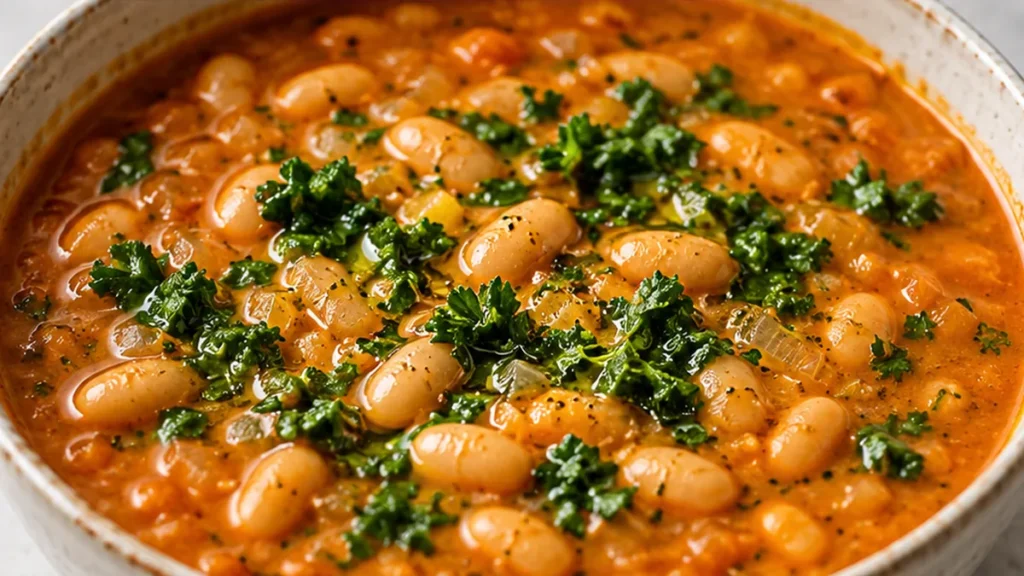
El Bulli’s bean soup is a comforting dish that combines beans and smoked paprika. This recipe is straightforward and ideal for home cooks.
Key takeaways
- Choose high-quality beans for the best flavor and texture.
- Control blending to achieve the desired consistency with a mix of smooth and chunky.
- Sauté aromatics to enhance the flavor balance and add salt early in the cooking process.
- Monitor cooking times carefully to ensure beans are tender but not mushy.
El Bulli’s Bean Soup — Pure Comfort!
Ingredients
Instructions
- Saute onion and herbs for 8 minutes: Heat oil in a large heavy based pot over medium heat. Add garlic, onion, and herbs and cook, stirring regularly, for 8 minutes until the onions are a deep golden brown and sweet.
- Cook tomato passata for 8 minutes: Add tomato passata and cook over low heat for another 8 minutes until the tomato changes from red and watery to dark brown and very thick.
- Simmer: Stir in the beans followed by the vegetable stock. Adjust heat so it’s bubbling very gently and simmer for 15 minutes with the lid off.
- Blitz: Transfer 2/3 cup (150ml) of soup into a jug or jar large enough to fit the head of a blender stick. Blitz until smooth then stir it back into the soup to thicken the broth.
- Serve: Taste and add more salt if needed. Serve immediately with crusty bread.
Understanding the Role of Beans in El Bulli’s Bean Soup
The foundation of El Bulli’s Bean Soup lies in the beans used. Varieties like cannellini or borlotti provide a creamy texture and rich flavor, essential for a comforting soup. The choice of dried versus canned beans can significantly impact the dish. Dried beans, when soaked and cooked properly, offer a depth of flavor and a firmer texture compared to canned beans, which may lack the same intensity.
How to Achieve the Perfect Consistency
Consistency in bean soup is crucial. Aiming for a smooth yet slightly chunky texture can be achieved by controlling the blending process. After cooking, blend only a portion of the soup to maintain some whole beans, which adds to the mouthfeel. If the soup is too thick, a splash of vegetable broth or water can be incorporated to adjust the texture. Conversely, if too thin, simmering uncovered allows excess moisture to evaporate.
Balancing Flavors for an Unforgettable Taste
The balance of flavors in El Bulli’s Bean Soup is key to its success. Ingredients like garlic, onion, and herbs should be sautéed to release their essential oils, enhancing the overall flavor profile. Adding salt at the right moment is also essential; it should be introduced during the sautéing process rather than at the end, allowing it to penetrate the beans and develop a more complex flavor. A touch of acidity, such as lemon juice or vinegar, can brighten the dish and elevate the taste.
Mastering Cooking Times for Optimal Bean Texture
Cooking times vary depending on the type of beans used. For dried beans, soaking overnight and cooking for approximately 1 to 1.5 hours is recommended, ensuring they are tender but not mushy. For canned beans, a gentle simmer of about 20-30 minutes is sufficient to meld the flavors without overcooking. Monitoring the cooking process is vital to achieve the desired texture without compromising the integrity of the beans.
Enhancing El Bulli’s Bean Soup with Unique Ingredients
While the recipe stands strong on its own, incorporating unique ingredients can elevate the soup further. Adding a splash of white wine can introduce acidity and complexity, while smoked paprika can add a subtle smokiness. For a more luxurious touch, a drizzle of high-quality olive oil just before serving enhances both flavor and presentation. However, these additions should complement, not overpower, the original flavor of the beans.
How to Prepare El Bulli’s Bean Soup in Advance
Making El Bulli’s bean soup ahead of time can enhance its flavors, as the ingredients have the opportunity to meld together. To prepare in advance, cook the soup fully and allow it to cool to room temperature before refrigerating. It can be stored in an airtight container for up to 3 days. When ready to serve, reheat gently on the stove, adding a little water or broth if necessary to adjust the consistency. This method allows the flavors to deepen, making the soup even more comforting.
Scaling El Bulli’s Bean Soup for Larger Gatherings
Scaling the recipe for El Bulli’s bean soup is straightforward, but attention must be paid to cooking times and ingredient ratios. For every additional 500 grams of beans, increase the broth by about 1 liter. However, be cautious not to overcrowd your cooking pot; larger batches may require longer cooking times to ensure even heating. A larger pot will help maintain consistent heat, which is crucial for achieving the desired texture and flavor.
Choosing the Right Equipment for El Bulli’s Bean Soup
The choice of equipment can significantly impact the outcome of El Bulli’s bean soup. A heavy-bottomed pot or Dutch oven is ideal for even heat distribution, preventing scorching. If using an immersion blender to puree the soup, ensure it is powerful enough to handle the thickness without overworking the beans. Additionally, using a fine-mesh strainer can help achieve a smoother consistency if desired, but this is optional based on personal preference.
Seasonal Variations and Ingredient Quality for El Bulli’s Bean Soup
The quality of ingredients can make a notable difference in El Bulli’s bean soup. Using fresh, seasonal vegetables will enhance the flavor profile. For instance, in spring, consider adding fresh herbs like parsley or mint, while in autumn, root vegetables can provide a heartier taste. Additionally, beans can vary in texture and flavor depending on their source; using organic, high-quality beans will yield the best results. Always taste the soup as you go, adjusting seasonings based on the freshness of your ingredients.
How to Store El Bulli’s Bean Soup for Maximum Freshness
Storing El Bulli’s bean soup properly is crucial to maintaining its flavor and texture. After cooking, allow the soup to cool to room temperature before transferring it to an airtight container. It can be refrigerated for up to 3-4 days. For longer storage, consider freezing the soup. When freezing, portion it into smaller containers, leaving some space for expansion. This method preserves the soup’s quality, allowing you to enjoy the comforting flavors later. When reheating, do so gently on the stove over low heat, adding a splash of water or broth if the soup thickens too much during storage.
Adjusting for Ingredient Quality in El Bulli’s Bean Soup
The quality of ingredients plays a significant role in the outcome of El Bulli’s bean soup. Fresh, high-quality beans will yield better texture and flavor. If using dried beans, soak them overnight for optimal hydration. In contrast, canned beans can be a convenient alternative; however, they may require less cooking time. Always rinse canned beans to remove excess sodium. Seasonal vegetables should also be chosen carefully; fresh produce enhances the soup’s overall taste. For instance, ripe tomatoes in summer will offer a sweetness that out-of-season tomatoes lack. Adjust cooking times based on the freshness and type of ingredients used to achieve the best results.
Scaling El Bulli’s Bean Soup for Gatherings
When scaling El Bulli’s bean soup for larger gatherings, it’s essential to maintain the balance of flavors and textures. A general rule of thumb is to increase the ingredient quantities proportionally, but be mindful that cooking times may vary. Larger batches may require additional simmering time to develop flavors fully. Moreover, consider the size of your cooking vessel; a larger pot ensures even cooking and prevents scorching. If you’re doubling or tripling the recipe, taste as you go to adjust seasonings accordingly. This method ensures that each serving retains the comforting essence of the original recipe.
How to Serve El Bulli’s Bean Soup for Maximum Enjoyment
Serving El Bulli’s Bean Soup requires attention to detail to enhance its comforting qualities. The soup can be served hot, ideally around 70-80°C (158-176°F), to ensure that the flavors are vibrant. Consider garnishing with a drizzle of high-quality olive oil or a sprinkle of fresh herbs like parsley or thyme to elevate the presentation and flavor profile. Pairing the soup with crusty bread or a light salad can provide a delightful contrast in texture. For a more substantial meal, consider serving it alongside grilled meats or roasted vegetables, which complement the earthy flavors of the beans.
Understanding the Impact of Ingredient Quality on El Bulli’s Bean Soup
The quality of ingredients plays a crucial role in the final outcome of El Bulli’s Bean Soup. Fresh, high-quality beans will yield a richer flavor and better texture compared to older, dried beans. If using canned beans, opt for those without added preservatives or sodium for a cleaner taste. Seasonal produce, such as ripe tomatoes or fresh herbs, can significantly enhance the soup’s flavor. Additionally, the type of broth used—whether homemade or store-bought—can affect the depth of flavor. A well-made broth can add complexity, while a lower-quality one might result in a bland soup. Therefore, sourcing the best ingredients available is essential for achieving the soup’s intended comfort and richness.
Understanding the Role of Beans in El Bulli’s Bean Soup
The choice of beans is crucial in el Bulli’s bean soup, as different varieties contribute unique flavors and textures. For instance, using cannellini beans offers a creamy consistency, while black beans provide a richer taste. The cooking time varies between types; for example, dried beans typically require soaking for 6-8 hours and 1-2 hours of simmering, while canned beans only need to be heated through. Understanding the hydration levels of the beans is essential; dried beans should ideally absorb about 1.5-2 times their weight in water during cooking. This ensures they reach the perfect tenderness without becoming mushy. If the beans are undercooked, they will remain hard and gritty, detracting from the overall comfort of the soup. Conversely, overcooked beans can break apart, leading to a less appealing texture. Therefore, achieving the right balance in cooking is key to mastering this dish.
Pairing and Serving Suggestions for El Bulli’s Bean Soup
When serving el Bulli’s bean soup, the choice of accompaniments can elevate the dish significantly. Consider pairing it with crusty bread or a light salad to balance the richness of the soup. A drizzle of high-quality olive oil just before serving can enhance the flavor profile, adding a fruity note that complements the earthiness of the beans. Additionally, garnishing with fresh herbs such as parsley or cilantro can provide a refreshing contrast. For a bit of heat, a sprinkle of red pepper flakes or a dash of hot sauce can be added. It’s also important to serve the soup at the right temperature; ideally, it should be around 70-75 degrees Celsius (160-170 degrees Fahrenheit). This temperature allows the flavors to be fully appreciated without risking burns. Experimenting with different toppings and sides can provide a unique twist to each serving, making it a versatile dish for various occasions.
Pro tips
Pro tip: Best served immediately while hot!
Frequently asked questions
What type of beans should I use for El Bulli’s Bean Soup?
Cannellini or borlotti beans are ideal due to their creamy texture and rich flavor. Dried beans offer a better depth of flavor, but canned beans can be used for convenience.
How can I adjust the thickness of the soup?
If the soup is too thick, add vegetable broth or water gradually until you reach the desired consistency. If too thin, simmer uncovered to allow excess moisture to evaporate and thicken the soup.
Can I add other ingredients to enhance the soup?
Yes, adding a splash of white wine or smoked paprika can enhance the flavor. Just ensure these ingredients complement the beans rather than overpower them.
How long should I cook dried beans for this recipe?
Dried beans should be soaked overnight and then cooked for about 1 to 1.5 hours until tender. This ensures they have the right texture for the soup.
More from Vegan Bowls →