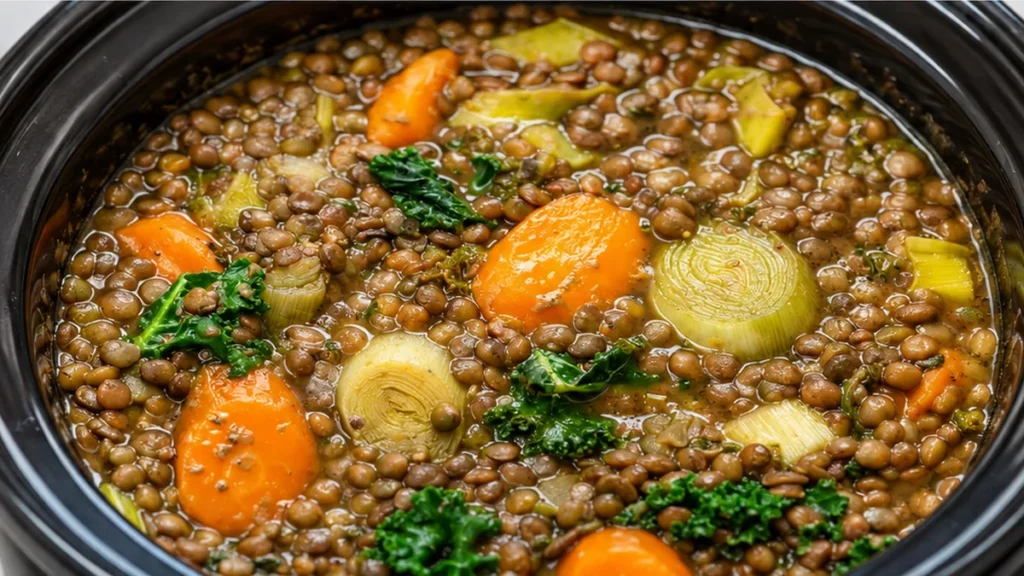
This lentil soup is a nourishing and satisfying meal. It uses whole lentils instead of split ones, providing a heartier texture and rich flavor.
Key takeaways
- Use the correct liquid-to-lentil ratio for the best texture.
- Adjust seasoning gradually for balanced flavors.
- French lentils provide a unique texture and flavor.
- Kale adds nutrition and heartiness to the soup.
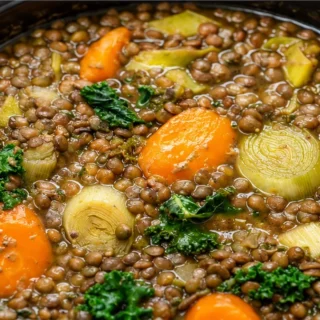
Hearty Vegan Lentil Soup
Ingredients
- 2 cups Whole Lentils (dried French lentils, or also known as Du puy)
- 5 cups Low-Sodium Vegetable Broth
- 2 Large Carrots (peeled and sliced into 1/4-inch thick rounds)
- 3 cups Chopped Kale Leaves
- 1 Leek (sliced)
- 2 Garlic Cloves (minced)
- 2 Sprigs Fresh Thyme
- 1 Bay Leaf
- 1 tablespoon Olive Oil
- 1 teaspoon Kosher Salt (or to taste)
Instructions
- Rinse the whole lentils thoroughly under cold water. Set aside.
- Heat the olive oil in a large pot over medium heat. Add the sliced leek and cook until softened, about 5-7 minutes.
- Stir in the minced garlic and cook for another minute until fragrant. Add the sliced carrots, rinsed lentils, vegetable broth, fresh thyme sprigs, and bay leaf.
- Bring the soup to a boil, then reduce heat to low, cover, and simmer for 30-40 minutes, or until the lentils are tender. Stir occasionally.
- Remove the thyme sprigs and bay leaf from the pot. Stir in the chopped kale and kosher salt. Cook for another 5-10 minutes, or until the kale is wilted and tender.
- Adjust seasoning with more salt if needed. Serve hot.
Video
Notes
The Science Behind Lentil Cooking
Understanding the cooking process of lentils is crucial for achieving the perfect texture and flavor in your lentil soup. Lentils, particularly French lentils (or Du Puy), require a cooking time of approximately 20-30 minutes when simmered in liquid. The ideal cooking temperature is around 90-95°C (194-203°F). This temperature range ensures that the lentils soften without becoming mushy, allowing them to retain their shape and provide a hearty texture in the soup.
A key factor in cooking lentils is their hydration level. Dried lentils need to absorb water to cook properly, and the ratio of liquid to lentils should generally be about 2.5:1. This means that for every cup of lentils, you should use about 2.5 cups of broth or water. The low-sodium vegetable broth not only adds flavor but also helps in controlling the sodium content of the soup.
Common Issues and Solutions
When making lentil soup, several common issues can arise:
- Issue: Lentils are mushy.
- Cause: Overcooking or using too much liquid can lead to mushy lentils. To fix this, reduce the cooking time and ensure you are using the correct liquid-to-lentil ratio.
- Issue: Soup is too bland.
- Cause: Insufficient seasoning or lack of aromatic vegetables. To enhance flavor, consider adding more garlic, herbs like thyme, or a splash of vinegar before serving.
- Issue: Soup is too thick.
- Cause: The lentils have absorbed too much liquid. To remedy this, simply add more vegetable broth or water until the desired consistency is reached.
- Issue: Unbalanced flavors.
- Cause: The combination of ingredients may not be harmonizing well. Adjust the seasoning gradually, tasting as you go, and consider adding a pinch of salt or a squeeze of lemon juice for brightness.
Ingredient Swaps and Their Impacts
While the recipe calls for specific ingredients, there are several swaps you can make that will still yield a delicious lentil soup:
- Swap: Kale for Spinach
- Impact: Spinach cooks faster and has a milder flavor, but it will not provide the same hearty texture as kale.
- Swap: Leeks for Onions
- Impact: Onions will add sweetness but may overpower the delicate flavor of the lentils compared to leeks.
- Swap: Fresh thyme for Dried Thyme
- Impact: Use one-third the amount of dried thyme, as it is more concentrated and can dominate the flavor profile if used in excess.
- Swap: Olive oil for Coconut Oil
- Impact: Coconut oil will impart a subtle sweetness and tropical flavor, which may alter the overall taste of the soup.
Unique Characteristics of This Soup
This hearty vegan lentil soup stands out due to its use of French lentils, which have a peppery flavor and maintain their shape better than other varieties. The addition of kale not only boosts the nutritional profile but also adds a satisfying texture. Unlike many other soups, this recipe does not rely on any animal products, making it a wholesome, plant-based option that is both filling and nutritious. The combination of fresh herbs and garlic enhances the flavor, creating a robust and aromatic dish that is perfect for any season.
Make-Ahead Strategies for Optimal Flavor
Preparing lentil soup in advance can significantly enhance its flavor profile. When allowed to rest, the ingredients meld together, resulting in a richer taste. To make this soup ahead of time, cook it as per the recipe and let it cool completely before transferring it to an airtight container. It can be stored in the refrigerator for up to five days or frozen for three months. When reheating, add a splash of broth or water to restore its consistency, as lentils tend to absorb liquid over time.
Scaling the Recipe Without Compromise
If you need to scale your lentil soup recipe for a larger gathering or to meal prep for the week, it’s crucial to maintain the ingredient ratios. Doubling or tripling the recipe is straightforward; however, consider the cooking time, as larger batches may require additional time for the lentils to cook thoroughly. Ensure you have a sufficiently large pot to accommodate the expanded volume without spilling. For smaller servings, you can easily halve the recipe, but keep in mind that the flavors may concentrate more intensely, so taste and adjust seasoning as needed.
Adapting Cooking Equipment for Consistency
The equipment you use can affect the final outcome of your lentil soup. A heavy-bottomed pot or Dutch oven is ideal for even heat distribution, preventing the lentils from sticking or burning. If using an Instant Pot or slow cooker, adjust the cooking times accordingly; lentils typically cook faster under high pressure. Always refer to the manufacturer’s guidelines for cooking times and liquid ratios, as these can vary between appliances. Regardless of the method, ensure the lentils are tender and the flavors are well-developed.
Seasonal Ingredient Impact on Soup Quality
The quality of your ingredients plays a vital role in the final taste of your lentil soup. Opt for fresh, in-season vegetables to enhance flavor and nutrition. For example, using young, tender kale in the spring or robust root vegetables in the winter can elevate the dish. Additionally, herbs like thyme should be fresh whenever possible, as dried herbs can lack the vibrant flavor profile. When selecting lentils, ensure they are fresh and free from any signs of spoilage, as older lentils may take longer to cook and not yield the desired texture.
Understanding the Importance of Ingredient Quality in Lentil Soup
The quality of ingredients plays a crucial role in the overall flavor and texture of lentil soup. Fresh, high-quality vegetables and herbs can elevate the dish significantly. For instance, using organic kale and fresh thyme will impart a more vibrant flavor compared to their counterparts. Additionally, the type of lentils used can affect cooking time and texture. French lentils, known for their firm texture and nutty flavor, hold their shape better than other varieties, making them ideal for soups. When selecting vegetables, look for firm carrots and vibrant kale leaves, as these will contribute to both the taste and visual appeal of the soup. Furthermore, the freshness of the vegetable broth can greatly enhance the soup’s depth of flavor. Homemade broth is often richer and more flavorful than store-bought versions, which can sometimes contain preservatives that alter the taste.
Batch Scaling for Meal Prep Success
Scaling the recipe for lentil soup can be an excellent strategy for meal prepping. This dish is particularly well-suited for batch cooking due to its ability to freeze and reheat well without losing flavor or texture. When scaling up, maintain the same ratios of ingredients to ensure consistency. For instance, if doubling the recipe, use four cups of lentils and ten cups of broth, keeping the vegetable quantities proportional. It’s essential to adjust cooking times slightly, as larger batches may require additional simmering to achieve the desired tenderness in the lentils and vegetables. Additionally, consider portioning the soup into individual servings before freezing, which allows for easy reheating and helps prevent waste. Label each container with the date and contents for better organization in the freezer.
Serving Suggestions to Enhance Your Lentil Soup Experience
The way you serve lentil soup can significantly impact the overall dining experience. Consider pairing the soup with crusty bread or a side salad to create a more balanced meal. Adding a dollop of vegan yogurt or a sprinkle of nutritional yeast on top can provide a creamy texture and additional flavor. For a touch of brightness, a squeeze of lemon juice or a sprinkle of fresh herbs just before serving can enhance the soup’s flavors. Additionally, consider garnishing with toasted seeds or nuts for added crunch and nutrition. When serving, ensure the soup is heated thoroughly, as this enhances the flavors and provides a comforting experience. Lastly, consider the serving temperature; while lentil soup is typically enjoyed warm, some people prefer it at room temperature, especially during warmer months.
Pro tips
- For quicker cooking, you can soak lentils for 30 minutes, though it’s not strictly necessary.
- Don’t skip rinsing the lentils; this removes any debris and dust.
- For a smoother soup, you can blend a portion of it before adding the kale.
- Store leftovers in an airtight container in the refrigerator for up to 4 days.
This hearty vegan lentil soup is a testament to how simple ingredients can create a profoundly flavorful and satisfying dish. Enjoy this nourishing bowl anytime!
Frequently asked questions
Can I use canned lentils instead of dried?
Yes, you can use canned lentils for convenience. However, reduce the cooking time significantly, as canned lentils are already cooked. Add them towards the end of the cooking process to heat through.
How can I store leftovers of this soup?
Store leftover lentil soup in an airtight container in the refrigerator for up to 5 days. You can also freeze it for up to 3 months; just be sure to let it cool completely before freezing.
What can I serve with lentil soup?
Lentil soup pairs well with crusty bread, a fresh salad, or a side of roasted vegetables. These accompaniments enhance the meal and add variety to your dining experience.
Can I add other vegetables to the soup?
Absolutely! Feel free to add vegetables like zucchini, bell peppers, or potatoes. Just be mindful of the cooking times, as some vegetables may require longer to cook than others.
More from Vegan Bowls →