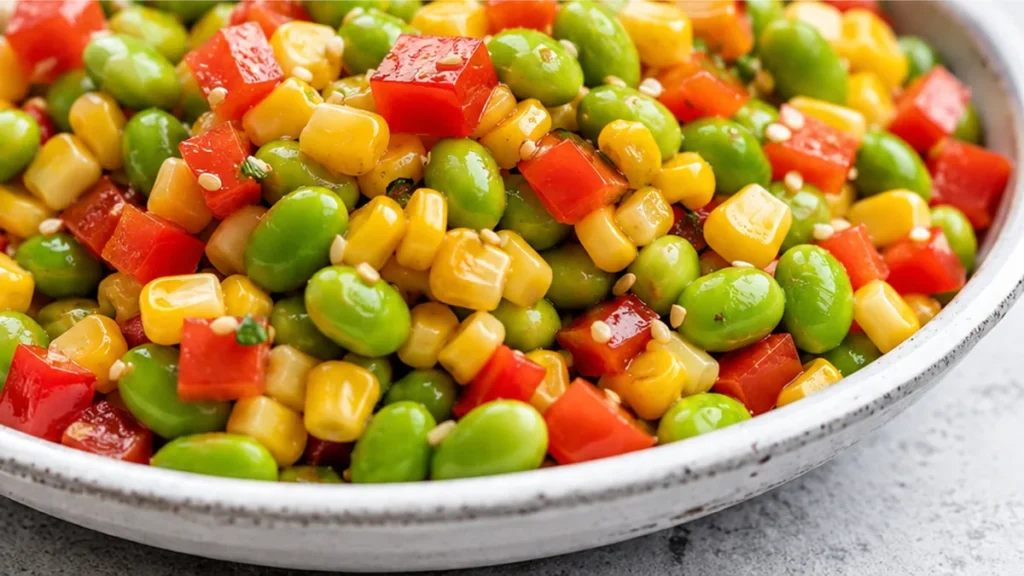
This Asian succotash recipe offers a fresh take on a classic side. It combines crisp edamame, sweet corn, and bell peppers with a savory sesame ginger dressing for a quick and flavorful addition to any meal.
Key takeaways
- Quick sauté over medium-high heat preserves vegetable crispness.
- Ensure pan is hot before adding ingredients to avoid steaming.
- Do not overcrowd the pan; cook in batches if needed.
- Adjust cooking time for bell pepper to maintain desired crunch.
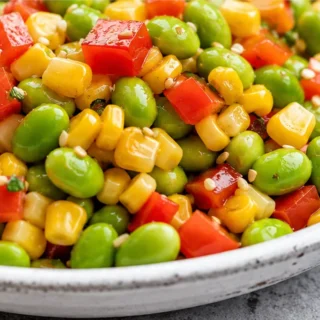
Asian Succotash: Fresh & Flavorful Side
Ingredients
- 1 cup frozen shelled edamame, defrosted
- 1/2 cup corn kernels, fresh or frozen, defrosted
- 1 red bell pepper, diced
- 1/2 teaspoon sesame oil
- 2 teaspoons low sodium soy sauce
- 1/2 teaspoon kosher salt
Instructions
- In a medium bowl, combine the defrosted edamame and corn kernels.
- Add the diced red bell pepper to the bowl.
- Drizzle with sesame oil and low sodium soy sauce.
- Season with kosher salt and stir well to combine all ingredients.
- Serve immediately as a vibrant side dish.
Notes
The Technique: Quick Sauté for Vibrant Flavor
The magic of this Asian Succotash lies in a rapid sauté, a technique that preserves the vibrant color and crisp-tender texture of the vegetables while infusing them with the savory sesame-soy dressing. Unlike traditional succotash which often involves longer simmering, this recipe relies on high heat and a short cooking time. This method prevents the edamame and corn from becoming mushy and ensures the red bell pepper retains a slight bite, offering a pleasant textural contrast. The key is to get your pan hot before adding the ingredients. This rapid cooking also allows the sesame oil and soy sauce to coat the vegetables quickly, creating a light, flavorful glaze rather than a heavy sauce. The minimal liquid from the soy sauce, combined with the quick evaporation from the hot pan, prevents the dish from becoming watery, thus concentrating the flavors.
Troubleshooting
- Problem: Vegetables are soggy or overcooked.
Fix: Ensure your pan is sufficiently hot before adding ingredients. Do not overcrowd the pan, as this lowers the temperature and causes steaming rather than sautéing. Cook in batches if necessary. - Problem: Dish tastes bland or watery.
Fix: Increase the heat slightly during the sauté to encourage evaporation and flavor concentration. Ensure you are using the full amount of soy sauce and sesame oil as specified. You may need to add a pinch more salt if your soy sauce is very low sodium. - Problem: Edamame is tough or not fully cooked.
Fix: Make sure you are using pre-shelled edamame and that it has been fully defrosted. If using frozen edamame directly from the freezer, it may require a slightly longer sauté time, but be mindful of overcooking the other vegetables. - Problem: Red bell pepper is too soft.
Fix: Add the diced red bell pepper towards the end of the sautéing process, about 1-2 minutes before finishing, to maintain its crispness.
Substitutions
- Edamame: If edamame is unavailable, substitute with fresh or frozen green peas. The result will be a slightly sweeter succotash with a similar pop of texture.
- Corn: Sweet white corn can be used instead of yellow corn for a visually different, equally delicious outcome. The sweetness profile will be similar.
- Red Bell Pepper: Diced yellow or orange bell pepper can be used. The color will change, but the slight crunch and sweetness will be comparable. For a hint of heat, a small amount of finely diced jalapeño could be substituted, but this will significantly alter the flavor profile towards spicy.
- Sesame Oil: A neutral oil like canola or vegetable oil can be used if sesame oil is not preferred or available. However, the distinct nutty aroma and flavor of sesame oil will be missed.
Pro tips
- For an extra crunch, lightly toast a sprinkle of sesame seeds before adding.
- If you don’t have red bell pepper, yellow or orange can be substituted for similar sweetness and color.
- This succotash is best enjoyed fresh, but leftovers can be stored in an airtight container in the refrigerator for up to 2 days.
This simple Asian succotash offers a perfect blend of convenience and fresh, zesty flavors. Enjoy it as a side or get creative by adding grilled chicken or tofu for a light main course!
Frequently asked questions
Can I use fresh corn instead of frozen?
Yes, fresh corn kernels can be used. If using fresh corn, ensure it is cut cleanly off the cob. It will cook similarly to frozen corn, requiring about the same amount of time in the sauté pan to become tender-crisp.
What if I don’t have edamame?
If edamame is unavailable, green peas make an excellent substitute. They offer a similar sweetness and texture, ensuring the succotash remains a delightful side dish. The cooking time should be comparable.
How can I make this spicier?
To add heat, consider adding a small, finely minced jalapeño or a pinch of red pepper flakes along with the bell pepper. Adjust the amount based on your spice preference, as this will change the classic flavor profile.
Can I prepare this ahead of time?
This succotash is best served immediately after cooking to maintain the optimal texture of the vegetables. While it can be made ahead and reheated, the vegetables may lose some of their crispness upon reheating.
More from Vegan Bowls →