Preserved lemons offer a unique, salty-citrus punch essential for many dishes. This recipe shows you how to easily salt-cure lemons at home for an authentic flavor.
Key takeaways
- Salt draws moisture out of lemons via osmosis, concentrating flavor and softening the rind.
- High salt levels prevent spoilage while encouraging beneficial fermentation.
- Proper submersion in brine and adequate salt are crucial for successful preservation.
- Rinse preserved lemons before use to balance saltiness and achieve desired flavor.
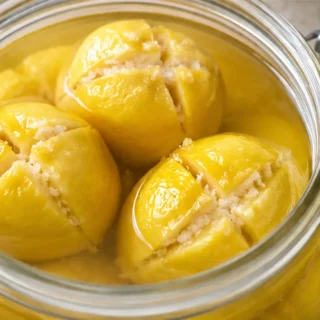
Zesty Preserved Lemons: Flavor Magic!
Ingredients
- 6 whole lemons, divided
- ½-1 cup fine sea salt or Kosher salt
- Fresh lemon juice
- Clean one-quart glass jar
- Paring knife
- Medium bowl
Instructions
- Wash lemons and pat dry thoroughly with a paper towel.
- Trim u00bc inch from each end of 4 lemons, reserving 2 for later juicing.
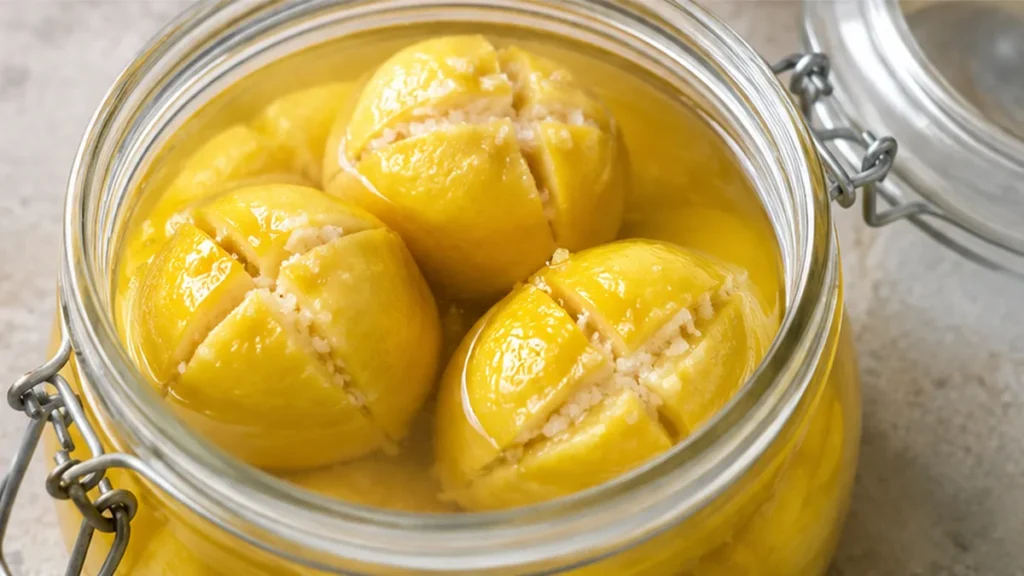
- Stand each trimmed lemon upright and make two perpendicular cuts, stopping just before cutting all the way through to create quarters.
- Remove all seeds from the cut lemons.
- In a medium bowl, sprinkle u00bd cup salt over the lemons, rubbing it into all surfaces. Add more salt as needed to coat liberally.
- Transfer the salted lemons and any remaining salt to a clean one-quart glass jar, pressing down to pack them tightly.
- Pour fresh lemon juice over the lemons until they are fully submerged in the jar.
- Seal the jar and let it sit at room temperature for 3-4 days, then refrigerate for at least 3 weeks before using.
Notes
The Science of Salt and Preservation
Preserving lemons relies on a simple yet powerful scientific principle: osmosis. Lemons are packed with water and citric acid, which are natural preservatives. When you salt them heavily, you create a hypertonic environment. Water is drawn out of the lemon cells through the semi-permeable cell membranes in a process called osmosis. This dehydration concentrates the lemon’s flavor and breaks down its cell walls, softening the peel and pulp. The high salt concentration also inhibits the growth of spoilage microorganisms like bacteria and mold, while allowing beneficial lactic acid bacteria to thrive. These bacteria contribute to the complex, fermented flavor profile characteristic of preserved lemons. The curing process, typically taking several weeks, allows enzymes within the lemon to further break down pectin and other compounds, resulting in the tender, intensely flavored rind and pulp.
Troubleshooting
- Failure: Mold growth on the lemons.
- Fix: Ensure lemons are fully submerged in brine (lemon juice and salt). If mold is superficial and only on the surface of the brine, you can carefully skim it off, but significant mold indicates spoilage and the batch should be discarded. Use clean jars and utensils.
- Failure: Lemons remain hard and unpleasantly chewy after several weeks.
- Fix: This often happens if not enough salt was used or if the lemons weren’t adequately packed. Ensure you use the recommended amount of salt and pack the lemons tightly into the jar, adding fresh lemon juice to cover completely.
- Failure: Preserved lemons taste overwhelmingly salty and lack depth.
- Fix: While salt is crucial, the flavor should be balanced by the lemon’s natural acidity and fermentation. Rinse the preserved lemon halves thoroughly under cold water before use to remove excess surface salt. Discard the pulp if it’s too bitter, using only the rind.
- Failure: Jar lid rusts or corrodes.
- Fix: Use a glass jar with a non-metal lid or ensure the metal lid has a plastic liner. The salt and acidity can corrode metal over time.
Substitutions
- Substitute: Using whole spices (like peppercorns, coriander seeds, or bay leaves) instead of just salt.
- Expected Result: This will infuse the preserved lemons with additional aromatic flavors, creating a more complex preserved lemon. The preservation process itself will still function due to the salt content.
- Substitute: Using Meyer lemons instead of standard Eureka or Lisbon lemons.
- Expected Result: Meyer lemons are less acidic and have a sweeter, more floral flavor. The preserved Meyer lemons will be less intensely tart and have a softer, more perfumed rind.
- Substitute: Using a blend of fine sea salt and kosher salt.
- Expected Result: This is a direct substitution and will yield virtually the same results. Ensure the total salt volume is consistent with the recipe’s requirements.
- Substitute: Adding a small amount of sugar (1-2 tablespoons) to the jar.
- Expected Result: While not traditional, a small amount of sugar can slightly mellow the intense saltiness and acidity, leading to a subtly sweeter preserved lemon. It may slightly alter the fermentation profile.
Pro tips
- Use organic, unwaxed lemons for the best results, as the rind is entirely consumed.
- For food safety, ensure all equipment (jars, knives) is thoroughly sterilized before use to prevent spoilage.
- The lemons will need at least 3-4 weeks to cure at room temperature before they are ready to use. After opening, store them in the refrigerator for up to 6 months.
- If the liquid level drops below the lemons during curing, top it up with extra fresh lemon juice to keep them submerged and prevent mold.
Embrace the magic of preserved lemons and watch how they transform your cooking with their unique salty and tangy notes. This simple technique yields a powerful ingredient that will become a staple in your kitchen. Enjoy the incredible depth they bring!
Frequently asked questions
How long do preserved lemons last?
Properly preserved lemons, stored in a cool, dark place and kept submerged in their brine, can last for up to a year or even longer. The high salt content acts as an excellent preservative, inhibiting the growth of harmful bacteria and extending their shelf life significantly.
Do I need to refrigerate preserved lemons?
Refrigeration is not strictly necessary if they are properly preserved and stored in a cool, dark place. However, refrigerating them after opening the jar can help maintain their quality and extend their shelf life even further, especially if your storage area is not consistently cool.
Can I eat the rind and pulp of preserved lemons?
Yes, both the rind and pulp are edible and highly flavorful. The rind becomes soft and tender, while the pulp offers an intense, salty-sour kick. It’s common to use just the rind, finely chopped, as the pulp can be very intense.
What is the best way to store preserved lemons?
Store preserved lemons in their original glass jar, ensuring they remain completely submerged in the brine. Keep the jar tightly sealed and store it in a cool, dark pantry or cupboard. If the brine level drops, top it up with fresh lemon juice.
More from Vegan Bowls →