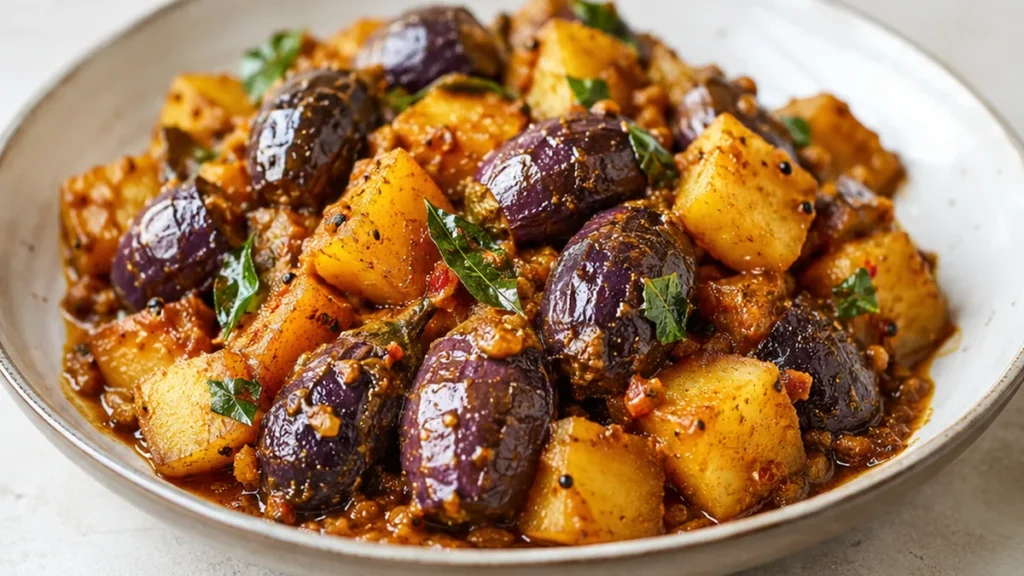
Eggplant potato curry is a quick and flavorful dish that shines with the pressure cooking method, particularly when using an Instant Pot. This Aloo Baingan recipe transforms humble vegetables into a rich and aromatic dish in just 25 minutes, making it perfect for busy weeknights. This eggplant potato curry focuses on layering spices to build depth quickly. It’s a fantastic way to enjoy hearty Indian flavors without spending hours in the kitchen, proving that delicious home-cooked meals are always within reach.
Key takeaways
- Use baby eggplants for tenderness and less bitterness.
- Cut potatoes into 1 cm cubes for even cooking.
- Balance spices carefully for a rich flavor profile.
- Adjust water content to achieve the desired curry consistency.
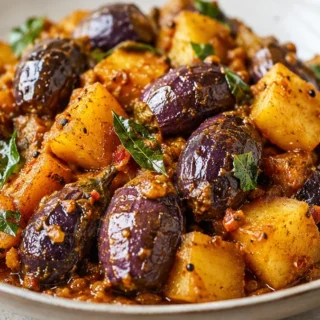
25-Minute Eggplant Potato Curry
Ingredients
- 6 to 8 baby eggplants (1 lb)
- 1 medium russet or red potato
- 1 tablespoon oil
- 1 teaspoon mustard seeds
- ⅛ teaspoon asafetida
- 1 ½ tablespoons garlic minced
- 12 curry leaves
- ¼ teaspoon Turmeric
- 1 teaspoon red chili powder
- 1 teaspoon cumin powder
- 1 teaspoon coriander powder
- 1 teaspoon salt
- ½ cup water
- 2 tablespoons ground peanuts
- ¼ cup fresh cilantro, chopped
Instructions
- Remove the green leafy parts from the stem and trim off half of the stem. Cut each eggplant lengthwise into 4 pieces along with the stem.
- Peel and cut the potato into 1-inch cubes.
- Set the Instant Pot to saute mode and heat oil. Add mustard seeds and allow them to splutter. Add asafetida, minced garlic, curry leaves, and turmeric. Mix well. Add potato, eggplant, red chili powder, cumin powder, coriander powder, and salt. Add water and give a quick stir.
- Close the Instant Pot with pressure release valve to sealing. Pressure cook for 2 minutes followed by quick release. Open the Instant Pot; if the eggplant is not fully cooked, keep the lid closed for 5 minutes and they will continue to cook without having to pressure cook again.
- Garnish with ground peanuts and cilantro. Give a quick stir and enjoy hot. Discard the stem while eating.
Video
Notes
Choosing the Right Eggplant for Optimal Flavor
For this eggplant potato curry, baby eggplants are preferred due to their tender skin and less bitter flavor compared to larger varieties. Baby eggplants typically weigh around 100-150 grams each. This dish uses 6 to 8 baby eggplants, ensuring even cooking and a delicate texture that absorbs spices beautifully. If larger eggplants are used, consider salting them beforehand to draw out excess moisture and bitterness.
Perfecting the Potato Texture in Your Curry
Using a medium russet or red potato is crucial for achieving the right texture in this curry. Cut the potato into small cubes, approximately 1 cm each, to ensure they cook evenly within the 25-minute timeframe. Russet potatoes will break down slightly, adding creaminess, while red potatoes maintain their shape, providing a nice contrast to the eggplant.
Balancing Spices for a Rich Flavor Profile
The spice blend in this curry is essential for depth of flavor. The combination of turmeric, red chili powder, cumin, and coriander creates a balanced profile. For instance, turmeric should be used in moderation (¼ teaspoon) to avoid overpowering the dish, while the red chili powder (1 teaspoon) adds necessary heat. Adjust the chili powder based on your heat preference, but be cautious as too much can overshadow the eggplant’s natural flavor.
Achieving the Right Consistency with Liquid
Adding ½ cup of water is key to creating the right consistency for your curry. If the curry is too watery, it may dilute the flavors; if too thick, it can become paste-like. Monitor the cooking process closely and adjust by adding small amounts of water, about 2 tablespoons at a time, if needed. This ensures the curry remains saucy yet not overly liquid.
Enhancing Texture with Ground Peanuts
Ground peanuts (2 tablespoons) not only add a nutty flavor but also contribute to the overall texture of the curry. They help thicken the sauce slightly and provide a delightful crunch. If you prefer a smoother texture, consider using peanut butter instead, though this will alter the flavor slightly and add sweetness.
How to Store Leftover Eggplant Potato Curry for Maximum Freshness
To maintain the flavor and texture of your eggplant potato curry, store it in an airtight container in the refrigerator for up to 3 days. If you want to keep it longer, freezing is an option; it can last up to 2 months in the freezer. To reheat, thaw overnight in the refrigerator and warm gently on the stove, adding a splash of water if necessary to restore moisture.
Adjusting Spice Levels for Personal Preference
When preparing eggplant potato curry, it’s essential to consider the spice levels. If you prefer a milder dish, reduce the red chili powder to ½ teaspoon or omit it altogether. Alternatively, for a spicier curry, consider adding more chili powder or incorporating fresh green chilies. Remember, the heat can intensify during cooking, so adjust accordingly based on your taste preferences.
Choosing the Right Cooking Equipment for Optimal Results
Using the right cooking equipment can significantly affect the outcome of your eggplant potato curry. A heavy-bottomed pot or a Dutch oven is ideal for even heat distribution, which helps prevent burning and sticking. If you use a non-stick pan, ensure it is adequately heated before adding oil to prevent sticking. A lid is also crucial for simmering, as it helps retain moisture and flavor while cooking.
Pairing Suggestions to Elevate Your Eggplant Potato Curry
Eggplant potato curry pairs beautifully with various accompaniments. For a complete meal, consider serving it with steamed basmati rice or warm naan bread. A side of cooling cucumber raita or a simple green salad can balance the spices. For a more substantial meal, serve it alongside lentil dal or spiced chickpeas to enhance the protein content.
How to Make Eggplant Potato Curry Ahead of Time
This eggplant potato curry can be prepped in advance, making it an excellent choice for meal prep. To make ahead, prepare the curry up to the point of simmering. Allow it to cool completely before transferring it to an airtight container. It can be stored in the refrigerator for up to 3 days. When ready to eat, reheat it on the stovetop over low heat, adding a splash of water if necessary to prevent sticking.
Scaling the Recipe for Larger Gatherings
Scaling this eggplant potato curry is straightforward. For every additional serving, simply increase the quantity of each ingredient proportionally. For example, if doubling the recipe, use 12 to 16 baby eggplants and 2 medium potatoes. However, be mindful of your cooking vessel’s size; a larger pot may be required to accommodate the increased volume. Cooking time may also need adjustment, as a larger batch may take longer to reach the desired consistency.
Choosing the Right Equipment for Optimal Flavor Development
The choice of cooking equipment can significantly influence the flavor and texture of your eggplant potato curry. A heavy-bottomed pot or a Dutch oven is ideal, as it provides even heat distribution, preventing the spices from burning. Additionally, using a lid during simmering helps trap steam and intensify flavors. If using a non-stick pan, be cautious as high heat can damage the coating, affecting the cooking process. Always opt for utensils that complement your cookware to avoid scratching.
Adapting to Seasonal Ingredients and Quality
Seasonality plays a crucial role in the quality of your eggplant potato curry. Fresh, in-season eggplants will have a firmer texture and richer flavor compared to those that are out of season. Similarly, using local potatoes can enhance the dish’s taste. If eggplants are large or overly mature, they may be bitter; select smaller, glossy ones for the best results. Adjusting spices according to the freshness of your ingredients can also elevate the dish — fresher spices tend to be more potent and flavorful.
Understanding the Role of Curry Leaves in Flavor Development
Curry leaves are a vital ingredient in this eggplant potato curry, contributing a unique aromatic quality that enhances the dish. When sautéed in oil, the essential oils in curry leaves are released, infusing the dish with a distinct flavor profile that is both citrusy and slightly nutty. To maximize their impact, add curry leaves early in the cooking process, allowing them to bloom in the oil for about 1-2 minutes. This step not only enhances the flavor but also helps to mellow the bitterness often associated with eggplants. If fresh curry leaves are unavailable, dried leaves can be used, but they will impart a less vibrant flavor. Typically, 12 fresh leaves are ideal for this recipe, but you can adjust based on personal taste.
Maximizing the Flavor of Eggplant and Potato Through Proper Cooking Techniques
The cooking technique used in this eggplant potato curry is crucial for achieving the right texture and flavor. Begin by sautéing mustard seeds and asafetida in oil; this activates their flavors. Next, incorporate the minced garlic and curry leaves, cooking them until fragrant. The baby eggplants should be added whole or halved, depending on their size, to maintain their shape and integrity during cooking. The russet or red potato should be diced into small cubes for even cooking. The key is to allow both the eggplant and potato to cook until tender without becoming mushy, which typically takes about 10-15 minutes. Maintaining a gentle simmer after adding water allows the spices to meld beautifully, creating a cohesive flavor without losing the individual character of each ingredient. This method ensures that the eggplant absorbs the spices while the potato provides a creamy contrast.
Why the Eggplant and Potato May Become Mushy in Curry
One common issue with eggplant potato curry is achieving the right texture for both vegetables. Eggplants can absorb a lot of moisture and become mushy if overcooked. To prevent this, ensure that the eggplants are cut into uniform pieces, ideally around 1-inch cubes. This size allows for even cooking and helps retain structure. Cook the eggplants for about 5-7 minutes before adding the potatoes, which typically take longer to soften. The ideal cooking temperature is medium heat (around 350°F or 175°C) to allow the eggplants to sauté and brown slightly without becoming overly soft. If you notice your eggplant potato curry is turning mushy, it may be due to cooking at too high a temperature or for too long. Adjusting the cooking time or temperature can help maintain the integrity of the vegetables.
Why Ground Peanuts Are Essential for Flavor and Texture
Ground peanuts add a unique texture and nutty flavor to eggplant potato curry, enhancing both the mouthfeel and taste profile of the dish. The fats in the peanuts emulsify with the curry’s liquid, creating a richer sauce. To incorporate ground peanuts effectively, add them towards the end of cooking, allowing them to blend with the other ingredients without losing their crunch. If you prefer a smoother consistency, you can grind the peanuts into a finer powder, but be cautious not to over-process them into peanut butter. If you do not have ground peanuts, you can substitute with ground almonds or cashews, but note that this will alter the flavor slightly. The key is to balance the nuttiness with the spices, ensuring that the curry remains well-rounded.
Pro tips
- For extra flavor, temper the mustard seeds and curry leaves until fragrant before adding other ingredients. Rush this step and the flavor won’t be as bright.
- If you don’t have an Instant Pot, you can simmer the curry on the stovetop in a covered pot for 20-25 minutes, or until the potatoes and eggplants are tender.
- To store, refrigerate leftovers in an airtight container for up to 3 days. Reheat gently on the stovetop or in the microwave.
This eggplant potato curry offers a simple yet profoundly satisfying meal. Experiment with adding a touch of garam masala at the end for an extra layer of warmth. Enjoy this hearty and quick dish!
Frequently asked questions
What can I substitute for baby eggplants?
You can use regular eggplants, but make sure to salt them beforehand to reduce bitterness. Alternatively, zucchini can be used, though it will change the flavor profile and texture.
How do I know when the potatoes are cooked?
The potatoes should be fork-tender, which typically takes about 15-20 minutes of simmering. Check them by piercing with a fork; they should break apart easily but not be mushy.
Can I make this curry in advance?
Yes, this curry can be made in advance. Allow it to cool, then store in an airtight container in the refrigerator for up to 3 days. Reheat gently on the stove before serving.
What is the role of mustard seeds in this recipe?
Mustard seeds add a unique flavor and crunch to the dish. They are typically tempered in oil at the beginning of cooking, releasing their essential oils and enhancing the overall taste of the curry.
More from Vegan Bowls →