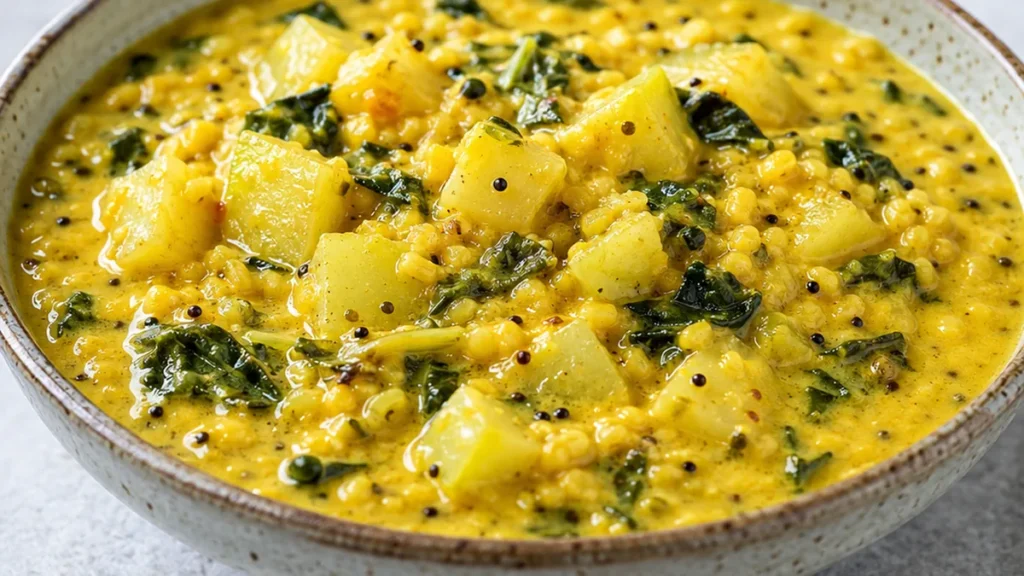
Kohlrabi curry brings together the slightly sweet, crisp texture of kohlrabi and the creamy richness of mung dal. This kohlrabi curry recipe simplifies traditional Indian flavors, making it accessible for any home cook looking for a hearty vegetarian option. At first it can seem doubtful that the kohlrabi will soften enough. A patient, covered simmer makes the kohlrabi perfectly tender without losing its subtle character. This dish is not just a meal; it’s a celebration of simple, wholesome ingredients elevated by aromatic spices.
Key takeaways
- Soak mung dal for even cooking.
- Diced kohlrabi should be small for quick cooking.
- Tempering spices properly enhances flavor.
- Fresh cilantro adds brightness to the dish.
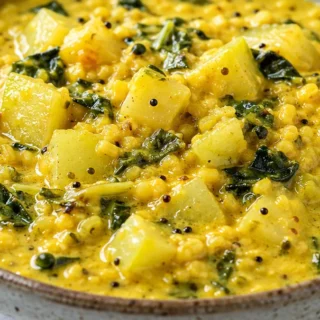
Creamy Kohlrabi Mung Dal Curry
Ingredients
- 1 lb Kohlrabi (around 3 bulbs), peeled and diced, tender leaves finely chopped
- ½ cup mung dal
- 1 cup warm water
- 1 tablespoon oil
- 1 teaspoon mustard seeds
- ⅛ teaspoon asafetida
- ½ teaspoon turmeric
- 1 teaspoon ground cumin
- 2 teaspoons ground coriander
- 2 teaspoons Kashmiri red chili powder
- 1 teaspoon garam masala
- ½ teaspoon salt, or to taste
- Fresh cilantro, for garnish
Instructions
- Rinse mung dal and soak it in warm water for at least 15 minutes while you prepare the Kohlrabi.
- Remove the Kohlrabi stems. Reserve the bulbs and tender leaves. Peel the outer skin of the bulb and discard. Dice the peeled bulb into half-inch cubes. Finely chop the tender leaves.
- Drain the water out of the soaked mung dal thoroughly.
- Heat oil in a medium pan over medium heat. Once the oil is hot, add mustard seeds and allow them to pop. Add asafetida and turmeric, stirring for 10 seconds.
- Add diced kohlrabi and mung dal to the pan. Mix well and cook covered on low-medium heat for 5 to 7 minutes, stirring occasionally.
- Add the chopped kohlrabi leaves, ground cumin, ground coriander, red chili powder, garam masala, and salt. Mix well to combine all ingredients.
- Add 1 cup water and give a quick stir. Cook covered on low to medium heat for 5 to 7 minutes or until the kohlrabi pieces are cooked tender.
- Turn the heat off and garnish generously with fresh cilantro. Serve hot with Roti or Bhakri.
- Enjoy your creamy kohlrabi curry!
Video
Notes
The Importance of Cooking Mung Dal Correctly
Mung dal is a key ingredient in kohlrabi curry, providing both protein and texture. To achieve the perfect consistency, soak the mung dal for at least 30 minutes before cooking. This helps to hydrate the lentils, allowing them to cook evenly. When cooking, use a ratio of 1 part mung dal to 2 parts water, simmering for about 20-25 minutes until tender.
Achieving Creaminess in the Curry
The creaminess of kohlrabi mung dal curry comes from the combination of the diced kohlrabi and the cooked mung dal. To enhance this, ensure the kohlrabi is diced into small, even pieces, allowing it to cook through within 15-20 minutes. Adding a splash of warm water during cooking can help create a smoother texture, ensuring the flavors meld together beautifully.
Balancing Spices for Flavor Depth
A well-balanced spice profile is essential for kohlrabi curry. Start with tempering mustard seeds and asafetida in hot oil to release their aromatic oils. Follow with turmeric, cumin, coriander, and Kashmiri red chili powder, cooking these spices for about 2-3 minutes. This method ensures that the spices bloom, enhancing their flavors and preventing bitterness.
Why Fresh Herbs Matter
Fresh cilantro is not just a garnish; it adds a burst of freshness that brightens the dish. Add chopped cilantro just before serving to maintain its vibrant color and flavor. If you prefer, you can substitute with fresh mint, but note that this will impart a distinct flavor that alters the dish’s character.
Common Mistakes and How to Fix Them
- Too Watery: If the curry is too thin, simmer uncovered for a few minutes to reduce the liquid.
- Bitter Flavor: This can occur from overcooking spices. Ensure spices are cooked just until fragrant, about 2-3 minutes.
- Undercooked Kohlrabi: If kohlrabi is still crunchy, increase the cooking time by 5-10 minutes, adding a bit more water if necessary.
- Overly Spicy: If too spicy, add a dollop of yogurt or coconut cream to mellow the heat.
How to Make Ahead and Store Your Kohlrabi Curry
This creamy kohlrabi mung dal curry can be prepared in advance, making it a convenient option for meal prep. To make ahead, cook the curry as per the recipe and allow it to cool completely before storing. Transfer it to an airtight container and refrigerate for up to 3 days. For longer storage, you can freeze the curry for up to 3 months. When ready to serve, thaw in the refrigerator overnight and reheat gently on the stovetop, adding a splash of water if needed to restore creaminess. Note that the texture of kohlrabi may soften slightly upon reheating, but the flavors will remain intact.
Scaling the Recipe for Larger Gatherings
If you want to serve a larger group, scaling the recipe for kohlrabi curry is straightforward. Simply multiply the ingredients by the desired number of servings. However, keep in mind that cooking times may vary slightly with larger quantities. For instance, if doubling the recipe, you may need to increase the cooking time by an additional 5-10 minutes to ensure the mung dal is fully cooked and the flavors meld together. Also, ensure your cooking pot is large enough to accommodate the increased volume without overflowing.
Choosing the Right Equipment for Cooking
The type of cookware you use can significantly impact the outcome of your kohlrabi curry. A heavy-bottomed pot or Dutch oven is ideal, as it distributes heat evenly and prevents burning. Non-stick pans can also work well, especially for sautéing the spices and kohlrabi. However, avoid using aluminum cookware, as it can react with acidic ingredients and alter the flavor of the curry. If using a pressure cooker, reduce the water slightly and cook for about 10-12 minutes under pressure for a quicker preparation.
Seasonal Variations and Ingredient Quality Impact
The quality of your ingredients, particularly the kohlrabi, can greatly influence the flavor and texture of your curry. Fresh, young kohlrabi will yield a sweeter and more tender result compared to older, tougher bulbs. In terms of seasonal variations, consider adding seasonal vegetables such as spinach or kale during the spring, or using root vegetables like carrots in the winter to enhance the dish’s heartiness. Additionally, the availability of fresh herbs can vary; using dried herbs in place of fresh can alter the flavor profile, so adjust quantities accordingly.
Understanding the Role of Mung Dal in Texture and Nutrition
Mung dal is not just a protein source; it plays a crucial role in achieving the desired texture of kohlrabi curry. When cooked properly, mung dal should become creamy, thickening the curry and enhancing its mouthfeel. To achieve this, soak the mung dal for at least 30 minutes before cooking. This hydration process allows the dal to cook evenly and softens its outer layer, ensuring a smoother consistency. Cooking the soaked mung dal with kohlrabi for about 20-25 minutes on medium heat is ideal. Monitor the water level; you may need to add a bit more to prevent sticking. If the dal is overcooked, it may turn mushy, while undercooked dal will remain grainy, disrupting the curry’s creamy texture.
Choosing the Right Cooking Method for Flavor Development
The cooking method significantly impacts the flavor profile of kohlrabi mung dal curry. Traditional stovetop cooking allows for better control over heat and moisture, essential for developing the curry’s flavors. Start by heating oil and tempering mustard seeds, which release their oils and flavors into the dish. Then, add asafetida, turmeric, and other spices, allowing them to bloom for about 1-2 minutes before adding the kohlrabi and mung dal. This technique not only enhances the flavor but also prevents spices from burning. If using a pressure cooker, remember that cooking times will be reduced, but the blooming of spices may not be as pronounced, which could lead to a less complex flavor.
Pairing Suggestions to Elevate Your Kohlrabi Curry Experience
Pairing kohlrabi mung dal curry with the right accompaniments can elevate the dining experience. Serve it with basmati rice or whole grain flatbreads like chapati or naan to balance the creaminess of the curry. A side of tangy cucumber raita can provide a refreshing contrast, while pickles add a zesty kick. For a complete meal, consider including a simple salad made from seasonal vegetables, which can enhance the dish’s nutritional value. When serving, consider the visual appeal; garnishing with fresh cilantro not only adds color but also a burst of freshness that can brighten the dish.
Understanding the Impact of Fresh Kohlrabi on Curry Flavor
Fresh kohlrabi is essential for achieving the desired texture and flavor in your kohlrabi curry. When selecting kohlrabi, look for bulbs that are firm and free from blemishes. The tender leaves should be vibrant and not wilted. Fresh kohlrabi has a mild, sweet flavor that mellows during cooking, enhancing the overall dish. If you use older kohlrabi, it may have a tougher texture and a more pronounced bitterness, which can affect the final dish. Proper storage is key; keep kohlrabi in a cool, dark place or refrigerate it in a perforated bag to maintain freshness. Ideally, use kohlrabi within a week of purchase for the best results. If you can only find older kohlrabi, peeling away the outer layer can help reduce bitterness, but keep in mind that this may also remove some nutrients.
Adjusting Cooking Times for Different Equipment
The cooking method and equipment you choose can significantly influence the outcome of your kohlrabi mung dal curry. If using a stovetop, medium heat is ideal to allow the mung dal to cook evenly without burning. A pressure cooker can drastically reduce cooking time, often requiring only 10-15 minutes under pressure. However, if using a slow cooker, you may need to extend the cooking time to 4-6 hours on low heat to ensure the kohlrabi and mung dal are tender and well-combined. Each method impacts the texture and depth of flavor; stovetop cooking allows for better evaporation of excess moisture, resulting in a thicker curry, while a slow cooker melds flavors beautifully over time. Always adjust your water ratio based on your equipment; stovetop methods may need less water than slow cooking to achieve the right consistency.
Pro tips
- For best results, dice the kohlrabi into uniform half-inch cubes to ensure even cooking.
- If you don’t have Kashmiri red chili powder, a milder paprika with a pinch of cayenne can be substituted, though the color will differ.
- This kohlrabi curry tastes even better the next day as the flavors meld. Store leftovers in an airtight container in the refrigerator for up to 3-4 days.
This kohlrabi curry is a testament to how simple ingredients can create profound flavors. Experiment with adding other seasonal vegetables or adjusting the spice levels to suit your taste. Enjoy this nourishing and flavorful dish!
Frequently asked questions
Can I use split mung beans instead of whole?
Yes, split mung beans can be used, but they cook faster than whole mung dal. Reduce the cooking time to about 15-20 minutes.
What can I substitute for kohlrabi?
Turnips or potatoes can be substituted for kohlrabi. However, turnips will impart a slightly sharper flavor, while potatoes will make the dish heartier.
Is this curry suitable for meal prep?
Absolutely! This curry stores well in the refrigerator for up to 3 days and can be frozen for up to a month. Reheat gently on the stove or in the microwave.
Can I make this curry vegan?
This kohlrabi mung dal curry is already vegan as it contains no animal products. Enjoy it with rice or naan for a complete meal.
More from Vegan Bowls →