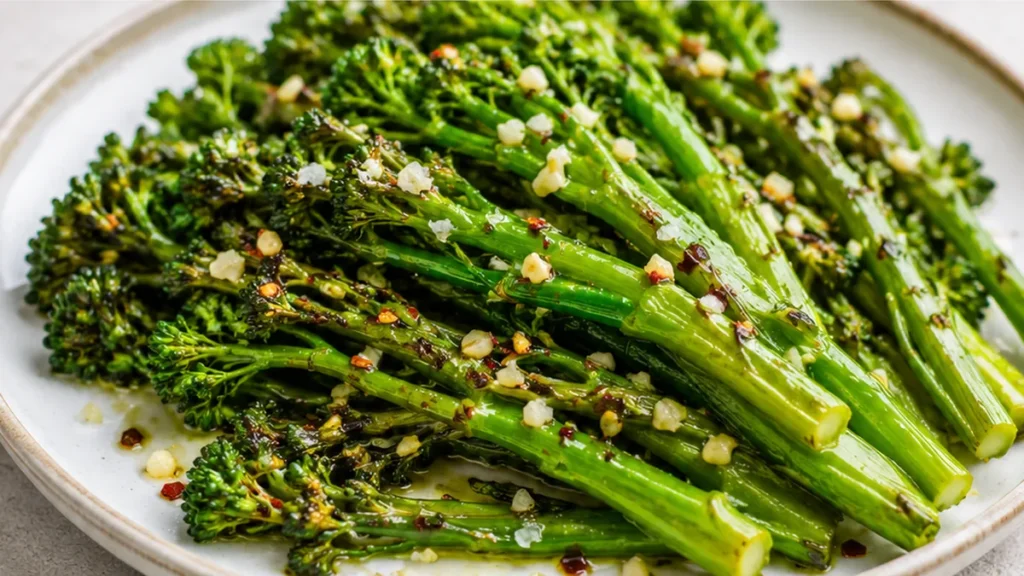
This sauteed broccolini recipe is a quick and flavorful side dish. It transforms broccolini into a tender-crisp delight with simple ingredients.
Key takeaways
- Achieve tender stems and crisp-tender florets by searing then steaming.
- Control moisture by using only one tablespoon of water for steaming.
- Season throughout the cooking process for maximum flavor.
- Finish with fresh lemon juice immediately after cooking to brighten the taste.
Zesty Garlic Broccolini: Your New Favorite Side Dish!
Ingredients
- 1 tablespoon olive oil or avocado oil
- 1 bunch (8 ounces) broccolini, leaves removed and ½ inch trimmed off stalk ends
- 1 garlic clove, minced or pressed
- ¼ teaspoon fine salt
- pinch black pepper
- 1 tablespoon water
- ½ small lemon, juiced (about 2 teaspoons)
- Optional for garnish: Flakey salt
- Optional for garnish: Crushed red pepper flakes
Instructions
- Place a 10-12 inch skillet over medium-high heat. Add oil. When the oil is hot, swirl it around the skillet, then add the broccolini. Toss with tongs to coat in the oil.
- Cook for 3-4 minutes or until broccolini is vibrant in color with a little charring.
- Add the garlic, salt, and pepper; toss. Cook for 30 seconds.
- Add the water and cover immediately with the lid. Reduce the heat to a low. Cook until broccolini stalks are tender, 3 to 4 minutes.
- Remove the skillet from the heat and squeeze lemon juice over the broccolini.
- Garnish with flakey salt and crushed red pepper flakes, if desired.
Notes
The Technique That Makes It
The key to perfectly sauteed broccolini lies in managing heat and moisture. Broccolini, with its tender florets and slightly tougher stems, requires a two-stage approach. First, a brief period of searing in hot oil allows the stems to begin softening and develop a slight char, contributing to flavor through the Maillard reaction. However, if you simply continue to saute, the florets can easily overcook and become mushy before the stems are tender. This is where the addition of water and covering the pan comes in. The steam generated quickly and gently cooks the florets and finishes tenderizing the stems without sacrificing texture. This controlled steaming, after the initial sear, ensures a balanced cook. Finally, the quick addition of lemon juice and seasoning right at the end preserves the bright, fresh flavor of the broccolini and the zesty lemon notes.
Troubleshooting
- Problem: Stems are tough, florets are mushy.
Fix: This usually means the heat was too high for too long initially, or not enough water was added for steaming. Ensure your pan is hot enough for the initial sear but reduce heat slightly before adding water and covering. Add the water in a single splash to create steam quickly. - Problem: Broccolini is bland.
Fix: Ensure you are seasoning adequately with salt and pepper during the sautéing process. Don’t wait until the very end. Also, make sure the garlic is fragrant before adding the broccolini, and don’t skip the lemon juice, which brightens all the flavors. - Problem: Florets are burnt before stems are tender.
Fix: Your heat is likely too high. Reduce the heat after the initial oil is hot. You can also add the water and cover the pan sooner to introduce steam to cook the florets more gently. - Problem: Watery or soggy broccolini.
Fix: You may have added too much water, or the pan wasn’t hot enough to evaporate excess moisture. Use only the specified tablespoon of water. Ensure the pan is properly heated before adding the water to encourage rapid steaming and evaporation.
Substitutions
- Broccolini: Broccoli florets or asparagus spears can be substituted. Broccoli florets will require a slightly longer steaming time. Asparagus will cook very quickly and may need to be added towards the end of the broccolini’s cooking time.
- Garlic: Garlic powder can be used in a pinch, about 1/8 teaspoon. However, fresh garlic provides a more robust and nuanced flavor.
- Lemon Juice: Lime juice can offer a similar bright, acidic note, though it will alter the specific flavor profile slightly. A splash of white wine vinegar could also work for acidity.
- Olive Oil/Avocado Oil: Grapeseed oil or another neutral high-heat oil can be used. For a richer flavor, a small amount of butter could be added with the olive oil at the beginning.
Pro tips
- Don’t overcrowd the pan: Cook the broccolini in batches if your skillet isn’t large enough to ensure even charring and cooking.
- For extra crispness: After steaming, you can uncover and cook for another minute on medium-high heat to evaporate any remaining water and crisp up the florets slightly.
- Storage: Store leftover sautéed broccolini in an airtight container in the refrigerator for up to 4 days. Reheat gently in a skillet or microwave.
Elevate your vegetable game with this simple yet sensational sautéed broccolini. It’s a testament to how a few fresh ingredients can create something truly special. Enjoy!
Frequently asked questions
How do I prevent the broccolini from becoming mushy?
To avoid mushiness, start with a hot pan for a quick sear, then add just one tablespoon of water and cover immediately to steam. This method cooks the broccolini quickly and efficiently, preserving its crisp-tender texture.
Can I use regular broccoli instead of broccolini?
Yes, you can substitute regular broccoli florets. Cut them into bite-sized pieces. They will likely require a slightly longer steaming time than broccolini, so check for tenderness.
What if I don’t have fresh lemon?
If fresh lemon is unavailable, you can substitute it with about two teaspoons of bottled lemon juice for acidity. Alternatively, a small splash of white wine vinegar or lime juice can provide a similar bright finish.
How can I make this dish spicier?
For a spicier kick, add a pinch of crushed red pepper flakes along with the black pepper and salt. You can also sprinkle extra red pepper flakes on top as a garnish just before serving.
More from Vegan Bowls →