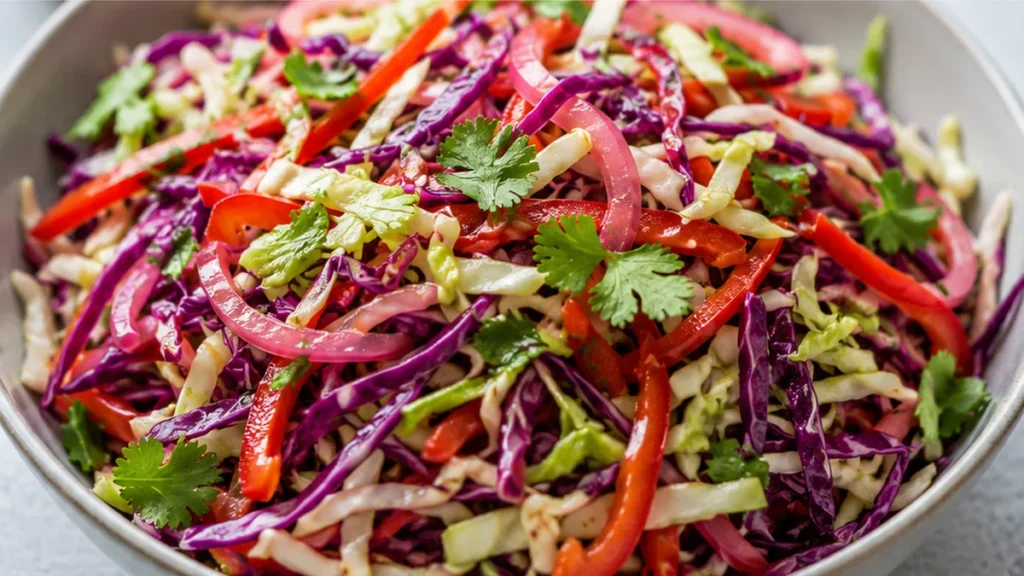
The secret to an exceptional Asian slaw lies in maintaining the crispness of the vegetables, a principle that holds for almost any salad. This Asian slaw recipe relies on the physical structure of thinly sliced cabbage and bell pepper to maximize surface area for quick flavor penetration. This method ensures a light coating and flavor infusion from the apple cider vinegar dressing without wilting the ingredients. It’s a fast, healthy side that brings texture and brightness to any plate.
Key takeaways
- Maintain vegetable crispness by slicing thinly and dressing just before serving.
- Balance the sweet and tangy dressing components for optimal flavor, using 3 tbsp vinegar to 1 tsp sugar as a starting point.
- Ensure all ingredients are fresh and bright for the best texture and taste.
- Adjust dressing ratios based on personal preference for sweetness or acidity, tasting as you go.
Crunchy Asian Slaw: Fresh & Flavorful!
Ingredients
- 1/2 head purple cabbage (thinly sliced or finely chopped)
- 1/2 head white cabbage (thinly sliced or finely chopped)
- 1/2 cup pickled onions
- 1 red bell pepper (thinly sliced or finely chopped)
- 2 tablespoons finely chopped fresh cilantro
- 3 tablespoons apple cider vinegar
- 1 teaspoon sugar
Instructions
- In a large mixing bowl, combine the thinly sliced purple cabbage, white cabbage, pickled onions, red bell pepper, and fresh cilantro.
- In a separate small bowl, whisk together the 3 tablespoons of apple cider vinegar and 1 teaspoon of sugar until the sugar is fully dissolved.
- Pour the dressing evenly over the prepared slaw mixture in the large bowl.
- Toss all ingredients thoroughly for 1-2 minutes to ensure the cabbage and vegetables are well coated with the zesty dressing.
Notes
– If you prefer a creamier slaw, you can add a tablespoon of mayonnaise or Greek yogurt to the dressing. Nutrition information is an estimate, calculated automatically. Values vary with brands, substitutions and portion sizes.
The Technique: Achieving the Perfect Crunch
The key to an exceptional asian slaw lies in maintaining the crispness of the vegetables. This recipe relies on the principle of osmosis and the physical structure of the cabbage and bell pepper. When the dressing, containing 3 tablespoons of apple cider vinegar and 1 teaspoon of sugar, is added, it begins to draw moisture out of the vegetables. However, the goal is to achieve a light coating and flavor infusion without wilting the ingredients.
The thinly sliced or finely chopped nature of the cabbage and bell pepper maximizes surface area, allowing for quick flavor penetration while minimizing the time needed for the dressing to act. The pickled onions, already softened and slightly dehydrated by their pickling process, contribute their unique tang without adding excess moisture that could compromise the slaw’s texture. Proper tossing ensures an even distribution of the dressing, preventing any single area from becoming soggy. The immediate serving after dressing is crucial to enjoy the slaw at its peak crunch.
Troubleshooting
- Soggy Slaw? If your slaw becomes watery, it’s likely due to the dressing sitting too long, or the vegetables not being sliced thinly enough, increasing surface area for moisture release. To fix, drain any excess liquid and consider adding a bit more fresh, thinly sliced cabbage or bell pepper to reintroduce crispness. Ensure you serve immediately after dressing in the future.
- Dull Flavor? A bland slaw often means the dressing wasn’t fully incorporated or the ingredients lacked vibrancy. Ensure the apple cider vinegar and sugar are well-mixed into the dressing before tossing. Taste and adjust seasoning if needed, perhaps with a tiny pinch more sugar or a dash more vinegar.
- Overly Sour? Too much vinegar can overpower the slaw. If this happens, you can try to balance it by adding a touch more sugar to the existing dressing or by tossing the slaw with a small amount of shredded carrot or additional cabbage to dilute the sourness.
- Lack of Crunch? If the cabbage and bell pepper aren’t crisp, ensure they were very thinly sliced or finely chopped. Using very cold, fresh vegetables is also important. If the slaw has been dressed for a while, it’s difficult to fully recover the crunch, but serving immediately is the best preventative measure.
Substitutions
- Purple Cabbage: While purple cabbage provides beautiful color, green cabbage can be substituted. The flavor profile will be very similar, though the visual appeal will be less striking.
- White Cabbage: If white cabbage is unavailable, use only purple cabbage, or substitute with a mix of green cabbage and a small amount of Napa cabbage for a different texture. The overall crispness should be maintained, though Napa cabbage tends to be softer.
- Pickled Onions: Thinly sliced raw red onion can be used, but expect a sharper, more pungent onion flavor and less sweetness. For a closer match, soak raw red onion slices in a little vinegar and sugar for 10 minutes before adding. The overlooked detail here is that the pickling process adds a specific tang and tender-crisp texture that raw onions lack.
- Apple Cider Vinegar: White wine vinegar or rice vinegar can be used. White wine vinegar will offer a slightly different tang, while rice vinegar will be milder and slightly sweeter, potentially requiring a small adjustment in sugar. Use 3 tablespoons of rice vinegar if you prefer a less acidic dressing.
Pro tips
- For extra crunch, add a handful of toasted sesame seeds or chopped peanuts just before serving.
- Make this Asian slaw ahead of time: prepare the vegetables and dressing separately, then combine just before serving to maintain maximum crispness.
- If you prefer a creamier slaw, try adding a tablespoon of mayonnaise or Greek yogurt to the dressing for a richer texture.
This Asian slaw is a versatile and refreshing addition to your recipe repertoire. Experiment with different vegetables or herbs to make it your own. Enjoy this bright, healthy side!
Frequently asked questions
How thin should I slice the cabbage?
For maximum crunch and quick flavor absorption, slice the cabbage and bell pepper as thinly as possible, aiming for shreds or very fine pieces. This ensures they are coated evenly by the dressing without becoming soggy too quickly, usually about 1/16th of an inch.
Can I make this slaw ahead of time?
It’s best to serve this asian slaw immediately after dressing to ensure the vegetables remain crisp. If you must prepare it in advance, keep the sliced vegetables and the dressing in separate airtight containers in the refrigerator for up to 24 hours, then combine just before serving.
What can I use instead of apple cider vinegar?
White wine vinegar or rice vinegar can be used as substitutes. White wine vinegar will offer a slightly different tang, while rice vinegar will be milder and slightly sweeter, potentially requiring a small adjustment in the 1 teaspoon of sugar.
How can I prevent my slaw from becoming soggy?
The key to preventing soggy slaw is serving it immediately after dressing. Unlike most recipes that let dressed salads sit, this one works best tossed for just 1-2 minutes until coated, then served. What most guides miss is that thinly sliced vegetables release moisture quickly once salt and acid are introduced, so timing is crucial.