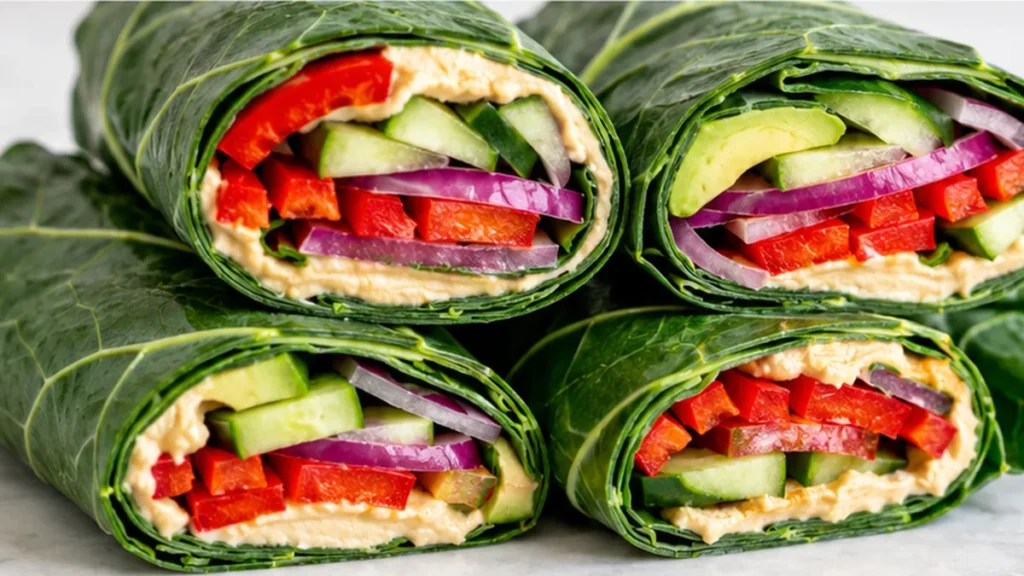
Collard green wraps offer a refreshing, low-carb alternative to traditional tortillas or bread, making them a perfect vessel for fresh, bright fillings. These Mediterranean-style collard green wraps combine crisp collard leaves with creamy hummus and a medley of colorful vegetables, offering a satisfying and nutritious meal. This collard green wraps recipe is not only simple to prepare but also incredibly versatile, catering to various dietary preferences. Gently shaving the thick stem part of the collard leaf (rather than just cutting) makes the leaves much more pliable and easier to roll without tearing.
Key takeaways
- Use large, fresh collard greens for the best wraps.
- Blanching enhances flexibility and color retention.
- Layering vegetables creates a balanced flavor profile.
- Avoid overfilling to prevent tearing during rolling.
Fresh Collard Wraps: Your New Lunch Obsession!
Ingredients
- 4 large Collard leaves, washed and dried
- 1 cup Hummus
- 3 oz Cucumber, cut into thin, short strips (~1/2 medium cucumber)
- 1/2 large Bell pepper, cut into thin, short strips
- 1 medium Roma tomato, diced
- 1/4 cup Red onion, sliced into thin half moons
- 1 medium Avocado, sliced
Instructions
- Use a paring knife to shave off the thick part of the collard green stems.
- Lay out the collard leaves and spread 1/4 cup of hummus on each, leaving a 1-inch (2.5 centimeter) border.
- Top with cucumbers, bell peppers, red onions, tomatoes, and avocado, placing all veggies lengthwise, perpendicular to the leaf’s length.
- Fold in the ends of the collard leaf first.
- Roll up the collard leaf like a burrito, starting with the wide side.
- Place the finished wrap seam side down and repeat with the remaining collard wraps.
Video
Notes
Choosing the Right Collard Greens for Wraps
Using large, fresh collard greens is essential for making wraps. Look for leaves that are vibrant green, firm, and free from blemishes. The thickness of the leaves provides structure, but they should also be pliable enough to roll without tearing. Ideally, each leaf should weigh around 80-100 grams to ensure adequate coverage when wrapping.
Preparing Collard Greens for Optimal Flexibility
To make collard greens pliable, you can blanch them. Bring a pot of water to a boil and add the leaves for about 30 seconds. This softens the leaves and makes them easier to roll. After blanching, immediately transfer the leaves to an ice bath to stop the cooking process. This method retains the vibrant color and nutrients while enhancing flexibility.
Building Flavor with Hummus and Fresh Vegetables
The choice of hummus plays a critical role in flavor. A standard serving of hummus is about 1/4 cup (60 grams) per wrap. You can choose classic, roasted red pepper, or garlic hummus for varied flavor profiles. Layering the vegetables—cucumber, bell pepper, tomato, red onion, and avocado—ensures a balanced taste in every bite. The crunch of cucumber and bell pepper complements the creaminess of avocado, while tomatoes add acidity.
Avoiding Common Wrapping Mistakes
One common issue is overfilling the wraps, which can lead to tearing. Aim for about 1 cup of filling for each wrap. If the collard green leaves are too thick, they may not roll properly. If you find the leaves are too stiff, consider additional blanching. Conversely, if they are too soft, they may tear upon rolling. Adjust your blanching time accordingly to achieve the perfect texture.
Unique Characteristics of Collard Green Wraps
Collard green wraps are distinct from other leafy wraps due to their sturdiness and nutritional profile. Collard greens are high in calcium, vitamins A, C, and K, making them a nutrient-dense option. Unlike lettuce or cabbage, which can wilt quickly, collard greens hold their shape and crunch even when filled with moist ingredients, making them ideal for meal prep and on-the-go lunches.
How to Prepare Collard Wraps in Advance
Making collard green wraps ahead of time can save you valuable minutes during busy weekdays. To do this effectively, prepare the filling ingredients—hummus, cucumber, bell pepper, tomato, red onion, and avocado—up to 3 days in advance. Store them in airtight containers in the refrigerator. However, avoid slicing the avocado until you are ready to serve to prevent browning. When ready to assemble, simply take the collard leaves, spread a layer of hummus, and add your prepped vegetables. Roll tightly and enjoy. This method ensures freshness while allowing you to enjoy your wraps on the go.
Scaling Your Collard Green Wraps for Meal Prep
If you want to scale your collard green wraps for meal prep, consider the ratios of your ingredients. For every 4 large collard leaves, you can use 1 cup of hummus and 3 cups of assorted vegetables. This means if you want to make 12 wraps, use 12 collard leaves, 3 cups of hummus, and 9 cups of vegetables. Be mindful of the size of your storage containers as well, ensuring they can accommodate larger batches. The key to successful scaling is maintaining the balance of flavors and textures, so adjust seasoning accordingly.
Choosing the Right Equipment for Assembly
The assembly of collard green wraps can be greatly influenced by your choice of equipment. A large cutting board provides ample space for rolling, while a sharp knife is essential for preparing your vegetable fillings. Using a vegetable peeler can help create thin strips of cucumber and bell pepper, ensuring they fit nicely within the wrap. Additionally, a rolling mat or parchment paper can aid in achieving a tight roll. If you have a food processor, consider using it for a smoother hummus texture, which can enhance the overall flavor of your wraps.
Seasonal Variations for Fresh Collard Wraps
The ingredients used in collard green wraps can vary with the seasons, influencing flavor and freshness. In the summer, opt for ripe tomatoes and fresh herbs like basil or cilantro for a burst of flavor. In the fall, consider adding roasted vegetables, such as sweet potatoes or butternut squash, for a heartier wrap. Winter can introduce ingredients like shredded carrots for crunch and warmth, while spring might call for asparagus or radishes for a refreshing crunch. Adjusting your ingredients based on seasonal availability not only enhances flavor but also supports local agriculture.
How to Store Collard Wraps for Maximum Freshness
Storing collard green wraps properly is essential to maintain their texture and flavor. To keep them fresh, wrap each collard wrap individually in parchment paper or plastic wrap. This prevents moisture loss and keeps the greens crisp. Place the wrapped collard wraps in an airtight container and refrigerate. They can last up to 3 days in the fridge. If you notice any moisture buildup inside the container, replace the wrapping to avoid sogginess.
Scaling the Recipe for Meal Prep Success
When scaling your collard green wraps recipe, it’s important to maintain ingredient ratios for consistent flavor and texture. For every additional two collard leaves, increase the hummus by 1/4 cup and add another 1/2 cup of chopped vegetables (cucumber, bell pepper, tomato, and onion) accordingly. This ensures that each wrap is filled adequately without overwhelming the greens. Be mindful of the assembly process; larger batches may require more space and time to prepare.
Pairing Collard Wraps with Complementary Sides
Serving collard green wraps can be enhanced by pairing them with complementary sides that elevate the overall meal experience. Consider serving them with a light salad, such as a citrus vinaigrette-dressed arugula salad, which adds brightness. Alternatively, a side of quinoa or a grain salad can provide a satisfying contrast in texture and flavor. For a dip, a zesty tahini sauce or a yogurt-based dressing can enhance the wraps while adding creaminess.
How to Prepare Collard Wraps for Make-Ahead Convenience
When preparing collard green wraps in advance, the key is to maintain the freshness and texture of the ingredients. Start by washing and drying the collard leaves thoroughly; moisture can lead to sogginess. After assembling the wraps, wrap each one tightly in parchment paper or plastic wrap to prevent air exposure. Store them in an airtight container in the refrigerator for up to 3 days. To prevent the avocado from browning, consider applying a thin layer of lemon juice on the exposed flesh. If you plan to freeze collard wraps, do so before adding fresh ingredients like avocado and tomato, which do not freeze well. Instead, prepare these separately and add them just before serving.
Scaling Your Collard Green Wraps for Larger Gatherings
Scaling this recipe for larger gatherings is straightforward, but there are a few considerations to ensure quality. For every additional 4 wraps, increase the ingredients proportionally: 1 cup of hummus, 3 oz of cucumber, and so forth. However, keep in mind the size of your workspace; assembling a larger batch may require more room and time. If you’re preparing for a crowd, consider using a large cutting board or a clean countertop. Additionally, the assembly line method can be effective: prepare all the vegetables first, then spread the hummus on each collard leaf, and finally, fill and roll each wrap. This method not only saves time but ensures uniformity in each wrap.
How to Prepare Collard Wraps for Optimal Freshness
Freshness is key to enjoying collard green wraps. To maintain the vibrant flavors and textures, store your wraps in an airtight container in the refrigerator. Ideally, consume them within 3 days for the best taste and nutritional value. If you’re making them ahead, consider wrapping each collard wrap in parchment paper before placing them in the container. This method prevents moisture buildup, which can lead to soggy wraps. If you notice any wilting or browning on the collard leaves, trim those areas before assembly to ensure a fresh appearance. Additionally, avoid adding too much moisture-heavy ingredients, like tomatoes, until just before serving to keep the wraps crisp.
How to Scale Your Collard Green Wraps for Larger Gatherings
Scaling your collard green wraps for larger groups is straightforward but requires some planning. For every additional four wraps, increase the number of collard leaves by one and the filling ingredients proportionally. This ensures each wrap remains balanced. For example, if you’re making 12 wraps, use 3 large collard leaves and adjust the hummus and vegetables accordingly. A good ratio is about 1/4 cup of hummus and 1 cup of mixed veggies per leaf. Consider preparing the filling ingredients in bulk, as they can be mixed and stored separately, allowing you to assemble the wraps just before serving. This method keeps the wraps fresh and visually appealing, enhancing the overall dining experience.
Pro tips
– Choose the largest, freshest collard leaves you can find; they will be easier to roll. – Don’t overfill your wraps. It’s better to make more smaller wraps than one giant, unmanageable one. – For extra flavor, lightly season your veggies with a pinch of salt and pepper before adding them to the wrap. – Store prepared collard green wraps in an airtight container in the refrigerator for up to 2-3 days. Wrap each individually in parchment paper to prevent sticking.
These collard green wraps prove that healthy eating can be both delicious and exciting. Experiment with different fillings and make them your own! Enjoy this fresh and satisfying meal.
Frequently asked questions
Can I use other greens instead of collard greens?
Yes, you can substitute collard greens with Swiss chard or kale, but keep in mind that they may not be as sturdy. Collard greens provide a unique texture and nutritional benefits that other greens may lack.
How do I store leftover collard wraps?
Store leftover collard wraps in an airtight container in the refrigerator for up to 2 days. To maintain freshness, keep the filling separate from the wraps until ready to eat.
Can I make these wraps ahead of time?
Absolutely! You can prepare the collard wraps a day in advance. Just ensure that you store them properly to prevent the leaves from wilting. Wrap them tightly in plastic wrap or place them in an airtight container.
What can I add for extra protein?
For added protein, consider including grilled chicken, tofu, or chickpeas. Each option can enhance the nutritional value of the wraps while providing a satisfying meal. Aim for about 3-4 ounces of protein per wrap.
More from Vegan Bowls →