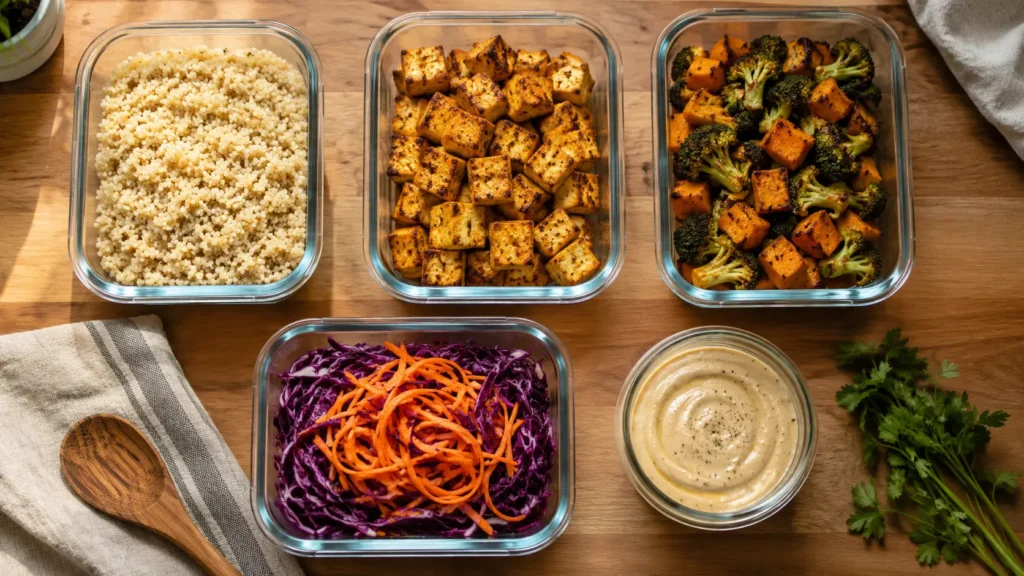
The fastest way to eat well all week is to stop thinking in finished meals and start thinking in parts. The best vegan meal prep ideas are not twelve separate recipes you cook on a Sunday and dread by Wednesday, they are a small set of cooked grains, seasoned proteins, roasted vegetables, raw crunch, and a couple of bold sauces that you mix and match into something different every day. Cook five or six components once, store them properly, and you can build bowls, wraps, grain salads, and quick dinners in the time it takes to boil a kettle.
This guide is the part the recipe round-ups skip: how to actually run a prep session, exactly how long each component keeps in the fridge and freezer, how to reheat without turning everything to mush, and how to get real protein into the week. If you cook plants for a living or you are three weeks into your first plant-based month, the system is the same. Let’s build it.
What Vegan Meal Prep Actually Means
Meal prep gets a reputation for joyless rows of identical containers. It does not have to work that way. There are really two styles, and the most sustainable approach borrows from both.
Full-meal prep means cooking a complete dish, a chili, a curry, a baked pasta, and portioning it into single servings. It is the right move for anything that improves after a day in the fridge, which is most stews, soups, and tomato-based sauces. Component prep means cooking flexible building blocks, a pot of grains, a tray of roasted vegetables, a batch of marinated tofu, and assembling them differently each day. Component prep is what keeps the week from getting boring, because the same roasted sweet potato becomes a grain bowl on Monday, a taco filling on Tuesday, and a soup garnish on Wednesday.
My honest recommendation is to anchor each week with one or two full-meal batches (something you can heat and eat on the busiest night) and fill in the rest with components. That mix gives you both convenience and variety, and it is far less overwhelming than trying to pre-build seven complete dinners.
The Component System: Five Building Blocks
Almost every satisfying plant-based plate is some combination of five things: a grain or starch, a protein, a roasted or cooked vegetable, something raw and crunchy, and a sauce that ties it together. Prep one or two options from each row and the number of meals you can assemble climbs fast.
| Building block | Prep-friendly options | Why it earns its place |
|---|---|---|
| Grain / starch | Brown rice, quinoa, farro, roasted potatoes, whole-grain pasta | Bulk, fiber, and a base that reheats well |
| Protein | Baked tofu, marinated tempeh, seasoned chickpeas, lentils, edamame | Staying power and the nutrient most new preppers under-plan |
| Roasted vegetable | Sweet potato, cauliflower, broccoli, root vegetables, peppers | Caramelized flavor that survives reheating |
| Raw crunch | Shredded cabbage, quick-pickled carrots, cucumber, hardy greens | Texture and freshness that cooked food loses |
| Sauce / dressing | Tahini-lemon, peanut, hummus, salsa, vinaigrette | The single biggest lever for variety |
That last row matters more than any other. A bowl of grains, tofu, and broccoli is plain with a squeeze of lemon and exciting under a garlicky tahini sauce. A scoop of creamy garlic hummus thinned with a little water becomes a five-minute dressing that works on almost anything, which is why I always keep a tub of it in the door of the fridge.
Building meals from the blocks
Once your components are cooked, assembly is a matter of picking one from each row. The same five blocks can carry you through a week without repeating a plate.
| Day | Assembled meal |
|---|---|
| Monday | Quinoa + baked tofu + roasted broccoli + cabbage + peanut sauce |
| Tuesday | Rice + seasoned chickpeas + sweet potato + pickled carrots + tahini-lemon |
| Wednesday | Tortilla wrap + tempeh + peppers + slaw + hummus |
| Thursday | Grain salad: farro + chickpeas + roasted veg + greens + vinaigrette |
A Two-Hour Sunday Prep Workflow
The reason prep sessions drag on is that people cook one thing at a time. The fix is to start with whatever takes longest and uses the oven or a hands-off appliance, then work on the active tasks while it runs. Here is the order I use, and it reliably fits inside two hours.
| Time | What you are doing |
|---|---|
| 0:00 | Heat the oven. Start the grains (pot or rice cooker). Press the tofu. |
| 0:10 | Chop vegetables, toss with oil and salt, get the first tray roasting. |
| 0:30 | Cube and season the tofu; roast it. Simmer lentils or open and rinse chickpeas. |
| 0:50 | Blend two sauces. Shred cabbage and quick-pickle carrots while pans run. |
| 1:20 | Pull trays, cool components, wash up as you go. |
| 1:40 | Portion into containers, label with the date, and stack the fridge. |
Two habits make the biggest difference: measure your spices and aromatics before the pans get hot, and clean as you go so you are not facing a mountain of dishes at the end. If you own a multi-cooker, use it for the grains or lentils so the stovetop and oven stay free for everything else.
Cooling before you seal
Let hot components steam off for ten to fifteen minutes before you put the lid on. Sealing food while it is still steaming traps moisture, and that condensation is exactly what turns a crisp roasted vegetable soft and shortens how long it keeps. This one step is the difference between Thursday’s lunch being good and being sad.
Vegan Meal Prep Ideas by Meal
Breakfast
Breakfast is the easiest win because so many options are designed to sit overnight. Overnight oats, chia pudding, and baked oatmeal squares all hold for days. For something savory, a tofu scramble made on Sunday reheats beautifully and is the most natural egg stand-in for wraps and breakfast bowls. Make a double batch of muffins or breakfast burritos and freeze half.
Lunch
Lunch is where the component system shines. A grain bowl keeps well for about four days, which covers a standard work week. Layer the dressing at the bottom of the jar and the greens at the top so nothing wilts, then tip it into a bowl when you eat. Wraps and grain salads travel well and need no reheating at all.
Dinner
For dinners, lean on full-meal batches that taste better the next day: a chickpea and tomato curry, a pot of chili, or a hearty soup. Beans and lentils carry the protein and the leftovers reheat in minutes. If you want a rotation of make-ahead dinners that freeze well, a good library of bean soups is worth building, since most of them double easily and forgive a few days in the fridge.
Snacks and sides
Prep keeps you from reaching for whatever is fast and beige when hunger hits. A tub of hummus, a jar of roasted chickpeas, cut vegetables, and a batch of crispy root vegetable fries cover most cravings. Quick pickles like dilly carrots add a bright, crunchy bite to any bowl and last for weeks. For more grab-and-go inspiration that happens to suit allergy-friendly eaters too, browse a roundup of gluten-free sides.
How Long Does Vegan Meal Prep Last?
This is the question every round-up dodges, and it is the one that decides whether prep actually saves you money or quietly feeds the compost bin. The general rule from food-safety guidance is that cooked plant foods keep three to four days in the fridge at or below 40°F. Some components stretch a little longer, and many freeze for months. Here is a practical reference.
| Component | Fridge | Freezer |
|---|---|---|
| Cooked grains (rice, quinoa, farro) | 4-5 days | Up to 3 months |
| Baked tofu / marinated tempeh | 4-5 days | 2-3 months |
| Cooked beans & lentils | 4-5 days | Up to 3 months |
| Roasted vegetables | 3-4 days | Texture suffers; freeze only for soups |
| Soups, stews, curries, chili | 4-5 days | 3-6 months |
| Tahini / vinaigrette dressings | 1-2 weeks | Not recommended |
| Hummus (homemade) | 4-5 days | Up to 4 months |
| Cut raw vegetables | 4-5 days | Not recommended |
| Overnight oats / chia pudding | 4-5 days | Up to 1 month |
When in doubt, trust your senses and the date label over the table, sour smells, off colors, or any fuzz mean it goes in the bin. Labeling each container with the day you cooked it removes the guesswork entirely, and it takes about three seconds with a strip of tape.
Reheating Without Ruining the Texture
Different components want different treatment. Grains and proteins reheat best with a splash of water and a lid to trap steam, which loosens dried-out rice back to fluffy. Roasted vegetables are happiest crisped again in a hot oven, air fryer, or skillet rather than the microwave, which steams them limp. Soups and stews simply go back into a pot over medium heat. Leave anything raw, greens, avocado, pickles, fresh herbs, out of the reheating entirely and add it at the end so the contrast survives.
Getting Enough Protein in Vegan Meal Prep
The most common planning mistake I see is a fridge full of grains and vegetables with no real protein anchor, which leaves people hungry an hour after lunch. Plant proteins are abundant, but they have to be deliberately built into the week rather than assumed. Whole-food sources also bring fiber and micronutrients, which is part of why a varied plant-based pattern is associated with strong health markers; the case for building meals around legumes and soy is laid out well by both NutritionFacts.org and Forks Over Knives.
| Protein source | Approx. protein per cooked cup |
|---|---|
| Lentils | ~18 g |
| Tempeh | ~31 g |
| Tofu (firm) | ~20 g |
| Chickpeas | ~15 g |
| Edamame | ~18 g |
A reliable target is to include one of these in every prepped lunch and dinner. If you batch a tray of baked tofu and a pot of lentils each week, you have covered the protein for most of your meals before you even think about the vegetables. For dependable techniques on pressing and baking tofu and tempeh so they hold up in the fridge, Minimalist Baker is a good reference.
Containers and Equipment
You do not need much, but a few things pay for themselves quickly. Glass containers with tight lids are worth the investment because they go from fridge to oven to microwave and do not stain or hold odors. A set in two sizes, large for full meals, small for sauces and snacks, covers nearly everything. Wide-mouth jars are ideal for layered salads and overnight oats. Beyond storage, a sheet pan or two, a blender for sauces, and a hands-off grain cooker are the only tools that meaningfully speed up a session. A food processor earns its counter space if you prep large batches and hate chopping.
Eating Well for Less: The Budget Angle
One of the quiet advantages of plant-based prep is how cheap it can be when you build the week around pantry staples. Dried beans, lentils, rice, oats, and frozen vegetables cost a fraction of pre-made convenience food, and prepping them in bulk is what turns that low price into real savings. A pot of lentils cooked from dry costs pennies a serving and stretches across soups, bowls, and wraps for days.
A few habits keep costs down without much effort. Buy the staples you use most in larger quantities, since grains and dried legumes keep for months in a sealed jar. Let the seasonal produce that is cheapest that week decide which vegetables you roast, rather than forcing a recipe. Cook beans from dry when you have the time and freeze them in one-cup portions, which gives you the convenience of canned at a lower price and with less packaging. And treat your freezer as an extension of the prep session: doubling a soup or a tray of tofu costs almost no extra time but banks a future meal for the nights you would otherwise order out. Over a month, those small choices add up to a grocery bill that is noticeably lighter than a diet built on ready meals.
Common Vegan Meal Prep Mistakes
A handful of avoidable errors account for most failed prep weeks. Steer around these and the habit sticks.
- Cooking seven identical meals. Boredom is the number one reason prep gets abandoned. Vary sauces and assembly instead of repeating a finished dish.
- Sealing food while it is hot. Trapped steam shortens shelf life and softens everything. Cool first.
- Forgetting the protein. Grains and vegetables alone will not keep you full. Anchor every container.
- Dressing salads in advance. Keep dressing separate or at the bottom of a jar so greens stay crisp.
- Skipping labels. Without a date, you cannot trust the fridge, and food gets tossed out of caution or eaten past its prime.
- Prepping more than you will eat. Start with three or four days, not seven, until you learn your real appetite.
Frequently Asked Questions
How long does vegan meal prep last in the fridge?
Most cooked plant components keep three to five days at or below 40°F. Grains, beans, tofu, and soups land at the longer end; roasted vegetables and cut raw produce at the shorter end. Always label containers with the cook date and trust your senses over any chart.
Can you freeze vegan meal prep?
Yes, and freezing is the secret to never getting bored. Soups, stews, curries, cooked grains, beans, tofu, and tempeh all freeze well for one to six months. Avoid freezing roasted vegetables you want crisp, fresh produce, and oil-based dressings, which separate or go soft.
How do I keep vegan meal prep from getting boring?
Prep flexible components rather than finished meals, and make two or three different sauces. The same grains, protein, and vegetables feel like a new dish under peanut sauce on Monday and tahini-lemon on Tuesday. Variety lives in the sauce and the assembly, not in cooking more recipes.
What is the best vegan protein for meal prep?
Baked tofu, marinated tempeh, lentils, and seasoned chickpeas are the workhorses because they hold their texture for days and reheat well. Tempeh and tofu carry the most protein per serving, while lentils and chickpeas double as both protein and a hearty base.
How much time does vegan meal prep take?
A focused session that yields four or five components for the week fits inside about two hours if you start with the longest-cooking items and multitask while the oven and grain cooker run. As the routine becomes familiar, many people trim it closer to ninety minutes.
Do I need special containers for meal prep?
No, but glass containers with tight lids and a few wide-mouth jars make life easier. Glass moves from fridge to oven without staining or absorbing smells, and jars are ideal for layered salads and overnight oats. Any airtight container that seals well will do the job.
Bottom Line
Good vegan meal prep is a system, not a marathon of recipes. Cook five flexible components, a grain, a protein, a roasted vegetable, something crunchy, and a couple of sauces, in one focused two-hour session, cool them before you seal them, label everything with the date, and you have the raw material for a week of meals that never repeat. Anchor each plate with a real protein, keep your sauces interesting, and lean on the freezer for the busy nights. Do that for a couple of weeks and the habit stops feeling like work and starts feeling like the easiest way to eat plants well.