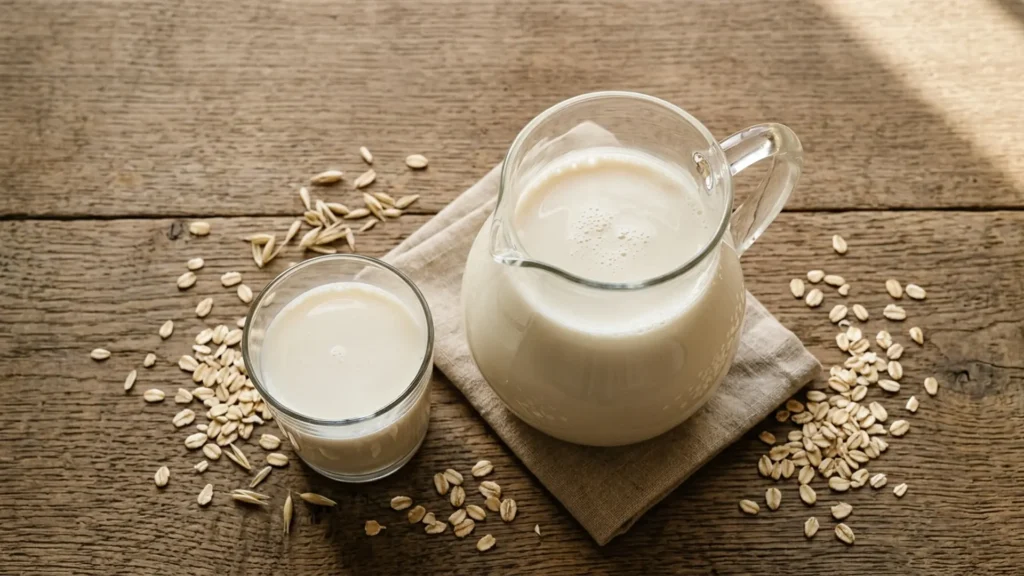
Is oat milk gluten free? The honest answer is: it depends entirely on the carton in your hand. Oats themselves contain no gluten, the protein found in wheat, barley, and rye. But oats are notorious for picking up gluten during growing, harvest, and processing, which means a plain oat milk made from ordinary oats can easily carry enough gluten to make a sensitive person sick. The only oat milk you can trust is one that says gluten-free on the label, ideally backed by third-party certification. Everything else is a gamble.
This distinction trips up a lot of people, because oat milk has become the default plant milk in coffee shops and home kitchens alike, and it feels like it should be safe. After all, oats are a whole grain, not a wheat product. But the path from field to carton is full of chances for wheat to sneak in, and a label that simply says oat milk tells you nothing about whether that happened. If you have celiac disease or a real gluten sensitivity, that gap matters enormously. This guide walks through exactly why oats get contaminated, what the gluten-free label actually guarantees, which brands are certified safe, how to read a carton in a few seconds, and how to make a batch at home that you know is clean. Let us settle the question properly.
Oats are naturally gluten-free, but that is only half the story
Start with the good news, because it is real. Pure oats do not contain gluten. The proteins in wheat, barley, and rye that cause trouble for people with celiac disease are simply not present in an oat grain. Oats carry a different protein called avenin, and the large majority of people with celiac disease tolerate pure, uncontaminated oats without any reaction at all. So on a botanical level, oat milk should be safe.
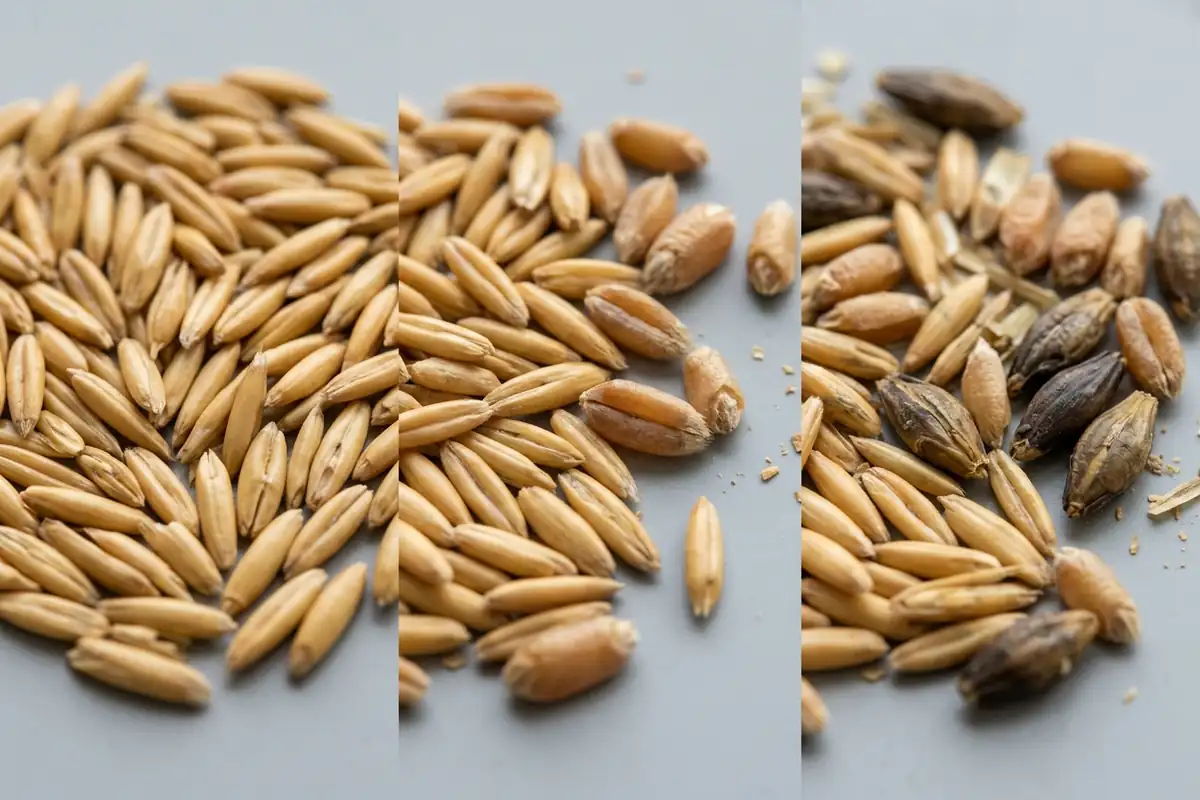
The problem is everything that happens to oats before they become milk. Oats are very commonly grown in fields right next to wheat and barley, harvested with the same equipment, hauled in the same trucks, stored in the same silos, and milled in the same facilities. At every one of those steps, stray wheat and barley grains mix into the oats. By the time the oats reach a processor, a batch that started clean can be carrying far more gluten than a sensitive gut can handle. The contamination is not in the oat. It is in the supply chain. That single fact is the whole reason this question is more complicated than it looks.
How much gluten contamination actually happens
 gluten free — How much gluten contamination actually happens” title=”How much gluten contamination actually happens” width=”1200″ height=”800″ loading=”lazy” />
This is not a rare, theoretical risk. It is the norm for conventional oats. A frequently cited Canadian study tested commercial oat samples and found that a striking majority of them exceeded the safety threshold for gluten, with some samples carrying gluten levels many times over the limit. In other words, if you grabbed a random bag of ordinary oats off a shelf, the odds were good it was contaminated enough to be unsafe for someone with celiac disease.
That is why the oat milk question cannot be answered with a simple yes. A carton of oat milk made from conventional, uncertified oats inherits all of that contamination risk. The oats get blended with water, strained, and packaged, but nothing in that process removes gluten that came along for the ride. So when someone asks whether oat milk is gluten-free, the truthful response is that the default oat milk probably is not safe, and you have to actively choose a version that has been protected against contamination from the start.
What the gluten-free label really means on oat milk
Here is where the label becomes your single most important tool. In the United States, a product can only be labeled gluten-free if it contains less than 20 parts per million of gluten. That 20 ppm threshold is the internationally accepted level considered safe for the vast majority of people with celiac disease. When an oat milk carton carries the words gluten-free, the manufacturer is making a legal claim that the product meets that standard.
There is one important wrinkle worth understanding. The FDA does not personally test products for gluten. It sets the 20 ppm rule and the labeling standard, but the responsibility for testing falls on the manufacturer. A company that prints gluten-free on its carton is legally on the hook for that claim and can be penalized for a false one, which is real accountability. But it also means the rigor varies from brand to brand. That is exactly why a third-party certification, where an independent organization tests and verifies the product, gives you an extra layer of confidence on top of the basic label. For a casual gluten-avoider the plain label is usually enough. For someone with celiac disease, that third-party seal is worth seeking out.
Certified gluten-free oat milk brands you can trust
The reassuring part is that the major oat milk companies have figured this out, and several now make their products from oats specifically handled to keep them gluten-free. Oatly, probably the most recognizable oat milk brand, makes its U.S. products to be gluten-free and is one of the more thoroughly verified options on the shelf. Other widely available brands, including Planet Oat, Califia Farms, and Elmhurst, also label their oat milks gluten-free, though the level of independent third-party certification can vary between them.
The practical lesson is not to memorize a brand list, because formulations and sourcing change over time, but to build the habit of checking the carton every single time. A brand you trusted last year could change its supplier, and a new brand could be perfectly safe. Treat the gluten-free wording on the package, and any certification seal next to it, as the real authority rather than the brand name itself. The independent nutrition research collected at NutritionFacts.org reinforces this same theme across many foods: the label and the testing behind it tell the true story, not the marketing on the front.
Why this matters so much for celiac disease
The stakes here are not about preference or comfort for everyone. For a person with celiac disease, gluten is not merely unpleasant, it is genuinely damaging. Celiac disease is an autoimmune condition in which even small amounts of gluten trigger the immune system to attack the lining of the small intestine. Over time, that damage interferes with the absorption of nutrients and can cause a long list of serious problems. Crucially, this reaction can happen even when there are no obvious symptoms, which is why trace contamination is such a real concern.
That is the reason the casual answer of oats are gluten-free is not good enough for a celiac eater. The 20 ppm threshold and the certification system exist precisely because tiny amounts of gluten, the kind that sneak in through cross-contamination, are enough to cause harm. If your need to avoid gluten is medical, you should treat any oat milk without a clear gluten-free label as off-limits, full stop. If you are avoiding gluten by preference or for milder sensitivity, you have a bit more room to be relaxed, but the certified versions are still the smarter default.
How to read an oat milk carton in ten seconds
Scanning a carton quickly is a skill worth building, because oat milk lines are crowded and the differences are easy to miss. Start at the front of the package and look for the explicit words gluten-free. If they are not there, do not assume, even though the main ingredient is oats. The absence of the claim is itself information.
Next, glance for a certification seal, a small logo from an independent gluten-free certifying organization, which signals third-party testing rather than a self-made claim. Then flip to the ingredient list and allergen statement on the back. Watch for any added barley malt, malt flavoring, or wheat-based thickeners, which would introduce gluten directly, and read the contains and may contain lines at the bottom. A may contain wheat warning is a flag that the product is made on shared equipment, which matters most for celiac eaters. Two labels of oat milk sitting right next to each other can be worlds apart on this, so the ten seconds you spend reading the back is the difference between a safe choice and a risky one.
Make your own gluten-free oat milk at home
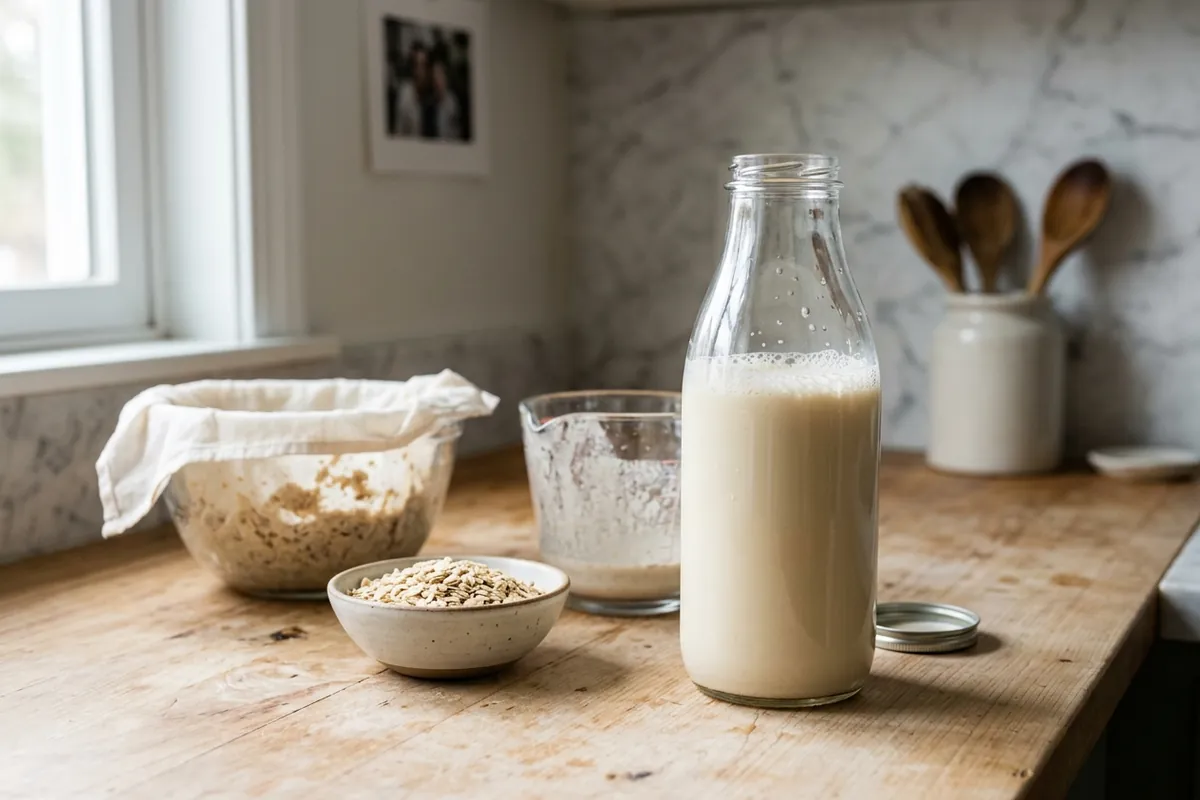
If you want total control, the simplest route is to make oat milk yourself from certified gluten-free oats. It is genuinely one of the cheapest and easiest plant milks to make, and starting from certified oats removes the contamination question entirely, because you control everything that touches the grain.
The method is almost embarrassingly simple. Blend one cup of certified gluten-free rolled oats with three to four cups of cold water for about thirty seconds, no longer, because over-blending makes the milk slimy. Strain it through a nut milk bag or a fine cloth, and you are done. A pinch of salt, a date, or a splash of vanilla rounds out the flavor. Use cold water and a quick blend to keep the texture smooth, and store the milk in the fridge for up to four or five days. Because you started with certified oats and a clean blender, you know exactly what is in it. Homemade oat milk slots naturally into a plant-based kitchen, and if you are building out a fuller plant-based pantry it pairs well with the swaps covered in our guide to the best vegan egg substitutes for baking and cooking. For anyone managing gluten more broadly, the dedicated gluten-free recipe collections elsewhere in the network are a useful companion.
Oat milk versus other plant milks for gluten safety
If the contamination risk of oat milk feels like too much to track, it helps to know that several other plant milks sidestep the issue almost entirely. Almond milk, soy milk, coconut milk, and rice milk are all made from base ingredients that carry no gluten and no significant cross-contamination history, so they are far less likely to be a problem. That said, even these can pick up gluten from added thickeners or flavorings, so the same back-of-carton check applies, just with lower stakes.
Oat milk earns its popularity for good reasons. It froths beautifully for coffee, has a naturally creamy body, and a mild, slightly sweet flavor that most people love. None of that has to be sacrificed for gluten safety, because the certified versions deliver the same experience. The choice is not oat milk or safety. It is simply choosing the right oat milk. If you are weighing plant milks on broader nutrition as well as gluten, our honest comparison of whether almond milk is healthier than cow milk lays out the trade-offs that apply across the whole plant-milk aisle.
Common oat milk mistakes for gluten-free eaters
A few avoidable slip-ups account for most of the trouble gluten-free shoppers run into with oat milk, and they are easy to fix once you know them. The first and biggest is assuming that because oats are a whole grain rather than a wheat product, any oat milk must be safe. As we have seen, the contamination comes from the supply chain, not the grain, so this assumption is exactly the one that gets sensitive eaters into trouble. Never let the word oats stand in for the words gluten-free on a label.
The second mistake is buying oat milk for someone with celiac disease based on a brand reputation rather than the specific carton. Formulations and sourcing change, and a brand that was certified last year might have shifted, so check the package every time rather than relying on memory. The third is overlooking added ingredients. Some flavored or barista-style oat milks include malt, barley-derived sweeteners, or thickeners that introduce gluten directly, even when the base oats were fine, so the flavored versions deserve an extra glance. The fourth is ignoring the may contain wheat allergen line, which signals shared equipment and matters most for celiac eaters. Sidestep these four traps by reading the full label, prioritizing certified products for medical needs, and treating flavored varieties with extra care, and oat milk becomes a safe, easy staple rather than a hidden risk.
Frequently asked questions
Is oat milk gluten free?
Not always. Oats are naturally gluten-free, but they are frequently cross-contaminated with wheat and barley during growing and processing, so ordinary oat milk can contain unsafe gluten levels. Only oat milk labeled gluten-free, ideally third-party certified, is reliably safe for people with celiac disease or gluten sensitivity. The grain itself is clean, but the route it travels to your carton rarely is, so the label is the deciding factor every time.
Why is oat milk not always gluten free if oats have no gluten?
Because the contamination comes from the supply chain, not the oat itself. Oats are commonly grown beside wheat and barley and processed on shared equipment, so stray gluten grains mix in. The oat is naturally clean, but the conventional oat that reaches your carton often is not.
Is Oatly oat milk gluten free?
Oatly makes its U.S. oat milk products to be gluten-free and is one of the more thoroughly verified options available. As always, check the specific carton you are buying for the gluten-free label, since formulations and sourcing can change over time.
Can people with celiac disease drink oat milk?
Yes, but only oat milk that is clearly labeled gluten-free, and ideally third-party certified, because even trace gluten from cross-contamination can damage the gut in celiac disease. Avoid any oat milk that lacks a clear gluten-free claim, and be cautious of may contain wheat warnings.
What does the 20 ppm gluten-free threshold mean?
In the United States, a product can be labeled gluten-free only if it contains less than 20 parts per million of gluten. That level is internationally accepted as safe for the large majority of people with celiac disease. An oat milk carrying the gluten-free label is legally claiming to meet that standard.
Is homemade oat milk gluten free?
It is, as long as you start with certified gluten-free oats and use a clean blender and strainer. Making your own removes the contamination question entirely, because you control every ingredient and surface that touches the oats. Blend the oats briefly with cold water, strain, and store cold for several days.
The bottom line
Oat milk is gluten-free only when the carton tells you so. Oats carry no gluten by nature, but the journey from field to package contaminates conventional oats so reliably that the default oat milk cannot be trusted by anyone who must avoid gluten. Look for the gluten-free label, lean on third-party certification when your need is medical, read the back of the carton every time, and make your own from certified oats when you want total control. Do that, and you can enjoy oat milk’s creamy froth and gentle sweetness without a second thought, gluten and all sorted. The whole question really does come down to a few seconds of label reading, and once that habit is in place, oat milk stops being a worry and goes back to being the easy, everyday plant milk it was meant to be.