
Is almond milk healthier than cow milk? The honest answer is that it depends entirely on what you need from the glass, because there is no single tidy verdict that fits everyone. Here is the honest short version: almond milk is lower in calories, fat, and carbohydrates, contains no lactose or cholesterol, and suits anyone watching their weight or avoiding dairy. Cow milk, on the other hand, is a nutritional heavyweight when it comes to protein, packing about 8 grams per cup against almond milk’s measly 1 gram. Neither is simply better. They are different tools for different jobs.
I have spent years cooking and drinking both, and the more I learn, the less interested I am in crowning a single winner. What matters is matching the milk to your goals, reading the label so you are not fooled by added sugar, and choosing a fortified version so you do not quietly miss out on calcium and vitamin D. This guide walks through the nutrition side by side, where each one genuinely shines, the truth about fortification, the sweetened-versus-unsweetened trap that catches so many people, and how to actually use almond milk in your kitchen. By the end you will know exactly which carton belongs in your fridge, and it might be both.
The short answer, before we dig in
If your priority is fewer calories, weight management, avoiding dairy, or cutting lactose, unsweetened fortified almond milk is the healthier pick for you. If your priority is protein, building muscle, or feeding growing kids who need the calories, cow milk has the clear edge. For most adults who eat a varied diet and get protein from other sources, an unsweetened, fortified almond milk is a genuinely smart everyday choice, and that is the one I reach for. But the label matters more than the marketing, so let us look at the actual numbers.
Almond milk vs cow milk: nutrition head to head
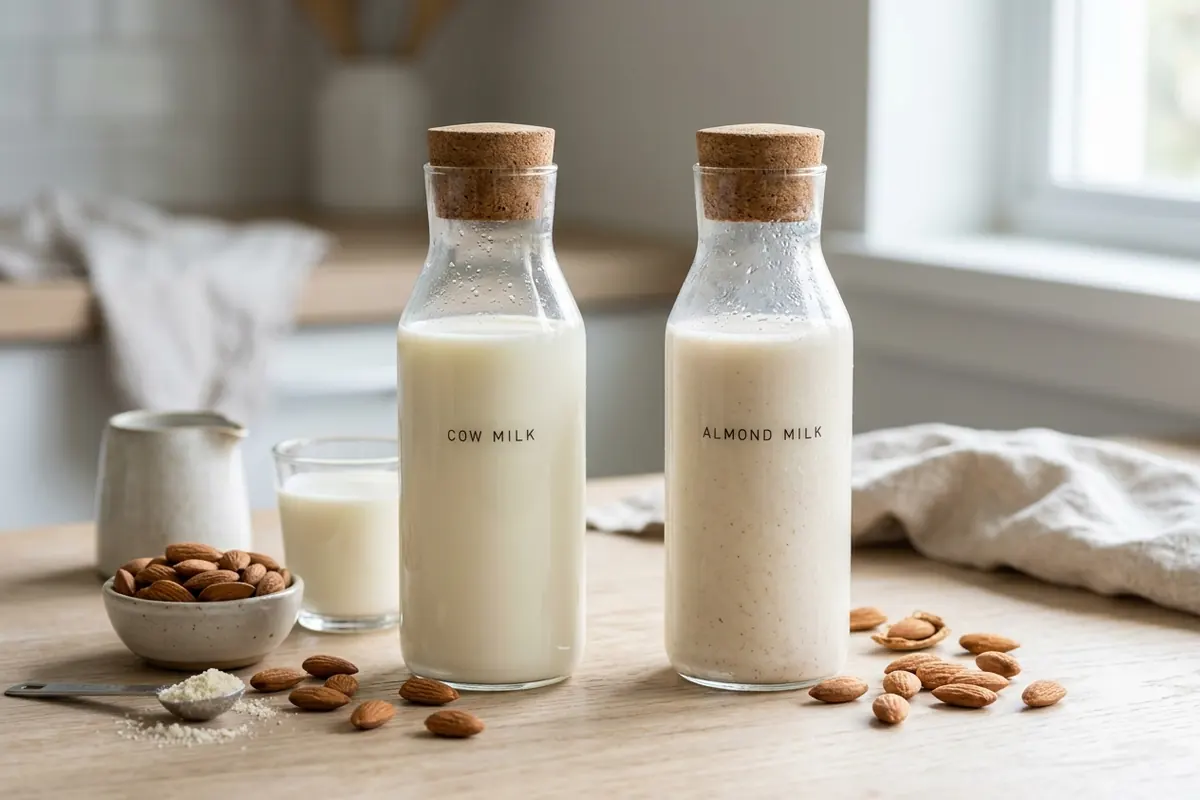
Here is how a standard one-cup serving of each stacks up. I have used whole cow milk and unsweetened almond milk for a fair comparison, since sweetened almond milk changes the picture considerably, as we will see.
| Per 1 cup | Unsweetened almond milk | Whole cow milk |
|---|---|---|
| Calories | about 40 | about 150 |
| Protein | 1 g | 8 g |
| Fat | 2.5 g | 8 g |
| Carbohydrates | 1-2 g | 12 g |
| Sugar | 0 g | 12 g (natural lactose) |
| Calcium (if fortified) | often 450 mg | about 300 mg |
| Cholesterol | 0 mg | about 35 mg |
| Lactose | none | yes |
The story those numbers tell is clear. Almond milk is essentially flavored, enriched water: very light, very low in everything, including the protein. Cow milk is a complete, calorie-dense food that delivers a serious dose of protein and naturally occurring nutrients in every glass. Whether that density is a feature or a drawback depends on what your body needs that day.
Where almond milk comes out ahead
Almond milk earns its popularity honestly, and not just as a trend. Its biggest advantage is how light it is. At roughly a quarter of the calories of whole milk, it lets you enjoy a creamy splash in coffee, smoothies, or oatmeal without much caloric cost, which is a real help if you are managing your weight. It is naturally free of lactose, so the millions of people who feel bloated, gassy, or worse after dairy can drink it comfortably, and it contains zero cholesterol and very little saturated fat.
That lactose point is bigger than it sounds. A large share of the world’s adults, by some estimates the majority, lose much of their ability to digest lactose after childhood, which is why dairy leaves so many people uncomfortable without their realizing the milk is the cause. For them, switching their coffee and cereal to almond milk is not a fad, it is simple relief. There is no enzyme to fuss with and no digestive gamble, you just pour and go. Combine that comfort with the low calorie count and the clean ingredient list of a good unsweetened carton, and it is easy to see why almond milk moved from a niche health-store item to a mainstream staple in barely a decade. It solves a real problem for a lot of people while asking very little in return.
It is also naturally low in carbohydrates and sugar in its unsweetened form, making it friendly for lower-carb and diabetic-conscious eating. And because it comes from a plant, it fits vegan and most plant-forward diets without compromise. When a fortified carton is enriched with calcium and vitamin D, it can actually deliver more calcium per cup than cow milk does. For a deeper look at how plant milks measure up nutritionally, the evidence-based summaries at NutritionFacts.org are a level-headed place to read more.
Where cow milk still wins
Now for the other side, because almond milk has one glaring weakness: protein. A cup of cow milk gives you about 8 grams of complete, high-quality protein containing all nine essential amino acids your body cannot make on its own. That protein supports muscle repair, immune function, and growth, which is exactly why milk has long been a staple for children and athletes. Almond milk simply cannot compete here, offering barely a gram, and that gram is not a complete protein.
Cow milk also delivers calcium, B vitamins, phosphorus, and potassium naturally, bundled with that protein and fat in a form the body readily absorbs. For growing kids who need calories and protein to develop, or for anyone trying to build muscle or simply struggling to eat enough, the density of cow milk is a genuine advantage rather than a flaw. It is a food, not just a beverage, and that distinction matters.
The truth about calcium, vitamin D, and B12
This is where a lot of the confusion lives, so let me clear it up. Cow milk contains calcium, B12, and (when fortified, which most is) vitamin D naturally or by enrichment. Almonds themselves contain very little calcium and no B12, so the calcium and vitamins in almond milk are almost entirely added during manufacturing through fortification.
The practical takeaway is simple but important: always buy fortified almond milk. An unfortified carton is little more than watery almond flavor and will leave you short on the very nutrients people assume they are getting. A fortified one, by contrast, is enriched to match or exceed cow milk’s calcium and vitamin D, and many brands add B12 too, which is especially valuable for anyone eating fully plant-based, since B12 is otherwise hard to get from plants. Read the nutrition panel, and if it does not list calcium and vitamin D in meaningful amounts, put it back.
The sugar trap: sweetened versus unsweetened
Here is the single biggest mistake people make when reaching for almond milk in the name of health: grabbing the sweetened or flavored version by accident. Original and vanilla almond milks often contain 7 to 15 grams of added sugar per cup, which can quietly erase the calorie advantage that drew you to almond milk in the first place and load you up with the kind of added sugar nobody needs.
The fix is to always choose unsweetened. Unsweetened almond milk has essentially no sugar and a clean, nutty taste that works beautifully in both sweet and savory cooking. If you find it too plain at first, your palate adjusts within a week or two, and you will start to find the sweetened versions cloying. This one swap is the difference between almond milk being a genuinely healthy choice and being a dessert in disguise.
So who should choose which?
Let me make this concrete. Choose unsweetened fortified almond milk if you are lactose intolerant, vegan, watching calories, eating lower-carb, or simply prefer its light texture in coffee and cooking. Choose cow milk if you are after protein, feeding growing children, building muscle, or wanting a single food that delivers dense, natural nutrition. And there is nothing wrong with keeping both in the fridge, almond milk for your morning coffee and cereal, cow milk or another high-protein option when you specifically want the protein. Nutrition is not a team sport. Use what serves the moment.
How almond milk compares to other plant milks
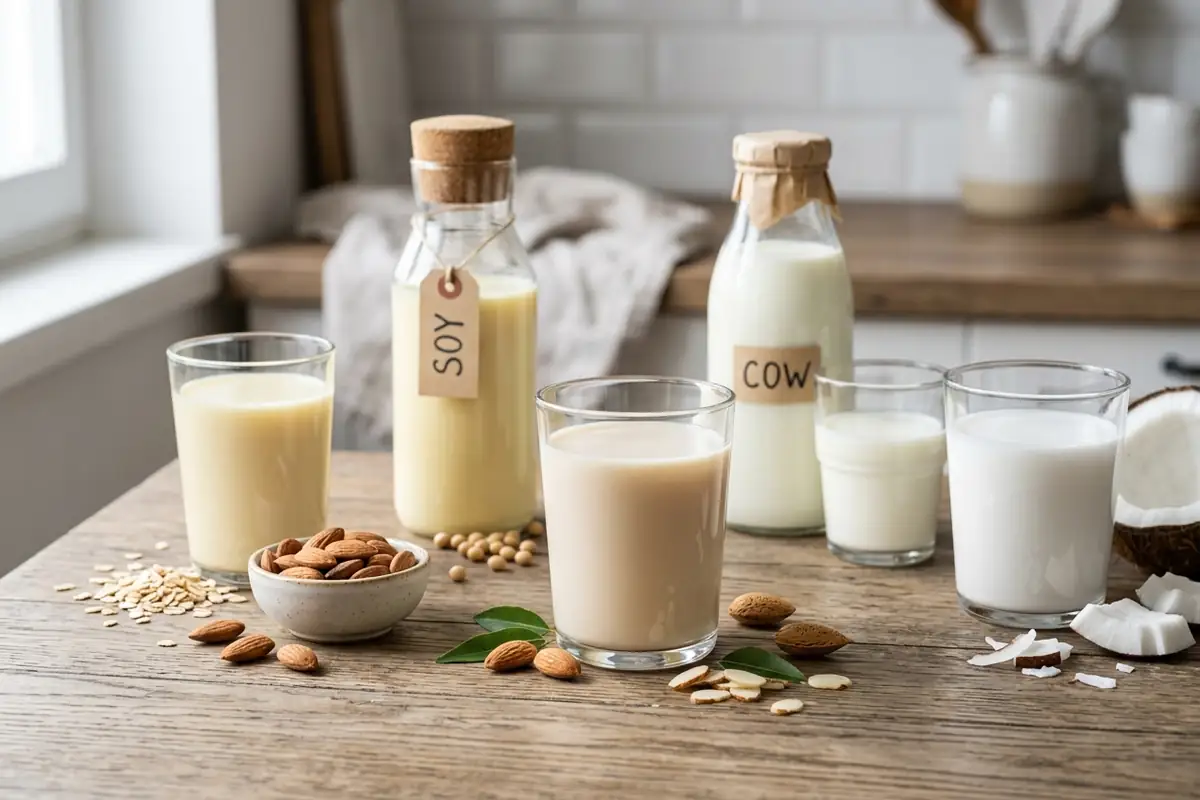
Almond milk is not the only plant option on the shelf, and it helps to know where it sits among its neighbors, because the best choice for you might be a different carton entirely. The four big players are almond, oat, soy, and coconut, and each has a distinct personality.
Soy milk is the closest plant milk to cow milk nutritionally, delivering about 7 grams of protein per cup, nearly matching dairy, which makes it the top pick if protein is your concern and you want to stay plant-based. Oat milk is the creamy crowd-pleaser, with a naturally sweet, rich body that froths beautifully for lattes and behaves more like dairy in cooking, though it carries more carbohydrates and calories than almond. Coconut milk, the beverage kind in cartons, is light and tropical but very low in protein, similar to almond in that respect.
Almond milk’s niche in this lineup is being the lightest and lowest in calories and carbs, which is exactly why it stays so popular for everyday sipping and weight-conscious eating. If you want creaminess, reach for oat. If you want protein, reach for soy. If you want light and low-calorie, almond is your milk. There is no single best plant milk, only the best one for a given purpose, and many of us keep two on hand for different uses. Tasting your way through a few is the only way to find your favorite.
How to read an almond milk label like a pro
Since so much of almond milk’s healthiness comes down to which carton you grab, it is worth knowing exactly what to scan for in the store. Three things tell you almost everything. First, check the word unsweetened on the front, then confirm it on the back where the sugar line should read 0 grams or close to it. Second, look at the calcium and vitamin D percentages, because a genuinely fortified milk will list meaningful amounts, often 25 percent or more of the daily value for calcium. Third, glance at the ingredient list and favor shorter ones, ideally almonds, water, a thickener or two, and the added vitamins, without a long tail of sweeteners and flavors.
Carrageenan, a common thickener, sometimes draws worry, though current evidence considers it safe in the amounts used; if you would rather avoid it, plenty of brands now skip it, so just pick one that does. The bottom line is that two cartons sitting side by side can be worlds apart nutritionally, and thirty seconds reading the panel is what separates a smart buy from a sugary one. Make label-reading a habit and almond milk becomes one of the easiest healthy choices in the dairy aisle.
How to actually cook with almond milk
Numbers aside, almond milk is a joy to cook with once you know its quirks. Its mild, slightly nutty flavor disappears into most dishes, and its lightness is perfect for anything where you do not want heavy dairy richness. It shines in a warm bowl of apple cinnamon oatmeal, where it turns creamy without weighing the breakfast down, and it blends seamlessly into smoothies and overnight oats. Use it cup for cup in place of dairy milk in pancakes, muffins, and quick breads.
The one thing to know is that unsweetened almond milk does not behave exactly like cream in high-heat savory cooking, since it has less fat and can thin out, so for a silky soup or sauce you may want to thicken it slightly or reach for a richer plant milk like oat or cashew. It still adds lovely body to a pot of creamy soup when handled gently. And it pairs naturally with the kind of fresh, plant-forward dishes I love, from a bright bowl of homemade guacamole alongside to a stack of dairy-free pancakes. For a treasure trove of recipes built around plant milks, the kitchen at Minimalist Baker is endlessly useful.
Frequently asked questions
Is almond milk healthier than cow milk for weight loss?
For weight loss specifically, yes, unsweetened almond milk has a clear edge, since it contains roughly a quarter of the calories of whole cow milk. Just be sure to choose the unsweetened version, because sweetened almond milk can carry as much sugar and nearly as many calories as the milk you were trying to cut.
Does almond milk have enough protein?
On its own, no. Almond milk contains only about 1 gram of protein per cup compared to cow milk’s 8 grams. If you rely on almond milk, make sure you are getting protein from other sources like beans, lentils, tofu, nuts, or seeds, or look for a pea-protein-enriched plant milk if protein is a priority.
Is almond milk bad for you?
Not at all, especially the unsweetened fortified kind. The main cautions are to avoid the sugary sweetened versions and to make sure yours is fortified with calcium and vitamin D. People with tree nut allergies should obviously avoid it and choose oat or soy milk instead.
Which milk is better for your bones?
It depends on fortification. Cow milk naturally provides calcium and is usually fortified with vitamin D. Fortified almond milk often contains as much or more calcium per cup. An unfortified almond milk, however, has very little calcium, so for bone health the fortified label is what matters most.
Can I use almond milk in coffee and cooking like regular milk?
Yes, with minor adjustments. Almond milk works wonderfully in coffee, cereal, smoothies, and baking, used cup for cup. In hot or very acidic drinks it can occasionally curdle, and in rich savory sauces its lower fat means it is less creamy than dairy, so a thicker plant milk may serve you better there.
Is almond milk better for the environment than cow milk?
Generally, plant milks including almond milk produce fewer greenhouse gas emissions and use less land than dairy. Almond milk’s one environmental knock is its water use during almond farming, though it still tends to have a lighter overall footprint than cow milk. Oat milk is often cited as the most water-friendly plant option.
The bottom line
Almond milk is not universally healthier than cow milk, it is healthier for certain goals and weaker for others. It wins on calories, fat, carbs, and being dairy-free, while cow milk wins decisively on protein and natural nutrient density. The smartest move for most people is an unsweetened, fortified almond milk for everyday sipping and cooking, with cow milk or another protein source called in when you specifically need the protein. Read the label, skip the added sugar, insist on fortification, and you genuinely cannot go wrong with whichever pour suits your day. Think in terms of what your body needs from a given glass rather than chasing a single winner, and you will quickly find that the healthiest choice is simply the one that fits the moment in front of you.