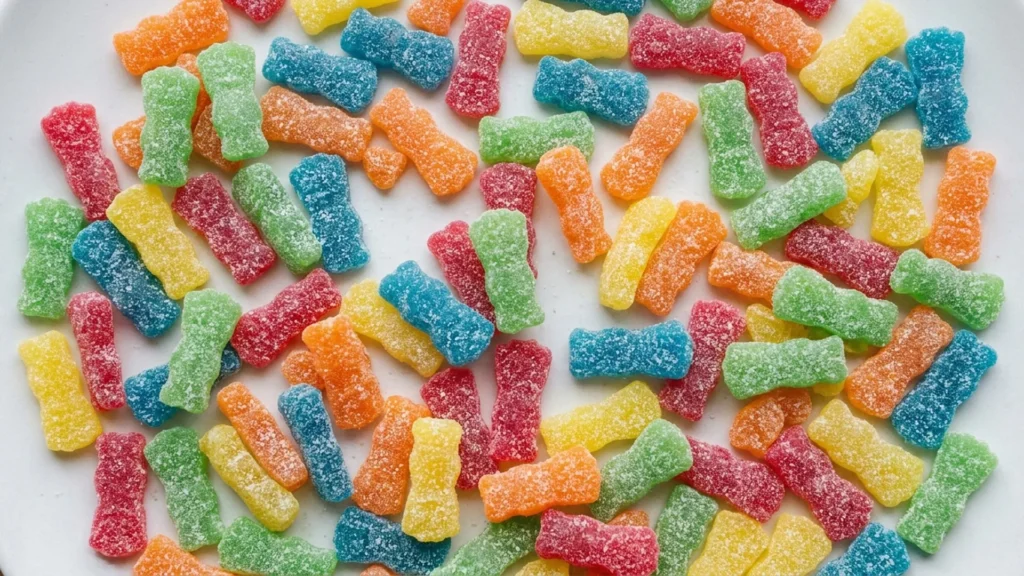
Are Sour Patch Kids vegan? In the United States, yes, the standard Sour Patch Kids contain no gelatin, no dairy, no eggs, and no other obvious animal ingredients, which makes them friendly to the vast majority of vegans. That alone puts them ahead of most gummy and chewy candies, which usually rely on gelatin made from animal bones and skin. So if you are in the US and reach for a bag of the classic soft, sour, sweet pieces, you are eating a candy with a fully plant-derived ingredient list. For most people following a plant-based diet, that settles it.
The honest answer has two big caveats, though, and they are the reason this question keeps coming up. First, location matters enormously: the UK and many European versions of Sour Patch Kids do contain gelatin, so they are not vegan, full stop. Second, even the US version sits in a few gray areas that stricter vegans care about, namely how the sugar is processed, whether the artificial colors were tested on animals, and the fact that the manufacturer will not confirm the source of the “natural flavors.” This guide breaks down the actual ingredient list, explains exactly where the gray areas are and how much they matter, sorts out the US-versus-UK confusion, and points you to genuinely certified vegan alternatives if you want zero ambiguity. By the end you will know precisely where Sour Patch Kids stand and how to decide for yourself.
What is actually in Sour Patch Kids
The clearest way to answer the vegan question is to read the label. The US Sour Patch Kids ingredient list is short and revealing: sugar, invert sugar, corn syrup, modified corn starch, and then small amounts of tartaric acid, citric acid, natural and artificial flavors, and artificial colors (Yellow 6, Red 40, Yellow 5, Blue 1). The sour coating is mostly sugar plus the acids that give the candy its pucker.
The headline takeaway is what is not on that list. There is no gelatin, which is the animal-derived gelling agent in most gummies, and there is no dairy, no egg, no honey, and no carmine (the red colorant made from crushed insects that turns up in some candies). Instead of gelatin, Sour Patch Kids get their chewy texture from modified corn starch, a plant-based thickener. That is the single most important fact: the ingredient most likely to make a candy non-vegan is simply absent from the US formula. Everything on the list is, at face value, plant-derived or synthetic rather than animal-derived. Sorting a candy this way, ingredient by ingredient, is the same approach we use to figure out whether Takis are vegan across their flavor lineup, where the answer also lives in the fine print.
The US version: vegan for most people
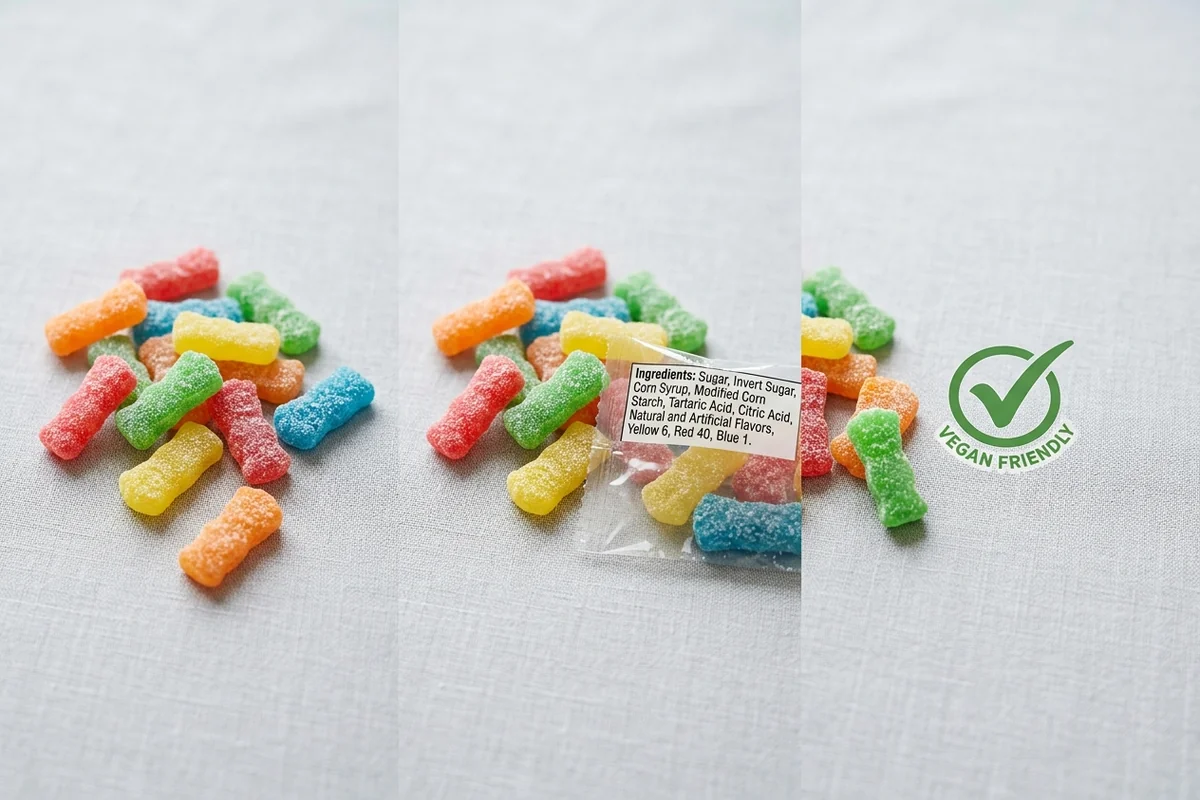
For the everyday vegan, US Sour Patch Kids are a yes. The original, watermelon, berries, and most of the standard flavors share that gelatin-free, dairy-free formula. The texture comes from starch, the sweetness from sugar and corn syrup, and the sour kick from tartaric and citric acid, all plant-friendly. PETA, the largest animal-rights organization, has historically listed Sour Patch Kids among the candies that are accidentally vegan, the snacks that happen to contain no animal products even though they were never marketed as vegan.
The phrase “accidentally vegan” is worth understanding, because it describes a whole category of mainstream candy. These products were formulated for cost and texture, not for plant-based eaters, and they simply never needed gelatin or dairy to work. That is good news if you want a familiar treat without hunting down specialty brands. It also means the formula could change without fanfare, so the habit of a quick label check still pays off, the same way label-reading sorts out which packaged foods are vegan and also free of other allergens. As of now, the US Sour Patch Kids ingredient list contains nothing an everyday vegan would object to.
The gray areas stricter vegans care about
If the ingredient list is clean, why does anyone hesitate? The fuller definition of veganism asks you to avoid animal exploitation as far as you reasonably can, and a handful of production details slip into that wider net even when nothing animal-derived shows up in the candy itself. Three of them come up again and again.
Sugar and bone char
The one people mention most is the sugar. A lot of US cane sugar gets its bright white color from being filtered through bone char, which is exactly what it sounds like, a charcoal made from animal bones. None of that char ends up in the finished sugar, but the refining step leans on an animal product, so the strictest vegans steer clear of sugar made this way. The frustrating part is that a candy wrapper almost never tells you how its sugar was refined, and Mondelez does not publish the detail. Beet sugar and organic cane sugar skip bone char altogether, but a mainstream candy rarely says which it used. PETA’s advice here is basically to not lose sleep over trace issues like this one, and most vegans take that view, while the truly strict avoid any conventional sugar they cannot trace.
Artificial colors and animal testing
Then there are the dyes. Red 40 and Yellow 6 give the candy its color and neither is made from an animal, but synthetic food dyes did go through animal testing at some point on the road to regulatory approval, and that history is enough to put some vegans off them. No one is running fresh animal tests to keep these dyes on the market, so it is really a question about the past rather than the present, but if you avoid anything with an animal-testing history, it counts.
Natural flavors that cannot be confirmed
Last is the vaguest one. “Natural flavors” on a label is a catch-all that usually means plant-derived but can, on rare occasions, mean animal-derived, and Mondelez has never confirmed which applies to Sour Patch Kids. The odds heavily favor plant sources for a fruity candy, but a cautious vegan tends to want the maker to say so outright, and here they simply have not.
The UK and Europe: not vegan
Here is the fork in the road that trips up a lot of online answers. The Sour Patch Kids sold in the UK and many European countries are made to a different recipe, and that recipe contains gelatin. Because gelatin is derived from the bones, skin, and connective tissue of animals (usually pigs or cattle), the UK and most European Sour Patch Kids are not vegan.
This is why you will find people online insisting Sour Patch Kids are not vegan while others swear they are, and both can be right depending on where they shop. Manufacturers reformulate products for different markets based on local tastes and supply, and gelatin gives a firmer, more traditional gummy chew that is popular in the UK candy market. The practical rule is simple: in the US, check that the texture comes from starch (the standard formula), and outside the US, read the label every single time, because gelatin is likely present. Watermelon Sour Patch Kids in the UK have at times been the exception, made without gelatin, but formulas shift, so never assume; the allergen and ingredient list on the bag in your hand is the only reliable guide.
It is worth understanding why the same brand splits like this. Gelatin and starch produce noticeably different textures. Gelatin gives a firmer, springier, more elastic chew that snaps back when you bite it, the texture British and European candy shoppers tend to expect from a quality gummy. Starch produces a softer, shorter, more tender bite. Mondelez formulates each market’s product to match local taste and supply chains, which is why a candy with the same name and packaging can have a fundamentally different ingredient base on two sides of the Atlantic. Travelers and online shoppers get caught by this constantly, buying what they assume is the familiar vegan-friendly US candy only to find gelatin on the imported bag. If you order Sour Patch Kids online, check whether the listing ships the US or the UK or European version, because the country of origin determines the answer entirely.
How to decide if they are vegan enough for you
Veganism is not a single bright line, and that is really the root of all the online arguing about this candy. Most people who eat plant-based watch for the things that are unmistakably animal: gelatin, dairy, eggs, honey, and the insect-derived red dye carmine. If that is your standard, and it is the standard most vegans actually live by, US Sour Patch Kids are an easy yes, because not one of those things is in them. You can buy the bag and eat it without a second thought, and you would be in good company doing so.
A smaller group draws the line further out, past the ingredient list and into how the candy is made. These are the eaters who will not touch cane sugar that might have been refined through bone char, who steer clear of synthetic dyes because of their animal-testing past, and who are bothered that the maker will not say where the natural flavors come from. For them, Sour Patch Kids land in murky territory, not because of anything you can point to in the candy itself, but because of what nobody will confirm about the supply chain behind it.
Both of those are honest readings of the same principle, which is to avoid animal exploitation as far as you reasonably can. One person practices it at the ingredient list, another carries it all the way back to the refinery, and neither is doing it wrong. If you are the first kind, go ahead and enjoy the candy. If you are the second kind, the certified options in the next section will spare you the guesswork entirely. Working out where you personally land is part of building a plant-based diet you can actually keep up, the same kind of judgment call that runs through our complete guide to plant-based protein.
Certified vegan candy alternatives
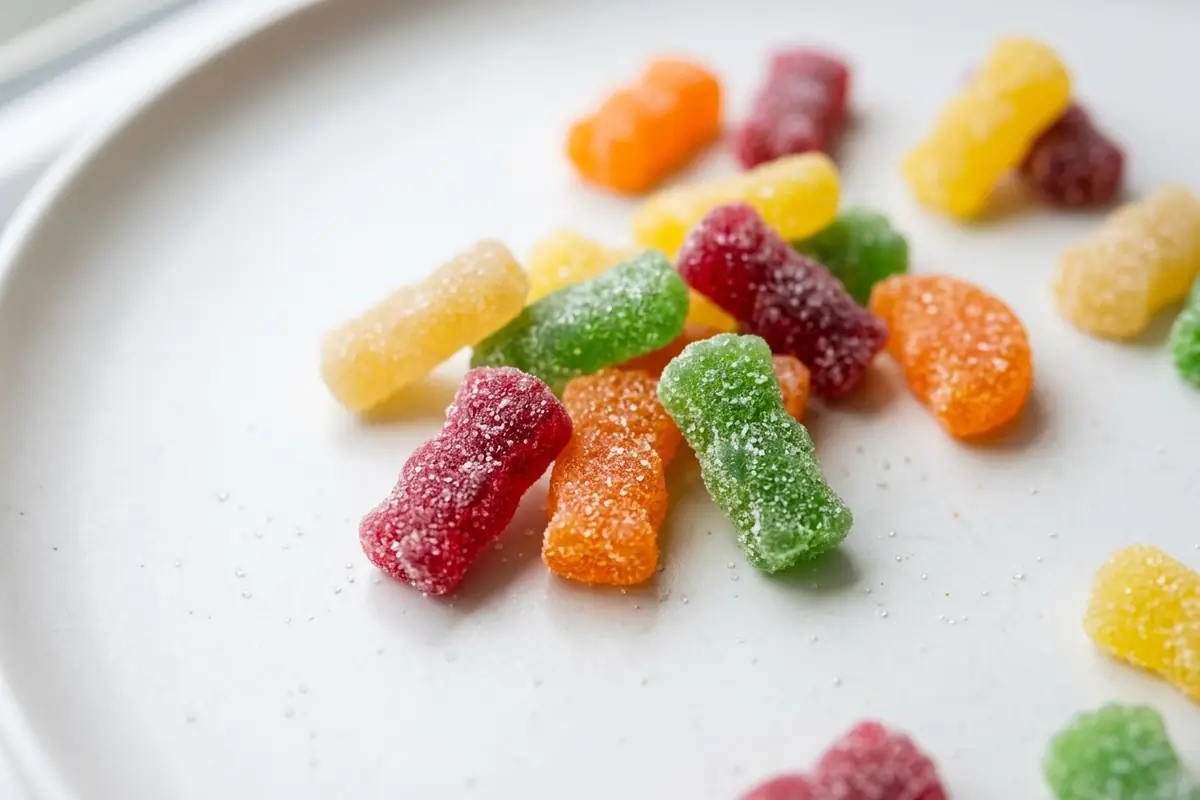
If you want the sour-gummy experience with zero gray areas, the candy aisle has grown a lot of genuinely certified vegan options. These products are made specifically without gelatin, use plant-based colors or clearly disclose their sourcing, and often carry a certified vegan logo.
Brands like Jealous Sweets, Candy Kittens, and Funday make gummy and sour candies that are certified vegan, using pectin or starch instead of gelatin and frequently coloring with fruit and vegetable extracts. Surf Sweets and YumEarth offer organic sour candies that sidestep both the gelatin and the bone-char-sugar issues, since organic sugar is not refined with bone char. SmartSweets makes lower-sugar gummy options that are gelatin-free. For a sour fix specifically, look for “sour” varieties from these certified brands, which deliver the same pucker without the unknowns.
You can also make sour gummies at home, which removes every question at once: a base of fruit juice and a plant gelling agent (agar agar or pectin) set in molds, dusted with a mix of sugar and citric acid for the sour coating. Homemade versions let you control the sugar source and the colors entirely. Recipe resources like Minimalist Baker are full of plant-based sweets that show how pectin and fruit do the work gelatin used to, and they are a good starting point if you want to make your own.
Other accidentally vegan candies to know
Sour Patch Kids are part of a surprisingly large club of mainstream candies that happen to be vegan in their US formulas, and knowing the club makes plant-based snacking much easier. Many fruit-flavored chews and hard candies skip gelatin because starch or pectin does the job more cheaply, and plenty of classic sweets contain no dairy at all.
Commonly cited accidentally vegan US candies include Swedish Fish, Twizzlers, Airheads, Skittles (which dropped gelatin years ago), Jolly Ranchers, Dum-Dums, and Sour Patch Kids themselves. The same caveats apply across the board: the bone-char-sugar and artificial-color questions follow these candies too, and overseas versions may differ, so the everyday-vegan-versus-strict-vegan distinction holds throughout. The skill that ties it all together is label literacy, scanning an ingredient list for gelatin, dairy, egg, honey, and carmine, and checking the allergen statement. Resources from plant-based nutrition groups such as those summarized at NutritionFacts.org are useful for the bigger picture of how processed sweets fit a healthy plant-based diet, which is to say sparingly, as a treat rather than a staple, just as they would for anyone.
Frequently asked questions
Are Sour Patch Kids vegan in the US?
Yes, US Sour Patch Kids are vegan by the everyday standard. They contain no gelatin, dairy, eggs, honey, or carmine; their chewy texture comes from modified corn starch. Strict vegans may still avoid them over the sugar’s possible bone-char refining, synthetic dyes, and unconfirmed natural flavors, but for most vegans they are fine.
Do Sour Patch Kids contain gelatin?
US Sour Patch Kids do not contain gelatin; they use modified corn starch for their texture. UK and many European versions, however, do contain gelatin, which is animal-derived, so those are not vegan. Always check the label outside the US, because the formula varies by country.
Why might strict vegans avoid Sour Patch Kids?
Because of processing rather than ingredients. The cane sugar may be filtered through bone char, the synthetic colors were historically tested on animals, and the manufacturer has not confirmed whether the natural flavors are plant-derived. None of these put an animal product in the candy, but stricter vegans avoid these unverifiable gray areas.
Are UK Sour Patch Kids vegan?
No, most UK and European Sour Patch Kids contain gelatin, an animal-derived ingredient, so they are not vegan. Some flavors like watermelon have at times been made without gelatin, but formulas change, so you must read the ingredient list on the specific bag rather than assuming.
What candies are similar to Sour Patch Kids but certified vegan?
Certified vegan sour gummies include options from Jealous Sweets, Candy Kittens, Funday, Surf Sweets, YumEarth, and SmartSweets. These use pectin or starch instead of gelatin, and the organic ones avoid bone-char sugar too. They deliver the same sour, chewy experience with no gray areas.
Is the sugar in Sour Patch Kids vegan?
That is the hardest part to confirm. Some US cane sugar is whitened using bone char, an animal-derived filter, and the manufacturer does not disclose its sugar source. The bone char is not in the final product, but strict vegans avoid sugar refined this way. Organic and beet sugar do not use bone char.
The bottom line
US Sour Patch Kids are vegan for the vast majority of people who follow a plant-based diet, because the ingredient list has no gelatin, dairy, eggs, honey, or carmine, and the chew comes from corn starch rather than animal collagen. The only reasons to hesitate are the wider, processing-level gray areas, the possibility of bone-char-refined sugar, synthetic dyes with an animal-testing history, and unconfirmed natural flavors, which matter to strict ethical vegans but not to most everyday ones. Outside the US, the calculation flips: the UK and European versions usually contain gelatin and are not vegan, so the label is essential. If you want the sour-gummy fix with no question marks, certified vegan brands and a simple homemade recipe both deliver. Decide which tier of veganism you follow, read the label on the bag in front of you, and you will always know exactly where you stand. And if you would rather not think about it at all, a certified vegan sour gummy gives you the same treat with every question already answered, which for a lot of people is the easiest path of all.