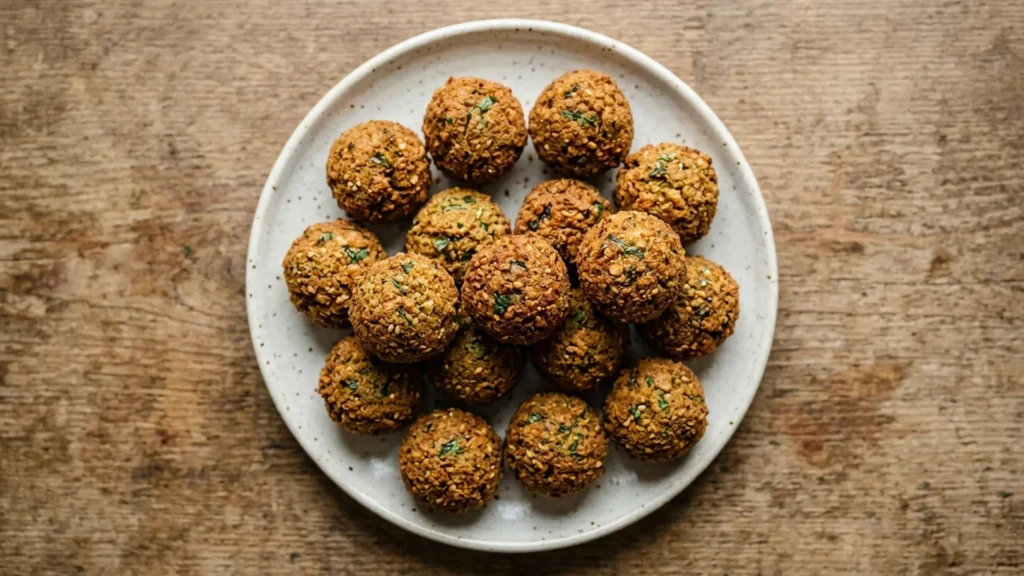
Is falafel gluten free? Traditional falafel is naturally gluten free, because the authentic recipe is built on chickpeas (or fava beans), fresh herbs, onion, garlic, and spices, none of which contain gluten. Chickpeas and fava beans are legumes, not grains, so they carry none of the wheat, barley, or rye proteins that cause problems for people with celiac disease or gluten sensitivity. Made the proper way, a falafel is just ground soaked legumes and seasoning, fried into a crisp little patty. So the base ingredient list is reassuringly safe for a gluten free diet.
The catch is that “made the proper way” does a lot of work in that sentence. Plenty of restaurants and most boxed mixes take shortcuts, adding wheat flour, breadcrumbs, or semolina as a binder, and any of those turns a naturally gluten free food into one that will make a sensitive eater sick. On top of that, falafel is almost always deep-fried, often in oil shared with breaded foods and pita, which creates a real cross-contamination risk even when the recipe itself is clean. This guide explains why authentic falafel needs no flour at all, exactly where gluten sneaks in, how to question a restaurant and read a package, which binders keep homemade falafel safe, and how to make a perfect gluten free batch yourself. By the end you will be able to tell a safe falafel from a risky one in seconds.
Why authentic falafel is naturally gluten free
To understand falafel, you have to understand its texture trick. Real, traditional falafel starts with dried chickpeas (or fava beans, or a mix) that are soaked in water overnight but never cooked. The soaked-but-raw legumes are ground with herbs and spices into a coarse paste, and it is the starch and protein in those raw, soaked chickpeas that bind everything together when the falafel hits hot oil. No flour, no egg, no breadcrumb is required, because the legume does the binding itself. This is the heart of the dish, and it is also why authentic falafel is gluten free by nature.
Gluten is a protein found only in wheat and its relatives (spelt, durum, semolina), plus barley and rye. It does not exist in legumes, herbs, onions, garlic, or the cumin, coriander, and parsley that flavor a good falafel. So a falafel made the classic way, from soaked dried chickpeas and seasoning, contains zero gluten from start to finish. Chickpeas are also a nutritional workhorse, bringing plant protein, fiber, iron, and folate, which is part of why they show up so often in any solid rundown of plant-based protein sources. The legume is clean, the herbs are clean, and the spices are clean. Gluten only enters when someone changes the recipe.
Where gluten sneaks into falafel
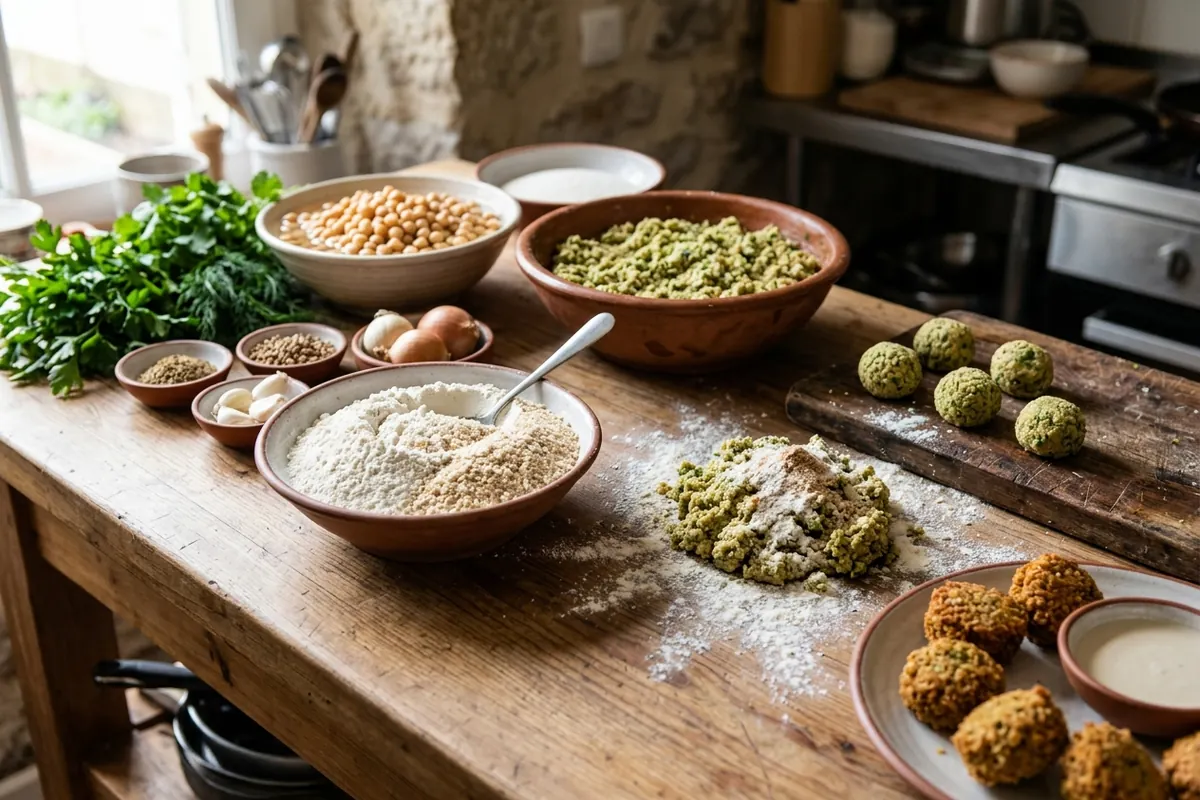
If the traditional recipe is safe, the risk lives entirely in shortcuts and shared equipment. There are three main ways gluten gets into a falafel that should not have any.
Flour and breadcrumb binders
This is the most common culprit, and it usually traces back to a shortcut. When a kitchen uses canned (already cooked) chickpeas instead of soaked dried ones, the mixture is too wet and soft to hold together, because cooked chickpeas have lost the raw starch that does the binding. To compensate, the cook adds a binder, and the cheapest, most familiar one is wheat flour or breadcrumbs. Some recipes use semolina (a wheat product) for crunch. Any of these makes the falafel contain gluten. Boxed falafel mixes are especially likely to include flour, since they are formulated for convenience and reliable binding rather than authenticity.
Shared frying oil
Even a perfectly gluten free falafel recipe becomes unsafe if it is fried in oil that also cooks breaded foods, battered items, or anything floured. At a busy Middle Eastern or Mediterranean restaurant, the same fryer may handle falafel, breaded appetizers, and other items, and the gluten leaches into the shared oil. For someone with celiac disease, this trace contamination is enough to cause a reaction. A dedicated fryer is the only way to fully avoid it.
Prep surfaces, utensils, and what comes with it
Falafel is usually served in or with pita bread, which is wheat. Cross-contact can happen on shared cutting boards, with shared utensils, or simply from the falafel sitting against the pita. Ask for your falafel without the bread, in a bowl or over salad and rice, and confirm the prep area is clean. This same label-and-prep awareness is exactly what helps you sort out whether other packaged and prepared foods are vegan and gluten free at a glance.
Restaurant falafel: the questions to ask
Ordering falafel out is where careful eaters get caught, because you cannot see the recipe or the fryer. The word “falafel” on a menu tells you nothing about whether flour was added or how it was cooked, so you have to ask. Three specific questions cover almost everything.
First: “Is there any flour or breadcrumb in your falafel?” This sorts out the recipe itself. A kitchen that makes traditional falafel from soaked chickpeas will say no; one using a mix or canned-chickpea shortcut may say yes. Second: “Is it fried in a dedicated fryer, or shared with breaded foods?” This is the cross-contamination question, and for celiacs it is the most important one, because even a flourless falafel from a shared fryer is not safe. Third: “Can I get it without pita, in a bowl?” This removes the most obvious wheat contact at serving.
Frame it as an allergy or celiac issue, not a preference, so the staff understand that cross-contact matters, not just the listed ingredients. Some Mediterranean restaurants make genuinely gluten free falafel and fry it separately, and they will tell you proudly; others cannot guarantee it, and an honest “we can’t be sure” is more useful than a casual “it’s fine.” When a kitchen cannot confirm a dedicated fryer, the safest move is to treat that falafel as risky. The same careful, question-by-question approach is what we use to evaluate whether a popular snack passes, the way our breakdown of whether Takis are vegan reads the details rather than trusting the name.
Store-bought falafel: reading the label
Packaged falafel, whether frozen patties, refrigerated balls, or a dry mix, is a mixed bag, so the label is your friend. Start with the ingredient list and scan for the gluten signals: wheat flour, flour, breadcrumbs, semolina, wheat starch, and barley malt. If the binder is flour, the product contains gluten. If the list reads chickpeas, herbs, spices, and maybe chickpea flour or a gluten free binder, you are likely fine.
The strongest assurance is a certified gluten free seal, which in the US means the product has been tested to under 20 parts per million of gluten, the FDA threshold for the gluten free claim. Several brands now make certified gluten free falafel specifically for this market, using chickpea flour or no added binder at all. Watch the allergen statement too: a “Contains: wheat” line is a clear stop, and a “may contain wheat” or “made in a facility that processes wheat” advisory is a cross-contamination warning whose weight depends on your own sensitivity. Dry falafel mixes are the most likely to contain wheat flour, so they need the closest read; many conventional boxed mixes are not gluten free, while a growing number of specialty brands are. As always, the label on the specific package in your hand is the final word, because brands reformulate and product lines change.
Gluten free binders for homemade falafel
The best way to guarantee gluten free falafel is to make it yourself, and the good news is that the authentic method needs no binder at all. If you use dried chickpeas soaked overnight (not canned), grind them coarsely, and chill the mixture before frying, the falafel holds together on its own, exactly as it has for centuries. This is the single most important tip: soaked dried chickpeas, not canned, are the secret to falafel that binds without flour.
If your mixture still feels loose, or if you want to use canned chickpeas for speed, reach for a gluten free binder instead of wheat flour. Chickpea flour (besan) is the natural choice, since it matches the falafel’s own flavor and adds no gluten. A spoonful of cornstarch, rice flour, or a little ground oats (certified gluten free) also works. Some cooks add a tablespoon of ground flax mixed with water as a binder, which doubles as a way to keep the falafel vegan. The trick across all of them is to add only as much as you need to hold the shape, since too much binder makes the falafel dense. Chilling the shaped balls for thirty minutes before frying firms them up further. Recipe resources like Minimalist Baker have well-tested gluten free falafel methods that lean on chickpea flour and proper soaking, and they are a reliable place to start.
How to fry or bake gluten free falafel
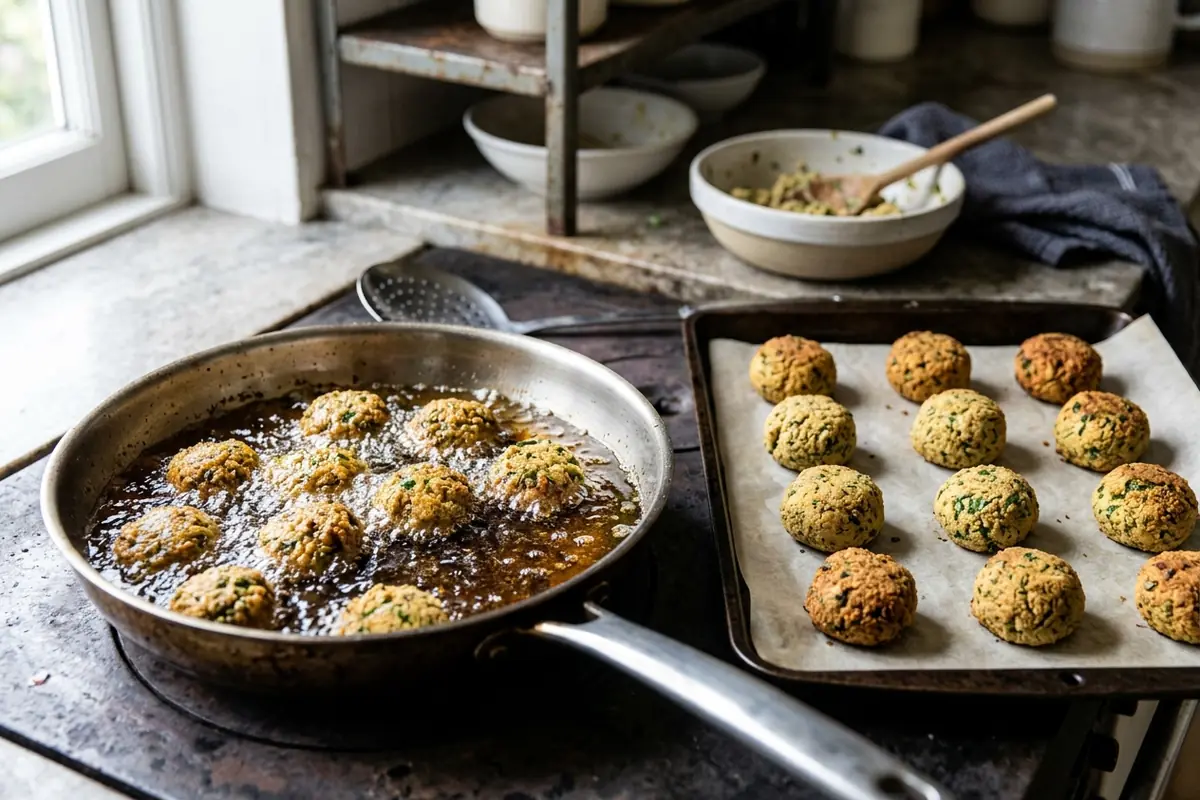
Once the mixture is right, cooking gluten free falafel is straightforward, and the cross-contamination risk drops to zero at home because you control the oil. For frying, use fresh oil or oil that has only cooked gluten free foods. Heat it to around 350 degrees Fahrenheit, fry the balls in batches until deep golden and crisp, about three to four minutes, and drain them on paper towels. The exterior crisps while the inside stays moist and green from the herbs.
If you would rather skip deep frying, falafel bakes or air-fries well too. Brush the shaped balls with oil and bake at around 375 degrees for 20 to 25 minutes, turning halfway, or air-fry at 375 for about 15 minutes until crisp. Baked and air-fried falafel are a little drier than deep-fried, so do not over-bake, and a generous coat of oil helps them brown. Serve your gluten free falafel over a grain bowl with rice or quinoa, tucked into a gluten free wrap or lettuce cups instead of pita, or alongside hummus, tahini sauce, and a chopped salad. For the bigger picture of how legumes like chickpeas fit a healthy plant-based plate, the nutrition science summarized at NutritionFacts.org is a useful reference, and it reinforces why falafel, made well, is both a safe and a genuinely nourishing choice.
Falafel in a wider gluten free, plant-based diet
Falafel earns a permanent spot in a gluten free, plant-based kitchen because it solves several problems at once. It is naturally vegan and naturally gluten free in its authentic form, which is rare; many meat substitutes and convenience foods are one or the other but not both. Built on chickpeas, it delivers real plant protein and fiber, so it works as a satisfying main rather than just a side, and it travels well as leftovers.
It is also endlessly adaptable. Swap fava beans for some of the chickpeas for a creamier interior, add roasted red pepper or extra herbs for variety, or season toward different cuisines. Because the base is just legumes and seasoning, falafel slots naturally alongside the other staples of a gluten free plant-based diet, the rice, quinoa, vegetables, hummus, and tahini that already fill that kind of plate.
Falafel also helps solve one of the quieter challenges of eating both gluten free and plant-based at once, which is keeping protein varied and interesting. When wheat-based options like seitan and many veggie burgers are off the table, your protein has to come from legumes, soy, nuts, and seeds, and there are only so many ways to eat plain chickpeas before monotony sets in. Falafel turns the humble chickpea into something crisp, herby, and craveable, which makes it far easier to hit your protein without feeling like you are eating the same bowl every day. Batch-fry a tray, refrigerate or freeze the extras, and you have a fast protein to drop onto salads and grain bowls all week. The one habit to keep is the same one that runs through this whole guide: trust the traditional, soaked-chickpea recipe, question any falafel you did not make yourself, and read the label on anything packaged. With those reflexes, falafel goes from a “maybe” food to a dependable favorite.
Frequently asked questions
Is all falafel gluten free?
No. Traditional falafel made from soaked dried chickpeas, herbs, and spices is naturally gluten free, but many restaurant and store-bought versions add wheat flour or breadcrumbs as a binder, which adds gluten. Falafel fried in shared oil with breaded foods can also pick up gluten. You have to check each one rather than assume.
Does authentic falafel contain flour?
No, authentic falafel contains no flour. It is bound by the starch in soaked, uncooked dried chickpeas, which hold the patty together when fried. Flour or breadcrumbs only appear as a shortcut when cooks use canned chickpeas or a boxed mix, which lack that natural binding ability.
Is restaurant falafel safe for celiacs?
Only if you confirm two things: that no flour or breadcrumb is in the recipe, and that it is fried in a dedicated fryer not shared with breaded foods. Even a flourless falafel from a shared fryer is unsafe for celiacs due to cross-contamination. Ask both questions and request it without pita.
What can I use instead of flour to bind falafel?
The best answer is to use soaked dried chickpeas, which bind on their own with no flour. If you need a binder, use chickpea flour (besan), cornstarch, rice flour, certified gluten free oats, or a flax-and-water mixture. Add only a little, and chill the shaped balls before frying so they hold together.
Is store-bought falafel gluten free?
Some is and some is not. Frozen and refrigerated falafel may use wheat flour as a binder, and dry mixes often do. Read the ingredient list for wheat, flour, breadcrumbs, and semolina, and look for a certified gluten free seal, which means the product tests under 20 parts per million of gluten. Several brands now make certified gluten free falafel.
Is falafel made with fava beans gluten free?
Yes. Fava beans, like chickpeas, are legumes and contain no gluten, so falafel made from fava beans or a chickpea-fava mix is naturally gluten free. The same caution applies: check for added flour or breadcrumb binders and for shared frying oil, since those are what introduce gluten regardless of the bean.
The bottom line
Traditional falafel is gluten free, because it is nothing more than soaked chickpeas (or fava beans), herbs, and spices, with the legume itself doing the binding that flour does in shortcut versions. The risk is never the falafel’s natural ingredients; it is the wheat flour and breadcrumbs some kitchens and mixes add, and the shared frying oil that contaminates even a clean recipe. Once you know that, eating falafel safely on a gluten free diet comes down to three habits: question restaurant falafel about flour and the fryer, read the label on anything packaged and look for a certified gluten free seal, and make it at home from soaked dried chickpeas when you want zero doubt. Done that way, falafel is one of the most satisfying, protein-rich, naturally plant-based foods a gluten free eater can keep in regular rotation.