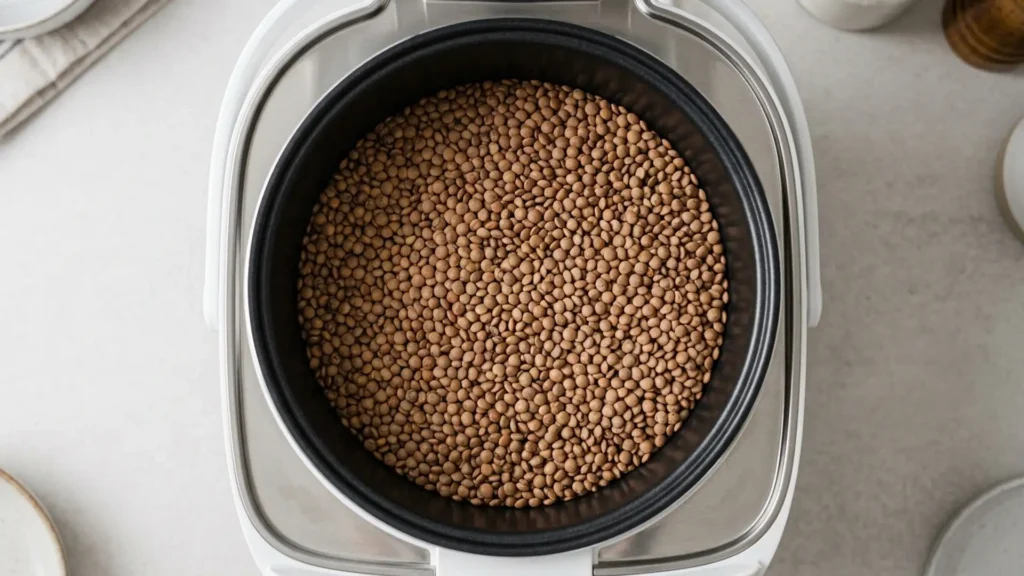
Learning to cook lentils in rice cooker batches comes down to one simple rule: use a ratio of one cup of dried lentils to two cups of water or broth, set the machine to its Grain or regular cook cycle, and let it run for about 40 minutes before checking. That is the whole trick: the rice cooker turns lentils into a genuinely hands-off side. You rinse them, add liquid and a few aromatics, press start, and walk away while the sealed steam environment cooks them evenly with no pot-watching and no boil-overs to mop up. It is one of the most reliable ways to get tender, intact lentils without standing at the stove.
This guide covers the exact ratios for each type of lentil, which varieties work and which to avoid, a step-by-step method, how to cook lentils and rice together in one pot, and how to fix the two things that occasionally go wrong. Everything here is plant based by default, because lentils are one of the best foods a vegan kitchen can lean on.
Why the rice cooker is so good at lentils
A rice cooker is built to do one thing precisely: bring a measured amount of grain and water to a boil, hold it at a steady simmer, and shut off when the liquid is absorbed. Lentils behave a lot like rice in that closed, steamy environment, which is exactly why the method works so well.
Because the lid stays sealed, the heat and moisture stay even from top to bottom, so the lentils cook uniformly instead of the bottom layer overcooking while the top stays firm. There is no stirring, no babysitting, and no foamy boil-over racing up the side of a saucepan. The machine also stops itself, which removes the most common stovetop mistake of walking away and coming back to a scorched pot. For a food that benefits from gentle, even cooking, the rice cooker is close to reliable.
The right lentils for a rice cooker
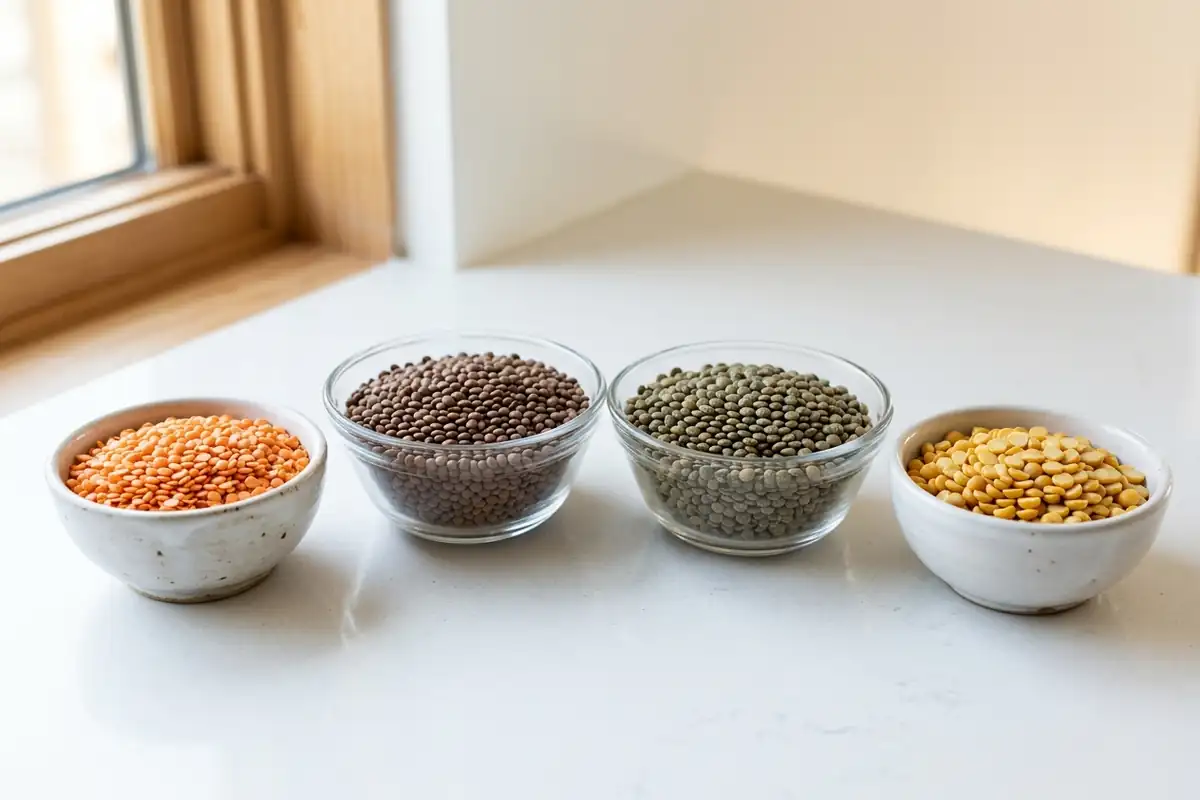
The single most important choice is which lentil you use, because not all of them suit this method. The rule is simple: whole lentils that hold their shape are ideal, while split lentils that break down fast are a poor fit.
Brown, green, black (beluga), and French (Puy) lentils are the winners. They are whole lentils with intact skins, so they cook in the 30 to 50 minute range the rice cooker is good at, and they finish tender but still distinct. Red and yellow lentils are the ones to avoid here. They are split, they cook in 15 to 20 minutes, and they dissolve into a soft mush that is wonderful in a dal or a thick soup but wrong for a rice cooker side where you want intact lentils. Save the red and yellow ones for the stovetop and a pot of soup instead.
| Lentil type | Water ratio (lentil:liquid) | Approx. cook time | Result |
|---|---|---|---|
| Green | 1:2 | 40 to 50 min | Firm, holds shape well |
| Brown | 1:2 | 35 to 45 min | Tender, slightly soft |
| Black (beluga) | 1:2 | 40 to 45 min | Firm, glossy, great in salads |
| French (Puy) | 1:2 | 40 to 50 min | Very firm, peppery, keeps bite |
| Red or yellow (split) | not recommended | n/a in rice cooker | Falls apart, use stovetop |
If your machine has a Grain or Brown Rice setting, use it, since those cycles run a little longer and suit whole lentils. A basic one-button cooker works too, you just may need to run it a second time to finish. For more detail on one of these varieties, our guide to how to cook green lentils covers the texture targets that apply here as well.
Step-by-step: lentils in a rice cooker
The method is short, and once you have done it once you will not need the recipe again.
- Measure and rinse. Use one cup of dried lentils to two cups of water or vegetable broth. Rinse the lentils in a fine strainer and pick out any small stones or shriveled bits, which is more common with lentils than with rice.
- Add aromatics. Drop in a couple of bay leaves, a smashed garlic clove or two, and a tablespoon of olive oil. These flavor the lentils as they cook without any extra effort.
- Cook. Set the machine to Grain or the standard cook cycle and start it. Most whole lentils are done in about 40 minutes.
- Check and finish. When the cycle ends, taste a few lentils. If they are still firm in the center, add a splash of water, stir, and run the cycle again, checking every 10 minutes until they are tender.
- Season and rest. Stir in salt to taste at the end, fish out the bay leaves, and let the lentils sit with the lid on for five minutes. Drain any small amount of excess liquid if needed.
Salt at the finish rather than the start. It is not that early salt ruins lentils, but a strongly acidic addition like a big splash of vinegar or tomato can keep the skins firm before they are tender, so save acidic ingredients for after the lentils have softened. One genuine advantage lentils have over most beans is that they need no soaking, which is what makes hands-off appliance methods work so well; the same no-soak principle drives this minimalistbaker no-soak lentil method for the pressure cooker.
Cooking lentils and rice together in one pot
One of the best uses of this method is a complete one-pot side: lentils and rice cooked together, the foundation of dishes like mujadara. Because they finish in a similar window when you choose the right pairing, the rice cooker handles both at once.
Pair brown lentils with brown rice, since both want a longer cook, or green lentils with white rice for a slightly different timing. A reliable starting ratio is one part lentils, one part rice, and three parts liquid. Rinse both, add your aromatics, and run the Grain or Brown Rice cycle. The result is a protein-and-grain base that needs nothing more than a drizzle of olive oil, some fried onions, and a squeeze of lemon to become dinner. It reheats beautifully, which makes it a meal-prep favorite.
Troubleshooting: mushy or undercooked lentils
Two problems come up, and both have easy fixes once you know the cause.
If your lentils turn out mushy, the usual culprit is either using split red or yellow lentils, which are not suited to this method, or too much liquid. Drop to a 1 to 1.75 ratio for a firmer result, and stick to whole lentils. If the lentils come out undercooked or chalky in the center, the cycle simply ended before they were done, which is common with single-button cookers. Add a splash of water and run the cycle again; whole lentils sometimes need a second pass, especially older dried lentils that have sat in the pantry for a year or more.
| Problem | Likely cause | Fix |
|---|---|---|
| Mushy, falling apart | Split lentils or too much water | Use whole lentils, drop to 1:1.75 ratio |
| Still firm in the center | Cycle ended too soon | Add a splash of water, run again 10 min |
| Boiled over | Pot too full, foam pushed up | Fill no more than halfway, add 1 tsp oil |
| Bland | No aromatics, salted too early or not at all | Cook in broth, salt at the end |
Boil-overs are rare in a rice cooker but can happen if you overfill it. Keep the pot no more than half full, since lentils expand, and the tablespoon of oil in the recipe helps tame the foam.
How much do lentils yield, and how to store them
Dried lentils roughly double to triple in volume once cooked, so one cup of dried lentils gives you about two and a half to three cups cooked, enough for four servings as a side. That makes a single rice cooker batch an efficient bit of meal prep.
Cooked lentils keep in a sealed container in the refrigerator for about five days, and they freeze well for up to three months. Freeze them in flat, portion-sized bags so they thaw quickly, and you will always have a protein base on hand. A good rhythm is to cook one batch at the start of the week, keep half in the fridge for the next few days of lunches, and freeze the other half for a future week when you have no time to cook. Because lentils reheat without turning to mush, that frozen portion drops straight into a soup or a sauce later with no loss of texture.
Lentils are a nutrition workhorse, rich in plant protein, fiber, iron, and folate, and the research collected at nutritionfacts.org on beans and legumes lays out why a legume habit is one of the better dietary moves you can make. If your dried lentils have been in the pantry a long time, they will simply need a few extra minutes in the cooker, since older lentils are drier and take longer to soften, which is worth knowing before you blame the machine.
Flavoring lentils as they cook
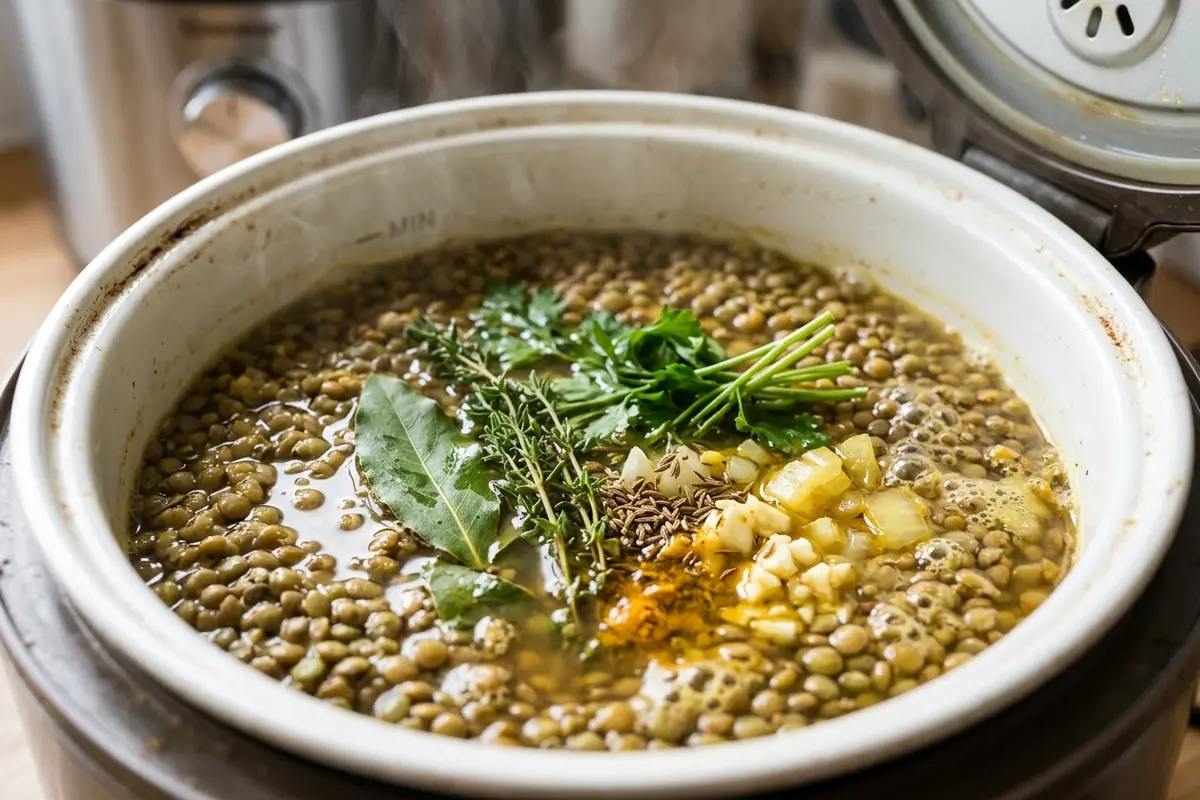
Plain lentils are useful, but a little seasoning in the pot turns them from a building block into something you would happily eat on their own. The rice cooker makes this easy, because anything you add at the start infuses the lentils gently as they steam.
The simplest upgrade is to swap water for vegetable broth, which seasons every lentil from the inside. Beyond that, aromatics do the heavy lifting: a couple of bay leaves, smashed garlic, a thick slice of onion, or a strip of kombu all add depth without dominating. Whole spices suit this method especially well, since they have time to bloom. A teaspoon of cumin seeds, a cinnamon stick, a few cardamom pods, or a pinch of smoked paprika each push the lentils in a different direction, Indian, Middle Eastern, or smoky, depending on what you reach for. Add a tablespoon of olive oil too, which both carries the spice flavors and keeps any foam in check.
Hold the acidic and salty finishers until the end. Lemon juice, vinegar, tomatoes, and a generous pinch of salt are best stirred in after the lentils are tender, where they brighten the finished dish without slowing the cooking. A spoonful of miso or a splash of soy sauce at the end adds a savory, umami backbone that makes plant-based lentils taste richer than their short ingredient list suggests.
Why lentils earn a permanent spot in a plant-based kitchen
Cooking lentils this easily matters because lentils are one of the highest-value foods a vegan or plant-curious cook can keep on hand. They are inexpensive, shelf-stable for a long time, and nutritionally dense in exactly the ways a plant-based diet wants.
A single cup of cooked lentils delivers around 18 grams of protein and roughly 15 grams of fiber, along with meaningful iron, folate, and potassium. That combination of protein and fiber is part of why lentils are so filling and so steadying for blood sugar, and it is why they show up again and again in research on heart-healthy and longevity-friendly eating patterns. Pairing them with a vitamin C source like tomatoes, peppers, or a squeeze of lemon helps your body absorb the plant iron, a small habit worth building. When a food is this cheap, this good for you, and this easy to cook in a machine you already own, it makes sense to keep a bag in the pantry and a batch in the fridge. The rice cooker simply removes the last bit of friction between you and that habit.
Easy ways to use your rice cooker lentils
A batch of plain, tender lentils is a blank canvas, which is the whole point of cooking them this way. They slot into meals all week with almost no extra work.
Toss warm black or French lentils with olive oil, lemon, and herbs for a hearty salad that holds up for days. Stir brown lentils into a tomato sauce to bulk up pasta with protein, or fold them into a grain bowl with roasted vegetables and tahini. Mash them lightly with spices to make a quick filling for tacos or wraps, or simmer a scoop into broth for an instant soup. If you find yourself with extra liquid or you started with split lentils, lean into it and make a pot of soup instead, the way our slow cooker lentil soup does. However you use them, the rice cooker did the hard part already.
The bottom line on rice cooker lentils
Cooking lentils in a rice cooker is one of the easiest hands-off techniques in a plant-based kitchen. Stick to whole lentils, brown, green, black, or French, use a one-to-two ratio of lentils to liquid, run the Grain cycle for about 40 minutes, and finish with salt. Avoid the split red and yellow lentils, which belong in soup, and use the troubleshooting fixes if the texture is off. Do that and you get perfectly tender lentils with no pot-watching, ready to drop into salads, bowls, sauces, and soups all week. Once the method is second nature, you will find yourself reaching for the rice cooker for lentils as often as for rice, and a pantry bag of dried lentils starts to feel like one of the most useful things you own. For a food this good for you and this cheap, it is hard to beat the convenience.
Frequently Asked Questions
What is the water ratio for lentils in a rice cooker?
Use one cup of dried lentils to two cups of water or broth, a 1:2 ratio. For a firmer result, drop slightly to 1:1.75. Whole lentils like green, brown, black, and French work best at this ratio.
Can you cook red lentils in a rice cooker?
It is not recommended. Red and yellow lentils are split and cook in 15 to 20 minutes, breaking down into a soft mush in the rice cooker. They are great for dal and soups on the stovetop, but for intact lentils use whole varieties.
How long do lentils take in a rice cooker?
Most whole lentils finish in about 40 minutes on the Grain or standard cycle, with green and French lentils taking up to 50 minutes. Check at 40 minutes and run the cycle again in 10-minute increments if they are still firm.
Do you need to soak lentils before cooking them in a rice cooker?
No. Unlike many beans, lentils do not need soaking. Just rinse them and pick out any small stones or debris before adding them to the rice cooker with your liquid and aromatics.
Can you cook lentils and rice together in a rice cooker?
Yes, and it makes a great one-pot side. Use one part lentils, one part rice, and three parts liquid, and pair similar-cooking types like brown lentils with brown rice. Rinse both, add aromatics, and run the Grain cycle.
Why are my rice cooker lentils still hard?
The cycle most likely ended before they finished, which is common with single-button cookers and older dried lentils. Add a splash of water, stir, and run the cycle again, checking every 10 minutes until the centers are tender.