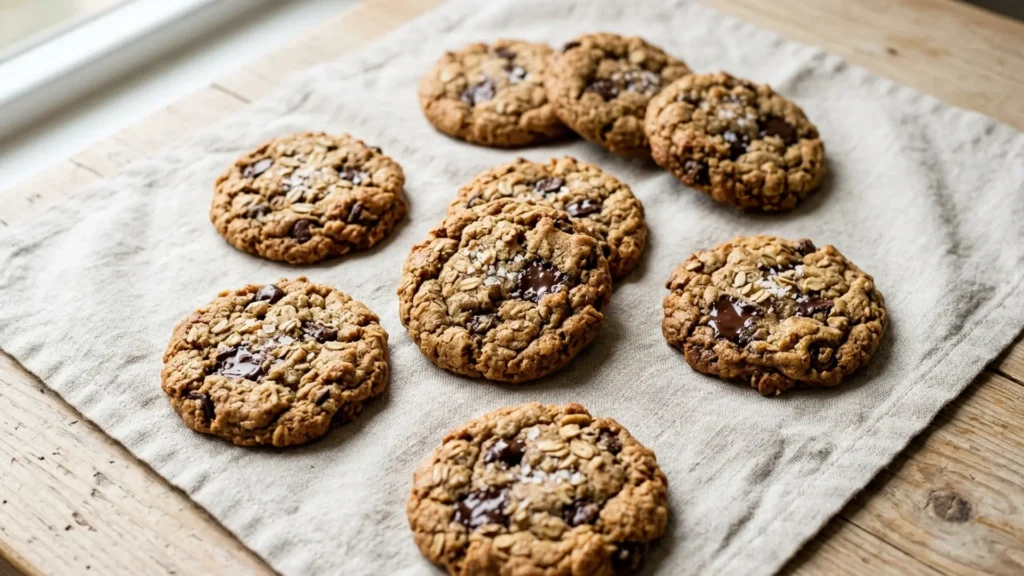
Vegan cookies are simply cookies made without any animal products, which means no butter, no eggs, and no dairy, and the good news is they can taste every bit as rich and chewy as the traditional kind. The two ingredients people worry about, butter and eggs, both have reliable plant-based swaps that do the same jobs in the dough. Once you understand what those swaps are actually doing, you can bake any cookie you like, from a classic chocolate chip to a soft sugar cookie, without a single egg or stick of dairy butter in the kitchen.
This guide explains how vegan baking works, the best substitutes for eggs and butter and when to use each, how to control whether your cookies come out soft and chewy or thin and crisp, a reliable base recipe to riff on, and the handful of mistakes that trip people up. The aim is to give you the understanding, not just a single recipe, so you can make any cookie vegan with confidence.
What makes a cookie vegan, and why it works
A standard cookie leans on butter for fat and flavor and eggs for binding, structure, and moisture. To make a cookie vegan, you replace those two ingredients with plant-based versions that perform the same functions. Nothing about the flour, sugar, leavening, or chocolate has to change, since those are already plant based in most cases.
The reason this works so smoothly is that a cookie does not need animal protein to hold together. Fat tenderizes and carries flavor, and a good vegan butter does that just as well as dairy butter. Eggs bind and add a little moisture, and a flax egg, a spoonful of applesauce, or aquafaba can stand in for that role. Because a cookie is a fairly forgiving structure, these swaps rarely demand the precise chemistry a delicate cake might, which is exactly why cookies are one of the easiest things to veganize. You are not fighting the recipe; you are substituting parts that have well-known stand-ins.
The best egg substitutes for cookies

Eggs do two main jobs in a cookie: they bind the dough and add moisture. Several plant-based options handle that, and the best one depends on the cookie you are making. Our full guide to the best vegan egg substitute for every recipe goes deeper, but here is how the common choices behave in cookies specifically.
| Egg substitute | Amount (per egg) | Best for |
|---|---|---|
| Flax egg | 1 tbsp ground flax + 3 tbsp water | Chewy chocolate chip and oatmeal cookies |
| Applesauce | 1/4 cup unsweetened | Soft, cakey cookies; adds moisture |
| Aquafaba | 3 tbsp chickpea liquid | Lighter, crisper cookies and meringue types |
| Mashed banana | 1/4 cup | Soft cookies where banana flavor fits |
| Commercial egg replacer | per package | Reliable all-rounder, neutral flavor |
The flax egg is the workhorse for most chewy cookies. You mix one tablespoon of ground flaxseed with three tablespoons of water and let it sit for about five minutes until it turns gel-like, then use it just as you would an egg. It binds well and contributes to that satisfying chew. Applesauce makes a softer, more cake-like cookie and adds moisture, while aquafaba, the liquid from a can of chickpeas, whips up light and suits crisper styles. Match the substitute to the texture you want and you are halfway there.
Choosing the right fat: vegan butter and beyond
Fat is where vegan cookies most often succeed or fall flat, so it is worth getting right. The fat sets the flavor, the tenderness, and a lot of the texture, and the choice you make changes the cookie noticeably.
Vegan butter, sold in sticks or tubs, is the closest one-to-one swap for dairy butter and generally gives the best results. Use a stick-style vegan butter rather than a soft spread, because the firmer version has the right fat content and behaves like real butter when you cream it with sugar. Coconut oil works too and makes a slightly crisper cookie, but it changes the flavor and the texture, so it is a substitute with a personality rather than a neutral swap. Refined coconut oil is more neutral than virgin if you want to avoid a coconut note. Whichever you choose, the temperature matters: softened, not melted, for a thick chewy cookie, and melted for a thinner, crisp-edged one.
Soft and chewy or thin and crisp: how to control texture
The single most useful thing to understand about vegan cookies, or any cookies, is that a few specific levers decide the final texture. Once you know them, you can dial a cookie toward soft and chewy or thin and crisp on purpose instead of by luck.
For a soft, chewy cookie, lean on brown sugar rather than white, because its molasses holds moisture and encourages chew. Add a tablespoon of cornstarch to the dry ingredients, which softens the crumb and is a trick many vegan bakers swear by. Use softened, not melted, fat, and chill the dough for 30 minutes before baking so the cookies spread less and stay thick. Most important, pull them from the oven when the edges are barely set and the centers still look underdone, because they firm up as they cool. For a thinner, crisper cookie, do the opposite: use more white sugar, melt the fat, skip the chill, and bake a couple of minutes longer until the edges are golden.
| For chewy cookies | For crisp cookies |
|---|---|
| More brown sugar | More white sugar |
| Softened fat | Melted fat |
| Add 1 tbsp cornstarch | No cornstarch |
| Chill the dough 30 min | Bake straight away |
| Underbake slightly | Bake until golden |
These levers stack, so you can mix and match. A cookie with brown sugar, chilled dough, and a slight underbake will be unmistakably chewy, while the crisp column pushed all the way gives you a snappy, golden cookie. Vegan dough responds to these controls the same way conventional dough does.
A reliable base recipe to riff on
Rather than memorizing a dozen recipes, learn one solid base and adapt it. This makes a classic soft, chewy drop cookie and takes well to chocolate chips, chopped nuts, or dried fruit.
Cream 1/2 cup softened vegan butter with 1/2 cup brown sugar and 1/4 cup white sugar until fluffy. Beat in one flax egg (1 tablespoon ground flax plus 3 tablespoons water, rested) and 1 teaspoon vanilla. In a separate bowl, whisk 1.5 cups all-purpose flour, 1 tablespoon cornstarch, 1/2 teaspoon baking soda, and 1/4 teaspoon salt. Combine the wet and dry, then fold in 3/4 cup vegan chocolate chips or your add-in of choice. Chill the dough for 30 minutes, scoop onto a lined sheet, and bake at 350 degrees Fahrenheit for 9 to 11 minutes, until the edges are set but the centers look soft. Let them rest on the pan for five minutes before moving them. That single recipe, with the texture levers above, covers most of what people want from a cookie. Toasted nuts are a great add-in here, and our guide to how to roast cashews shows how to get them deeply flavorful first.
Common vegan cookie mistakes and how to fix them
Most disappointing vegan cookies come down to one of a few fixable errors rather than the absence of eggs or butter.
- Cookies spread into flat puddles. The fat was too warm or melted, or the dough was not chilled. Chill the dough and use softened, not liquid, fat.
- Cookies came out dry and crumbly. Usually too much flour or overbaking. Measure flour by spooning it into the cup and leveling, and pull the cookies while the centers still look soft.
- Cookies are cakey instead of chewy. Often from applesauce or banana, which add moisture and lift. Switch to a flax egg and more brown sugar for chew.
- Bland flavor. Vegan butter can be milder than dairy butter. Add a bit more salt and vanilla, and brown the vegan butter first if you want depth.
- Dense, heavy texture. The fat and sugar were not creamed long enough. Cream until visibly lighter and fluffy to aerate the dough.
Almost every one of these is a technique fix, not a recipe failure, which is reassuring. Vegan cookie dough is not fragile; it just rewards the same care any good cookie does.
Storing and freezing vegan cookies
Vegan cookies store just like any other cookie, and the dough freezes beautifully, which makes fresh cookies a five-minute affair on a busy day.
Baked cookies keep in an airtight container at room temperature for about five days. To keep soft cookies soft, tuck a slice of bread into the container; the cookies pull moisture from it and stay tender. For longer storage, freeze baked cookies for up to three months. Better still, freeze the raw dough: scoop it into balls, freeze them solid on a tray, then bag them, and bake straight from frozen with an extra minute or two. That way you can bake one or two cookies whenever you want without making a whole batch, which is one of the quiet joys of keeping cookie dough on hand.
Easy ways to vary the base recipe
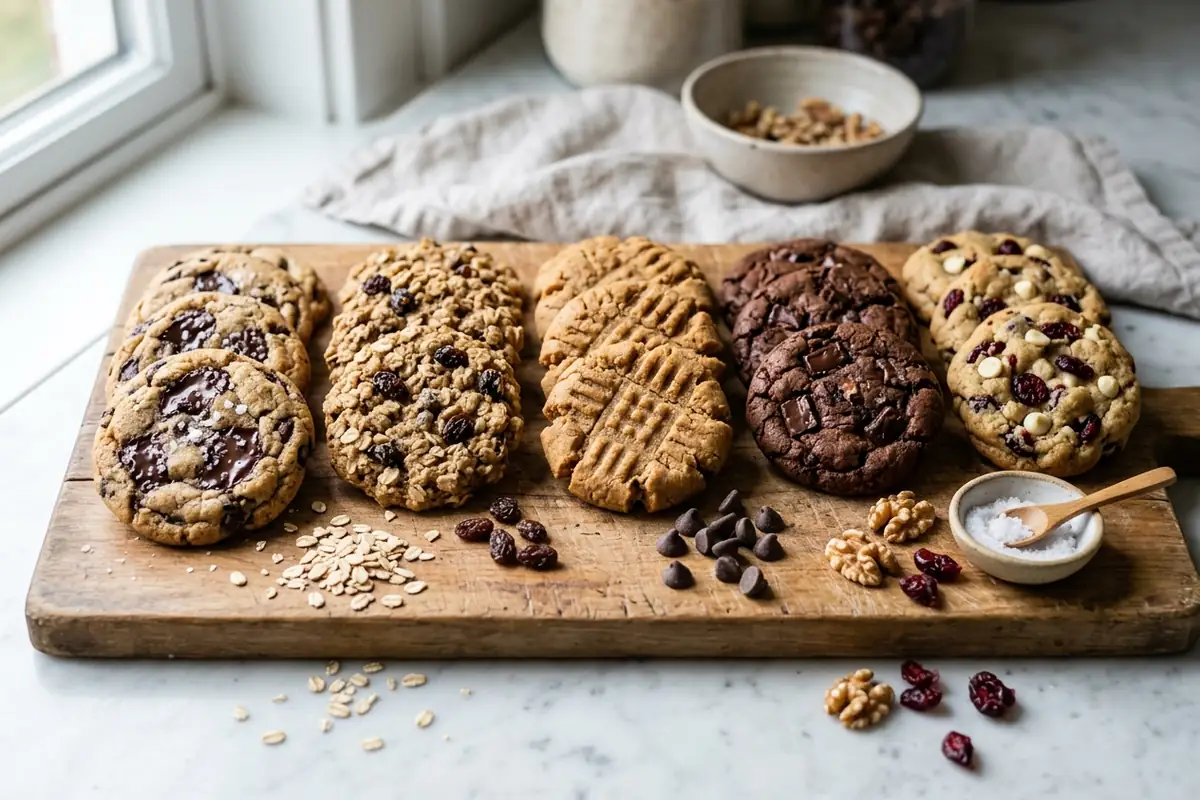
Once the base is reliable, variety is just a matter of swapping the add-ins and a few flavorings. The dough is a canvas, and small changes take it a long way.
Fold in chopped vegan dark chocolate and a flaky salt finish for a bakery-style chocolate chip cookie. Add rolled oats and raisins or vegan chocolate for a chewy oatmeal cookie, increasing the flour slightly to balance the oats. Swap in peanut butter for some of the fat and roll the dough in sugar for a peanut butter cookie, or add warm spices like cinnamon, ginger, and molasses for a soft gingerbread. For a sugar cookie, drop the brown sugar in favor of white, skip the add-ins, and finish with a simple plant-based icing. If you also bake for gluten-free eaters, a one-to-one gluten-free flour blend works in this dough, and our roundup of vegan gluten free desserts has more ideas for covering both needs at once. A solid plant-based pantry of vegan butter, flax, and good chocolate, like the staples covered at minimalistbaker, makes all of these variations quick.
Why vegan cookies often turn out better than you expect
People new to plant-based baking often brace for a letdown, then are surprised when the cookies are genuinely good. There are a few real reasons for that, beyond wishful thinking, and they are worth knowing because they explain why these recipes have won over so many non-vegan bakers too.
First, vegan butter and the texture levers give you a lot of control over chew, and chew is exactly what most people want in a cookie. Second, a flax egg adds a subtle nuttiness and binds without the slight rubberiness that too much egg can bring, so vegan chocolate chip cookies in particular tend toward the soft, dense, bakery style many people prefer. Third, because there are no raw eggs, the dough is safe to taste and eat, which is a small but real bonus when you are baking with kids or sneaking a spoonful. None of this makes vegan cookies magically superior, but it does explain why the gap people expect rarely shows up on the plate. The plant-based wellness library at forksoverknives is a good reminder that plant-based eating is about abundance rather than restriction, and a great cookie is part of that.
Making vegan cookies a little more wholesome
A cookie is a treat, and it should taste like one, but a few simple swaps can nudge a batch toward more fiber and nutrients without wrecking the texture. These are optional, and the point is small, sensible upgrades rather than turning dessert into health food.
Swapping a quarter to a third of the all-purpose flour for whole wheat pastry flour or oat flour adds fiber while keeping the crumb tender. Rolled oats bring chew and fiber to oatmeal-style cookies. Chopped nuts and seeds add healthy fats, protein, and crunch, and dark chocolate carries more antioxidants and less sugar than milk chocolate, which is already a natural fit since most dark chocolate is dairy-free. You can also trim the sugar by ten or twenty percent in most cookie recipes without a noticeable difference, since cookies are usually sweeter than they need to be. None of these turn a cookie into a salad, but they show that a plant-based treat can lean a little more nourishing while still being unmistakably a cookie.
The bottom line on vegan cookies
Vegan cookies are not a compromise. Replace the butter with a stick-style vegan butter and the egg with a flax egg or another swap matched to your texture goal, then use the same levers, brown sugar, cornstarch, chilling, and a slight underbake, that make any cookie soft and chewy. Learn one good base recipe, understand what each substitution is doing, and you can turn nearly any cookie into a plant-based version that no one would guess was vegan. The dough is forgiving, the swaps are reliable, and the results are genuinely excellent, which is why so many bakers reach for these recipes whether they are vegan or not. Bake one batch with these principles in mind and you will stop thinking of them as vegan cookies and start thinking of them simply as good cookies that happen to be plant based.
Frequently Asked Questions
What can I use instead of eggs in vegan cookies?
A flax egg (1 tablespoon ground flax plus 3 tablespoons water) is the most reliable choice for chewy cookies. Applesauce and mashed banana make softer, cakier cookies, aquafaba suits crisper styles, and commercial egg replacers work as a neutral all-rounder.
What is the best butter substitute for vegan cookies?
Stick-style vegan butter is the closest swap for dairy butter and gives the best texture. Coconut oil also works but makes a slightly crisper cookie and adds a mild coconut flavor unless you use the refined kind.
Why did my vegan cookies turn out flat?
The fat was likely too warm or melted, or the dough was not chilled. Use softened rather than liquid fat, and chill the dough for about 30 minutes before baking so the cookies hold their shape and spread less.
How do I make vegan cookies chewy instead of crisp?
Use more brown sugar than white, add a tablespoon of cornstarch, use softened fat, chill the dough, and pull the cookies from the oven when the centers still look underdone. They firm up as they cool into a chewy texture.
Are all chocolate chips vegan?
No. Many chocolate chips contain milk or milk fat, so check the label. Look for chips labeled vegan or dairy-free, which dark chocolate chips often are, and confirm there is no milk powder in the ingredient list.
Can I freeze vegan cookie dough?
Yes, and it freezes very well. Scoop the dough into balls, freeze them solid on a tray, then transfer to a bag for up to three months. Bake straight from frozen with an extra minute or two of time.