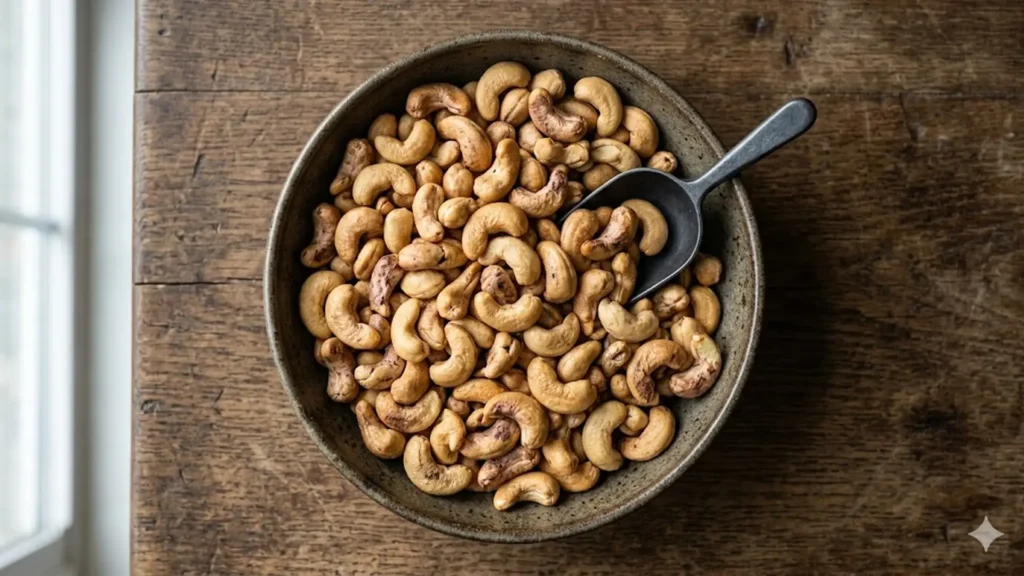
How to roast cashews comes down to one rule that saves you from the most common mistake: pull them when they are just barely golden, not when they look done. Spread raw cashews in a single layer, roast at 350 degrees Fahrenheit for 8 to 12 minutes, stir once or twice, and take them out the moment they turn pale gold and smell toasty. They keep cooking from the pan’s heat after they leave the oven, so what looks underdone in the tray is exactly right.
I roast cashews almost every week, partly for snacking and partly because freshly roasted nuts beat anything in a can. Most guides give you a temperature and a time and leave you to discover the hard parts yourself. This one covers the parts that actually decide whether your batch is perfect or bitter: the carryover cooking, getting salt to stick, and which method to pick for the result you want.
One thing to settle before you start: buy whole cashews, not pieces, when you are roasting for snacking. Broken bits and halves roast unevenly because the small fragments brown and even burn while the whole nuts are still pale, so a bag of pieces will fight you the whole time. Save the cheaper pieces for blending into creams and butters, where the size does not matter, and reach for whole cashews when even color and a clean snap are the point. It is a small choice that quietly determines how good your batch looks.
The Pull-Early Rule That Prevents Burnt Cashews
Cashews go from raw to perfect to burnt faster than almost any nut, and the reason is carryover cooking. When you take a tray out of a 350-degree oven, the cashews and the hot pan keep transferring heat for another minute or two. If you wait until they look fully golden in the oven, that residual heat pushes them past golden into bitter and brown while they sit. The fix is to pull them when they are a shade lighter than you want, pale gold rather than tan.
This is the single most useful thing I can tell you, and it is the thing the popular recipes mention only as a vague warning to not walk away. The mechanism matters. Cashews also do not crisp in the oven, they crisp as they cool. A cashew straight from the tray feels soft and almost bendy. Let it sit five minutes and it firms into that satisfying snap. So you are judging doneness by color and smell, not by texture, because the texture you want has not arrived yet when they leave the heat.
This is exactly the gap in most cashew-roasting guides. They give you 350 degrees and 7 to 10 minutes and a line about watching closely, then stop. What they leave out is why a batch that looked perfect still came out bitter, which is the carryover, and why the salt slid off, which is the dry surface, and which method to choose for your situation. Two cooks can follow the identical temperature and time and get opposite results because one pulled early onto a cool plate and the other left the tray on the stovetop. The number on the dial is the easy part. The judgment around it is what this guide is actually about.
The doneness cues are simple once you trust them. Look for an even pale gold, not deep brown. Smell for a warm, nutty, toasted aroma, the moment the kitchen starts to smell like roasted nuts is the moment to check. If you wait for the deep color, you have already overshot. I keep the oven light on and check at the 8-minute mark, then every minute after.
My own worst batch taught me this the expensive way. I pulled a tray that looked just shy of perfect, then got distracted and left them piled on the hot sheet while I answered the door. By the time I came back they had gone from golden to brown to faintly bitter, cooked entirely by the leftover heat of the pan. Nothing had touched the oven in those minutes. That is when carryover stopped being an abstraction for me. Now I slide the cashews off the hot sheet onto a cool plate or a sheet of parchment the second they come out, which stops the cooking and lets them crisp on something that is not still radiating heat.
Stirring matters more than people expect too. Ovens have hot spots, and the cashews near the back or the edges brown faster than the ones in the center. A single stir at the halfway mark, around the 5-minute point, evens out that difference and is the reason a stirred batch looks uniform while an unstirred one comes out splotchy, some nuts pale and some too dark on the same tray.
Getting Salt and Seasoning to Actually Stick
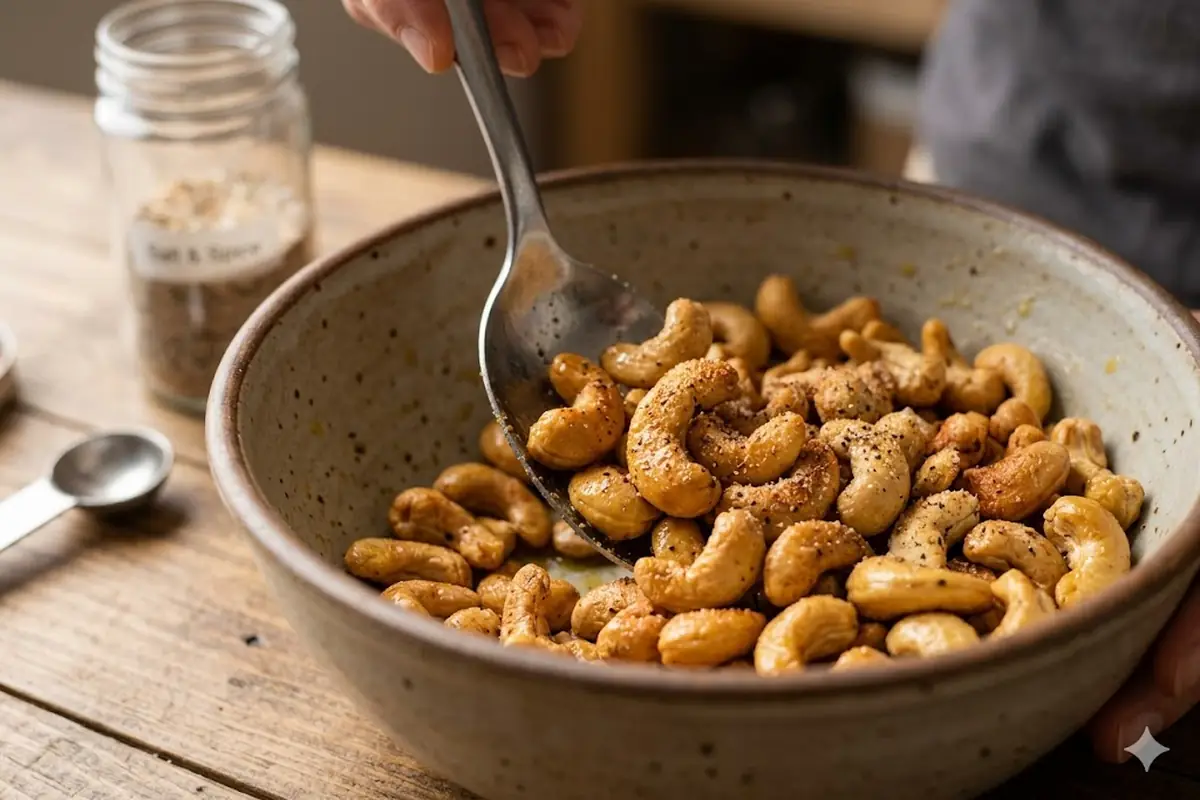
Here is the frustration nobody warns you about. You dry-roast a beautiful batch, sprinkle salt over the hot nuts, and watch most of it slide straight to the bottom of the bowl. Dry cashews have nothing for salt to grab. The surface is smooth and oil-free, so the seasoning bounces off.
There are two fixes, and I use both depending on the goal. The first is a thin coat of oil, about one teaspoon for every two cups of cashews, tossed on before roasting. That whisper of oil gives the salt and any spices something to cling to, and it helps the cashews brown evenly too. The second, for when you want truly oil-free nuts, is to toss the salt on while the cashews are still hot and slightly steamy from the oven, then let them cool in the seasoning. The faint surface moisture from the heat helps a little salt adhere. Even so, expect oil-coated to hold seasoning far better than dry.
Timing matters for flavored versions. Savory spices like smoked paprika, garlic powder, or chili go on with the oil before roasting, or tossed in the residual oil right after. Sweet coatings are the opposite. Maple syrup, sugar, and honey-style glazes burn fast at roasting temperature, so add them in the last few minutes or toss them on after the nuts come out and let the carryover heat set them. I learned to keep sweet and savory on different schedules after scorching a maple batch that I treated like a salted one.
Four Methods, and When Each One Wins
You have more than one way to roast cashews, and the right method depends on how many you are doing and how much you care about even color. Here is how I choose.
| Method | Temp and time | Best for |
|---|---|---|
| Oven | 350 F, 8 to 12 min, stir once | Big even batches, hands-off |
| Stovetop | Medium, 3 to 5 min, stir constantly | A single cup, fast |
| Air fryer | 330 F, 4 min then 3 to 5 more | Speed plus extra crunch |
| Microwave | 1-min bursts, stir between | A pinch, in a hurry |
The oven is my default for anything over a cup because the heat is even and I can walk a few steps away, as long as I respect the timer. The stovetop is faster for a small amount, but it demands constant stirring because the cashews touching the hot pan brown while the ones on top stay pale, so you are tossing the whole time. The air fryer is a pleasant surprise. The circulating hot air gives an exceptionally even, crunchy result in about 8 minutes total, though you may need to work in batches so the basket is not crowded. The microwave is the method of last resort, since it warms the nuts unevenly and the texture comes out softer than a real roast. It works in a pinch, but it is not how you make a great batch.
Flavored Cashews Worth Making
Once you can roast a plain batch reliably, flavors open up, and this is where home roasting leaves the store far behind. The key is matching the seasoning to the right point in the process so nothing burns and everything sticks.
For savory, my go-to is a teaspoon of oil, half a teaspoon of smoked paprika, a quarter teaspoon of garlic powder, and a good pinch of salt tossed with two cups of cashews before they go in. The oil carries the spices and they toast alongside the nuts, deepening as they cook. Rosemary and sea salt is another favorite, though I add finely chopped fresh rosemary in the last three minutes so it does not scorch into something acrid. For heat, chili powder and a little cayenne with lime zest tossed on after roasting gives a bright, spicy snack that disappears fast at gatherings.
Sweet versions need a gentler hand. A maple-cinnamon batch wants the syrup added in the final two to three minutes, or tossed on right after the nuts come out so the carryover heat sets the glaze without burning the sugar. Sugar scorches well below the temperature that toasts a nut, so you cannot treat a sweet coating like a savory one. If you want a candied edge, a tiny bit of maple plus a sprinkle of coconut sugar after roasting, spread out to cool, gives you a light crackle without a sticky mess. The cooling step does double duty here, crisping the nut and setting the glaze at the same time.
The Stovetop Method, Done Right
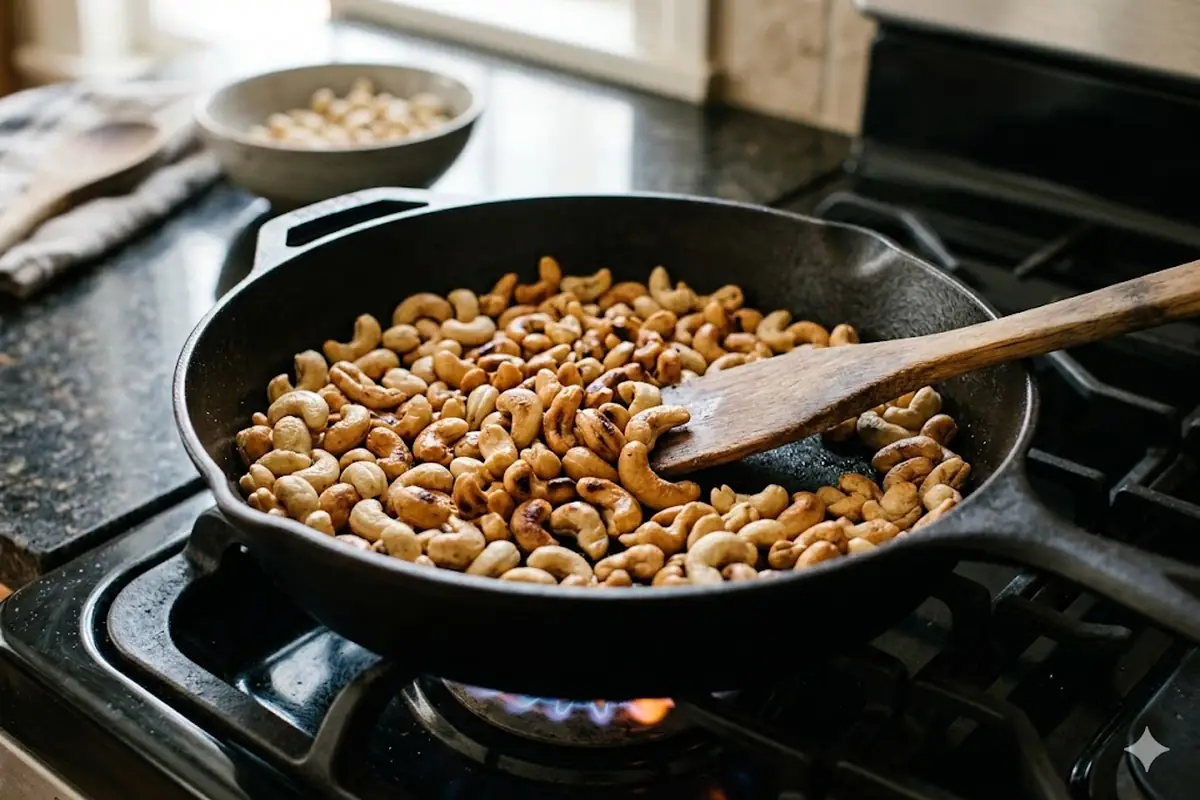
When I only want a cup of cashews for a salad or a stir-fry, I skip the oven entirely and use a dry skillet. It is faster, but it asks for your full attention, because the stovetop browns by direct contact rather than even air. Heat a pan over medium, add the cashews in a single layer, and stir more or less constantly. The cashews touching the metal color first, so the stirring is what keeps any one nut from burning while its neighbors stay raw.
The whole thing takes 3 to 5 minutes, and the doneness cues are the same as the oven: pale gold and nutty-smelling, then off the heat. The difference is that a hot skillet retains even more residual heat than a baking sheet, so I tip the cashews straight onto a plate the moment they are ready rather than leaving them in the pan, where they would keep cooking and slide into bitter. That transfer is the stovetop version of the pull-early rule, and it is just as important. Toasting cashews this way for a recipe is the same move I use when I want a warm, nutty topping for grain bowls or roasted vegetables.
Why Roast at Home Instead of Buying Roasted
It is a fair question. Roasted cashews are on every store shelf. But home roasting wins on three counts that matter to me. You control the salt, which means you can make them lightly salted or salt-free, instead of the sodium bombs that canned cashews often are. You control the freshness, since nuts lose their snap and develop a stale, flat taste the longer they sit roasted, and a batch you roast tonight tastes alive in a way a months-old can never will. And you control the flavor, building anything from rosemary-and-sea-salt to chili-lime in your own kitchen.
For a plant-based kitchen there is a bonus. Roasting your own means you can buy raw cashews in bulk for cooking, the kind you soak for dairy-free creams, and simply roast a portion when you want snacking nuts. One bag covers both jobs. If you want the full picture on whether cashews earn their place nutritionally, my breakdown of whether cashews are healthy walks through the numbers and the smart daily portion. And folding a batch into your week is easy when roasting becomes one task in a larger vegan meal prep session.
For deeper nutrition context on nuts, the evidence summaries at NutritionFacts.org are the most rigorous I have found, and Minimalist Baker has good ideas for putting roasted cashews to work in recipes. A handful of warm, freshly roasted cashews next to a bowl of pasta is a small upgrade to an ordinary dinner.
Storing Roasted Cashews So They Stay Fresh
Roasting changes the storage math. Raw cashews are stable for a long time, but once roasted, the heat has started the clock on the oils going rancid. At room temperature in an airtight container, roasted cashews stay good for about two weeks. In the fridge they hold for 4 to 6 months, and in the freezer up to a year. Because roasting only takes about ten minutes, I usually roast small batches often rather than one giant batch that goes stale, which keeps every handful fresh.
Know the signs of a nut that has turned. Rancid cashews taste bitter and flat, sometimes with a paint-like edge, and they may look darker or shriveled. They are not dangerous, but they will ruin whatever you put them in, so give a quick sniff before using an older batch. Keeping them away from heat, light, and air is what slows the decline, which is why a sealed container in a cool cupboard beats an open bowl on the counter.
One practical habit ties all of this together: roast in portions you will actually finish. I rarely roast more than two cups at once, because two cups is roughly a week of snacking for my household and it stays fresh the whole time. A giant batch looks efficient but tastes worse by the end, since the oils are quietly degrading from day one. Roasting takes ten minutes start to finish, so the small-batch-often approach costs almost nothing and rewards you with cashews that snap and taste sweet every single time rather than dull and flat by the second week. Freshness is a technique as much as temperature is.
Frequently Asked Questions
What temperature should I roast cashews at?
350 degrees Fahrenheit is the reliable sweet spot for oven roasting, taking about 8 to 12 minutes. You can go lower to 325 for a gentler, more forgiving roast that takes a couple minutes longer, which is helpful if you tend to burn nuts. The air fryer works well at 330 degrees. Higher than 350 risks scorching before the inside toasts.
How do I know when cashews are done roasting?
Judge by color and smell, not texture. Pull them when they are an even pale gold and the kitchen smells warmly nutty, which is a shade lighter than fully done. They keep browning from residual heat after you take them out, and they crisp as they cool rather than in the oven, so a soft, pale-gold cashew is exactly right at the pull.
Why does the salt not stick to my roasted cashews?
Dry cashews have a smooth, oil-free surface with nothing for salt to grab. Toss them with a thin coat of oil, about a teaspoon per two cups, before roasting so the salt and spices cling. If you want them oil-free, salt them while they are still hot and slightly steamy from the oven, though oil-coated will always hold seasoning better.
Can I roast cashews in an air fryer?
Yes, and it gives an exceptionally even, crunchy result. Set the air fryer to 330 degrees, cook for 4 minutes, toss, then continue 3 to 5 minutes until golden. Work in batches if your basket is small, since crowding leads to uneven roasting. Watch the last couple minutes closely because air fryers move fast.
Do I need oil to roast cashews?
No, you can dry-roast them with no oil at all and they will toast just fine. Oil is optional and serves two purposes: it helps seasoning stick and promotes even browning. A teaspoon per two cups is plenty. For plain snacking nuts or for cashews you plan to grind into butter, dry-roasting keeps them lean and neutral.
How long do roasted cashews last?
About two weeks at room temperature in an airtight container, 4 to 6 months in the fridge, and up to a year frozen. Roasting starts the oils toward rancidity, so roasted nuts do not keep as long as raw ones. Since a batch only takes ten minutes, roasting small amounts often keeps them tasting freshest.
Why did my cashews turn out bitter?
Bitterness almost always means they overcooked, usually from carryover heat after the pull. If you wait until they look fully browned in the oven, the residual heat pushes them past done as they cool on the hot pan. Pull them at pale gold instead. Bitterness can also signal old, rancid nuts, so check the freshness of your raw cashews too.